Categories
MAIN COURSE

Spicy skewered chicken with pineapple, pepper and onions


Served with the spicy sauce, Basmati rice and a sweet and sour Asian salad

Serves 4
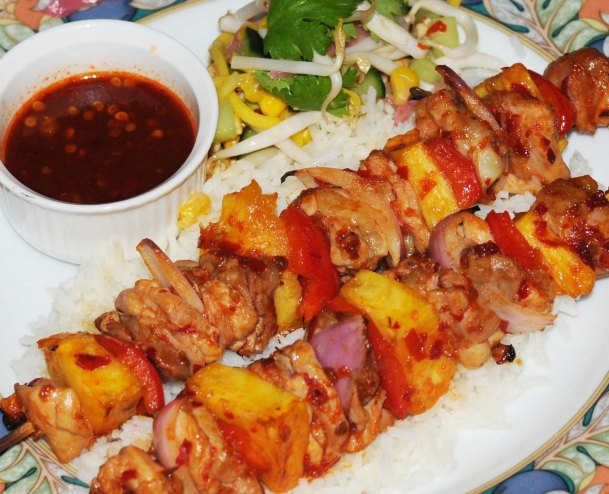
SPICY CHICKEN SKEWERS WITH ASIAN SALAD

The marinade:
¼ cup brown sugar

½ cup rice vinegar
½ cup sambal oelek, store bought or make your own
¼ cup fish sauce, available at Asian supermarkets
2 teaspoons fresh ginger, minced


A hot sauce in one of its purest forms, Indonesian sambal oelek is merely freshly ground hot red chiles with some salt and vinegar for flavor and preservation.


The kebabs:

680 g/1½ lbs chicken thighs, deboned and cut into roughly 25 mm x 25 mm/1 inch x 1 inch pieces
8 wooden skewers, soaked in water for more than 1 hour
½ large ripe pineapple, peeled and cut into roughly 25 mm x 25 mm/1 inch x 1 inch pieces
½ large red sweet pepper, cored and cut into roughly 25 mm x 25 mm/1 inch x 1 inch pieces
½ large red onion, quartered and each quarter halved, breaking up the layers

The salad:
1 cup cucumber, seeded and diced
1 cup bean sprouts
¾ cup frozen corn kernels, defrosted
1 cup half-ripe mango, cut into thin strips


If mangos are not in season, use papaya, pineapple, sweet melon, etc.


½ cup spring onions, diced

1 cup fresh coriander leaves
½ cup peanuts, roughly chopped
Asian sweet and sour sauce to drizzle (see recipe below)

The rice:
2 cups/500 ml Basmati rice
salt
1 tablespoon/15 ml butter (optional)

For the marinade, whisk the brown sugar, vinegar, sambal oelek, fish sauce and ginger in a large bowl until the sugar has dissolved. Add the chicken and mix thoroughly making sure that every piece is coated. Refrigerate until ready to cook.

For the chicken skewers. alternate chicken, pineapple, chicken,  pepper, chicken and a segment of onion, and repeat until the skewer is full. Pour the balance of the marinade into a saucepan together with ½ cup/125 ml water and bring to the boil. Reduce until thickened slightly and pour out a third for basting. Put the rest aside for dipping later.

Preheat the oven to 80ºC/176°F and place a heatproof plate, big enough to hold all the skewers, to warm up.

When the barbeque reaches (150ºC/302°F ), salt the kebabs and place them on the rack. Cook for about 15 minutes, turning and basting at regular intervals. When cooked, transfer to the warmed plate and leave to rest for about 10 minutes in the heated oven. Discard the rest of the sauce that was used for basting (it could be contaminated with raw chicken) and reheat the rest of the reserved sauce.

Just before cooking, prepare the salad by mixing all the ingredients except the sweet and sour sauce. Cover and refrigerate until ready to use.

To serve
Serve the skewers on a bed of rice with the sauce in a separate container. Lightly toss the sweet and sour sauce through the salad and serve with the kebabs.

A rich, dark honey color, this tart-sweet-savory sauce does not resemble the cloying, sticky, bright red sauce that’s often served at Chinese restaurants. You can whip it up quickly to enjoy with snacks such as fried wontons. For spicy tropical flair, use unsweetened pineapple juice instead of water and include 2 teaspoons of minced ginger and a chopped Thai chile with the other seasoning at the beginning.

Asian sweet and sour sauce:
¼ cup sugar or lightly packed light brown sugar
¼ teaspoon salt
1 tablespoon ketchup
1 tablespoon light soy sauce
3 tablespoons rice vinegar
½ cup water
2 teaspoons cornstarch dissolved in 2 tablespoons water

  • Combine the sugar, salt, ketchup, soy sauce, vinegar, and water in a small saucepan.
  • Bring to a near boil over medium heat, stirring occasionally to dissolve the sugar.
  • Give the cornstarch a stir and then add it to the pan. Continue cooking, stirring, for about 15 seconds, or until the sauce comes to full boil and thickens.
  • Remove from the heat, transfer to a serving bowl, and set aside for 10 minutes to cool and concentrate in flavor.
  • Taste and add extra salt, if needed. Serve warm or at room temperature.
  • This sauce can be prepared a day in advance.
Categories
MAIN COURSE

Salmon and prawns poached in a seafood broth


The stock:
1/3 cup/80 ml olive oil
2 tablespoons/30 ml lightly smoked bacon, finely chopped
1 onion, roughly chopped
1 leek, roughly chopped
2 celery stalks, thinly sliced
2 tablespoons/30 ml fresh fennel, finely sliced or 1 tablespoon/15 ml fennel seeds
6 cloves garlic, chopped
¼ cup/60 ml white wine
1 tablespoon/15 ml orange zest
8 ripe tomatoes, chopped
1 tablespoon/15 ml tomato paste
1 medium-hot red chili, seeded and chopped


If you want the broth spicier, add powdered chilli right at the end.


1 teaspoon/5 ml saffron strands, soaked in cold water
1 sprig of thyme
4 cups/1 liter fish stock, heated
15 g/½ oz butter

2 tablespoons/30 ml olive oil
2 cloves garlic, finely chopped
reserved shells of prawns
1 teaspoon/5 ml Pernod
salt and freshly ground black pepper

The seafood:
4 tablespoons/60 ml olive oil
4 x 250 g/4 x 8.8 oz firm white fish fillets, on the bone, skin removed
8 large prawns, shelled and de-veined, reserve shells for stock
3 ripe tomatoes, skinned, seeded and diced
1 tablespoon/15 ml cornstarch, dissolved in 2 tablespoons/15 ml cold water (optional)

The aïoli (garlic mayonnaise):
4 egg yolks (See the Glossary on the use of excess egg whites.)
½ teaspoon/3 ml salt
3 cloves garlic (more if you wish)
2 teaspoons/10 ml lemon juice
2 cup/500 ml groundnut oil

The garnish:
2 tablespoons/30 ml fresh coriander, finely chopped
2 tablespoons/30 ml dill, finely chopped
crusty white bread, thinly sliced and lightly toasted

  • In a large saucepan, heat the oil and sauté the onions, bacon, leeks, celery, fresh fennel or fennel seeds and garlic until soft. Add the wine and boil until all the alcohol has evaporated, then add the orange zest, tomatoes, tomato paste, chili, saffron and soaking liquid, thyme and fish stock and bring to the boil. Boil for 15 minutes, then remove from the heat and set aside.
  • In a separate frying pan, heat the butter and olive oil and sauté the garlic, shells of the prawns until golden and aromatic. Deglaze the pan with the Pernod, then add the contents of the pan to the prepared stock and set aside until ready to poach the fish and prawns.
  • Strain the prepared stock thoroughly into a saucepan big enough for the fish, prawns and broth, and and discard the solids. Bring to a gentle simmer, then add the diced tomatoes and, if desired, thicken slightly with the cornstarch.

Use the cornstarch slush only if you find the stock too watery. But only add a little at a time to make sure that the stock does not end up too thick.


  • Let it simmer for a few minutes longer until slightly thickened, then add the fish to the simmering broth.
  • Poach for about 4 minutes, then carefully turn the fish over, add the prawns and poach 2 minutes more or until you are satisfied that the prawns are cooked. The fish should be opaque and cooked through but flake easily. Check the seasoning, then turn off the heat and prepare to serve.
  • For the aïoli, blend together the egg yolks, salt, garlic and lemon juice in a food processor. Add the oil in a thin steady stream while the machine keeps running. Continue until all the oil is incorporated. Check the seasoning.

This recipe contains raw eggs and is not suitable for pregnant women, the elderly or very young children. If you feel uneasy using raw egg yolks, see the recipe for Mayonnaise made with cooked egg.


To serve:
Lift the fish from the broth and place into deep pre-heated bowls. Carefully pour the broth around the fish, add two prawns to each dish, and sprinkle the fresh coriander and dill over. Serve the crusty bread and small bowls filled with the aïoli on the side.

Categories
MAIN COURSE

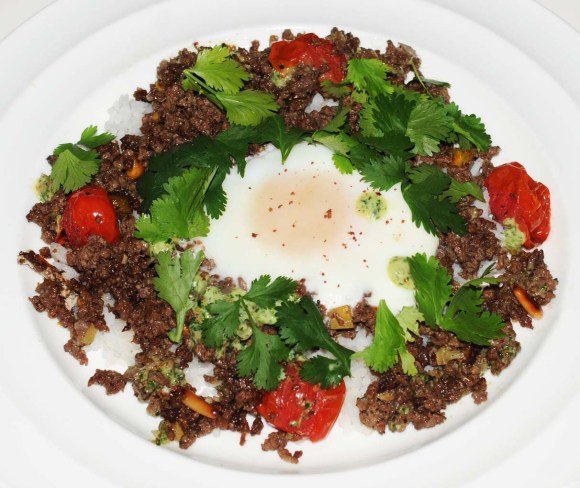
LAMB MINCE WITH BAKED EGG, SUMAC AND ROAST TOMATOES


Learning about the cuisine of other cultures and the fusion of flavors happening as a result of immigrants bringing their traditional cooking methods, herbs and family favorites into your country, has made cooking a very interesting and delicious hobby. This dish (inspired by fusion food served in Jerusalem) is a delightful and surprising result.  Yet another version of comfort food you can add to your repertoire.

Lamb mince with baked egg, sumace and harissa

360 h/12.7 oz Basmati rice

The lamb:
2 tablespoons/30 ml olive oil
12 shallots, finely sliced
2 cloves garlic, minced
350 g/12 oz lamb mince
2 cups/500 ml lamb stock
2 tablespoons/30 ml sumac (availalable at well stocked supermarkets)


Sumac, from the berries of the sumac bush (vaguely related to Poison Ivy although not poisonous) are dried and in some instances you can buy the berries whole or already ground. It is dark brick red in color and adds a delightful color and zing to food without overpowering it — subtle and refreshing. Add it to scramble eggs, a vinaigrette, garlic mayonnaise, tomato salad, etc. Try it with chicken, fish, butternut soup …. the possibilities are endless. Use your imagination.

1 tablespoon/15 ml za’atar (available in shops that specialise in Middle Eastern spices or make you own)
1 tablespoon/15 ml cumin
2 tablespoons/30 ml pine nuts
salt and freshly ground black pepper

The tomatoes:
2 tablespoons/30 ml olive oil
24 cherry tomatoes
1 teaspoon/5 ml coarse sea salt
sprinkle of sugar
1 teaspoon/5 ml balsamic vinegar

The garnish:
4 fresh eggs
plain thick Greek yogurt
bunch coriander leaves

  • In a small bowl mix the vinegar with the salt and add the onion. Set aside for the onions to soften.
  • Boil the rice and keep warm.
  • Preheat the oven to 220°C.
  • In a heatproof baking dish mix the cherry tomatoes with the olive oil, salt, sugar and vinegar and roast in the oven until the skins burst open and the juices start sizzling. Remove from the oven and set aside.
  • For the lamb:  in a big enough pan, heat the olive oil and fry the shallots and garlic briefly then add the mince.
  • Break up the mince as much as possible to avoid having clumps of meat.
  • When it becomes nice and caramelized, add half the stock, sumac, za’tar, cumin and salt and pepper and cook until most of the liquid has evaporated.
  • Add the rest of the stock and simmer for 5 minutes.
  • With a large spoon, move the meat aside to form four hollow spots. Break an egg into each hollow, then cover the pan with a lid and steam the eggs for about 5 minutes or until the eggs are cooked but the yolks still soft.

I find it much easier to fry the eggs separately and place it on top of the dish when ready to serve.  But it is up to you. It does not affect the outcome of the dish or spoil its authenticity.

  • To serve: on each warmed plate spoon the rice and spread out quite a bit.
  • Spoon the lamb and a cooked egg over the rice, being careful not the break the yolk.
  • Dot the surface of the meat with spoons full of yogurt, scatter the roast tomatoes around and sprinkle over the coriander. Serve immediately.

Extra sumac sprinkled over gives the dish an extra tang and color but use sparingly.

Categories
MAIN COURSE

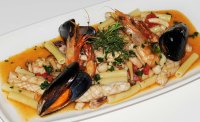
MIXED SEAFOOD PASTA


This dish is a bit daunting if you are entertaining, because it has to be done the last minute. But if you are well organized and have done all the preparations, it should be fine. The seafood preparation can be done the previous day as well as all the measuring of the ingredients, and kept covered and refrigerated.

SEAFOOD PASTA SAUCE

The fish and seafood:
25 g/0.9 oz butter
2 tablespoons/30 ml olive oil
120 g/4 oz firm white fish, skinned
120 g/4 oz prawns,
120 g/4 oz squid with tentacles
2 tablespoons/30 ml extra-virgin olive oil
½ onion, thinly sliced into rings
3 garlic cloves, thinly sliced
1 teaspoon/5 ml dried red chile flakes
4 anchovy fillets in oil, drained, rinsed and dried
1 kg/2 lbs black mussels, scrubbed and de-bearded
1 cup/250 ml dry white wine
2 tablespoons/30 ml salted capers, rinsed and drained
1 bunch Italian parsley leaves, finely chopped
salt and freshly ground black pepper

The seafood sauce:
25 g butter
2 garlic cloves
reserved prawn shells
trimmings of squid and fish
1 cup/250 ml white wine
4 cups/1 ℓ fish stock, heated
1 tablespoon/15 ml tomato paste
1 teaspoon/5 ml Pernod
1 tablespoon/15 ml agar-agar, mixed with 4 tablespoons/60 ml cold water
1 cup/250 ml double cream
2 tablespoons/30 ml tarragon leaves

For the fish, prawns and squid, cut the fish into 3 x 3 cm/1 x 1 in pieces, and peel and devein the prawns (reserving the shells for later use). Remove the tentacles from the squid body (remove the beak from the tentacles, reserving all the trimmings), and cut the squid into rings about 1 cm/0.4 in wide. In a big frying pan, heat the olive oil and butter and sauté the fish, prawns, squid and tentacles in batches, seasoning adequately as you go along, being careful at the same time not to overcook. Set aside and keep warm. Keep the saucepan with pan juices to make the sauce later.

Meanwhile, in a large saucepan, heat the olive oil and lightly saute the red onion, garlic and chile flakes. Saute until fragrant, then add the anchovies and cook until the anchovies have disintegrated. Add the mussels and white wine, and cover quickly, so the steam cooks the mussels. Shake the pot after 1 minute, and again after 2 more minutes. Check the mussels, if they are open and plump, they are cooked. Check the seasoning, then stir in the parsley. Set aside and keep warm.

For the seafood sauce: use the saucepan the seafood was cooked in and heat to medium. Add the butter add the garlic. Saute for a few seconds then add the prawn shells and all the other trimmings. Cook for about 3 minutes then add the wine. Reduce until about a third is left then add the heated fish stock. Bring to the boil and add the tomato paste and Pernod. Cook until the liquid has reduced by about one third then check the seasoning. Stir in the dissolved agar-agar little by little until you reach the desired consistency which should be like pouring cream. Strain the sauce and keep warm. Just before serving, roughly chop the tarragon then mix into the seafood sauce.

To serve:
On a large warmed serving plate, arrange the fish, prawns, squid and mussels and pour the mussel juice over. Serve the Seafood sauce separately.

Categories
MAIN COURSE

MAIN COURSES


SPICY CHICKEN SKEWERS WITH ASIAN SALADSpicy skewered chicken served with the spicy sauce, Basmati rice and a sweet and sour Asian salad


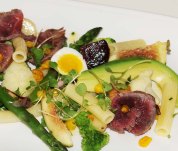
SEARED VENISON ANTIPASTO PLATTER 2

Seared venison antipasto platter

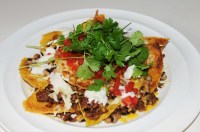
NachosNachos with tomato salsa, guacamole and sour cream
DEEP FRIED PORK LOIN SANDWICH WITH SPINACH AND RICOTTA RAVIOLI

 Deep-fried pork loin sandwich with spinach and ricotta ravioli

LAMB MINCE USING SUMAC

Lamb mince with sumac, pine nuts and Coriander and parsley salsa, served with Basmati rice and fried eggs 

Pig’s trotters stuffed with chicken and sweetbread mousse

SEAFOOD PASTA SAUCE

Mixed seafood pasta

BOLOGNESE

Bolognese 

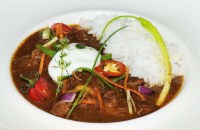
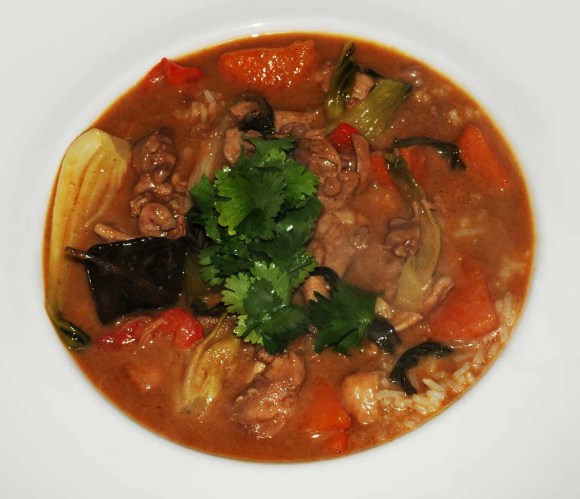
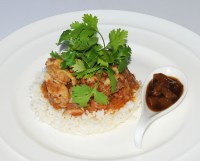
Massaman curry chicken with butternut, red pepper and pak choi

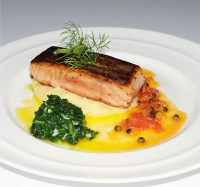
SEARED SALMON

Cured and seared spicy salmon with creamy mashed potatoes, creamed spinach and a green peppercorn vinaigrette

FISH SOUP

Seafood soup served with garlic mayonnaise and crusty bread

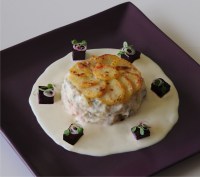
Seafood pie with a golden potato crust served with a fennel, carrot and apple salsa and an apple juice and maple syrup dressing

 Deep-fried fish, mixed seafood and onion rings in a Parmesan and garlic batter, served on a bed of noodles and cucumber ribbons with a creamy caper mayonnaise dressing

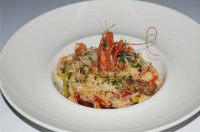
CHICKEN AND PRAWN PILAF

 Chicken and prawn pilaf with Chorizo sausage, tomatoes, green beans and almonds  

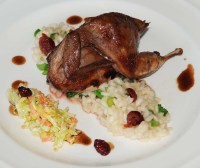
BARBEQUE QUAIL

Barbecue marinated quail, served with broccoli risotto and oyster sauce and a sweet and tangy coleslaw

CHICKEN CASSEROLE

 Chicken and mushroom casserole with a creamy champagne and tarragon sauce

Chicken sausage with pistachios and ham served with mushroom risotto and apples poached in red wine
THYME SMOKED CHICKEN

Thyme smoked chicken with a creamy white wine and thyme sauce, served with a bulgur wheat salad

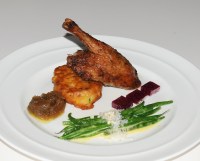
DUCK CONFITDuck legs confit with corn fritters,  Armagnac jelly,  served with creamy green beans and pickled cucumber

INDIAN CHICKEN DISH

An Indian chicken dish delicately flavored with a selection of spices, served with Basmati rice, Poppadoms and a variety of sambals

VEAL ROLLS

Veal rolls stuffed with chicken liver and proscuito in a Marsala and white wine sauce served with polenta cakes and pickled beetroot

LASAGNE

Lamb and aubergine lasagna

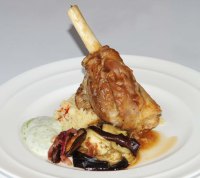
LAMB SHANKS WITH HARISSA

Lamb shanks poached in spicy broth with harissa yoghurt, served with couscous and roast vegetables and spicy eggplant and shiitake mushrooms 

MOROCCAN LAMB

Lamb neck casserole with Moroccan flavors, served with papaya, red pepper and spring onion salsa

CRISPY PORK LOIN WITH DEEPFRIED VEAL SWEETBREADS AND PUY LENTILS

Crispy pork belly with deep-fried sweetbreads served with  Puy lentils and a grape and cucumber salsa

PORK BELLY

 Slow poached marinated pork belly (”sous vide”- style) with Mushroom Basmati rice

OXTAIL

Oxtail wrapped in a herb dumpling served with fried glazed ginger and lemon confit, and a roasted beetroot salad

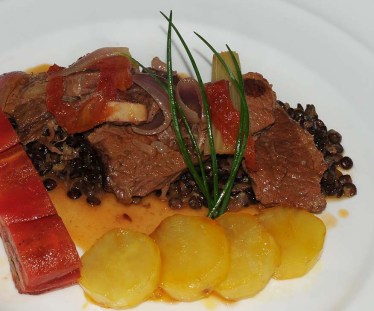
BEEF BRISKET

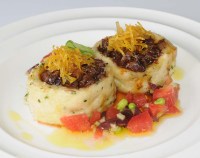
Beef brisket poached in spicy beef stock with Puy lentils, candied sweet potatoes and tomato and basil terrine

BEEF WELLINGTON

Stuffed beef fillet roll in pastry served with cauliflower cream and sweet peas

Categories
MAIN COURSE

BEEF BRISKET POACHED IN SPICY BEEF STOCK


Serve with Puy lentils, candied sweet potatoes and tomato and basil terrine.

LINE

Serves 4

Brisket is an inexpensive cut of beef that requires long, slow cooking to break down the collagen in the connective muscle tissues which results in succulence and  tenderness.  The Tomato and basil terrine is a refreshing addition to the rich brisket dish.

BEEF BRISKET

The brisket:
2 tablespoons/30 ml olive oil
1 kg/2 lbs brisket with the bone on
3 cloves garlic, crushed
1 red onion, roughly chopped
1 cup/250 ml dry red wine
2 cups spicy/500 ml beef stock, heated
1 teaspoon/5 ml fresh ginger, grated
juice of ½ lemon
2 teaspoons/10 ml palm sugar
1 star anise
salt and freshly ground pepper
1 red chili, rib and seeds removed, finely chopped (optional)

The Puy lentils:
200 g/7 oz Puy lentils
1½/375 ml cup chicken stock
salt and freshly ground black pepper
1 medium red onion, finely sliced
1 tablespoon/15 ml lemon juice
1 tablespoon/15 ml olive oil
salt and freshly ground black pepper

The sweet potatoes:
4 large sweet potatoes, peeled and cut across into 1 cm (0.4 in) thick slices
¼ cup/60 ml butter
¼ cup/60 ml sugar
juice of one orange

The tomato and basil terrine:
1 cup/250 ml olive oil
½ cup/125 ml balsamic vinegar
4 shallots, peeled and finely sliced
4 garlic cloves, minced
salt and freshly ground black pepper
1.5 kg/3.3 lbs very ripe tomatoes, peeled, sliced into petals and seeded
1 bunch basil
baby rocket leaves

Start with the terrine:
For the marinade, combine the olive oil, vinegar, shallots, garlic and seasoning. Add the tomatoes to the marinade and refrigerate for 24 hours.

For the terrine, line four individual molds with plastic film, then push in each mold a layer of the tomato petals, then a basil leave, then salt and pepper and a drizzle of the marinade. Repeat until all the ingredients are used and pour the rest of the marinade over. Press down firmly and fit a piece of board cut to the size of the mold on top. Put small weights on top and leave for at least 8 hours to set before serving.  When ready to serve, invert the terrines on each of the serving plates with the brisket, Puy lentils and sweet potatoes.

For the brisket, heat the oil in a large saucepan and brown the brisket all over. Add the garlic and onion and stir until heated through, then add the red wine and allow to boil until almost evaporated. Add the beef stock and bring to a boil, then add the rest of the ingredients and cook, covered, for about ½ hour. Remove the star anise and continue cooking for another hour or until the meat is very tender. Check periodically to see that there is enough liquid to cover the meat. If necessary add a little bit of boiling water from time to time.

When the brisket is tender, remove from the saucepan and keep in a warm place. Add the chili (optional) to the saucepan and reduce the liquid in the pan until it is thick and syrupy.

Shred the brisket into smaller pieces, discard the bones (if any) and return the meat to the saucepan. Gently mix with the sauce in the pan and check the seasoning. Keep warm.

Cook the lentils in simmering unsalted chicken stock for 20 minutes or until tender. Drain and season with salt and freshly ground black pepper.

Meanwhile, soak the red onion in the lemon juice for 5 minutes. Once the lentils are cooked, add the drained onion, olive oil and stir through.

In a saucepan, put the sweet potatoes and cover with water, salt and half the butter. Bring to the boil and cook until nearly all the water has evaporated. Pour in the orange juice, the rest of the butter and the sugar. Turn the heat down low and let the juices slowly caramelize.

Assemble the dish:
Serve the brisket on top of the Puy lentils with the Sweet potatoes and the Tomato and basil terrine around it.

Categories
MAIN COURSE

CRISPY PORK BELLY (“SOUS VIDE”-METHOD) WITH DEEPFRIED SWEETBREADS


 Serve with Puy lentils and a grape and cucumber salsa

LINE

CRISPY PORK LOIN WITH DEEPFRIED VEAL SWEETBREADS AND PUY LENTILS

“Sous-vide”-cooking is a method used to cook food sealed in airtight plastic bags in a water bath for longer than normal cooking times, sometimes as long as 72 hours, at a regulated temperature much lower than normally used for cooking. The intention is to cook the item (mostly tough cuts of meat) evenly, preventing the food from overcooking whilst keeping it juicy, succulent and tender.

For the pork belly:
1 stalk lemongrass, hard outside removed, the core finely chopped
1 teaspoon/5 ml white pepper, freshly ground
2 teaspoons/10 ml Chinese five-spice powder (mix your own)
4 cloves garlic, crushed
2 teaspoons/10 ml fresh ginger, peeled and finely chopped
1-2 red chilies, seeds removed, finely chopped
Kosher salt
1 kg/2 lb pork belly, without bone
1⅓  cup/300 ml pork stock
2 tablespoons/30 ml vegetable oil
1 tablespoon/15 ml cornstarch (optional)
2 tablespoons/30 ml cold water
1 tablespoon/15 ml fresh coriander, roughly chopped
1 tablespoon/15 ml fresh chives. finely chopped

For the sweetbreads:
900 g/2 lbs sweetbreads
1 tablespoon/30 ml salt
1 tablespoon/30 ml vinegar
¼ cup/60 ml flour plus extra salt
2 teaspoons/10 ml garlic powder
2 egg, whisked
2 cups/500 ml Panko breadcrumbs
oil for deep-frying

For the Puy lentils:
1½ cup/375 ml Puy lentils
2 cups/500 ml chicken stock
¼ cup/60 ml carrot, finely diced
¼ cup/60 ml celery, finely diced
¼ cup/60 ml shallots, finely diced
2 tablespoons/30 ml sherry vinegar
2 tablespoons/30 ml olive oil
2 tablespoons/30 ml chives, finely sliced
2 tablespoons/30 ml parsley, finely chopped
2 tablespoons/30 ml toasted walnut, roughly chopped
salt and freshly ground pepper to taste

For the salsa garnish:
about 32 green grapes, peeled (you do not have to peel them, but it looks nicer and the skin of some grapes might be a bit tough)
1 cup/250 ml cucumber finely diced
1 tablespoon/15 ml rice wine vinegar
2 teaspoons/10 ml fine sugar
2 tablespoons/30 ml chives finely sliced
salt and freshly ground black pepper to taste
a selection of micro leaves

To make the marinade for the pork belly, mix the lemongrass, five spice, garlic, ginger, salt and chilies and add to the pork stock in a jug. Mix well. Place the pork in a food grade plastic bag and pour in the stock with the marinade mix. Seal the bag in the vacuum sealer and leave in the refrigerator for up to 12 hours.

To make the pouring of the liquid into the bag easier, put the bag (open side up) in a deep container.

Preheat the oven to 120º C/248ºF.

When ready to cook the pork, heat enough water in the ovenproof dish with a lid (to cover the bag) to the same temperature as you have set the oven. Carefully lower the bag with the pork into the hot water, bring the water back to the original temperature (that of the oven), cover the surface of the water with a cartouche and cover with the lid.

A cartouche is a paper lid to, amongst other things, put on top of slow cooking food. The purpose is to keep the food submerged in the liquid. To make your own, take a square piece of parchment paper, slightly larger than the pan. Note the center of  and fold it in half and in half again to form a square with the center of paper now at one corner.  align the edges of the folded paper that diverge from the corner and make a fold.  Keep folding it the same so that you have a narrow sector shape with a wide end and a tip of the center which will become the center of the cartouche.  Measure the length of the folded paper from the center of the pan to the rim.  /cut away any excess at the wide end.  Cut off the tip — about 1½ cm/⅝ in — which will make the hole in the center through which the steam will escape . Open up the folded paper and shape it as necessary to form a circle. Your cartouche is now ready.

Cover the dish with its lid and place in the oven. Cook for 3 hours. When the cooking time has expired, carefully remove the cartouche then the bag from the hot water with tongs and put the bag in a deep dish. Cut the bag open and let the meat and juices slide out of the bag into the dish.  (Do this with great care because the contents will be very hot.) Carefully lift the meat out and place skin side up on a baking tray, put another baking tray on top with some weight to flatten the piece of meat. Chill for at least 2 hours. Just before serving, heat the oil in a frying pan to medium heat and place the pork, skin side down, to crisp up for 10-15 minutes. Put in a warm oven to warm through.

Be careful because quite a lot of spatting will take place.

Meanwhile, strain the sauce into a saucepan and over high heat, reduce to the desired consistency. The sauce will have all the flavors of the marinade as well as the meat. If desired, thicken with some corn starch mixed with some cold water, then strain again. Stir in the coriander and chives.

For the sweetbreads, separate them into about 4 cm/1½ in blocks. In a large saucepan, bring enough water to cover the sweetbreads to a boil and add the salt, vinegar and sweetbreads. Boil the sweetbreads for 5 minutes, remove them from the water with a slotted spoon and place in a bowl of iced water.  Carefully peel off the thin membrane then continue to do the deep-frying.

Personally, I do not think that the membrane causes any problems should you leave them, but to please the purists, I feel I must mention it.

Get three bowls ready: one with the flour, one with the whisked egg and one with the crumbs. In a deep pan heat the oil to 180ºC/356ºF. Coat each piece of sweetbread with the flour then roll it in the egg and finally cover in the breadcrumbs. Carefully place each piece in the hot oil (you might have to do this in batches) and fry until golden brown all round — 3-4 minutes. Remove from the oil and drain on kitchen paper. Keep uncovered in a warm oven until ready to serve.

Meanwhile, in a saucepan and over medium heat, put the lentils, the chicken stock, carrot, celery and shallots and bring to the boil. Boil for 20 minutes without adding salt. Test the lentils for tenderness and strain. Add the rest of the ingredients, mix carefully and keep warm until ready to serve.

For the salsa, drain the cucumber and mix with the grapes and chives.

To serve:
On preheated plates, spoon the Puy lentils, place the pork and sweetbreads at random and carefully pour the sauce around (not over the pork and sweetbreads, it might affect the crispiness of the skin and crumb coating).   Scatter the grape and cucumber salsa around and sprinkle over the micro leaves.  Serve immediately.

Categories
MAIN COURSE

MASSAMAN CURRY CHICKEN WITH BUTTERNUT, RED PEPPER AND PAK CHOI


Served with Basmati rice and fresh corianderLINE

This is a hearty meal but with an exotic flavor. The vegetables give it substance but also add a unique flavor and interesting textures. It can be varied by using green beans, carrots, or even broccoli.

Massaman chicken curry

2 tablespoons oil
10 chicken drumsticks, boned
4 cloves garlic
1 medium onion, thinly sliced
1-2 red chilies, stem and seeds removed, finely chopped
2 tablespoons/30 ml Massaman curry paste (make your own)
1-2 cups/250-500 ml chicken stock (if necessary)
1½ cups/375 ml coconut milk
½ cup/125 ml coconut cream (optional)
4 kaffir lime leaves, dried if fresh is not available
1 tablespoon/15 ml fish sauce
1 tablespoon/15 ml lime juice
2 teaspoons/10 ml palm sugar
fresh coriander leaves

1 butternut, cut into bite size blocks
1-2 red peppers, seeds and ribs removed and cut into bite size squares
6 pak choi, quartered lengthways

In a deep heavy saucepan, heat the oil and over high heat fry the chicken until it starts to caramelize. Remove from the pan and set aside. In the same pan, add the garlic, chilies and onion and fry lightly whilst stirring then add the curry paste. Keep stirring until the paste becomes fragrant, then add the chicken and stir around until or the chicken is covered with the paste. Add the coconut milk and coconut cream (if using) and bring to the boil then add the lime leaves, fish sauce, lime juice and palm sugar. Turn the heat down slightly and let it simmer for about 20 minutes.

If you feel you would like it saucier, then add the chicken stock (preheated).

Meanwhile, cook the butternut until just tender, drain and set aside.

After the curry had been cooking for 20 minutes, add the cooked butternut, red pepper and pak choi and check that they are all covered by the sauce. Check the seasoning and if needed add more fish sauce or salt, if preferred.

Serve this curry over Basmati rice, topped with a generous helping of fresh coriander leaves.

Categories
MAIN COURSE

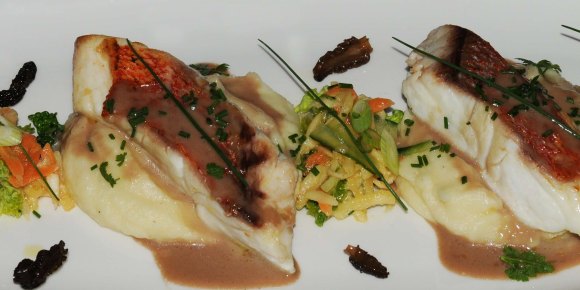
PAN-ROAST FISH WITH MOREL SAUCE


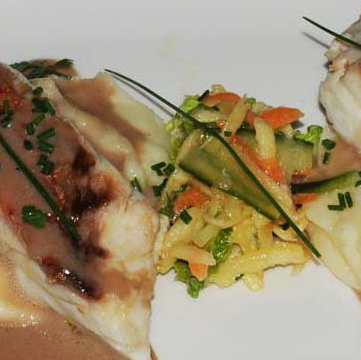
Serve with creamy mash potato and spicy coleslaw.

Pan-fried fish with morel sauce

For the potato mash
1 kg/2 lbs potatoes, skin on
75 ml/⅓ cup of double cream
75 ml/⅓ cup milk
50 g/1.7 oz butter
salt and freshly ground white pepper

For the morel sauce
30 g/1 oz butter
2 shallots, finely chopped
8 dried morels
6 white peppercorns, crushed
4 red sorrel leaves
½ cup/125 ml Noilly Prat
1 cup/250 ml white wine
1 cup/250 ml prawn stock
¾ cup/175 ml cream
salt to taste

For the coleslaw
2 medium carrots, peeled and finely shredded
½ small cabbage, finely shredded
1 small apple, grated
½ cup/125 ml celeriac, finely shredded
½ red onion, finely chopped
2 spring onions, finely sliced
½ cup/125 ml fresh coriander

For the dressing
2 tablespoons/30 ml fresh ginger, minced
2 tablespoons/30 ml Japanese mayonnaise
2 teaspoons/10 ml rice wine vinegar
½ teaspoon/3 ml fine sugar
pinch of salt

For the fish
4 x 200 g firm white fish fillets, scaled and pin-boned, with skin on
salt and freshly ground black pepper
1 tablespoon/15 ml olive oil
1 tablespoon/15 ml butter

Panfried fish with morel sauce

  • For the potatoes and if you have the time, heat the oven to 180˚C/356°F, place the potatoes in the oven and cook until tender.
  • This will take about 90 minutes. Otherwise, boil them whole with skin on until totally soft.
  • Drain and remove the skin while still hot.

Put the potatoes through a ricer or, to make the mash really smooth, pass through a drum sieve. Stir some of the cream mixture through the potatoes and keep warm.

  • For the sauce, heat the butter in a saucepan over medium heat, then add the shallots, morels, peppercorns and sorrel and lightly sauté until the shallots are translucent, but not brown.
  • Deglaze the pan with the Noilly Prat and reduce until about half. Then add the white wine and reduce again until half.
  • Finally add the prawn stock and cream and reduce again until half. Set aside for the flavors to intensify, then pick out the 8 morels and set them aside for garnish.
  • For the coleslaw, combine all the ingredients in a large bowl. Drizzle some lemon juice over, cover and set aside in the refrigerator.
  • For the dressing, whisk all the ingredients together and set aside.
    Pour the dressing over the slaw just before serving.
  • For the fish, preheat the oven to 100°C/212°F and season the fish. Heat a frying pan and add the oil and once the oil is hot, fry the fish skin side down for one to two minutes (depending on the thickness) when the skin turns golden, then add the butter and spoon the foamy butter over the fish whilst cooking for another minute.
  • Remove the pan from the heat and put in the oven for 5 minutes.

If you feel uncomfortable with the doneness of the fish or if your fish is very thick, let it cook for an extra minute but not longer.

To serve

  • Heat four serving plates.
  • When ready to serve, mix in a little more of the cream mixture to the potatoes until it reaches the consistency you want and gently reheat.
  • Strain the morel sauce, adjust the seasoning and gently reheat. Add the reserved morels.
  • Pour the dressing over the coleslaw and gently mix through.
  • Place dollops of mashed potatoes on each plate and top with a piece of fish. Pour the sauce around the fish, making sure that each plate has 2 morels, and scatter the coleslaw around.
  • Serve immediately.
Categories
MAIN COURSE

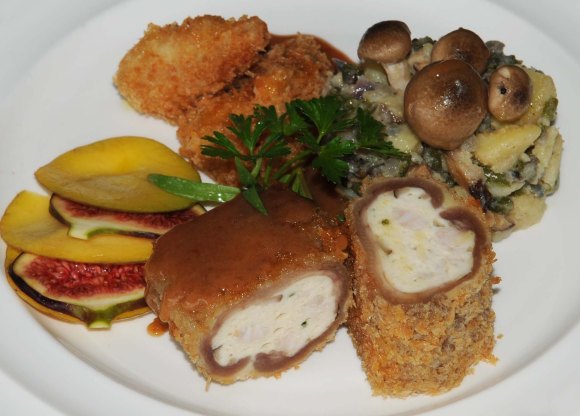
Pork trotter stuffed with chicken and sweetbread mousse


The humble pig’s trotter does not possess much meat, but what it has is flavor, and the cylindrical shape ideal to be stuffed like a sausage.  It’s the intelligent way to approach this part of the nose to tail philosophy, I think.  Its flavor is simple but elegant, earthy but seriously delicious. How to get there is a totally different story.  It is a commitment and a secure few hours of dedication to make the best of it.  My very first time.

PIG'S TROTTERS STUFFED WITH CHICK MOUSSE.jpg


After careful research and You Tube education, and armed with a very sharp knife and chopping board, I started with my most amazing journey — deboning and stuffing pig’s trotters. First the singing with the blow torch to remove any hair that might still be around. Then scrubbing between the toes and singe once more if necessary, and voilá — ready for the deboning action.  Not for the squeamish though…

  • Start with the deboning of the trotters.  You will need 4 trotters.
  • Make an incision down the middle of the underside and carefully ease the skin away from the bone, starting from the open end (the end opposite the toes).
  • At all times try not to cut through the skin because the stuffing will leak out during the cooking process.
  • Peel the skin back as you cut it away from the bone.
  • You will reach the toes and quite a few tough tendons.
  • Cut the tendons and maneuver the knife into the first joint to disconnect the largest bone in the trotter.  (You will need to use some extra force.)
  • Then tackle the next joints which are smaller and easier to remove.
  • The good news is that the bones right inside the toes stay intact to keep them firm.
  • There will still be fat and unidentifiable bits and pieces on the inside of the skin which should be scraped off carefully without tearing the skin.

PIG'S TROTTER DEBONED

Lightly sprinkle the skins with some salt, and spices (I used ground clove and cinnamon) of your choice, and set aside.

The recipe for the whole process:
4 pigs trotters
flour for coating
3 eggs with a dash of water
4 cups/1 liter panko breadcrumbs
oil for deep-frying

2 tablespoons/30 ml oil
2 large carrots, diced
1 large onion, diced
¼ cup/60 ml white wine
1 tablespoon/15 ml Madeira
½ cup/125 ml veal or pork stock
2 teaspoons/10 ml champagne vinegar
herbs such as thyme, sage, tarragon, etc.

For the stuffing:
25 g calf’s sweetbreads
50 g/1.7 oz butter
1 small onion
20 mushrooms of your choice
1 chicken breast (very cold), skinned and diced
1 egg white
200 ml / 7 fl oz double cream, very cold
salt and freshly ground pepper


The chicken meat, egg white and cream must be very cold, otherwise it might split when processed.

  • Heat the oil in an oven-proof pan and lightly brown the chopped vegetables and the bones.
  • Deglaze the pan with the wine and as soon as the wine has evaporated, add the Madeira and the stock and bring back to a boil.
  • Place the trotter skins on top of the bones. Cover the pan tightly and place in the oven at 160°C/325°F for 3 hours.
  • Meanwhile, prepare the stuffing:
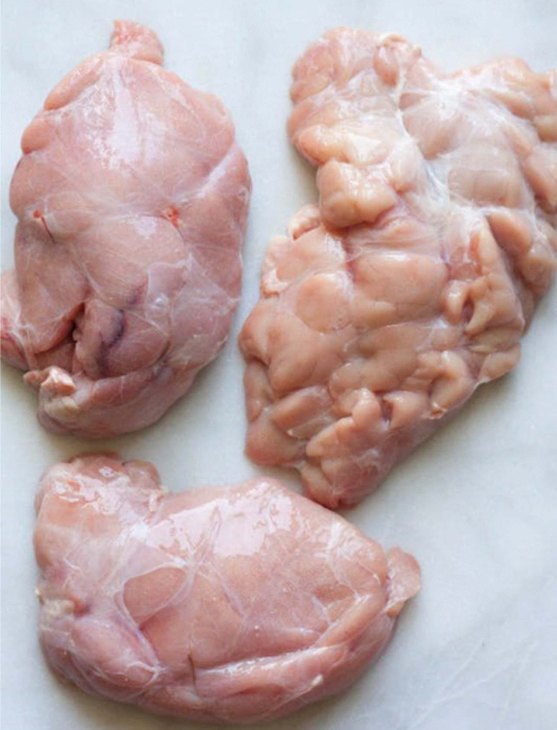
CALF'S SWEETBREADS
Calf’s sweetbreads
  • Blanch the sweetbreads for 5 minutes, remove with a slotted spoon and plunge in iced water.
  • Drain and carefully remove the skin and membranes around the sweetbreads, then roughly chop them.
  • In a pan heat some butter over medium heat and fry the sweetbreads and chopped onion for 5 minutes then add the mushrooms and cook for a further 5 minutes. Season lightly.  Set aside to cool.
  • To finish the stuffing:  In a processor, puree the chicken breast with the egg white and cream and season with salt and pepper.
  • Stir in the sweetbread mixture and mix well.  Take a small amount of the stuffing and fry it for tasting to adjust the seasoning if necessary.
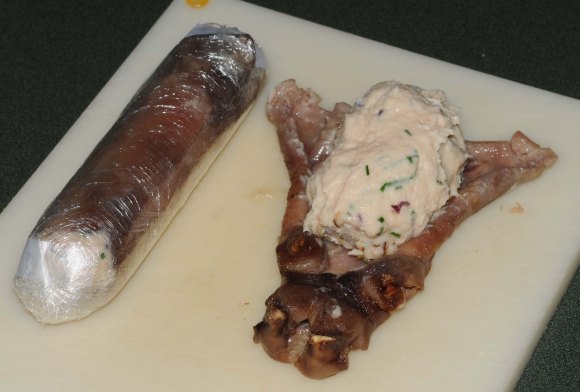
  • To stuff the trotters:  Place each lukewarm trotter skin (if it gets too cold it loses its elasticity and makes it difficult to roll) on a square of plastic wrap and start filling it, starting at the end of the foot.
  • Pack the stuffing in well but not so much that the trotter loses its shape. The exact amount of mixture will depend on the size of your trotters.
  • Once stuffed, it will take its original shape of the bone-in pig’s foot.
  • Tightly roll up the stuffed trotters in plastic wrap and refrigerate for an hour or two.  (Leftover mousse can be frozen to fill tortellini, etc.)

PORK TROTTERS BEING STUFFED.jpg

  • Meanwhile strain the cooking stock and discard the solids.
  • Reduce the stock to a thick consistency, skimming the fat from the surface of the braising liquid all the time, then whisk in a of champagne vinegar.
  • Add the herbs, adjust the seasoning and keep warm.
  • For the frying of the crumbed trotters, get ready three shallow bowls, one with flour, the other with an egg and water mixture and a third with panko breadcrumbs.
  • Remove the plastic wrap from the trotters.  Cover them with flour, shaking off the excess, then dip into the egg and finally roll in the breadcrumbs, making sure that the crumbs adhere all over.
  • Put back in the refrigerator for 30 minutes.
  • Heat a large pan on medium heat filled with enough vegetable oil to cover the trotters when deep-frying.
  • Once the oil is hot (about 160ºC/325ºF), add the breaded pig’s trotter to the pan and slowly fry it until all sides are golden brown all round.
  • Transfer to a heated pan and place in the oven (160°C/325°F) for 15 minutes.
  • When ready to serve, slice the trotter like a sausage and and arrange on the plate with the  sauce and Crushed potatoes, green beans and shiittaki .