Categories
MAIN COURSE

Leg of lamb, deboned, rolled and stuffed with rosemary and garlic


Serve with Potatoes roasted in duck fat.
Serves 4

LAMB ROLL STUFFED WITH ROSEMARY AND GARLIC WITH ROAST POTATOES AND MIXED VEGETABLESServes 4 with leftovers

For the lamb:
approx. 1 k/2 lbs leg of lamb, deboned* and butterflied — do it yourself or ask your butcher to do it but make sure you keep the bones and any off-cuts for making the lamb stock.


*Deboning it yourself:
When you put the leg, meatier side down on a large chopping board, it is easy to locate the bone. With a sharp knife, cut along the length of the bone through the thin flesh right onto the bone, then work your knife vertically along and around the bone whilst pushing as much meat as possible away from the bone. Do this all round the bone until you can lift the bone free. There are numerous instructing videos showing exactly how to do this and soon you will be able to master this seemingly daunting task. Otherwise simply ask you butcher to do it for you.

For the sauce:
750 ml lamb stock
1 medium size carrot, chopped
1 medium size onion, chopped
1 stick celery, chopped
5 garlic cloves, crushed
1 tablespoon fresh rosemary, finely chopped
2 tablespoons white wine vinegar
2 tablespoons tomato puree
1 tablespoon cornstarch mixed with cold water to form a thick slurry.

  • The secret for making an even roll is to get the thickness of the surface of the meat as even as possible.
  • Use a piece of cling film, place it over the meat and bash the thicker parts of the surface with a mallet to flatten it.
  • To be able to make a neat roll, cut off the uneven ends so that you have a neat rectangular piece.  Do not discard the off-cuts.
  • Open up the meat, “skin”-side down, sprinkle the vinegar over the surface and rub in the rosemary, garlic and salt mixture.
  • Sprinkle some salt over the off-cuts and place them close to the end of the meat where you would start rolling.
  • Now start rolling from any end depending on how thick you want your roll.
  • If you start rolling from the long side of the rectangle, you will have a thinner roll and vice versa.
  • Roll it as tight as possible (using skewers to keep the shape if you need to).
  • Once you have completed the roll and tucked in all the loose bits (if any), tie the meat with butcher’s twine to keep it together.  (Learn to make a butchers knot https://www.youtube.com/watch?v=UcgMtjtkeSg)
  • Cover the meat and refrigerate until ready to cook. Remove from the refrigerator at least one hour before cooking.
  • Rub olive oil all over the surface, then season with salt and freshly ground black pepper.
  • Heat the barbecue to 200°C/400°F then place the roll on the grid. Close the cooker and cook for an initial period of 20 minutes (depending on the thickness for medium rare in the middle) turning the roll every five minutes until cooked.
  • Remove from the heat and let it rest for at least 10 minutes.
  • Check the internal temperature of the lamb just before the estimated cooking time is up.
  • For the juiciest result, remove the meat from the heat just short of the temperature goal as the internal temperature of the meat can rise a bit more as it rests.

A meat thermometer is the easiest and most accurate way to tell if a roast or steak is ready. When your meat is done (be it a steak or a roast), the internal temperature of the meat will be:
Rare 60ºC

Medium rare 60-65ºC
Medium 65-70ºC
Medium well done 70ºC
Well done 75ºC

  • To cook the sauce, heat the oil in a saucepan and add the carrot, onion, celery, garlic and rosemary and lightly sauté for 5 minutes over medium heat.
  • Deglaze with the vinegar and as soon as the vinegar has evaporated, add the stock and tomato puree.
  • Reduce the stock by half, then gradually stir in the cornstarch slurry.  Keep stirring until the sauce has thickened.  (You may not need all the cornstarch.)
  • Strain the sauce and set aside in a warm place. After the meat has rested, pour the juices that was released from the lamb back into the sauce.  Reheat for serving.
  • To serve, slice the meat in the desired thickness and serve with Potatoes roasted in duck fat (see recipe below) and Mixed vegetables with beetroot gel.
  • Pour the sauce over the meat and reserve extra to be served at the table.

For the potatoes roasted in duck fat:
1.5 kg/3 lbs floury potatoes, cut into 3 pieces, depending on size
1 cup/250 ml duck fat
Maldon sea salt
2 tablespoons/30 ml rosemary needles

  • Preheat the oven to 180°C.
  • Place the potatoes in a saucepan of cold salted water and bring to the boil. Cook until halfway done (some resistance when pierced with a pointed knife).
  • Drain, then return to the pan and shake well over medium heat to dry out and rough up the edges.  This is necessary to obtain the crispy edges.
  • Place the duck fat in a roasting pan, then heat for 5 minutes. Remove from the oven, carefully add the potatoes to the duck fat and spoon over some of the fat.
  • Sprinkle over the Maldon sea salt and rosemary, then return to the oven and roast, turning twice, for 45 minutes or until golden and crispy.
  • Serve immediately.
Categories
GLOSSARY / METHODS

MUSHOOM STOCK


1 tablespoon/15 ml olive oil
1 large yellow onion, sliced
1 leek top, chopped
2 medium carrots, chopped
4 garlic cloves, crushed
500 g/1 lb white mushrooms, sliced
30 g/1 oz dried shiitake mushrooms, whole
4 liters/17 cups cold water
6 sprigs parsley
2 sprigs fresh thyme
1 bay leaf
1 teaspoon/5 ml black peppercorns

Heat the oil in a large pot over medium-high heat, then add the onion, leek, and carrot and cook, stirring occasionally, until the onions and leeks have softened, about 8 minutes. Add the garlic and cook, stirring occasionally, until fragrant, about 1 minute.  Add the white mushrooms and cook for 5 minutes.
Add the water and bring to a boil, then add the shiitake mushrooms, parsley, thyme, bay leaf and peppercorns and bring to the boil, then reduce the heat to simmer for about an hour, skimming the surface constantly. Remove from the heat and let stand until cool (to infuse furthermore). Strain through a fine-mesh strainer into a large enough container or several smaller ones. Discard the solids. Let cool furthermore then refrigerate for up to 3 days or freeze for up to 1 month.

Categories
MAIN COURSE

MIXED SEAFOOD PASTA


This dish is a bit daunting if you are entertaining, because it has to be done the last minute. But if you are well organized and have done all the preparations, it should be fine. The seafood preparation can be done the previous day as well as all the measuring of the ingredients, and kept covered and refrigerated.

SEAFOOD PASTA SAUCE

The fish and seafood:
25 g/0.9 oz butter
2 tablespoons/30 ml olive oil
120 g/4 oz firm white fish, skinned
120 g/4 oz prawns,
120 g/4 oz squid with tentacles
2 tablespoons/30 ml extra-virgin olive oil
½ onion, thinly sliced into rings
3 garlic cloves, thinly sliced
1 teaspoon/5 ml dried red chile flakes
4 anchovy fillets in oil, drained, rinsed and dried
1 kg/2 lbs black mussels, scrubbed and de-bearded
1 cup/250 ml dry white wine
2 tablespoons/30 ml salted capers, rinsed and drained
1 bunch Italian parsley leaves, finely chopped
salt and freshly ground black pepper

The seafood sauce:
25 g butter
2 garlic cloves
reserved prawn shells
trimmings of squid and fish
1 cup/250 ml white wine
4 cups/1 ℓ fish stock, heated
1 tablespoon/15 ml tomato paste
1 teaspoon/5 ml Pernod
1 tablespoon/15 ml agar-agar, mixed with 4 tablespoons/60 ml cold water
1 cup/250 ml double cream
2 tablespoons/30 ml tarragon leaves

For the fish, prawns and squid, cut the fish into 3 x 3 cm/1 x 1 in pieces, and peel and devein the prawns (reserving the shells for later use). Remove the tentacles from the squid body (remove the beak from the tentacles, reserving all the trimmings), and cut the squid into rings about 1 cm/0.4 in wide. In a big frying pan, heat the olive oil and butter and sauté the fish, prawns, squid and tentacles in batches, seasoning adequately as you go along, being careful at the same time not to overcook. Set aside and keep warm. Keep the saucepan with pan juices to make the sauce later.

Meanwhile, in a large saucepan, heat the olive oil and lightly saute the red onion, garlic and chile flakes. Saute until fragrant, then add the anchovies and cook until the anchovies have disintegrated. Add the mussels and white wine, and cover quickly, so the steam cooks the mussels. Shake the pot after 1 minute, and again after 2 more minutes. Check the mussels, if they are open and plump, they are cooked. Check the seasoning, then stir in the parsley. Set aside and keep warm.

For the seafood sauce: use the saucepan the seafood was cooked in and heat to medium. Add the butter add the garlic. Saute for a few seconds then add the prawn shells and all the other trimmings. Cook for about 3 minutes then add the wine. Reduce until about a third is left then add the heated fish stock. Bring to the boil and add the tomato paste and Pernod. Cook until the liquid has reduced by about one third then check the seasoning. Stir in the dissolved agar-agar little by little until you reach the desired consistency which should be like pouring cream. Strain the sauce and keep warm. Just before serving, roughly chop the tarragon then mix into the seafood sauce.

To serve:
On a large warmed serving plate, arrange the fish, prawns, squid and mussels and pour the mussel juice over. Serve the Seafood sauce separately.

Categories
SOUPS/SAUCES/CONDIMENTS

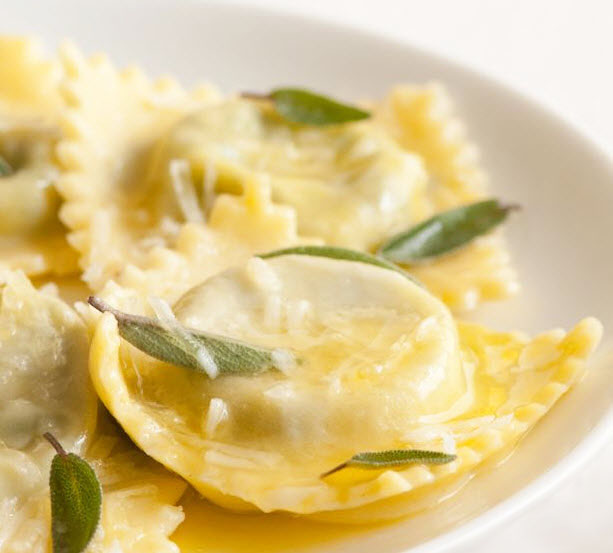
SPINACH AND RICOTTA RAVIOLI


Making ravioli at home using a pasta machine is time consuming but incredibly rewarding, especially when you choose a filling that you enjoy.   These ravioli make a gorgeous vegetarian dish or can be served with Deep fried pork loin sandwich with a spicy sauce.

RAVIOLI


For the filling:
1 tablespoon/15 ml olive oil
2 cloves garlic, finely chopped
225 g/8 oz Swiss chard, finely chopped
250 ml/1 cup ricotta (make your own)
3 tablespoons/45 ml pine nuts, toasted
4 tablespoons/60 ml Parmesan cheese, finely grated
extra Parmesan cheese for serving

For the ravioli:
See recipe for fresh pasta.

  • To make the filling, heat the oil in a saucepan over medium-high heat and add the garlic and the spinach and cook until the stalks of the chard is almost soft.  Remove from the heat and drain.
  • When cool enough squeeze as much of the liquid as possible out of the chard.
  • Add to a food processor with all the other ingredients and pulse until everything is reasonably fine but still with some texture.  Set aside until ready to use.
  • To make the ravioli, bring the pasta dough up to room temperature and then divide it in two.
  • Roll both the pieces of pasta out to the second narrowest setting. Dust the counter with flour and lay out the two long sheets of pasta next to each other.
  • Spoon about 1 tablespoon/15 ml of the filling 50 mm/2 in apart on the  one sheet and repeat until you reach the end of the pasta sheet.
  • Brush all round the fillings with water, then lay the other sheet of pasta on top of the filling portions.
  • You might have to stretch the pasta a little bit to meet the other edge.
  • Press down around the filling to press out any air and then, using the blunt end of a pastry cutter, just big enough to fit over the filling, to gently press down on the pasta to make sure that the filling is “locked” in.  Then, with a slightly bigger cutter, cut the ravioli.

    The ravioli can be cooked straight away or stored on a sheet pan dusted with fine semolina for up to two hours. You can also freeze them at this stage and then cook them from frozen when you are ready.

  • Bring a large pot of salted water to a boil over high heat.
  • Add the ravioli, and cook until for about 4 minutes or until they rise to the surface of the water.
  • Using a slotted spoon, transfer the ravioli to serving bowls.  Sprinkle liberally with Parmesan and serve immediately.
  • This ravioli can be served as a vegetarian dish or with Deep fried pork loin sandwich with a spicy sauce.
Categories
GLOSSARY / METHODS

WHY MAKE STOCK?


Chicken stock

Stocks have become the foundation of my cooking.  I use it not only to make soups, add it to stews or making fabulous sauces, but cauliflower cooked in chicken stock and butter, or potatoes simmered in duck stock with a bit of duck fat, even risotto made with fish stock, finely chopped parsley and Parmesan cheese, changes an ordinary side dish to something  sublime.  Making stock, however, is time-consuming with lots of fussing and do’s and don’ts, and unless you are committed to getting maximum flavor out of your food, you will find it a bore and unnecessary.  For me it certainly has become a labor of love and deeply satisfying and the more I do it, the easier it gets.  There are some basic rules, though, but you will not regret sticking these.

  • Use bones as they often have stray bits of meat on them. Roast the bones in a hot oven until crispy and brown before adding to the stock pot, except in the case of white chicken or seafood stock.
  • Start off with the vegetables according to your recipe and always sauté them before adding the roasted bones.  Only then add cold water.
  • Never let the stock boil. Bring it to a bare simmer only. Boiling will cloud your stock and can make it bitter.  The longer the stock cooks, the better the flavor.  But not for fish or seafood stock. Cooking time for this is not more than 20 minutes, otherwise it becomes bitter and nasty.
  • Do not add salt.  In doing so, means you’re committed to that salt later. Remember the idea of making stock is to concentrate flavours.  And the more you reduce the sauce you are making from the stock, the more the amount of salt concentrates and increases in saltines.  Salt does not evaporate with the water.
  • Skim the stock while it is simmering. During the simmering process fat and impurities will float to the surface and gather in a foamy scum. Use a large spoon and skim it off.  It is especially important in the beginning.  Have a container with warm water ready to rest your spoon in between skims.  This way the scum from the previous skimming won’t stick to it and is put into the stock.
  • When the stock is ready, turn off the heat and let it sit, not only to cool but to infuse a little longer.
  • Strain the stock with a fine-mesh strainer lined with cheesecloth. If you have rather large bones, lift them out with tongs first.
  • Stock will last for about 4 days in the refrigerator, but it works very well freezing it in small containers.

See recipes for Chicken stockBeef stockFish stock (see Poached salmon in seafood broth with fennel and tomato), Lamb stock (See Lamb neck casserole  with Moroccan flavors), Prawn stockPork stock,  Duck stock, Venison stock, etc.

neral


Categories
GLOSSARY / METHODS

VENISON STOCK


1.8 kg/4 lbs venison bones
4 tablespoons/¼ cup olive oil
1 medium onion, chopped
3 carrots, chopped
3 celery sticks, chopped
6 garlic cloves, crushed
1 tablespoon/15 ml crushed juniper berries
2 tablespoons/30 ml fresh rosemary
1 tablespoon/15 ml black pepper
4 chopped tomatoes
1 tablespoon/15 ml thyme
2 star anise pods
4 bay leaves

Preheat the oven to 200°C/400°F.
Place the bones on an oven tray and roast in the preheated oven until browned all over.  In a large stockpot, heat the oil and lightly fry the onion, carrots, celery and garlic.  Add the roasted bones and the rest of the ingredients and 4 liters/8.5 pts cold water, and bring to a gentle simmer, regularly skimming the brown foam that forms on the surface.  Simmer for 4 hours, then remove from the heat.  Cool to room temperature, then strain, do not press down on the solids as this will cause the stock to become  cloudy.  Cover and refrigerate until cold, then remove the fat from the surface.  Refrigerate for up to 2 days or frozen for up to 3 months. Discard the solids.

Categories
GLOSSARY / METHODS

DUCK STOCK


This quantity of stock is made with the bones, trimmings and gizzards (except the liver) of one duck.  If you are lucky enough to get lots of bones, just increase the rest of the ingredients.

bones, trimming and gizzards (excluding the liver) of one duck
50 ml olive oil
½ medium onion, roughly chopped
1 small carrot, roughly chopped
½ cup/125 ml celery, roughly chopped
1 garlic clove, crushed
½ cup/125 ml Shaoxing rice wine
1 teaspoon/5 ml ginger
1 star anise
1 tablespoon/15 ml Sichuan peppercorns, crushed

Heat the olive oil in a big enough saucepan for your stock and brown the bones, trimmings and gizzards, excluding the livers.  Add the onion, celery, carrots and garlic and lightly fry them.  Deglaze with the  Shaoxing rice wine and as soon as all the wine has evaporated, add cold water (about four times the volume of the solids), and bring to the boil.  Add the ginger, star anise and Sichuan peppercorns, then turn down the heat.  Simmer gently over low-medium heat, regularly skimming the brown foam that forms on the surface. After 5 hours, turn off the heat and cool to room temperature, then strain.  Do not press down on the solids as this will cause the stock to become cloudy.  Cover and refrigerate until cold, then remove the fat from the  surface.  Refrigerate for up to 2 days or freeze in smaller containers for up to 3 months.  Discard the solids.

Categories
GLOSSARY / METHODS

PORK STOCK


5 kg/11 lbs pork bones
2 pig’s trotters, cleaned thoroughly and split in half
50 ml olive oil
2 medium onions, roughly chopped
4 carrots, roughly chopped
1 celery stalk, roughly chopped
1 cup/250 ml white wine
1 garlic bulb, cut in half
a few sprigs of thyme
1 bay leave

Preheat the oven to 200°C/392°F.
Place the pork bones and the trotters on an oven tray and cook in a very hot oven until browned all over.  In a large stockpot, heat the oil and lightly fry the onions, carrots and celery then add the pork bones and trotters. Deglaze with the white wine and as soon as all the wine has evaporator, add the water, and bring to the boil.  Add the garlic, the thyme and bay leave and turn down the heat.  Simmer gently over low-medium heat for 5 hours, regularly skimming the brown foam that forms on the surface. After 5 hours, turn off the heat and cool to room temperature, then strain.  Do not press down on the solids as this will cause the stock to become cloudy.  Cover and refrigerate until cold, then remove the fat from the  surface.  Refrigerate for up to 2 days or frozen in smaller containers for up to 3 months.

Categories
GLOSSARY / METHODS

PRAWN STOCK


25 g/0.8 oz butter
1 clove garlic, crushed
reserved prawn shells of approximately 8 medium prawns
2 cups/500 ml fish stock
1 tablespoon/30 ml fresh parsley, roughly chopped
1 teaspoon/5 ml Noilly Prat
juice of ½ lemon

In a deep sauce pan over medium heat, melt the butter and fry the garlic for 10 seconds.  Add the prawn shells and fry until the shells turn pink, about 1 minute.  Add the fish stock and bring to the boil.  Add the parsley, Noilly Prat and lemon juice and bring to the boil again.  Boil for about 5 minutes, then remove from the heat.  Pour the stock through a colander lined with a muslin cloth. Leave to cool, then chill or freeze in smaller containers until needed.  Discard the solids.

Categories
GLOSSARY / METHODS

PORK STOCK


5 kg/11 lbs pork bones
2 pig’s trotters, cleaned thoroughly and split in half
50 ml olive oil
2 medium onions, roughly chopped
4 carrots, roughly chopped
1 celery stalk, roughly chopped
1 cup/250 ml white wine
1 garlic bulb, cut in half
a few sprigs of thyme
1 bay leave

Preheat the oven to 200°C/392°F.
Place the pork bones and the trotters on an oven tray and cook in a very hot oven until browned all over.  In a large stockpot, heat the oil and lightly fry the onions, carrots and celery then add the pork bones and trotters. Deglaze with the white wine and as soon as all the wine has evaporated, add the water, and bring to the boil.  Add the garlic, the thyme and bay leave and turn down the heat.  Simmer gently over low-medium heat for 5 hours, regularly skimming the brown foam that forms on the surface. After 5 hours, turn off the heat and cool to room temperature, then strain.  Do not press down on the solids as this will cause the stock to become cloudy.  Cover and refrigerate until cold, then remove the fat from the  surface.  Refrigerate for up to 2 days or freeze in smaller containers for up to 3 months.  Discard the solids.