Categories
MAIN COURSE

Thai vegetable curry


This is an ideal vegetarian dish to serve at any occasion.  For variation you can add some peeled prawns or chicken pieces, but try it first with only vegetables.  The curry can be quite strong but you can control it by simply put half the amount for the recipe and add gradually until you are satisfied.  Remember, though, that the longer it cooks the stronger it will become.  So it will be wise to go slowly.  You can also use different vegetables such as red pepper, celery, butternut or peas.  It’s your call.
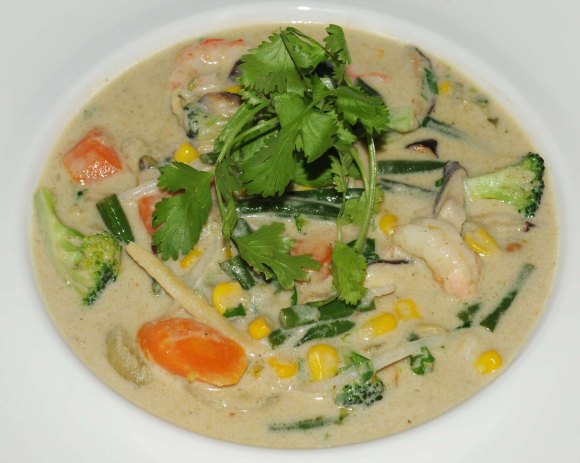
THAI VEGETABLE CURRY

Serves 4

For the soup:
1 tablespoon/15 ml vegetable oil
1 medium onion, finely chopped
1-2 tablespoons/15-30 ml green curry paste (shop bought or make your own — see recipe at the bottom of the page)
1½ cups/375 ml coconut milk
1 cup/250 ml vegetable stock (or water)
1 cup/250 ml green beans, cut in short lengths
2 medium carrots, peeled and cut in pieces
1 cup/250 ml broccoli florets
4 kaffir limes (dry is good)
½ cup/125 ml corn, frozen and defrosted
2 tablespoons/30 ml fish sauce
2 tablespoon/30 ml lime juice
2 teaspoons/10 ml finely grated lime rind
1-2 teaspoons/5-10 ml sugar (optional)
fresh coriander, picked
spring onions, cut in lengths

  • Heat the oil in a large wok or saucepan and add the onions and curry paste.
  • Cook for 3 minutes over medium heat, whilst stirring.
  • Add the coconut and stock (or water) and bring to the boil.  Stir then reduce the heat and cook uncovered for 5 minutes.
  • Add the beans, carrots and broccoli, kaffir limes and corn to the pan and cook uncovered for 5 minutes. 
  • Add the corn, fish sauce, lime juice and rind, and sugar, if using, after tasting.
    Ladle the soup into deep bowls and sprinkle over some coriander and spring onions.

This can also be served with rice, if desired.


Make your own Green curry paste:
1 tablespoon/15 ml coriander seeds
2 teaspoon/10 ml cumin seeds
1 teaspoon/5 ml black peppercorns
2 teaspoons/10 ml dried shrimp paste
8 large fresh green chilies, roughly chopped
1 cup/250 ml shallots, chopped
1 tablespoon/15 ml ginger, chopped
12 small cloves garlic, chopped
1 cup/250 ml fresh coriander leaves, chopped
6 kaffir lime leaves, chopped
3 stems lemon grass (white part only), finely chopped
2 teaspoons/10 ml grated lime rind
2 teaspoons/10 ml salt
2 tablespoons/30 ml vegetables oil
Makes approximately 1 cup.
  • Place the coriander and cumin seeds in a dry frying pan and heat for 2-3 minutes, shaking the pan constantly.
  • Pour the roasted spices and peppercorns in a mortar and pestle or spice grinder and grind until fine.
  • Grill the shrimp paste for 2-3 minutes, then add to the spices.  Add all to a processor.
  • Add the remaining ingredients and process fo 20 seconds until the mixture forms a smooth paste — periodically scrape down the sides of the bowl.
Categories
MAIN COURSE

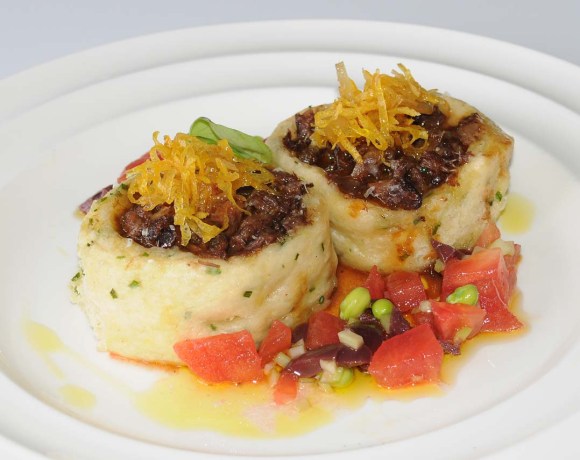
Oxtail wrapped in a herb dumpling


Serve with rice and fried glazed ginger and lemon confit with glazed baby beetroot and horseradish cream.


This can be made with leftover oxtail.

The meat should be very tender and come off the bone quite easily after the cooking process. If you prefer, leave the meat on the bone and serve the dumplings, steamed in a bamboo steamer, separately.
OXTAILServes 4 with possible leftovers
If you have the time (and inclination), prepare a separate stock to strengthen the flavor of your dish.  It is optional but worth it.  Start making this sauce before starting to cook the oxtail.

Additional flavor: (Optional)
1 tablespoon olive oil
any trimmings from the oxtail
1 medium onion, diced
1 garlic clove, finely chopped
2 cups beef stock, heated
2 cups of water

reserved tomato peels and seeds plus 1 extra tomato finely diced
3 juniper berries
1 teaspoon fennel seeds
2 thyme sprigs
1 teaspoon apple cider vinegar
season to taste
In a saucepan, add all the above ingredients and bring to a boil, skimming the surface all the time to remove all the impurities.  Cook for 30 minutes and let sit for another 30 minutes whilst preparing for the cooking of the oxtail.

The oxtail:
1 oxtail, trimmed and wiped dry, reserve the trimmings
2 tablespoons vegetable oil
½ bottle of red wine
1 large onion, chopped finely
3 cloves of garlic, chopped finely
1 cinnamon stick, whole
2 bay leaves
4 whole cloves
2 cups beef stock, heated (or the stock you prepared earlier, if you did)
salt and freshly ground pepper

1 large tomato, peeled, seeded and finely diced
1 onion, finely chopped

The lemon confit:
6 lemons, zest and juice
150 g (5.2 oz) castor sugar

The garnish: (optional)
glazed ginger, sliced and lightly fried in butter

The beetroot:
8 baby beetroot
1 tablespoon olive oil
1 sprig of thyme
1 clove garlic, roughly chopped
salt and freshly ground black pepper
1 small onion, thinly sliced
¼ cup apple cider vinegar
1 tablespoon honey, or to taste
1 teaspoon port

The horseradish cream:
¼ cup fresh horseradish, grated
1 tablespoon mustard
½ teaspoon lemon juice
½ castor sugar or to taste
1 tablespoon dill
salt and pepper
1 cup cream, whipped

The oxtail:

  • Heat the oil in a cast iron pan and add the oxtail pieces. Fry over moderate heat until brown all over, then add the red wine and bring to a boil until nearly dry, stirring regularly.
  • Add the onions, garlic, cinnamon, bay leaves, cloves, hot stock (or the above prepared sauce, strained), and salt and pepper, and cover tightly with the pan lid. Turn down the heat to a moderate simmer.

If you prefer to cook the oxtail in the oven, now is the time to put it in an oven preheated to 180°C/356°F.

  • Cook for at least two hours, checking at regular intervals that it does not cook dry. Top up with 1 cup boiling water and repeat every time it seems to be cooking dry.
  • When the meat separates easily from the bones, remove from the heat.  Spoon the meat in a separate container and leave the sauce, which should have formed a thick sludge by now, behind and keep warm.
  • Check the seasoning of the sauce, discard the cinnamon stick and bay leaves (and cloves if you can find them!), then reduce the sauce to a syrupy consistency and remove from the heat. Set aside in a warm place.

If you plan to serve the oxtail on the bone with the steamed dumplings, your oxtail is ready to be served now.

  • If you want to serve it with the dumplings wrapped around the meat, remove the bones from the meat and discard.
  • Roughly chop the meat, and mix in the tomato and onion. Shape the mixture into a sausage about 6 cm/2.5 in in diameter, and roll it in plastic film.
  • Twist the ends to seal well, then refrigerate to set.

For the dumplings:

  • Into a food processor bowl, sift the flour and baking powder, add oil and enough milk to bind the mixture and pulse until it just comes together as a dough.
  • Add the cheese and chives and pulse again to just combine.
  • Transfer the mixture to a lightly floured surface and knead very lightly. Roll out the pastry to a rectangle measuring 18 x 48 cm/7 x 19 x in.
  • Carefully remove the plastic film from the oxtail sausage and place the meat in the center of the dumpling dough. Roll the dough over the meat and seal the edges. Trim the two ends of the sausage then cut it into 8 even slices.
  • Prepare the steamer and line each steam basket with some cabbage leaves rubbed with oil. Place the oxtail dumplings flat on the cabbage leaves (this is to prevent the oxtail from sticking to the basket) so that the meat is visible and steam for 15 minutes.
  • Halfway through the steaming process change the steamer baskets around so that they both get equal steam.
  • Carefully remove each dumpling and put on a warm plate. Discard the cabbage leaves.

For the lemon confit:

  • Peel the lemons, leaving the pith behind, and slice the zest as fine as possible. Place the zest in a saucepan and just cover it with water. Bring to the boil but drain as soon as it starts boiling.
  • Repeat the whole process twice, starting off with fresh cold water every time.
  • After the final draining, place the zest back in the saucepan and cover with the lemon juice and the sugar and, if necessary, add a little water. Cook over very low heat (barely simmering) until the zest is tender and the juice becomes syrupy.

The beetroot:

  • On a large piece of foil, place the beetroot in the centre and drizzle with the olive oil, then add thyme and garlic. Season with salt and pepper.
  • Enclose the foil and seal, then place on a baking tray. Bake for about 1 hour until very tender.
  • Remove from the oven and, unwrap the foil and tip the beetroot into a bowl. Cover the bowl with some plastic film and leave for 20 minutes to allow the skins to loosen and the beetroot to cool.
  • Remove the plastic film and discard the thyme and garlic.
  • Rub off the skins of the beetroot and cut in half. Put all the beetroot in a bowl and add the onion.
  • In a saucepan, bring to a boil the vinegar, honey, port and 1 tablespoon cold water. Reduce until it starts to thicken to a rich glaze. Add the cooked beetroot and stir to cover with the glaze, remove from the heat and leave to cool.

For the horseradish:

  • In a food processor blend the horseradish, lemon juice, sugar and dill.
  • In a separate bowl, whisk the cream until stiff then fold into the horseradish mixture.
  • Season to taste, then strain through a sieve (optional) and refrigerate for 4 – 8 hours.

To serve:
Pour the sauce in the center of the plate and place two of the oxtail dumplings on top. Spoon the lemon confit and ginger on top of the oxtail and serve on rice with glazed baby beetroot and horseradish cream.

Categories
MAIN COURSE

Spicy skewered chicken with pineapple, pepper and onions


Served with the spicy sauce, Basmati rice and a sweet and sour Asian salad

Serves 4

SPICY CHICKEN SKEWERS WITH ASIAN SALAD

The marinade:
¼ cup brown sugar

½ cup rice vinegar
½ cup sambal oelek, store bought or make your own
¼ cup fish sauce, available at Asian supermarkets
2 teaspoons fresh ginger, minced


A hot sauce in one of its purest forms, Indonesian sambal oelek is merely freshly ground hot red chiles with some salt and vinegar for flavor and preservation.


The kebabs:

680 g/1½ lbs chicken thighs, deboned and cut into roughly 25 mm x 25 mm/1 inch x 1 inch pieces
8 wooden skewers, soaked in water for more than 1 hour
½ large ripe pineapple, peeled and cut into roughly 25 mm x 25 mm/1 inch x 1 inch pieces
½ large red sweet pepper, cored and cut into roughly 25 mm x 25 mm/1 inch x 1 inch pieces
½ large red onion, quartered and each quarter halved, breaking up the layers

The salad:
1 cup cucumber, seeded and diced
1 cup bean sprouts
¾ cup frozen corn kernels, defrosted
1 cup half-ripe mango, cut into thin strips


If mangos are not in season, use papaya, pineapple, sweet melon, etc.


½ cup spring onions, diced

1 cup fresh coriander leaves
½ cup peanuts, roughly chopped
Asian sweet and sour sauce to drizzle (see recipe below)

The rice:
2 cups/500 ml Basmati rice
salt
1 tablespoon/15 ml butter (optional)

For the marinade, whisk the brown sugar, vinegar, sambal oelek, fish sauce and ginger in a large bowl until the sugar has dissolved. Add the chicken and mix thoroughly making sure that every piece is coated. Refrigerate until ready to cook.

For the chicken skewers. alternate chicken, pineapple, chicken,  pepper, chicken and a segment of onion, and repeat until the skewer is full. Pour the balance of the marinade into a saucepan together with ½ cup/125 ml water and bring to the boil. Reduce until thickened slightly and pour out a third for basting. Put the rest aside for dipping later.

Preheat the oven to 80ºC/176°F and place a heatproof plate, big enough to hold all the skewers, to warm up.

When the barbeque reaches (150ºC/302°F ), salt the kebabs and place them on the rack. Cook for about 15 minutes, turning and basting at regular intervals. When cooked, transfer to the warmed plate and leave to rest for about 10 minutes in the heated oven. Discard the rest of the sauce that was used for basting (it could be contaminated with raw chicken) and reheat the rest of the reserved sauce.

Just before cooking, prepare the salad by mixing all the ingredients except the sweet and sour sauce. Cover and refrigerate until ready to use.

To serve
Serve the skewers on a bed of rice with the sauce in a separate container. Lightly toss the sweet and sour sauce through the salad and serve with the kebabs.

A rich, dark honey color, this tart-sweet-savory sauce does not resemble the cloying, sticky, bright red sauce that’s often served at Chinese restaurants. You can whip it up quickly to enjoy with snacks such as fried wontons. For spicy tropical flair, use unsweetened pineapple juice instead of water and include 2 teaspoons of minced ginger and a chopped Thai chile with the other seasoning at the beginning.

Asian sweet and sour sauce:
¼ cup sugar or lightly packed light brown sugar
¼ teaspoon salt
1 tablespoon ketchup
1 tablespoon light soy sauce
3 tablespoons rice vinegar
½ cup water
2 teaspoons cornstarch dissolved in 2 tablespoons water

  • Combine the sugar, salt, ketchup, soy sauce, vinegar, and water in a small saucepan.
  • Bring to a near boil over medium heat, stirring occasionally to dissolve the sugar.
  • Give the cornstarch a stir and then add it to the pan. Continue cooking, stirring, for about 15 seconds, or until the sauce comes to full boil and thickens.
  • Remove from the heat, transfer to a serving bowl, and set aside for 10 minutes to cool and concentrate in flavor.
  • Taste and add extra salt, if needed. Serve warm or at room temperature.
  • This sauce can be prepared a day in advance.
Categories
STARTERS/SIDES

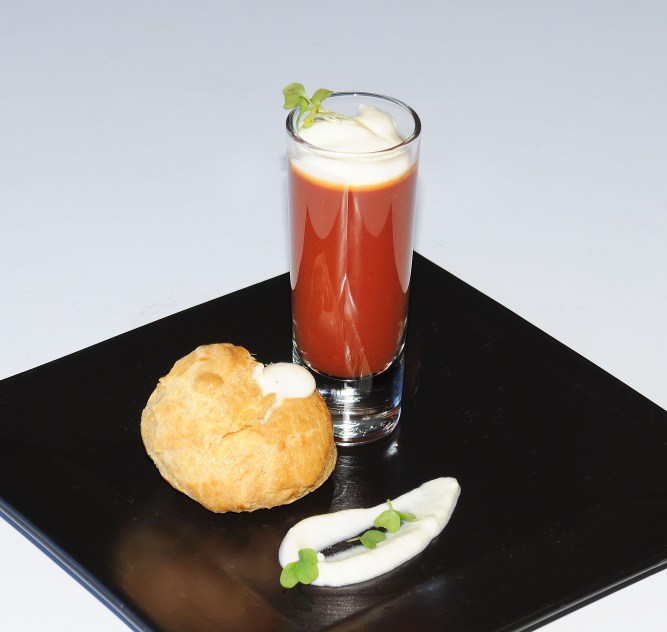
Bloody Mary jellies


Served with savory puffs filled and goat’s cheese cream

This truly delectable and very sophisticated jelly makes a perfect starter. Those who prefer not to use alcohol, use more tomato juice. The savory puffs can be omitted and instead serve with some cheese crackers.

BLOODY MARY JELLYServes 4

The jelly:
1½/ cups/350 ml tomato juice
⅓ cup/80 ml vodka
1 tablespoon/15 ml Worcestershire sauce (for vegetarians use soy sauce)
1 tablespoon/15 ml lemon juice
a few drops Tabasco, or according to taste
½ tablespoon/3 ml horseradish, freshly grated
celery salt to taste
4 teaspoons/20 ml gelatine powder
½ cup/125 ml water

The savory puffs:
½ cup/125 ml milk
115 g/4 oz unsalted butter, cut into tablespoons
large pinch of salt
1 cup/250 ml flour, sifted
4 large eggs
1 cup/250 ml Gruyère cheese, finely grated
freshly ground pepper
freshly grated nutmeg


Use any leftover savory puffs to fill with cream cheese and chives, leftover fish mixed with some mayonnaise, etc..

The filling:
½ cup/125 ml goat’s cheese, crumbled
2 tablespoons/30 ml light cream cheese
2 teaspoons/10 ml olive oil
1 tablespoon/15 ml of water
1 tablespoon/15 ml fresh lemon juice
1 fresh garlic clove, crushed
salt and freshly ground pepper to taste

The garnish:
a few celery leaves
a few sprigs of cress

For the jelly:

  • Mix all of the ingredients together, except the gelatine. Leave to infuse for about 30 minutes, then strain.
  • Heat about ½ cup/125 ml of the liquid and stir in the gelatin powder until dissolved.
  • Add to the rest of the liquid, pour into shot glasses, big enough for one serving each, and place in the refrigerator for at least three hours to set.

For the savory puffs:

  • Preheat the oven to 200°C/400°F and line 2 baking sheets with parchment paper. 
  • In a medium saucepan, bring the water, milk, butter and salt to a boil.
  • Add the flour and stir it with a wooden spoon until a smooth dough forms.
  • Lower the heat and stir until the dough pulls away from the sides, about 2 minutes.
  • Scrape the dough into a bowl and let it cool for 1 minute. Lightly beat the eggs and add to the dough, a little bit at a time, mixing well before adding more egg.
  • Add the cheese, the pepper and the nutmeg.
  • Transfer the dough to a pastry bag fitted with a 1.3 cm/0.5 in round tip and pipe tablespoon-size mounds onto the baking sheets, 5 cm/2 in apart.
  • Sprinkle with cheese and bake for 22 minutes, or until puffed and golden brown.
  • Poke a hole in the base of each puff to let out the steam. Leave to cool until ready to serve

For the savory puff filling:

  • Blend together all the ingredients until creamy, adding an extra tablespoon/15 ml water if necessary.
  • When ready to serve, place a shot glass on each plate and top it with some of the savory puff filling.
  • Pipe the filling into each savory puff and place one on each serving plate with the Bloody Mary jelly.
  • Garnish with a few celery leaves and cress and serve immediately.
Categories
METHODS SALADS/VINAIGRETTES

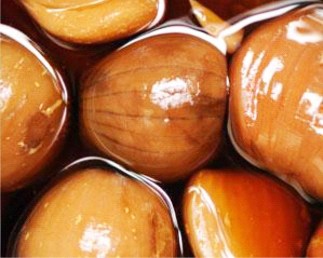
Pickled pearl onions


PICKLED PEARL ONIONS


16 white pearl onions, root ends trimmed and scored with an X
½ cup/125 ml water
½ cup/125 ml red wine vinegar
½ cup/125 ml sugar
4 teaspoons/20 ml mustard seeds
½ teaspoon/3 ml coriander seeds
½ teaspoon/3 ml black peppercorns

Bring a medium saucepan of boiling salted water to a boil, add the pearl onions and cook until just tender, about 8 minutes. Drain, rinse in ice water and drain again. Transfer the onions to a glass bowl.

Meanwhile, in another medium saucepan, add the rest of the ingredients and bring to a boil and boil until the sugar is dissolved, about 2 minutes. Pour the liquid over the onions and refrigerate for at least 1 hour and up to 2 days. Drain before serving.


Categories
MAIN COURSE

Salmon and prawns poached in a seafood broth


The stock:
1/3 cup/80 ml olive oil
2 tablespoons/30 ml lightly smoked bacon, finely chopped
1 onion, roughly chopped
1 leek, roughly chopped
2 celery stalks, thinly sliced
2 tablespoons/30 ml fresh fennel, finely sliced or 1 tablespoon/15 ml fennel seeds
6 cloves garlic, chopped
¼ cup/60 ml white wine
1 tablespoon/15 ml orange zest
8 ripe tomatoes, chopped
1 tablespoon/15 ml tomato paste
1 medium-hot red chili, seeded and chopped


If you want the broth spicier, add powdered chilli right at the end.


1 teaspoon/5 ml saffron strands, soaked in cold water
1 sprig of thyme
4 cups/1 liter fish stock, heated
15 g/½ oz butter

2 tablespoons/30 ml olive oil
2 cloves garlic, finely chopped
reserved shells of prawns
1 teaspoon/5 ml Pernod
salt and freshly ground black pepper

The seafood:
4 tablespoons/60 ml olive oil
4 x 250 g/4 x 8.8 oz firm white fish fillets, on the bone, skin removed
8 large prawns, shelled and de-veined, reserve shells for stock
3 ripe tomatoes, skinned, seeded and diced
1 tablespoon/15 ml cornstarch, dissolved in 2 tablespoons/15 ml cold water (optional)

The aïoli (garlic mayonnaise):
4 egg yolks (See the Glossary on the use of excess egg whites.)
½ teaspoon/3 ml salt
3 cloves garlic (more if you wish)
2 teaspoons/10 ml lemon juice
2 cup/500 ml groundnut oil

The garnish:
2 tablespoons/30 ml fresh coriander, finely chopped
2 tablespoons/30 ml dill, finely chopped
crusty white bread, thinly sliced and lightly toasted

  • In a large saucepan, heat the oil and sauté the onions, bacon, leeks, celery, fresh fennel or fennel seeds and garlic until soft. Add the wine and boil until all the alcohol has evaporated, then add the orange zest, tomatoes, tomato paste, chili, saffron and soaking liquid, thyme and fish stock and bring to the boil. Boil for 15 minutes, then remove from the heat and set aside.
  • In a separate frying pan, heat the butter and olive oil and sauté the garlic, shells of the prawns until golden and aromatic. Deglaze the pan with the Pernod, then add the contents of the pan to the prepared stock and set aside until ready to poach the fish and prawns.
  • Strain the prepared stock thoroughly into a saucepan big enough for the fish, prawns and broth, and and discard the solids. Bring to a gentle simmer, then add the diced tomatoes and, if desired, thicken slightly with the cornstarch.

Use the cornstarch slush only if you find the stock too watery. But only add a little at a time to make sure that the stock does not end up too thick.


  • Let it simmer for a few minutes longer until slightly thickened, then add the fish to the simmering broth.
  • Poach for about 4 minutes, then carefully turn the fish over, add the prawns and poach 2 minutes more or until you are satisfied that the prawns are cooked. The fish should be opaque and cooked through but flake easily. Check the seasoning, then turn off the heat and prepare to serve.
  • For the aïoli, blend together the egg yolks, salt, garlic and lemon juice in a food processor. Add the oil in a thin steady stream while the machine keeps running. Continue until all the oil is incorporated. Check the seasoning.

This recipe contains raw eggs and is not suitable for pregnant women, the elderly or very young children. If you feel uneasy using raw egg yolks, see the recipe for Mayonnaise made with cooked egg.


To serve:
Lift the fish from the broth and place into deep pre-heated bowls. Carefully pour the broth around the fish, add two prawns to each dish, and sprinkle the fresh coriander and dill over. Serve the crusty bread and small bowls filled with the aïoli on the side.

Categories
STARTERS/SIDES

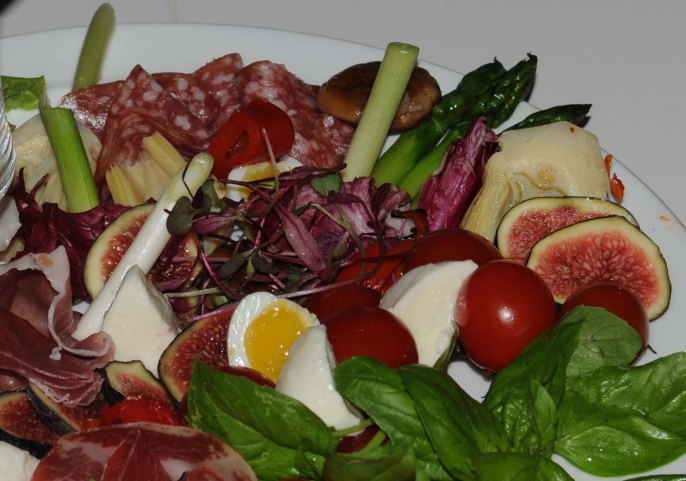
ANTIPASTO PLATTERS


ANTIPASTA1


In English, it is called the appetizer course, the French call it the hors d’oeuvre and in Italy, it’s called the antipasto — an exciting way to announce the start of a glorious feast. In true Italian tradition, antipasti are selected for color, flavor, texture and how well the different components work together.  When you start preparing the dish, it truly is a blank canvas and with the help of a few marinated and pickled vegetables, fresh seasonal fruit and vegetables, cured meats, olives, cheese, nuts, and bread of your choice, all beautifully arranged … how can you not create a masterpiece?


Omit the meat, add a few more nuts, and you have a perfect vegetarian starter.

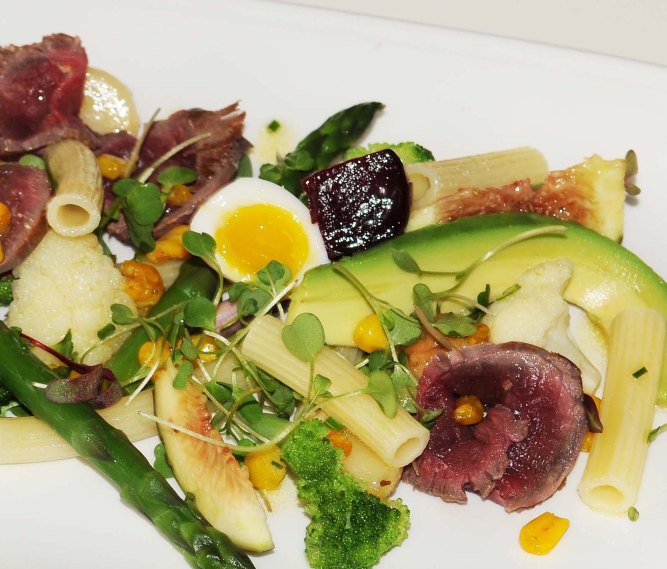
SEARED VENISON ANTIPASTO PLATTER 2

Here are the choices:
breadsticks or focaccia cut into bite size pieces
basil pesto
black olive tapenade 
stuffed green olives
Kalamata olives
Provolone cheese
Camembert cheese
Fontina
Parmesan crisps
Feta
fresh figs
melon
bunches of grapes
cherry tomatoes
spring onions
marinated mushrooms
pickled pearl onions
marinated artichoke hearts (from your supermarket or deli)
sun-dried tomatoes
roasted red peppers
roasted aubergine
Spanakopita
quail eggs


How to boil a quail egg to medium soft: Have ready a bowl of iced water. In a small saucepan, bring some water to a boil, enough to cover the quail’s eggs. (If one of the eggs just happens to be cracked, rub the cracked area with lemon juice or vinegar and lower the egg very gently into the water.) Boil the eggs for 1 minute, remove the pan from the heat and leave in the hot water for 30 seconds. Transfer the eggs to the reserved iced water and leave for 1 minute, then remove and peel.

thinly sliced salami
Prosciutto
anchovy fillets (drained)
nuts (try the Rosemary spiced mixed nuts)

Some basic rules:

  • With any antipasto platter, the quantity of each food item on the platter is a personal choice and is dependent on the number of guests.
  • Use your best judgment to create a balanced and interesting platter.
  • One large tray makes a nice visual impact, but one or more smaller plates will also work.
  • Prepare all the different elements of your platter and refrigerate separate in sealed containers. Assemble the plate just before serving.  Everything will look fresh and crispy.
  • Roll or fold sliced meats for a nice presentation.
  • Cut or shave pieces of cheese.
  • Keep sea salt and a pepper grinder handy for seasoning.
  • Have extra-virgin olive oil and aged balsamic vinegar, or a special vinaigrette ready for drizzling.
  • Consider using small bowls placed on the tray for marinated condiments, nuts or olives.
  • Place bread away from moist veggies and pickles.

Use your imagination and flair to create a beautiful platter of delicious nibbles.

Categories
GLOSSARY / METHODS

SUMAC


Sumac, from the berries of the sumac bush (vaguely related to Poison Ivy although not poisonous) are dried and in some instances you can buy the berries whole or already ground.  It is dark brick red in color and adds a delightful color and zing to food without overpowering it — subtle and refreshing.  Add it to scramble eggs, a vinaigrette, garlic mayonnaise, tomato salad, etc.  Try it with chicken, fish, butternut soup ….  the possibilities are endless.  Use your imagination.

Categories
GLOSSARY / METHODS

BOTARGA


Botarga is sun-dried salted Mullet roe, powdered. In Spain it is called Botarga, in Greece Avgotaraho, in France Boutargue and in Italy it is Bottarga. Whatever language you may use, you are sure of an exotic taste and a wonderful gourmet addition to pasta, fish and salads.

Categories
GLOSSARY / METHODS

ZA’ATAR


The Za’atar plant, originally called “hyssop”, is a herbaceous perennial native to the Middle East.  Strongly aromatic, pungent and delicious.  But since the Israeli authorities have declared the herb and endangered species and banned picking in the wild, those who were used to using this herb freely has come to terms with making their own blend of a few herbs and spices to imitate the same flavor.  I don’t know the real flavor of the authentic mix but I am so delighted to have found a recipe that is so satisfactory — sharp, warm and slightly pungent.  Sprinkle it over pita bread with olive oil, or stir into Goat’s cheese mousse (to spread over freshly baked bread). Use this mixture as a dry rub for fish or chicken or add to marinades for roasted vegetables.  Mix it into a party dip with fresh garlic, feta cheese and olive oil…

1 tablespoon/15 ml roasted sesame seeds
1 tablespoon/15 ml cumin
¼ cup/60 ml sumac
2 tablespoons/30 ml dried thyme
2 tablespoons/30 ml dried marjoram
2 tablespoons/30 ml dried oregano
1 teaspoon/5 ml coarse salt


If you grow your own herbs, try and dry them by picking them at their prime, stick them in brown paper bags to protect them from any dust and hang it up somewhere drafty and dry.

Lightly toast your cumin and sesame seeds in a heavy based frying pan. Tip all of the ingredients into a spice blender and work into a fine powder.  Store in an airtight container in a cool place away from strong light.