Categories
SOUPS/SAUCES/CONDIMENTS

Ravioli filled with creamy chicken mousse


Serve with a drizzle of roast almond dressing and micro herbs scattered over the top


This is a very romantic dish, fit for part of dinner to impress a seriously love one.
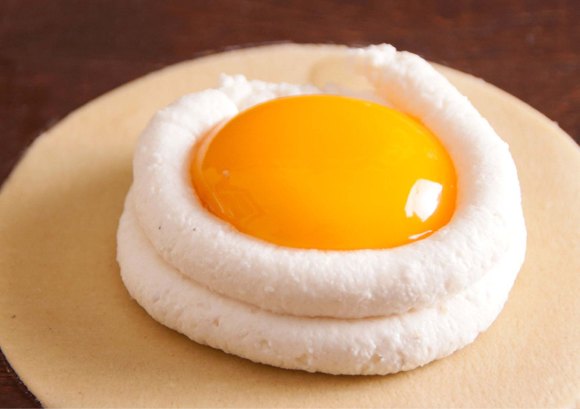
 

RAVIOLO WITH CHICKEN MOUSE AND YOLK

For the filling:
100 g/3.5 oz chicken mousse (recipe follows)
1 clove garlic, minced
50 g/1.7 oz ricotta (make your own)
125 ml/½ cup soft goats cheese
¼ cup/60 ml Parmesan cheese, finely grated
1 tablespoon/15 ml pine nuts, toasted and roughly chopped
4 fresh quail egg yolks extra Parmesan cheese for serving
4 leaves basil micro herbs

The ravioli:
See recipe for fresh pasta
1 egg plus
1 tablespoon/15 ml of water to prepare the egg wash

The dressing:
25 g/1 oz toasted almonds, ground
¼ cup/60 ml olive oil
1 tablespoon/15 ml lemon juice
2 teaspoons/10 ml grainy mustard pinch of sugar

The filling:
Prepare the chicken mousse (recipe follows) and keep refrigerated until ready to use. Mix the garlic, ricotta, goats cheese and Parmesan cheese and add to the chicken mousse. Stir through the pine nuts and put the whole mixture in a piping bag. Keep refrigerated until ready to use.

The almond dressing:
Mix all the ingredients together and season with salt and freshly ground black pepper to taste.

The ravioli:

  • Roll out the pasta dough to the thinnest setting of your pasta machine. Cut 8 circles of 150 ml/6 in diameter, cover 4 of the circles with plastic wrap and set aside.
  • For the other four circles, pipe on each one the chicken mousse mixture about 12 ml/½ in from the edge creating a hollow centre.
  • Slip an egg yolk into each center, then brush the rim with the egg wash. Place a second disc from the ones kept aside, over the filling and carefully press the edges together, working all round making sure to exclude any air before the final seal. (You might have to stretch the dough ever so slightly).

Make sure that you handle each ravioli with the greatest care to preserve your delicate egg yolk.

  • Bring a large pot of salted water to a boil over high heat and add 2 tablespoons/30 ml salt.
  • Lower the heat to a simmer and then, using a wide flat spatula, lower each raviolo into the water — depending on the size of your saucepan, cook all four at the same time.
  • Cook them for about 2 minutes then gently remove from the water, let them drain properly and place on a lightly oiled surface.

To serve: Place a raviolo in the center of each plate, drizzle the almond dressing over and scatter some micro herbs over and serve immediately.

The chicken mousse:
225 g/8 oz chicken breast, cut into small pieces
1 teaspoon/5 ml salt
1 egg white
¾ cup/200 ml thickened cream

  • Start the chicken mousse, making sure that all the ingredients using are very cold.
  • Pulse the chicken and salt in a food processor until finely chopped.
  • Add the egg white and process more until well combined.
  • Keep the motor running and slowly pour in cream and process until smooth.
  • Transfer the mixture to a bowl and refrigerate until ready to use.
Categories
MAIN COURSE

MIXED SEAFOOD PASTA


This dish is a bit daunting if you are entertaining, because it has to be done the last minute. But if you are well organized and have done all the preparations, it should be fine. The seafood preparation can be done the previous day as well as all the measuring of the ingredients, and kept covered and refrigerated.

SEAFOOD PASTA SAUCE

The fish and seafood:
25 g/0.9 oz butter
2 tablespoons/30 ml olive oil
120 g/4 oz firm white fish, skinned
120 g/4 oz prawns,
120 g/4 oz squid with tentacles
2 tablespoons/30 ml extra-virgin olive oil
½ onion, thinly sliced into rings
3 garlic cloves, thinly sliced
1 teaspoon/5 ml dried red chile flakes
4 anchovy fillets in oil, drained, rinsed and dried
1 kg/2 lbs black mussels, scrubbed and de-bearded
1 cup/250 ml dry white wine
2 tablespoons/30 ml salted capers, rinsed and drained
1 bunch Italian parsley leaves, finely chopped
salt and freshly ground black pepper

The seafood sauce:
25 g butter
2 garlic cloves
reserved prawn shells
trimmings of squid and fish
1 cup/250 ml white wine
4 cups/1 ℓ fish stock, heated
1 tablespoon/15 ml tomato paste
1 teaspoon/5 ml Pernod
1 tablespoon/15 ml agar-agar, mixed with 4 tablespoons/60 ml cold water
1 cup/250 ml double cream
2 tablespoons/30 ml tarragon leaves

For the fish, prawns and squid, cut the fish into 3 x 3 cm/1 x 1 in pieces, and peel and devein the prawns (reserving the shells for later use). Remove the tentacles from the squid body (remove the beak from the tentacles, reserving all the trimmings), and cut the squid into rings about 1 cm/0.4 in wide. In a big frying pan, heat the olive oil and butter and sauté the fish, prawns, squid and tentacles in batches, seasoning adequately as you go along, being careful at the same time not to overcook. Set aside and keep warm. Keep the saucepan with pan juices to make the sauce later.

Meanwhile, in a large saucepan, heat the olive oil and lightly saute the red onion, garlic and chile flakes. Saute until fragrant, then add the anchovies and cook until the anchovies have disintegrated. Add the mussels and white wine, and cover quickly, so the steam cooks the mussels. Shake the pot after 1 minute, and again after 2 more minutes. Check the mussels, if they are open and plump, they are cooked. Check the seasoning, then stir in the parsley. Set aside and keep warm.

For the seafood sauce: use the saucepan the seafood was cooked in and heat to medium. Add the butter add the garlic. Saute for a few seconds then add the prawn shells and all the other trimmings. Cook for about 3 minutes then add the wine. Reduce until about a third is left then add the heated fish stock. Bring to the boil and add the tomato paste and Pernod. Cook until the liquid has reduced by about one third then check the seasoning. Stir in the dissolved agar-agar little by little until you reach the desired consistency which should be like pouring cream. Strain the sauce and keep warm. Just before serving, roughly chop the tarragon then mix into the seafood sauce.

To serve:
On a large warmed serving plate, arrange the fish, prawns, squid and mussels and pour the mussel juice over. Serve the Seafood sauce separately.

Categories
SOUPS/SAUCES/CONDIMENTS

STARTERS/LIGHT LUNCHES


PASTA SPIRAL


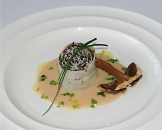
Pasta spiral with a mushroom filling, a light cheese sauce and truffle vinaigrette


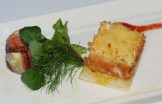
DEEPFRIED BRIEDeep-fried brie on toast with figs, crispy glass noodles and a port vinaigrette


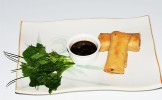
PORK SPRING ROLLSPork spring rolls with Oriental dipping sauce


MUSHROOM SOUP

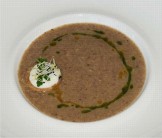
Mixed  mushroom soup with cream, chives and truffle oil vinaigrette


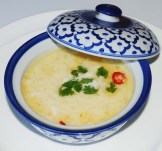
THAI  SPICED CHICKEN SOUP

Thai spiced chicken and coconut soup


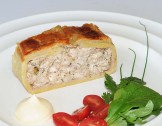
CHICKEN PATEChicken pate in pastry with tomato salad and a creamy salad dressing


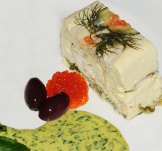
TERRINE OF FISH AND CUCUMBER

Terrine of fish and cucumber with watercress mayonnaise


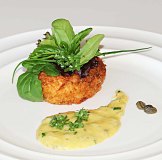
SEAFOOD CAKES

Seafood cakes with a caper sauce and mixed herbs


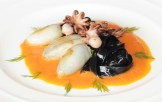
STUFFED SQUID

Prawn and mushroom stuffed squid with squid ink pasta and a spicy tomato sauce


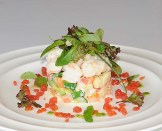
PRAWN AND VEGETABLE COCKTAIL

Prawn and vegetable cocktail with a creamy saffron and dill dressing


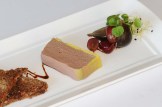
CHICKEN LIVER PAFEChicken liver parfait with figs, grapes and herb salad and whole-wheat bread


Spicy salmon mousse in filo pastry cups

Spicy salmon mousse in filo pastry cups served with balsamic vinegar dressing


SMOKED TROUT MOUSSE Smoked trout mousse with micro salad leaves and tomato and tarragon


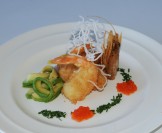
SEAFOOD TEMPURA

Fish and prawn tempura with an Oriental dipping sauce


Categories
SOUPS/SAUCES/CONDIMENTS

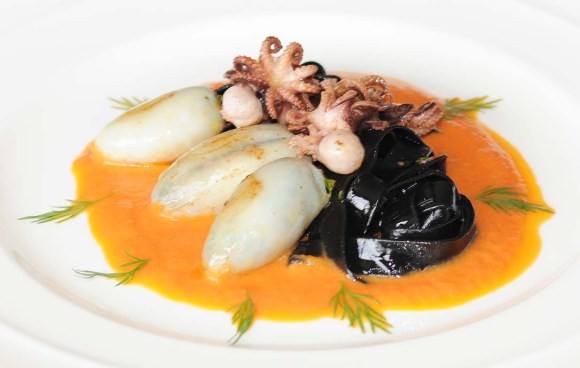
PRAWN AND MUSHROOM STUFFED SQUID WITH SQUID INK PASTA AND A SPICY TOMATO SAUCE


There are a wide variety of stuffing recipes for squid.  See the Glossary for a recipe for ground Thai pork stuffing.

Serves 4

STUFFED SQUID

For the squid:
12 medium squid hoods with tentacles

The stuffing:
1 tablespoon/15 ml olive oil
¼ cup/60 l onion, finely chopped
1 garlic clove, finely minced
½ teaspoon/3 ml salt
57 g/2 oz raw prawns, shelled and deveined (reserve the shells for the sauce)
2 tablespoons/30 ml tomato, finely chopped
2 teaspoons/10 ml lemon zest
2 teaspoons/10 ml fresh ginger, finely chopped
1 teaspoon/5 ml fresh parsley leaves, finely chopped
½ teaspoon/3 ml freshly ground black pepper
¼ cup/60 ml fresh bread crumbs

The sauce:
30 g/1 oz butter
1 garlic clove, crushed
12 medium prawns, shelled, reserve prawns for later use
2 cups/500 ml fish stock
2 tomatoes peeled, seeded and chopped
2 garlic cloves
2 salt anchovies, rinsed, filleted and chopped
pinch of paprika
freshly ground black pepper and cayenne pepper

The pasta:
250 g/8.8 oz squid ink pasta (store bought)
1 tablespoon/15 ml olive oil

To serve:
1 tablespoon/15 ml olive oil
reserved tentacles
½ cup/125 ml dill sprigs

Clean the squid thoroughly and separate from the tentacles. Reserve the tentacles.  Wash the cleaned squid hood under cold running water.  Drain.  Remove and discard the clear, hard quill from inside the hood. Turn the tubes inside out (because the outside skin tends to curl outward, it will hold the stuffing better inside out), and put into a bowl.  Leave in the refrigerator until ready to use.

Heat the olive oil in a frying pan over medium heat, add the onions, garlic and salt and sauté until the onions turn translucent, about 1 to 2 minutes. Do not brown. Transfer the mixture to a medium mixing bowl and set aside to cool.

Place the prawns in a food processor and pulse about 4 times, then add the tomato, lemon zest, ginger, parsley and pepper and pulse until well mixed but not smooth. Add to the onion and garlic in the bowl, then add the bread crumbs and stir to combine well.
Place the mixture into a piping bag and pipe the stuffing into the tubes, (or use a small spoon) making sure that you do not over-stuff them. Seal with toothpicks.

Heat the butter in a frying pan, add the garlic and the reserved prawn shells and cook until the shells are pink and aromatic. Add the fish stock and cook for 5 minutes. Strain the stock and discard the solids.

Using the same pan, heat the olive oil and add the tomatoes, garlic, anchovies, black pepper and paprika. When the anchovies have blended into the sauce, add the stock and cook until the sauce thickens slightly. Remove from the heat, strain again if you want a smooth sauce and put aside.

Boil the pasta in salted water until tender but still have a bite to it, drain and return to the pan. Pour over the olive oil over and keep warm.

Heat the olive in a large frying pan. Fry the tentacles for about 3 minutes or until crisp. Remove and drain on paper towel.
Add the squid to the hot pan and cook for 3 minutes on each side. Remove from the pan and drain on paper towel.

Twirl the pasta around a fork and place in the center of a deep plate. Remove the toothpicks from the squid and place three on top of the pasta. Scatter the crispy fried tentacles over the squid. Drizzle the sauce around and garnish with a few sprigs of dill.

Categories
SOUPS/SAUCES/CONDIMENTS

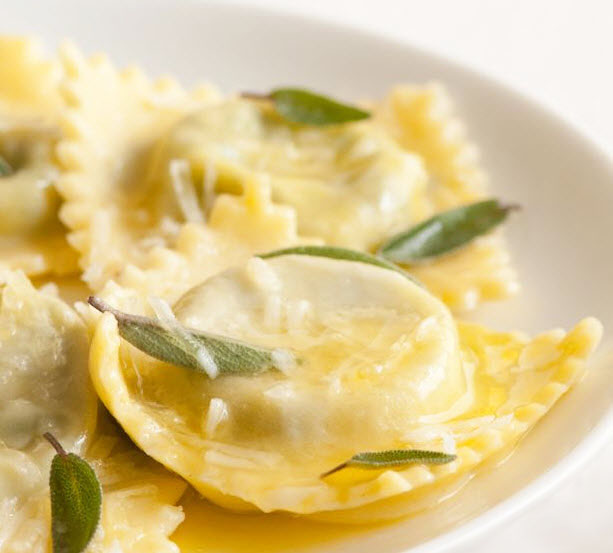
SPINACH AND RICOTTA RAVIOLI


Making ravioli at home using a pasta machine is time consuming but incredibly rewarding, especially when you choose a filling that you enjoy.   These ravioli make a gorgeous vegetarian dish or can be served with Deep fried pork loin sandwich with a spicy sauce.

RAVIOLI


For the filling:
1 tablespoon/15 ml olive oil
2 cloves garlic, finely chopped
225 g/8 oz Swiss chard, finely chopped
250 ml/1 cup ricotta (make your own)
3 tablespoons/45 ml pine nuts, toasted
4 tablespoons/60 ml Parmesan cheese, finely grated
extra Parmesan cheese for serving

For the ravioli:
See recipe for fresh pasta.

  • To make the filling, heat the oil in a saucepan over medium-high heat and add the garlic and the spinach and cook until the stalks of the chard is almost soft.  Remove from the heat and drain.
  • When cool enough squeeze as much of the liquid as possible out of the chard.
  • Add to a food processor with all the other ingredients and pulse until everything is reasonably fine but still with some texture.  Set aside until ready to use.
  • To make the ravioli, bring the pasta dough up to room temperature and then divide it in two.
  • Roll both the pieces of pasta out to the second narrowest setting. Dust the counter with flour and lay out the two long sheets of pasta next to each other.
  • Spoon about 1 tablespoon/15 ml of the filling 50 mm/2 in apart on the  one sheet and repeat until you reach the end of the pasta sheet.
  • Brush all round the fillings with water, then lay the other sheet of pasta on top of the filling portions.
  • You might have to stretch the pasta a little bit to meet the other edge.
  • Press down around the filling to press out any air and then, using the blunt end of a pastry cutter, just big enough to fit over the filling, to gently press down on the pasta to make sure that the filling is “locked” in.  Then, with a slightly bigger cutter, cut the ravioli.

    The ravioli can be cooked straight away or stored on a sheet pan dusted with fine semolina for up to two hours. You can also freeze them at this stage and then cook them from frozen when you are ready.

  • Bring a large pot of salted water to a boil over high heat.
  • Add the ravioli, and cook until for about 4 minutes or until they rise to the surface of the water.
  • Using a slotted spoon, transfer the ravioli to serving bowls.  Sprinkle liberally with Parmesan and serve immediately.
  • This ravioli can be served as a vegetarian dish or with Deep fried pork loin sandwich with a spicy sauce.
Categories
GLOSSARY / METHODS

FRESH PASTA


Ingredients:
300 g/10.5 oz “00” flour (see note), or strong white flour
3 eggs
pinch of salt

“00” flour
Flour is graded in Italy according to its coarseness, which designates its ideal use. It is marked “00”(very white and fine) to “04” (close to whole meal). Type “00” flour has a finer grain than commercial plain flours, resulting in light and airy bread and soft and delicate pasta.

Combine the flour, eggs and salt in a food processor until the mixture forms a dough.  Wrap in cling film and leave to rest for 30 minutes in the refrigerator.   When ready to roll the pasta, remove from the refrigerator and  bring up to room temperature.

WORKING WITH FRESH PASTA
Always allow pasta dough to come up to room temperature before rolling. It allows the gluten to relax which makes the dough much more flexible and easier to work with. Always keep the dough that you are not immediately working with, covered with a damp cloth to prevent it from drying out.

See Spinach and ricotta cheese ravioli for the method of rolling the pasta and making ravioli.

Categories
SOUPS/SAUCES/CONDIMENTS

Prawn and mushroom stuffed squid with squid ink pasta and a spicy tomato sauce


There are a wide variety of stuffing recipes for squid.  See the Glossary for a recipe for ground Thai pork stuffing.

Serves 4

STUFFED SQUID

12 medium squid hoods with tentacles

The stuffing:
1 tablespoon/15 ml olive oil
¼ cup/60 l onion, finely chopped
1 garlic clove, finely minced
½ teaspoon/3 ml salt
57 g/2 oz raw prawns, shelled and deveined (reserve the shells for the sauce)
2 tablespoons/30 ml tomato, finely chopped
2 teaspoons/10 ml lemon zest
2 teaspoons/10 ml fresh ginger, finely chopped
1 teaspoon/5 ml fresh parsley leaves, finely chopped
½ teaspoon/3 ml freshly ground black pepper
¼ cup/60 ml fresh bread crumbs

The sauce:
30 g/1 oz butter
1 garlic clove, crushed
12 medium prawns, shelled, reserve prawns for later use
2 cups/500 ml fish stock
2 tomatoes peeled, seeded and chopped
2 garlic cloves
2 salt anchovies, rinsed, filleted and chopped
pinch of paprika
freshly ground black pepper and cayenne pepper

The pasta:
250 g/8.8 oz squid ink pasta (store bought)
1 tablespoon/15 ml olive oil

To serve:
1 tablespoon/15 ml olive oil
reserved tentacles
½ cup/125 ml dill sprigs

Clean the squid thoroughly and separate from the tentacles. Reserve the tentacles.  Wash the cleaned squid hood under cold running water.  Drain.  Remove and discard the clear, hard quill from inside the hood. Turn the tubes inside out (because the outside skin tends to curl outward, it will hold the stuffing better inside out), and put into a bowl.  Leave in the refrigerator until ready to use.

Heat the olive oil in a frying pan over medium heat, add the onions, garlic and salt and sauté until the onions turn translucent, about 1 to 2 minutes. Do not brown. Transfer the mixture to a medium mixing bowl and set aside to cool.

Place the prawns in a food processor and pulse about 4 times, then add the tomato, lemon zest, ginger, parsley and pepper and pulse until well mixed but not smooth. Add to the onion and garlic in the bowl, then add the bread crumbs and stir to combine well.
Place the mixture into a piping bag and pipe the stuffing into the tubes, (or use a small spoon) making sure that you do not over-stuff them. Seal with toothpicks.

Heat the butter in a frying pan, add the garlic and the reserved prawn shells and cook until the shells are pink and aromatic. Add the fish stock and cook for 5 minutes. Strain the stock and discard the solids.

Using the same pan, heat the olive oil and add the tomatoes, garlic, anchovies, black pepper and paprika. When the anchovies have blended into the sauce, add the stock and cook until the sauce thickens slightly. Remove from the heat, strain again if you want a smooth sauce and put aside.

Boil the pasta in salted water until tender but still have a bite to it, drain and return to the pan. Pour over the olive oil over and keep warm.

Heat the olive in a large frying pan. Fry the tentacles for about 3 minutes or until crisp. Remove and drain on paper towel.
Add the squid to the hot pan and cook for 3 minutes on each side. Remove from the pan and drain on paper towel.

Twirl the pasta around a fork and place in the center of a deep plate. Remove the toothpicks from the squid and place three on top of the pasta. Scatter the crispy fried tentacles over the squid. Drizzle the sauce around and garnish with a few sprigs of dill.

Categories
MAIN COURSE

BOLOGNESE


The difference between this and the traditional Bolognese recipe is that I do not let it cook for very long because I do not use canned tomatoes. I prefer the freshness and lightness the fresh tomatoes give the dish.

BOLOGNESE

To start:
25 g/8 oz butter
25 g/8 oz olive oil
2 cloves garlic, finely chopped
1 carrot, finely chopped
2 celery stalks, finely chopped
2 large mushrooms, finely chopped

The meat:
25 g/8 oz butter
25 g/8 oz olive oil
70 g/2½ oz pancetta, finely sliced
1 onion, finely chopped
300 g/10.6 oz beef, minced
100 g/3.5 oz pork, minced
2 large, fresh tomatoes, peeled, deseeded and finely diced
¾ cup/175 ml white wine
1 cup/250 ml beef stock
¾ cup/175 ml whole milk

The pasta:
spaghetti (for 4 servings)
2 tablespoons/30 ml olive oil
2 tablespoons/30 ml parsley, finely chopped
grated Parmesan cheese, to serve

To start:
Melt the butter and oil in a heavy-based pan over medium heat, then add the garlic, carrot and celery and fry for 2 minutes. Add the mushroom and cook until the mushroom are cooked. Remove the vegetables from the pan with a slotted spoon and add some more butter and oil.

Turn up the heat then add the onion and pancetta and let it cook for a minute or so. Add the minced beef and pork, breaking it up with wooden spoon and leave to brown without stirring. Then stir and let brown some more. Stir in the reserved mushrooms and vegetables and the milk and stir through until the milk is well absorbed. Add the white wine and let it cook down, then add the tomatoes and half the stock. Cook until nearly dry then add the rest of the stock and cook some 15 minutes longer. Season to taste and remove from the heat. Keep it warm.

While the Bolognese is “resting”, cook the pasta until al dente in a deep saucepan with lots of salted water. Drain and pour back into the saucepan and drizzle some olive oil over. Stir through the parsley.

With a pasta serving fork, roll up the pasta and gently slide it onto a warm serving plate. Neatly spoon the meat sauce over the pasta, top it with freshly grated Parmesan cheese and more parsley if preferred.

Make double the meat sauce and use leftovers for making:
Stuffed roast peppers
Stuffed mushrooms
Sausage rolls with puff pastry.

For leftover spaghetti:
Mix with breadcrumbs, herbs and cheese and put it under the grill for a few minutes for a delightful snack or with a salad for lunch.

Categories
MAIN COURSE

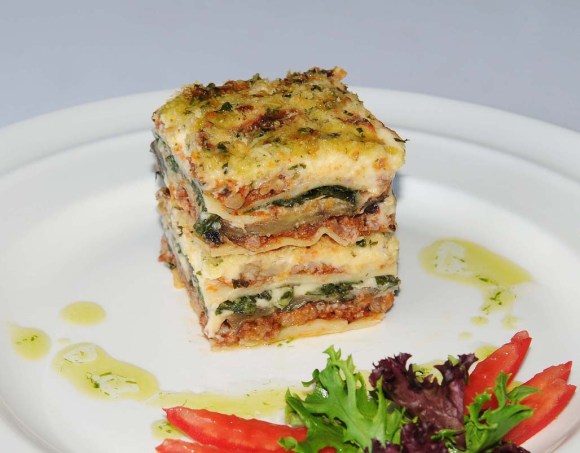
Lamb and aubergine lasagne


Serves 4

To save time, the white sauce may be made up to two days ahead, the surface covered with plastic wrap and stored in the refrigerator until ready to use. Dried lasagne sheets, blanched, can be used in stead of fresh pasta. LASAGNE

Please note that this is not strictly the traditional Lasagne, which I believe comes without aubergine, mushrooms and spinach — contrary to this recipe. So, apologies to all the purists out there.

The vegetables:
2 large aubergines, thinly sliced horizontally
2 tablespoons/30 ml olive oil
1 tablespoon/15 ml butter
16 large field mushrooms, roughly chopped
1 cup/25 ml cooked spinach
salt and freshly ground black pepper

The meat sauce:
2 tablespoons/20 ml olive oil
2 large onions, chopped
3 garlic cloves, minced
3 tablespoons/45 ml bacon, finely chopped
450 g/15.8 oz pork, minced
450 g/15.8 oz lamb, minced
750 g/1½ lb tomatoes, skinned, seeded and chopped
½ teaspoon/3 ml fennel seeds, crushed
2 tablespoons/30 ml tomato paste
½ teaspoon/3 ml cinnamon
pinch allspice, ground
salt and freshly ground pepper

The white sauce:
1 cup prepared Bechamel sauce

The topping:
1 cup/250 ml fresh breadcrumbs
2 tablespoons/30 ml fresh parsley, finely chopped
1 tablespoon/15 ml garlic
250 g/9 oz Parmesan cheese, finely grated

Additional ingredients:
125 g/4.4 oz cheddar cheese, grated
125 g/4.4 oz Buffalo mozzarella cheese, sliced
12 fresh pasta sheets (cut to 14 x 7 cm/5.5 in x 2.7 in)

Preheat the oven to 180°C/356°F.

Sprinkle the aubergines with salt and set aside for 30 minutes, then rinse the aubergines and pat dry.

Heat the olive oil and butter in a large heavy non-stick pan and fry the mushrooms until cooked through. Remove from the pan with a slotted spoon, season and set aside.

Heat some more oil and fry the aubergine slices until golden brown on both sides, then drain on kitchen towel and set aside.

In the same pan, heat the oil and fry the onions, garlic and bacon over moderate heat, until softened. Add the pork and lamb and cook, stirring to break up, until it is crisp and starting to caramelize. Stir in the remaining meat sauce ingredients and salt and pepper to taste. Cook for about 5 minutes more, uncovered.

Mix all the ingredients for the topping and set aside.

Assemble the dish:
Grease an ovenproof dish with a lid, approximately 34 x 24 cm/13 in x 9.5 in. Arrange enough pasta sheets to cover the bottom of the dish. Place the aubergine slices in a single layer over the pasta, then spread half of the meat sauce over the whole surface. Mix the mushroom mixture with the spinach and spread half of this over the meat sauce. Scatter half the mozzarella cheese over and pour half the white sauce over the cheese. Repeat the above steps once more ending with the white sauce. Sprinkle the topping over, drizzle some olive oil over, then cover the dish with the lid and bake in the middle of the oven for 30 minutes.

Remove the lid and bake the Lasagne for 10 minutes longer until the top is bubbling. For extra crispy and golden topping, grill under a preheated grill for about 2 minutes. Let the Lasagne stand for 5-10 minutes before serving. Serve with a simple fresh salad.2

Categories
STARTERS/SIDES

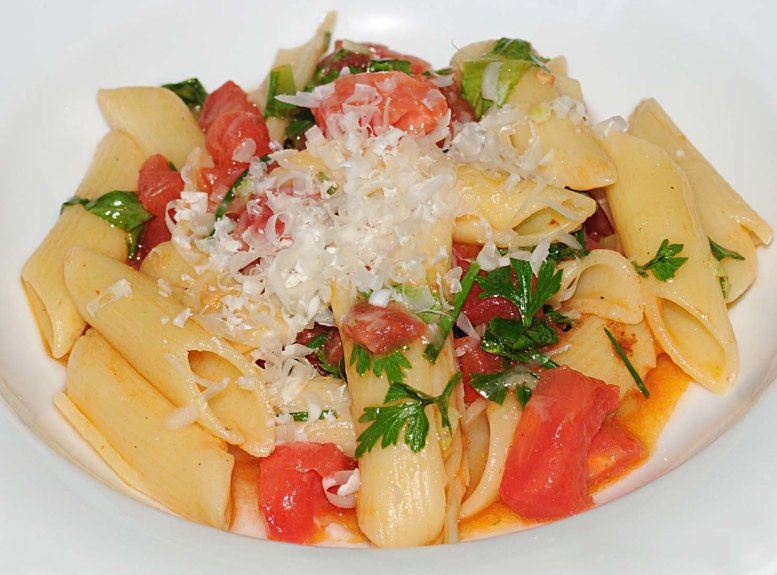
Pasta with a fresh tomato and brie sauce


This is a delightfully light and fresh tasting starter or light summer lunch. Served with some fresh crusty bread and a crispy white wine, guarantees total satisfaction.

PASTA WITH TOMATO AND BRIE SAUCEServes 4

olive oil
4 shallots, finely sliced
3 garlic cloves, finely chopped
8 rashers of bacon, finely chopped (omit if for vegetarians)
375 g penne pasta
250 g/8.8 oz good quality brie, roughly chopped
8 tomatoes, skinned and roughly chopped
salt and fresh ground pepper
2 tablespoons fresh parsley, finely chopped
2 cups Parmesan cheese
1 cup fresh basil, finely sliced


For every 100 g/3.5 oz of pasta, you’ll need 5 cups water and 2 teaspoons salt in a large saucepan. It is important to use lots of water when cooking pasta to enable the pasta to move around while cooking. Bring the water to the boil and add salt before you add the pasta. The best way to judge whether the pasta is cooked, is to taste it.

  • Heat 2 tablespoons olive oil in a frying pan and fry the shallots, garlic and bacon for about 4 minutes, until lightly caramelized. Remove from the heat.
  • Meanwhile, cook the pasta until tender but still have a bite to it. Drain but reserve one cup of the cooking liquid.
  • Place the saucepan with the pasta back onto low heat and mix in 2 tablespoons olive oil.
  • Reheat the pan with the fried onion mix and deglaze with the reserved liquid.
  • Add this mixture to the pasta, stir in the brie and let it melt slightly, then add the tomatoes, salt and pepper to taste, parsley and half of the Parmesan cheese.
  • Let simmer for about 2 minutes, then remove from the heat.
  • Dish up immediately with the basil and the rest of the Parmesan sprinkled over.