Categories
MAIN COURSE

MASSAMAN CURRY CHICKEN WITH BUTTERNUT, RED PEPPER AND PAK CHOI


Served with Basmati rice and fresh corianderLINE

This is a hearty meal but with an exotic flavor. The vegetables give it substance but also add a unique flavor and interesting textures. It can be varied by using green beans, carrots, or even broccoli.
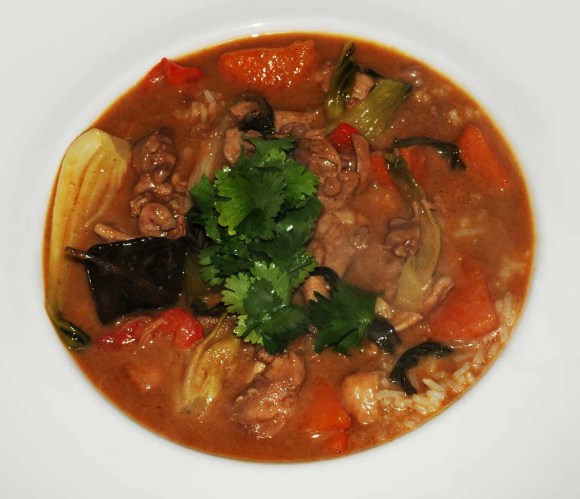
Massaman chicken curry

2 tablespoons oil
10 chicken drumsticks, boned
4 cloves garlic
1 medium onion, thinly sliced
1-2 red chilies, stem and seeds removed, finely chopped
2 tablespoons/30 ml Massaman curry paste (make your own)
1-2 cups/250-500 ml chicken stock (if necessary)
1½ cups/375 ml coconut milk
½ cup/125 ml coconut cream (optional)
4 kaffir lime leaves, dried if fresh is not available
1 tablespoon/15 ml fish sauce
1 tablespoon/15 ml lime juice
2 teaspoons/10 ml palm sugar
fresh coriander leaves

1 butternut, cut into bite size blocks
1-2 red peppers, seeds and ribs removed and cut into bite size squares
6 pak choi, quartered lengthways

In a deep heavy saucepan, heat the oil and over high heat fry the chicken until it starts to caramelize. Remove from the pan and set aside. In the same pan, add the garlic, chilies and onion and fry lightly whilst stirring then add the curry paste. Keep stirring until the paste becomes fragrant, then add the chicken and stir around until or the chicken is covered with the paste. Add the coconut milk and coconut cream (if using) and bring to the boil then add the lime leaves, fish sauce, lime juice and palm sugar. Turn the heat down slightly and let it simmer for about 20 minutes.

If you feel you would like it saucier, then add the chicken stock (preheated).

Meanwhile, cook the butternut until just tender, drain and set aside.

After the curry had been cooking for 20 minutes, add the cooked butternut, red pepper and pak choi and check that they are all covered by the sauce. Check the seasoning and if needed add more fish sauce or salt, if preferred.

Serve this curry over Basmati rice, topped with a generous helping of fresh coriander leaves.

Categories
MAIN COURSE

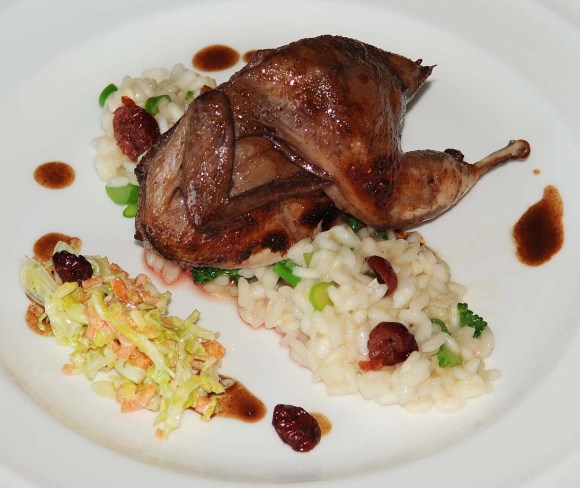
Barbeque marinated quail


Serve it with broccoli risotto and oyster sauce and a sweet and tangy coleslaw

BLOCK HORIZONTAL LINE

Serves 4

Quail should be serve pink in the inside therefore the cooking time is crucial.

BARBEQUE QUAIL

The marinade:
2 teaspoons/10 ml coarse salt
1 tablespoon/15 ml Sechuan peppercorns
1 medium shallot, finely chopped
4 cloves garlic
2 teaspoons/10 ml chili powder
1 tablespoon/15 ml olive oil
2 tablespoons/30 ml Shaoxing rice wine
4 quail, butterflied
¼ cup runny honey

The sauce:
1½ cup duck stock, heated
1½ cup chicken stock, heated
marinade with the solids
2 teaspoons/10 ml oyster sauce

The risotto:
2 tablespoons/30 ml olive oil
1 small shallot, finely chopped
1 cup/250 ml Arborio rice
1 cup/250 ml white wine
2 cups chicken stock
1 cup/250 ml broccoli, cooked but still crunchy
1 teaspoon/5 ml oyster sauce
½ cup/125 ml Parmesan cheese, finely grated
salt and freshly ground black pepper

The coleslaw:
2 medium carrots, peeled and finely chopped
½ small cabbage, shredded
½ red onion, finely chopped
2 spring onions, finely sliced
1 tablespoon/15 ml fresh ginger, finely chopped
1 tablespoon/15 ml Japanese mayonnaise
1 tablespoon/15 ml lemon juice
½ cup/125 ml fresh coriander

In a pestle and mortar, crush the peppercorns and salt, then add the shallot, garlic and chili powder and pound to a paste. Mix in the olive oil and rice wine and pour the mixture all over the quail. Put in a sealed container and marinade for at least eight hours.
When ready to grill, remove the quail from the marinade and wipe them clean. Sprinkle over a few pinches of salt and rub some olive oil in (to prevent it from sticking to the grill). Mix 2 tablespoons/30 ml of the marinade with the honey and use as basting when the quail is almost cooked.  The rest of the marinade will be used for the sauce.

Place the quail on a preheated barbeque grill. Cook for 3 minute on each side, then baste on the one side, cook for half a minute, then turn over and baste on the other side and cook for another half a minute. Remove the quails from the heat and keep warm for 15 minutes while preparing the sauce.

Bring the duck and chicken stock to a boil, add the reserved marinade and the oyster sauce and reduce to a light syrupy consistency. Strain and keep in a warm place.

In a medium saucepan, heat the olive oil then lightly fry the shallots. Add the rice and stir to coat until it is lightly toasted but not colored. Add the wine and cook until all the alcohol has evaporated. Add half a cup of the chicken stock, cook and stir the rice until almost all the liquid has been absorbed, then add another half a cup of the stock and repeat until all the stock has been used up. When ready to serve, mix the cooked broccoli with the oyster sauce and add to the rice with the cheese and salt and pepper. Carefully stir everything through, being careful not to break up the broccoli. The rice should be creamy and not dry. Add a little hot water to loosen the mixture if it is too stiff.

Mix all the vegetables together, then stir in the mayonnaise, lemon juice and coriander. Serve immediately.

Categories
SOUPS/SAUCES/CONDIMENTS

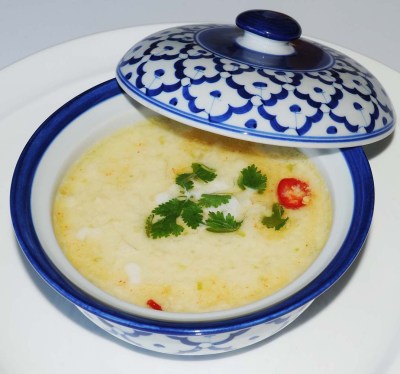
Thai spiced chicken and coconut soup


This is a spicy and creamy soup and it is essential to poach the raw chicken in the broth for more flavor.

THAI  SPICED CHICKEN SOUP

The soup:
2 tablespoons/30 ml vegetable oil
2 skinless free-range chicken breast fillets, cut into narrow strips
5 cm/2 in fresh ginger, peeled and finely chopped
1 stalk lemon grass, hard outer skin removed and chopped finely
1-2 teaspoons/5-10 ml mild red chilies, finely chopped
2 cups/500 ml coconut cream
1 cup chicken stock
2 tablespoons/30 ml Asian fish sauce (also known as Nam Pla, available in well-stocked supermarkets)
lime or lemon juice to taste

The garnish:
coconut shavings
½ cup/125 ml fresh coriander leaves
sliced red chilies (optional)

In a medium sized saucepan, heat the oil and lightly fry the ginger, lemon grass and chilies, then add the coconut cream and chicken stock and bring to the boil.  Add the strips of chicken, fish sauce and lemon juice and cook for another 5 minutes. Check the seasoning.

To serve:
Pour the soup into warm soup bowls and garnish with coconut shavings, fresh coriander and extra chilies (optional).

Categories
MAIN COURSE

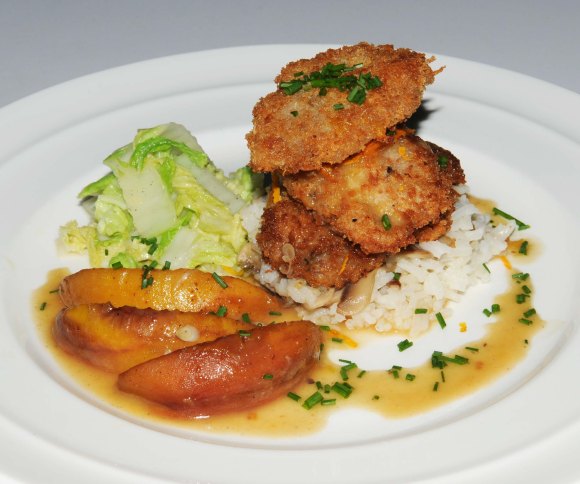
Duck breast fritters with Basmati rice and roast peaches


If you wish to serve another vegetable,  cabbage, lightly poached in butter and seasoned with nutmeg, goes very well with this dish.

Serves 4

DUCK BREAST FRITTERS

The duck:
4 free-range duck breasts
2 tablespoons/30 ml shoa xing rice wine (available at Asian supermarkets)
1 tablespoon/15 ml szechuan pepper, ground (available at Asian supermarkets)
1 clove garlic, minced
salt
flour for sprinkling
2 free-range eggs, whisked
Japanese breadcrumbs (Panko breadcrumbs)
oil for deep-frying

The peaches:
1 tablespoon/15 ml sugar
1 tablespoon/15 ml butter
4 ripe peaches, stoned and quartered (use canned peaches if fresh ones are unavailable but cut down on the sugar)
2 cloves, ground
2 tablespoons/30 ml Peach Schnapps

The rice:
450 g/15.8 oz Basmati rice
4 cups/1 liter chicken stock
75 g/2.6 oz butter
salt

The garnish:
2 tablespoons/30 ml orange zest, grated
2 tablespoons/30 ml fresh chives, chopped

Score the breasts on the fat side with 2 cm/0.8 in space between each cut. Mix the rice wine, pepper, garlic and salt and rub onto the breasts on both sides. Set aside in the refrigerator for at least 2 hours.

When ready to cook, wipe most of the marinade of the breasts, heat a non-stick pan and sear the breasts on the fat side only, until crispy (about 3 minutes). Remove the breasts from the pan and set aside to cool. Store the rendered fat in a container for another time to fry potatoes, etc.

When the meat has rested for at least ½ hour (it will be quite raw still), slice the meat into 4 thick slices across. Place each slice of breast between two pieces of cling film and with a mallet, flatten the meat until about 15 mm/1 in) thick.

Sprinkle each slice with flour, then dip it in the egg and finally coat with the breadcrumbs. Heat the oil in a large saucepan,  fry the crumbed slices in the hot oil until crispy — not longer than 30 seconds on each side. Remove from the pan and let drain on kitchen paper.

Meanwhile, in a saucepan, melt the sugar and butter and saute the peach quarters in it for about 1 minute on each side, de-glaze with the schnapps, sprinkle over the ground cloves and let simmer for another 2 minutes or until just tender.

Add the rice, salt and chicken stock to a medium saucepan. Bring to the boil, lower the heat, then cover with a tightly-fitting lid. Cook for 15-20 minutes then turn off the heat and leave the rice to stand, still covered, until about 5 minutes before serving. When ready to serve,add the butter and fluff up the rice with a fork.

To serve:
On each heated serving plate, spoon some rice and stack four duck breast fritters on top.  Divide the peaches and place around the rice and drizzle some of the peach juices over.

Categories
GLOSSARY / METHODS

Dashi granules


Dashi is Japan’s fundamental stock and seasoning, much used in Japanese cooking, particularly in Japanese soups and dipping sauces for tempura, stews and salad dressings. It is made from dried flakes of bonito (dried, smoked and cured bonito, a type of tuna, which has a strong aroma but a smoky, mellow flavor), kelp and shiitake mushrooms and are available in granule form in Asian supermarkets.

Categories
GLOSSARY / METHODS

Mirin


Mirin, is a low-alcohol sweet Japanese cooking wine, made of a mixture of medium grain rice, glutinous rice and distilled rice spirit, then matured for two months.  It adds a lovely glaze to grilled foods and a mild sweetness in cooking. Mirin is sold in well stocked supermarkets. It can be substituted with dry sherry to which sugar is added but will not have the same results in flavor.

Categories
SOUPS/SAUCES/CONDIMENTS

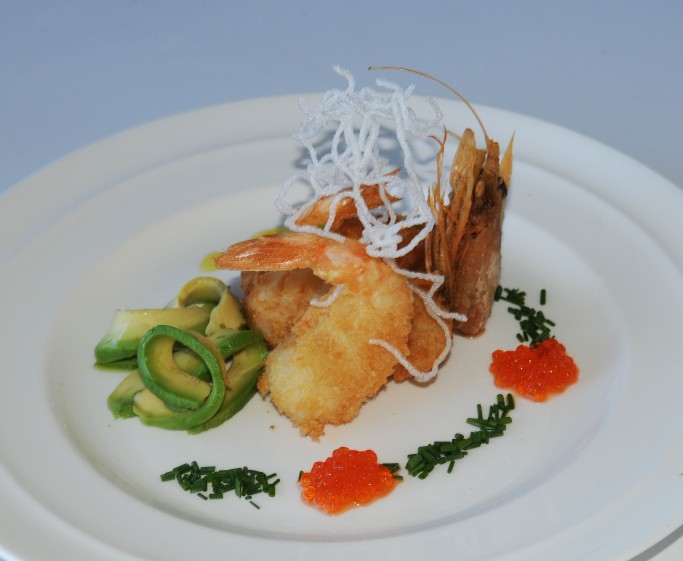
Fish and prawn tempura with an Oriental dipping sauce


The tempura prawns can also be served on a potato cake, toast or rice cake; serve also with salmon roe, chopped chives and/or avocado.

SEAFOOD TEMPURAServes 4

The fish:

320 g /11 oz firm white fish, skin removed
8 tiger prawns, shelled and de-veined (always reserve and freeze prawn shells for later use to make seafood stock. )
flour for dusting
salt and freshly ground black pepper
oil for deep-frying

The tempura batter:
1 cup/250 ml self-raising flour
1 tablespoon/15 ml cornstarch
1 cup/250 ml soda water
a few blocks of ice

The dressing:
3 tablespoons/45 ml hot water
1 teaspoon/5 ml dashi granules
1-2 teaspoons/5-10 ml mirin
2 tablespoon/30 l soy sauce

The garnish:
fresh coriander leaves for serving
salmon roe or caviar


See the Glossary for safety tips on deep-frying.

  • Heat the oil in a deep frying pan to about 180°C/356°F.
  • Cut the fish in strips of 3 x 8 cm/1 x 3 in and butterfly the prawns.
  • For the dipping sauce, dissolve the dashi granules in the hot water and let it cool.
  • Add the mirin and soy sauce and mix well.

The mirin is quite sweet but after tasting the sauce you can decide whether you want to add more.

  • In a large bowl, mix the two flours with the or soda water until just combined, but still quite lumpy. Add the blocks of ice to keep the mixture cold.
  • Dust the pieces of fish and prawns lightly with flour and season well.
  • Dip the fish in the batter, gently shake off the excess and place in the hot oil (not more than four pieces at a time).
  • Deep-fry in batches until golden and drain on paper towel.
  • Before adding the next batch, make sure the oil is back to the correct temperature.
  • Keep the cooked fish uncovered in a low oven until you are ready to serve.
  • Serve immediately.

To serve:
Serve the fish tempura pieces stacked on each plate with garnishes of your choice, and the dipping sauce in a small bowl for each serving.

Categories
MAIN COURSE

Lamb shanks poached in a spicy broth


Served with harissa yogurt,  couscous and roast vegetables and spicy aubergine and shiitaki mushrooms

BLOCK HORIZONTAL LINE
Serves 4

LAMB SHANKS WITH HARISSA

The shanks:
olive oil
4 lamb shanks
1 carrot, diced
1 leek, diced
1 celery stick, diced
4 garlic cloves
1 bay leaf
1 rosemary sprig
1 star anise
4 cardamom pods
1½ cup/375 ml dry white wine
7 cups/1¾ liter lamb stock, heated
sea salt and freshly ground black pepper

The couscous:
2 tablespoons/30 ml butter
3 spring onions, thinly sliced
½ cup/250 ml raisins
cinnamon stick
salt and freshly ground black pepper
3 cups/740 ml chicken stock
2 cups/250 ml couscous
¼ cup/60 ml almonds, slithered
¼ cup/60 ml fresh mint, chopped

The aubergines:
olive oil
4 medium aubergines, sliced in thin sliced
12 shiittaki mushrooms, sliced
salt and freshly ground black pepper
½ teaspoon/3 ml sesame oil
½ teaspoon/3 ml oyster sauce
½ tablespoon/7 ml balsamic vinegar
½ tablespoon/7 ml lemon juice
1 tablespoon.15 ml soy sauce
2 teaspoons/10 ml mirin

The yoghurt and harissa sauce:
2 tablespoons/30 ml fresh cream
4 tablespoons/60 ml plain yoghurt
2 teaspoons/20 ml lemon juice
salt and pepper to taste
harissa paste

Preheat the oven to 120°C/250ºF.
Heat a little olive oil in a large ovenproof pan and brown the shanks all over. Remove and set aside. Add some more olive oil to the same pan, then saute the carrot, leek, celery and garlic until light golden. Add the herbs and spices, pour in the wine and cook until the alcohol has evaporated.
Place the lamb shanks back into the pan with the vegetables, then pour in the stock. Season well, then cover and put in the preheated oven. Cook for about 3 hours, then remove from the oven and leave in the liquid for 30 minutes. Remove the meat and keep in a warm place. Strain the liquid, discard the solids, then skim of the fat that rises to the top. Reduce the liquid over high heat until thick and glossy. Check the seasoning and add more salt and pepper if necessary.

In a saucepan, melt the butter then add the spring onions, raisins, cinnamon stick, salt and pepper and stir until everything is well coated with the butter. Add the stock and bring to a boil. Put the couscous in a heatproof bowl and pour the spiced stock over. Cover and allow to sit for 5-10 minutes. Uncover, fluff the couscous with a fork, and stir in the almonds. Serve warm at room temperature with the mint sprinkled over.

Preheat the oven to 180°C/356°F.
Sprinkle the aubergines with salt and set aside for 30 minutes, then rinse the aubergines and pat dry. Heat some oil and fry the aubergine slices until golden brown on both sides. Drain on kitchen towel and set aside.

In the same pan heat some more oil and fry the mushrooms until tender. Remove from the pan and drain on kitchen towel. Set aside.
Mix together the rest of the ingredients for the dressing and season to taste. Mix the dressing with the fried mushrooms and aubergines and gently stir through to coat all the vegetables. Set aside until ready to serve warm at room temperature.

Whisk the cream until stiff, then fold in the yoghurt, lemon juice and salt and pepper. Taste and adjust the seasoning to your liking. Set aside until ready to use.
Just before serving, add some of the harissa paste to the yoghurt and mix through. Taste and add more paste if you wish.

Categories
STARTERS/SIDES

Pork spring rolls with Oriental dipping sauce


It is important to serve the spring rolls immediately after cooked and drained, as the vegetable filling can cause the crispy wrappers to go soggy if it sits for a while.

PORK SPRING ROLLSServes 4


The filling for these spring rolls can be made from leftover Crispy pork belly or any leftover meat from the pork dishes on this blog.

The pork spring rolls:
250 g/9 oz free-range pork, minced
1 tablespoon oil
2 tablespoons cabbage, julienned
2 tablespoons carrot, julienned
2 spring onions, thinly sliced
2 tablespoons fresh coriander, chopped
3 tablespoons fresh bean sprouts
½ teaspoon sesame oil
1 tablespoon oyster sauce (available at well-stocked supermarkets)
1 teaspoon fresh ginger, grated
1 teaspoon garlic, minced
1 teaspoonl chilli sauce (available at well-stocked supermarkets)
1 teaspoon cornstarch dissolved in 1 tablespoon water
12 spring roll wrappers (available at well-stocked supermarkets)
vegetable oil for deep frying


See Safety and practical tips for deep frying


The dipping sauce:
½ teaspoon sesame oil
2 tablespoons oyster sauce
1 tablespoon balsamic vinegar
2 tablespoons peanut oil
1 tablespoon light soy sauce
1 teaspoon mirin (available at well-stocked supermarkets)
black pepper to taste

The garnish:
a mixture of coriander leaves, finely sliced spring onions, sliced basil
eaves, garlic chives, etc.

  • Heat the oil in a saucepan and lightly fry the pork until golden brown.  Remove from the heat, drain and set aside to cool.
  • In a bowl, mix together the pork, cabbage, carrot, spring onions, coriander, bean sprouts, sesame oil, oyster sauce, ginger, garlic and chilli sauce.
  • Place approximately one tablespoon of the pork mixture in the corner of each spring roll wrapper, and roll the wrapper, folding the edges inward to close.
  • Brush the edges of the wrapper with the cornstarch mixture and seal.
  • Heat the oil to 180° C/350° F and deep-fry the spring rolls in batches until golden brown.  Drain on kitchen paper.
  • In a small mixing bowl, combine all the ingredients well, cover and refrigerate for 1 – 2 hours to allow the flavors to blend.