Categories
MAIN COURSE

Leg of lamb, deboned, rolled and stuffed with rosemary and garlic


Serve with Potatoes roasted in duck fat.
Serves 4

LAMB ROLL STUFFED WITH ROSEMARY AND GARLIC WITH ROAST POTATOES AND MIXED VEGETABLESServes 4 with leftovers

For the lamb:
approx. 1 k/2 lbs leg of lamb, deboned* and butterflied — do it yourself or ask your butcher to do it but make sure you keep the bones and any off-cuts for making the lamb stock.


*Deboning it yourself:
When you put the leg, meatier side down on a large chopping board, it is easy to locate the bone. With a sharp knife, cut along the length of the bone through the thin flesh right onto the bone, then work your knife vertically along and around the bone whilst pushing as much meat as possible away from the bone. Do this all round the bone until you can lift the bone free. There are numerous instructing videos showing exactly how to do this and soon you will be able to master this seemingly daunting task. Otherwise simply ask you butcher to do it for you.

For the sauce:
750 ml lamb stock
1 medium size carrot, chopped
1 medium size onion, chopped
1 stick celery, chopped
5 garlic cloves, crushed
1 tablespoon fresh rosemary, finely chopped
2 tablespoons white wine vinegar
2 tablespoons tomato puree
1 tablespoon cornstarch mixed with cold water to form a thick slurry.

  • The secret for making an even roll is to get the thickness of the surface of the meat as even as possible.
  • Use a piece of cling film, place it over the meat and bash the thicker parts of the surface with a mallet to flatten it.
  • To be able to make a neat roll, cut off the uneven ends so that you have a neat rectangular piece.  Do not discard the off-cuts.
  • Open up the meat, “skin”-side down, sprinkle the vinegar over the surface and rub in the rosemary, garlic and salt mixture.
  • Sprinkle some salt over the off-cuts and place them close to the end of the meat where you would start rolling.
  • Now start rolling from any end depending on how thick you want your roll.
  • If you start rolling from the long side of the rectangle, you will have a thinner roll and vice versa.
  • Roll it as tight as possible (using skewers to keep the shape if you need to).
  • Once you have completed the roll and tucked in all the loose bits (if any), tie the meat with butcher’s twine to keep it together.  (Learn to make a butchers knot https://www.youtube.com/watch?v=UcgMtjtkeSg)
  • Cover the meat and refrigerate until ready to cook. Remove from the refrigerator at least one hour before cooking.
  • Rub olive oil all over the surface, then season with salt and freshly ground black pepper.
  • Heat the barbecue to 200°C/400°F then place the roll on the grid. Close the cooker and cook for an initial period of 20 minutes (depending on the thickness for medium rare in the middle) turning the roll every five minutes until cooked.
  • Remove from the heat and let it rest for at least 10 minutes.
  • Check the internal temperature of the lamb just before the estimated cooking time is up.
  • For the juiciest result, remove the meat from the heat just short of the temperature goal as the internal temperature of the meat can rise a bit more as it rests.

A meat thermometer is the easiest and most accurate way to tell if a roast or steak is ready. When your meat is done (be it a steak or a roast), the internal temperature of the meat will be:
Rare 60ºC

Medium rare 60-65ºC
Medium 65-70ºC
Medium well done 70ºC
Well done 75ºC

  • To cook the sauce, heat the oil in a saucepan and add the carrot, onion, celery, garlic and rosemary and lightly sauté for 5 minutes over medium heat.
  • Deglaze with the vinegar and as soon as the vinegar has evaporated, add the stock and tomato puree.
  • Reduce the stock by half, then gradually stir in the cornstarch slurry.  Keep stirring until the sauce has thickened.  (You may not need all the cornstarch.)
  • Strain the sauce and set aside in a warm place. After the meat has rested, pour the juices that was released from the lamb back into the sauce.  Reheat for serving.
  • To serve, slice the meat in the desired thickness and serve with Potatoes roasted in duck fat (see recipe below) and Mixed vegetables with beetroot gel.
  • Pour the sauce over the meat and reserve extra to be served at the table.

For the potatoes roasted in duck fat:
1.5 kg/3 lbs floury potatoes, cut into 3 pieces, depending on size
1 cup/250 ml duck fat
Maldon sea salt
2 tablespoons/30 ml rosemary needles

  • Preheat the oven to 180°C.
  • Place the potatoes in a saucepan of cold salted water and bring to the boil. Cook until halfway done (some resistance when pierced with a pointed knife).
  • Drain, then return to the pan and shake well over medium heat to dry out and rough up the edges.  This is necessary to obtain the crispy edges.
  • Place the duck fat in a roasting pan, then heat for 5 minutes. Remove from the oven, carefully add the potatoes to the duck fat and spoon over some of the fat.
  • Sprinkle over the Maldon sea salt and rosemary, then return to the oven and roast, turning twice, for 45 minutes or until golden and crispy.
  • Serve immediately.
Categories
MAIN COURSE

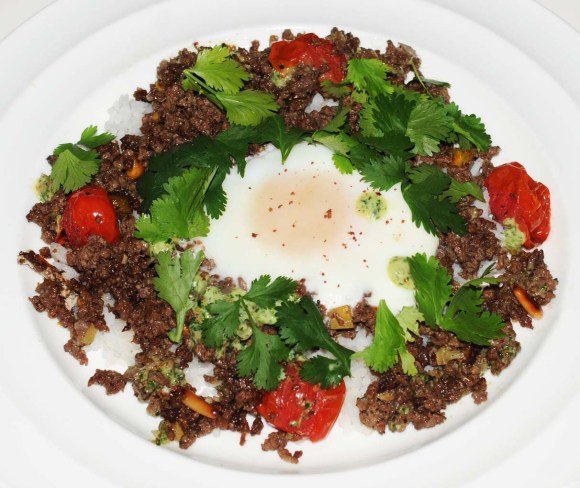
LAMB MINCE WITH BAKED EGG, SUMAC AND ROAST TOMATOES


Learning about the cuisine of other cultures and the fusion of flavors happening as a result of immigrants bringing their traditional cooking methods, herbs and family favorites into your country, has made cooking a very interesting and delicious hobby. This dish (inspired by fusion food served in Jerusalem) is a delightful and surprising result.  Yet another version of comfort food you can add to your repertoire.

Lamb mince with baked egg, sumace and harissa

360 h/12.7 oz Basmati rice

The lamb:
2 tablespoons/30 ml olive oil
12 shallots, finely sliced
2 cloves garlic, minced
350 g/12 oz lamb mince
2 cups/500 ml lamb stock
2 tablespoons/30 ml sumac (availalable at well stocked supermarkets)


Sumac, from the berries of the sumac bush (vaguely related to Poison Ivy although not poisonous) are dried and in some instances you can buy the berries whole or already ground. It is dark brick red in color and adds a delightful color and zing to food without overpowering it — subtle and refreshing. Add it to scramble eggs, a vinaigrette, garlic mayonnaise, tomato salad, etc. Try it with chicken, fish, butternut soup …. the possibilities are endless. Use your imagination.

1 tablespoon/15 ml za’atar (available in shops that specialise in Middle Eastern spices or make you own)
1 tablespoon/15 ml cumin
2 tablespoons/30 ml pine nuts
salt and freshly ground black pepper

The tomatoes:
2 tablespoons/30 ml olive oil
24 cherry tomatoes
1 teaspoon/5 ml coarse sea salt
sprinkle of sugar
1 teaspoon/5 ml balsamic vinegar

The garnish:
4 fresh eggs
plain thick Greek yogurt
bunch coriander leaves

  • In a small bowl mix the vinegar with the salt and add the onion. Set aside for the onions to soften.
  • Boil the rice and keep warm.
  • Preheat the oven to 220°C.
  • In a heatproof baking dish mix the cherry tomatoes with the olive oil, salt, sugar and vinegar and roast in the oven until the skins burst open and the juices start sizzling. Remove from the oven and set aside.
  • For the lamb:  in a big enough pan, heat the olive oil and fry the shallots and garlic briefly then add the mince.
  • Break up the mince as much as possible to avoid having clumps of meat.
  • When it becomes nice and caramelized, add half the stock, sumac, za’tar, cumin and salt and pepper and cook until most of the liquid has evaporated.
  • Add the rest of the stock and simmer for 5 minutes.
  • With a large spoon, move the meat aside to form four hollow spots. Break an egg into each hollow, then cover the pan with a lid and steam the eggs for about 5 minutes or until the eggs are cooked but the yolks still soft.

I find it much easier to fry the eggs separately and place it on top of the dish when ready to serve.  But it is up to you. It does not affect the outcome of the dish or spoil its authenticity.

  • To serve: on each warmed plate spoon the rice and spread out quite a bit.
  • Spoon the lamb and a cooked egg over the rice, being careful not the break the yolk.
  • Dot the surface of the meat with spoons full of yogurt, scatter the roast tomatoes around and sprinkle over the coriander. Serve immediately.

Extra sumac sprinkled over gives the dish an extra tang and color but use sparingly.

Categories
MAIN COURSE

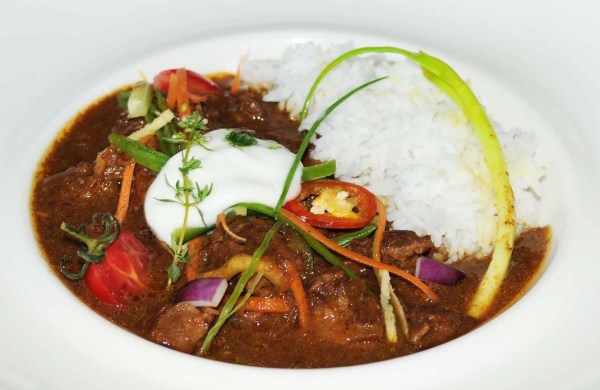
Lamb neck casserole with Moroccan flavors


Serve this with papaya, red pepper and spring onion salsa

LINE

Serves 4

MOROCCAN LAMB

The casserole:
3 tablespoons/45 ml vegetable oil
1 medium onion, finely sliced
2 cloves garlic, finely sliced
1 teaspoon/5 ml dried ginger, ground
2 teaspoons/10 ml cumin, ground
2 teaspoons/10 ml coriander seeds, ground
½ teaspoon/3 ml turmeric
½ teaspoon/3 ml cayenne pepper
1 medium strong chili, seeds and ribs removed and finely sliced
1 kg/2 lbs shoulder of lamb, deboned cut in 2 cm/0.7 in thick pieces
1 bulb fennel, finely sliced
30 g/1 oz dates, stoned and chopped
1 cup/250 ml lamb stock
salt and pepper
½ cup/125 ml yogurt
juice of one medium-sized lemon
1 tomato, peeled, seeded and finely chopped
½ onion, finely chopped

The rice:
1 cup/25 ml Basmati rice (will yield 3 cups cooked)
salt
1½ cup/375 ml water

The mango, raisin and tomato salsa:
2 tomatoes, peeled, seeded and roughly diced
1 mango, peeled and roughly diced
50 g/1.7 oz seedless raisins
1 spring onion, shredded

The green peppercorn dressing:
1 teaspoon/5 ml pickled green peppercorns, drained and crushed
1 teaspoon/5 ml finely grated lemon rind
2 tablespoons/30 ml red wine vinegar
1 tablespoon/15 ml olive oil
1 teaspoon/5 ml sugar

The garnish:
fresh coriander

Heat 2 tablespoons/30 ml of the oil in a saucepan and fry the onion and garlic until light golden. Add the spices and sliced chilli and fry until it becomes quite fragrant. Remove and keep aside.
Wipe the pan clean and heat the rest of the oil, then add the lamb and fry until golden brown on all sides.  Return the fried spices to the pan with the fennel and dates. Stir well and add the lamb stock and salt and pepper. Cover and cook gently for 2 hours. Check regularly to ensure it is not too dry. If necessary add more stock.

When cooked to your satisfaction, remove from the heat and stir in the yogurt, lemon, tomato and onion. Do no bring to the boil again.

Rinse the rice under cold running water until no starch is visible, then boil the rice in the water and salt until almost all the water has evaporated. Turn off the heat, and leave covered until ready to serve. When ready to dish up, fluff up the rice with a fork.

Mix together the tomato, mango and raisins and half the spring onion, and season well.  Combine all the ingredients. Just before serving, pour the dressing over the salad and scatter the rest of the spring onions over.

To serve:
Serve the lamb over the Basmati rice sprinkled with the fresh coriander and spoon the Mango, raisin and tomato salsa with green peppercorn dressing all round.

Categories
MAIN COURSE

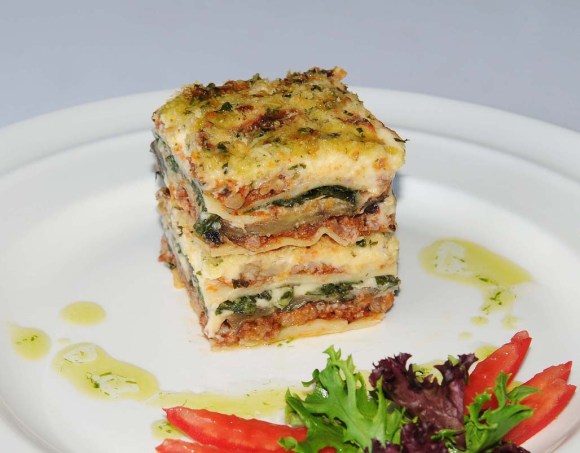
Lamb and aubergine lasagne


Serves 4

To save time, the white sauce may be made up to two days ahead, the surface covered with plastic wrap and stored in the refrigerator until ready to use. Dried lasagne sheets, blanched, can be used in stead of fresh pasta. LASAGNE

Please note that this is not strictly the traditional Lasagne, which I believe comes without aubergine, mushrooms and spinach — contrary to this recipe. So, apologies to all the purists out there.

The vegetables:
2 large aubergines, thinly sliced horizontally
2 tablespoons/30 ml olive oil
1 tablespoon/15 ml butter
16 large field mushrooms, roughly chopped
1 cup/25 ml cooked spinach
salt and freshly ground black pepper

The meat sauce:
2 tablespoons/20 ml olive oil
2 large onions, chopped
3 garlic cloves, minced
3 tablespoons/45 ml bacon, finely chopped
450 g/15.8 oz pork, minced
450 g/15.8 oz lamb, minced
750 g/1½ lb tomatoes, skinned, seeded and chopped
½ teaspoon/3 ml fennel seeds, crushed
2 tablespoons/30 ml tomato paste
½ teaspoon/3 ml cinnamon
pinch allspice, ground
salt and freshly ground pepper

The white sauce:
1 cup prepared Bechamel sauce

The topping:
1 cup/250 ml fresh breadcrumbs
2 tablespoons/30 ml fresh parsley, finely chopped
1 tablespoon/15 ml garlic
250 g/9 oz Parmesan cheese, finely grated

Additional ingredients:
125 g/4.4 oz cheddar cheese, grated
125 g/4.4 oz Buffalo mozzarella cheese, sliced
12 fresh pasta sheets (cut to 14 x 7 cm/5.5 in x 2.7 in)

Preheat the oven to 180°C/356°F.

Sprinkle the aubergines with salt and set aside for 30 minutes, then rinse the aubergines and pat dry.

Heat the olive oil and butter in a large heavy non-stick pan and fry the mushrooms until cooked through. Remove from the pan with a slotted spoon, season and set aside.

Heat some more oil and fry the aubergine slices until golden brown on both sides, then drain on kitchen towel and set aside.

In the same pan, heat the oil and fry the onions, garlic and bacon over moderate heat, until softened. Add the pork and lamb and cook, stirring to break up, until it is crisp and starting to caramelize. Stir in the remaining meat sauce ingredients and salt and pepper to taste. Cook for about 5 minutes more, uncovered.

Mix all the ingredients for the topping and set aside.

Assemble the dish:
Grease an ovenproof dish with a lid, approximately 34 x 24 cm/13 in x 9.5 in. Arrange enough pasta sheets to cover the bottom of the dish. Place the aubergine slices in a single layer over the pasta, then spread half of the meat sauce over the whole surface. Mix the mushroom mixture with the spinach and spread half of this over the meat sauce. Scatter half the mozzarella cheese over and pour half the white sauce over the cheese. Repeat the above steps once more ending with the white sauce. Sprinkle the topping over, drizzle some olive oil over, then cover the dish with the lid and bake in the middle of the oven for 30 minutes.

Remove the lid and bake the Lasagne for 10 minutes longer until the top is bubbling. For extra crispy and golden topping, grill under a preheated grill for about 2 minutes. Let the Lasagne stand for 5-10 minutes before serving. Serve with a simple fresh salad.2

Categories
MAIN COURSE

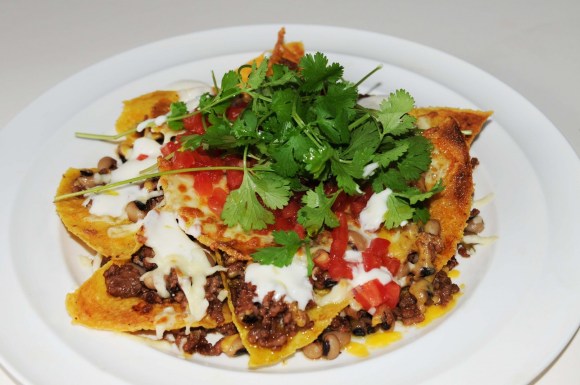
Nachos with tomato salsa, quacomole and sour cream


Nachos (believed to have originated in Mexico) is regarded as a snack and generally consists of fried tortilla chips topped with a layer of refried beans, various meats, jalapeño and a layer of shredded cheese.  There are many variations and this recipe is my own variation.  I hope you enjoy it.
LINE

Serves 4 Nachos

The beans:
1 cup/250 ml black eye beans, soaked in water overnight

The meat:
125 g/4.5 oz bacon, finely diced
500 g/1 lb ground lamb
2 garlic cloves
1 large onion, finely sliced
1 tablespoons/15 ml cumin, ground
2 cups/500 ml lamb stock (or chicken stock), heated
4 pickled jalapeno, seeds removed and finely sliced salt and freshly ground black pepper

The tomato salsa:
1 large onion, finely chopped
2 tomatoes, peeled, seeds removed, and chopped
1 cup/250 ml spring onions, finely sliced
1 tablespoon/15 ml olive oil
1 teaspoon/5 ml lemon juice
pinch of sugar
salt and freshly ground black pepper

The sour cream:
1 cup/250 ml cream
2 cups/500 ml natural yoghurt
2 tablespoons/30 ml lemon juice
salt and freshly ground black pepper

The quacomole:
2 ripe avocados, roughly mashed with a fork
1 pickled jalapeño, seeds removed if required, finely chopped
3 tablespoons/45 ml onion, finely chopped
1 tablespoon/15 ml tomato, peeled, seeded and finely chopped
1 tablespoon/15 ml cilantro
½ tablespoon/7 ml lime juice
a few drops of Tobasco sauce
salt and freshly ground black pepper

The toppings:
1 small bunch cilantro
24 corn tortillas
250 g/½ lb cheddar cheese, grated
250 g/½ lb hard mozzarella cheese, grated

In a saucepan, cover the soaked and drained black eye beans with cold water and bring to the boil.  Boil until tender (about 40 minutes), drain and add salt to taste.   Cover the saucepan and keep warm.

In a large frying pan, heat the olive oil until very hot.  Add the bacon and cook for a minute or so, then add the mince and stir to break up the lumps.  Fry until it started to get a good caramelized color, then add the garlic, onion, cumin, salt and freshly ground black pepper.  Cook for about 5 minutes, then add the hot lamb stock and cook until the sauce starts to thicken. Stir through the jalapeño and the black eye beans, cover the pan and turn off the heat.

For the tomato salsa, mix all the ingredients in a bowl, cover and refrigerate until needed.

For the sour cream, whisk the cream until slightly thickened, then add the rest of the ingredients and mix well.  Cover and refrigerate until needed.

For the quacomole, mix all the ingredients just before serving, cover and refrigerate until needed.

Heat the oven to very hot and arrange the corn tortillas on a big baking plate. Heat until the color changes slightly, then remove from the oven, cool slightly and break up in the required sizes.  Alternatively, if available, use good quality bought corn chips.

To serve: Use a big shallow baking dish and spread half the lamb mixture on the bottom, followed by a layer of chips.  Scatter half the cheddar and mozzarella around and half the cilantro.  Repeat the layer and finish with the cheese.  Do not add the rest of the cilantro now.  Place the baking dish under the grill and leave until the cheese is melted and bubbling.  Remove from the oven and sprinkle the rest of the cilantro over.  Serve with the tomato salsa scattered over and a generous drizzle of the sour cream.  Serve the quacomole on the side as well as the rest of the sour cream for guests to add as they wish.  Extra tortilla chips will certainly be appreciated.

Categories
METHODS

Lamb stock


5 kg/11 lbs lamb bones
2 pig’s trotters, cleaned thoroughly and split in half (ask your butcher to do it for you)
50 ml olive oil
2 medium onions, roughly chopped
4 carrots, roughly chopped
1 celery stalk, roughly chopped
6 liters/12.5 pts/ cold water
5 medium size ripe tomatoes, cut in quarters

Preheat the oven to 200°C/400°F.
Place the lamb bones and the trotters on an oven tray and cook in the preheated oven until browned all over.  In a large stockpot, heat the oil and lightly fry the onions, carrots and celery, then add the lamb bones and trotters. Add the water, and bring to the boil.  Turn down the heat and simmer gently over low-medium heat, regularly skimming the brown foam that forms on the surface.  Simmer for 5 hours, then remove from the heat. Cool to room temperature, then strain, do not press down on the solids as this will cause the stock to become cloudy.  Cover and refrigerate until cold, then remove the fat from the  surface.  Refrigerate for up to 2 days or frozen in smaller containers for up to 3 months.  Discard the solids.

Categories
MAIN COURSE

Lamb shanks poached in a spicy broth


Served with harissa yogurt,  couscous and roast vegetables and spicy aubergine and shiitaki mushrooms

BLOCK HORIZONTAL LINE
Serves 4

LAMB SHANKS WITH HARISSA

The shanks:
olive oil
4 lamb shanks
1 carrot, diced
1 leek, diced
1 celery stick, diced
4 garlic cloves
1 bay leaf
1 rosemary sprig
1 star anise
4 cardamom pods
1½ cup/375 ml dry white wine
7 cups/1¾ liter lamb stock, heated
sea salt and freshly ground black pepper

The couscous:
2 tablespoons/30 ml butter
3 spring onions, thinly sliced
½ cup/250 ml raisins
cinnamon stick
salt and freshly ground black pepper
3 cups/740 ml chicken stock
2 cups/250 ml couscous
¼ cup/60 ml almonds, slithered
¼ cup/60 ml fresh mint, chopped

The aubergines:
olive oil
4 medium aubergines, sliced in thin sliced
12 shiittaki mushrooms, sliced
salt and freshly ground black pepper
½ teaspoon/3 ml sesame oil
½ teaspoon/3 ml oyster sauce
½ tablespoon/7 ml balsamic vinegar
½ tablespoon/7 ml lemon juice
1 tablespoon.15 ml soy sauce
2 teaspoons/10 ml mirin

The yoghurt and harissa sauce:
2 tablespoons/30 ml fresh cream
4 tablespoons/60 ml plain yoghurt
2 teaspoons/20 ml lemon juice
salt and pepper to taste
harissa paste

Preheat the oven to 120°C/250ºF.
Heat a little olive oil in a large ovenproof pan and brown the shanks all over. Remove and set aside. Add some more olive oil to the same pan, then saute the carrot, leek, celery and garlic until light golden. Add the herbs and spices, pour in the wine and cook until the alcohol has evaporated.
Place the lamb shanks back into the pan with the vegetables, then pour in the stock. Season well, then cover and put in the preheated oven. Cook for about 3 hours, then remove from the oven and leave in the liquid for 30 minutes. Remove the meat and keep in a warm place. Strain the liquid, discard the solids, then skim of the fat that rises to the top. Reduce the liquid over high heat until thick and glossy. Check the seasoning and add more salt and pepper if necessary.

In a saucepan, melt the butter then add the spring onions, raisins, cinnamon stick, salt and pepper and stir until everything is well coated with the butter. Add the stock and bring to a boil. Put the couscous in a heatproof bowl and pour the spiced stock over. Cover and allow to sit for 5-10 minutes. Uncover, fluff the couscous with a fork, and stir in the almonds. Serve warm at room temperature with the mint sprinkled over.

Preheat the oven to 180°C/356°F.
Sprinkle the aubergines with salt and set aside for 30 minutes, then rinse the aubergines and pat dry. Heat some oil and fry the aubergine slices until golden brown on both sides. Drain on kitchen towel and set aside.

In the same pan heat some more oil and fry the mushrooms until tender. Remove from the pan and drain on kitchen towel. Set aside.
Mix together the rest of the ingredients for the dressing and season to taste. Mix the dressing with the fried mushrooms and aubergines and gently stir through to coat all the vegetables. Set aside until ready to serve warm at room temperature.

Whisk the cream until stiff, then fold in the yoghurt, lemon juice and salt and pepper. Taste and adjust the seasoning to your liking. Set aside until ready to use.
Just before serving, add some of the harissa paste to the yoghurt and mix through. Taste and add more paste if you wish.