Categories
SOUPS/SAUCES/CONDIMENTS

MIXED MUSHROOM RISOTTO


4 cups/1 liter chicken stock
6 fresh shiitake mushrooms, finely sliced (or 6 dried ones — see note)
150 g/5.3 oz mixed wild mushrooms, finely sliced
2 tablespoons/30 ml vegetable oil (for frying the mushrooms and onions)
1 onion, finely chopped
2 tablespoons/30 ml olive oil (for the risotto)
150 g/5.3 oz Arborio rice
⅔ cup/150 ml white wine
1 tablespoon/15 ml truffle trimmings (optional or use 1 teaspoon/5 ml truffle oil)
½ cup/125 ml Parmesan cheese, finely grated
¼ cup/60 ml chives, finely chopped
salt and freshly ground black pepper

If using dried shiitake mushrooms, pour out 1 cup/250 ml of the stock into a bowl containing the dried mushrooms. Set aside to soak until soft. Keep the rest of the stock simmering for the risotto. Remove the soaked mushrooms from the soaking liquid and finely slice them. Strain the soaking liquid of the mushrooms into the simmering stock.

In a medium saucepan, bring the stock to a simmer.
In a clean saucepan, heat the vegetable oil, then add all the mushrooms and onion and fry until cooked. Remove from the saucepan and set aside. (If using the dried shiitake mushrooms, strain at this stage and slice finely, then add it to the pan with the other mushrooms). 

Wipe the saucepan and heat 2 tablespoons/30 ml olive oil, then add the rice and stir to coat until it is lightly toasted but not colored. Add the wine and bring to the boil until all the alcohol has evaporated — stirring occasionally.  Stir in half a cup of the stock and cook until almost all the liquid has been absorbed.  Keep stirring  occasionally.  Continue adding the remaining stock, half a cup at a time, to the rice until almost all but half a cup of stock remains. This should take about 25 minutes. Add the cooked mushrooms, the onions and the balance of the stock. Stir to heat through. Remove from the heat, stir in the truffle trimmings (or truffle oil), the cheese and chives, and season to taste. Serve immediately.
Categories
METHODS SOUPS/SAUCES/CONDIMENTS

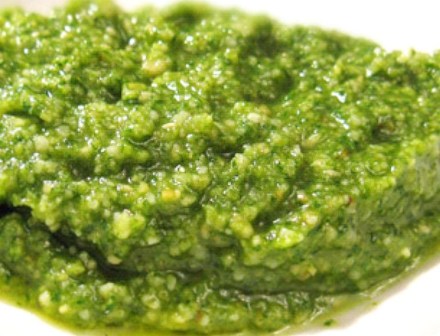
BASIL PESTO


BASIL PESTO


The quantity that this recipe gives can easily be doubled or tripled.

1 cup/250 ml (tightly packed) fresh basil leaves
1 garlic clove
25g/1 oz pine nuts, toasted
½ cup/125ml olive oil
4 tablespoons/60 ml Pecorino cheese, freshly grated
4 tablespoons/60 ml Parmesan, freshly grated
salt to taste
½ teaspoon/3 ml lemon juice

  • Put the basil, garlic, pine nuts and Pecorino cheese in an electric mixer and blend very briefly until you have a rough consistency.
  • Then slowly add the olive oil, checking regularly whether it is the consistency you want.
  • Keep on adding oil until you are satisfied. When the sauce has reached the consistency you want, add the Parmesan cheese, stir in well and check the seasoning.

The amount of salt depends on the piquancy of the Pecorino used.

  • Store in a jar with a tight-fitting lid in the refrigerator for about 3 days.
Categories
MAIN COURSE

BOLOGNESE


The difference between this and the traditional Bolognese recipe is that I do not let it cook for very long because I do not use canned tomatoes. I prefer the freshness and lightness the fresh tomatoes give the dish.

BOLOGNESE

To start:
25 g/8 oz butter
25 g/8 oz olive oil
2 cloves garlic, finely chopped
1 carrot, finely chopped
2 celery stalks, finely chopped
2 large mushrooms, finely chopped

The meat:
25 g/8 oz butter
25 g/8 oz olive oil
70 g/2½ oz pancetta, finely sliced
1 onion, finely chopped
300 g/10.6 oz beef, minced
100 g/3.5 oz pork, minced
2 large, fresh tomatoes, peeled, deseeded and finely diced
¾ cup/175 ml white wine
1 cup/250 ml beef stock
¾ cup/175 ml whole milk

The pasta:
spaghetti (for 4 servings)
2 tablespoons/30 ml olive oil
2 tablespoons/30 ml parsley, finely chopped
grated Parmesan cheese, to serve

To start:
Melt the butter and oil in a heavy-based pan over medium heat, then add the garlic, carrot and celery and fry for 2 minutes. Add the mushroom and cook until the mushroom are cooked. Remove the vegetables from the pan with a slotted spoon and add some more butter and oil.

Turn up the heat then add the onion and pancetta and let it cook for a minute or so. Add the minced beef and pork, breaking it up with wooden spoon and leave to brown without stirring. Then stir and let brown some more. Stir in the reserved mushrooms and vegetables and the milk and stir through until the milk is well absorbed. Add the white wine and let it cook down, then add the tomatoes and half the stock. Cook until nearly dry then add the rest of the stock and cook some 15 minutes longer. Season to taste and remove from the heat. Keep it warm.

While the Bolognese is “resting”, cook the pasta until al dente in a deep saucepan with lots of salted water. Drain and pour back into the saucepan and drizzle some olive oil over. Stir through the parsley.

With a pasta serving fork, roll up the pasta and gently slide it onto a warm serving plate. Neatly spoon the meat sauce over the pasta, top it with freshly grated Parmesan cheese and more parsley if preferred.

Make double the meat sauce and use leftovers for making:
Stuffed roast peppers
Stuffed mushrooms
Sausage rolls with puff pastry.

For leftover spaghetti:
Mix with breadcrumbs, herbs and cheese and put it under the grill for a few minutes for a delightful snack or with a salad for lunch.

Categories
STARTERS/SIDES

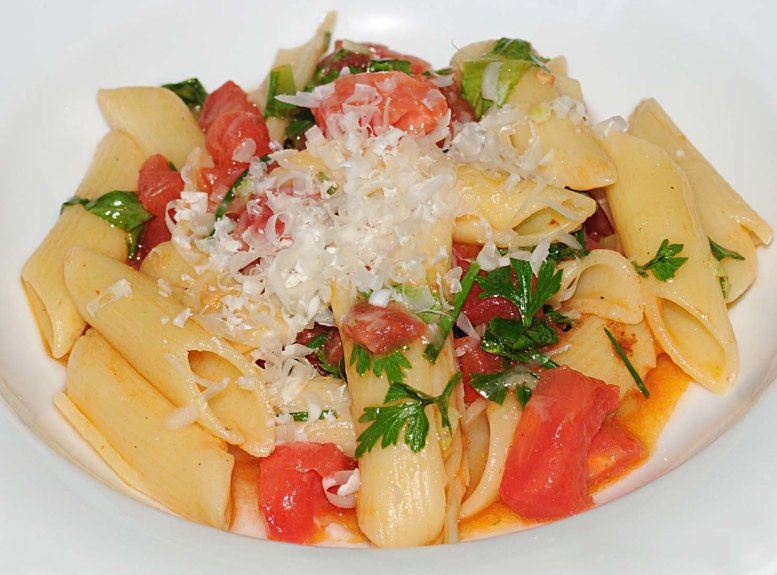
Pasta with a fresh tomato and brie sauce


This is a delightfully light and fresh tasting starter or light summer lunch. Served with some fresh crusty bread and a crispy white wine, guarantees total satisfaction.

PASTA WITH TOMATO AND BRIE SAUCEServes 4

olive oil
4 shallots, finely sliced
3 garlic cloves, finely chopped
8 rashers of bacon, finely chopped (omit if for vegetarians)
375 g penne pasta
250 g/8.8 oz good quality brie, roughly chopped
8 tomatoes, skinned and roughly chopped
salt and fresh ground pepper
2 tablespoons fresh parsley, finely chopped
2 cups Parmesan cheese
1 cup fresh basil, finely sliced


For every 100 g/3.5 oz of pasta, you’ll need 5 cups water and 2 teaspoons salt in a large saucepan. It is important to use lots of water when cooking pasta to enable the pasta to move around while cooking. Bring the water to the boil and add salt before you add the pasta. The best way to judge whether the pasta is cooked, is to taste it.

  • Heat 2 tablespoons olive oil in a frying pan and fry the shallots, garlic and bacon for about 4 minutes, until lightly caramelized. Remove from the heat.
  • Meanwhile, cook the pasta until tender but still have a bite to it. Drain but reserve one cup of the cooking liquid.
  • Place the saucepan with the pasta back onto low heat and mix in 2 tablespoons olive oil.
  • Reheat the pan with the fried onion mix and deglaze with the reserved liquid.
  • Add this mixture to the pasta, stir in the brie and let it melt slightly, then add the tomatoes, salt and pepper to taste, parsley and half of the Parmesan cheese.
  • Let simmer for about 2 minutes, then remove from the heat.
  • Dish up immediately with the basil and the rest of the Parmesan sprinkled over.
Categories
SOUPS/SAUCES/CONDIMENTS

Baked aubergine and mushroom stacks with tomato and balsamic vinegar


Serves 4

BAKED AUBERGINE AND MUSHROOM STACKS

The aubergine stacks:
2 tablespoons/30 ml olive oil
2-3 large aubergines, sliced across in 2 cm/0.8 in wide slices (you
should have 16 slices)
8 large black mushrooms, wiped clean
salt and freshly ground black pepper
4 tablespoons/60 ml soft goat’s cheese
4 slices of brie, medium flavored
8 basil leaves

The tomato sauce
1 tablespoon/15 ml olive oil
1 medium onion, finely chopped
1 garlic clove, finely chopped
3 large very ripe tomatoes, skinned and deseeded, roughly chopped
3 sprigs fresh rosemary, finely chopped
few sprigs of fresh thyme, leaves picked
salt and freshly ground black pepper
vegetable stock (optional), if needed

The dressing:
3 tablespoons/45 ml balsamic vinegar (not an expensive grade)
2 tablespoons/30 ml caster sugar
2 tablespoons/30 l water
zest of one lemon, finely chopped
2 tablespoons/30 ml chives, finely sliced

Heat the olive oil in a large frying pan and fry the aubergine slices until golden brown on both sides. Remove with a slotted spoon and drain on kitchen paper. In the same pan, fry the mushrooms, until they have released all their moisture. Remove from the heat and set aside.

For the tomatoes, heat the olive oil and over medium heat, fry the onion and garlic for about 1 minute. Turn up the heat, add the tomato and cook for about 10 minutes – nothing more. It must still retain the freshness. Add the herbs and season well. Reserve about 1 cup/250 ml for drizzling at the end.

For the dressing, bring the balsamic vinegar and sugar to the boil and remove from the heat immediately. (By the time you need to use the balsamic vinegar it might have turned too sticky to use. Just add a little water and reheat, stirring well.) Add the lemon zest and set aside.

Preheat the oven to 220°C/422°F.

To assemble:
In a heatproof dish make four “towers” starting at the bottom with one layer of aubergine, followed by a mushroom, a spoon full of tomato sauce and a layer of the soft goat’s cheese crumbled. Repeat this procedure until all the vegetables have been used, finishing with tomato. Put a slice of brie on top, scatter the crumb mixture over and drizzle a little bit of olive oil over. Put in the oven for about 10 minutes or until the brie starts bubbling. Remove from the oven and put a ”tower” on each plate. Drizzle the reserved tomato sauce around and a swirl of the balsamic vinegar glaze. Sprinkle the chopped chives and spring onions around, and serve immediately. If you have sufficient size ovenproof dishes, each “tower” can be baked and served individually.

Categories
MAIN COURSE

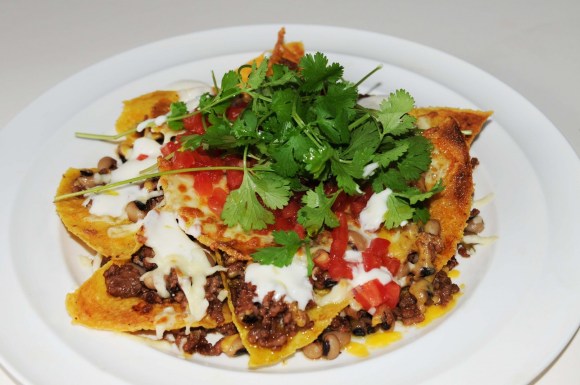
Nachos with tomato salsa, quacomole and sour cream


Nachos (believed to have originated in Mexico) is regarded as a snack and generally consists of fried tortilla chips topped with a layer of refried beans, various meats, jalapeño and a layer of shredded cheese.  There are many variations and this recipe is my own variation.  I hope you enjoy it.
LINE

Serves 4 Nachos

The beans:
1 cup/250 ml black eye beans, soaked in water overnight

The meat:
125 g/4.5 oz bacon, finely diced
500 g/1 lb ground lamb
2 garlic cloves
1 large onion, finely sliced
1 tablespoons/15 ml cumin, ground
2 cups/500 ml lamb stock (or chicken stock), heated
4 pickled jalapeno, seeds removed and finely sliced salt and freshly ground black pepper

The tomato salsa:
1 large onion, finely chopped
2 tomatoes, peeled, seeds removed, and chopped
1 cup/250 ml spring onions, finely sliced
1 tablespoon/15 ml olive oil
1 teaspoon/5 ml lemon juice
pinch of sugar
salt and freshly ground black pepper

The sour cream:
1 cup/250 ml cream
2 cups/500 ml natural yoghurt
2 tablespoons/30 ml lemon juice
salt and freshly ground black pepper

The quacomole:
2 ripe avocados, roughly mashed with a fork
1 pickled jalapeño, seeds removed if required, finely chopped
3 tablespoons/45 ml onion, finely chopped
1 tablespoon/15 ml tomato, peeled, seeded and finely chopped
1 tablespoon/15 ml cilantro
½ tablespoon/7 ml lime juice
a few drops of Tobasco sauce
salt and freshly ground black pepper

The toppings:
1 small bunch cilantro
24 corn tortillas
250 g/½ lb cheddar cheese, grated
250 g/½ lb hard mozzarella cheese, grated

In a saucepan, cover the soaked and drained black eye beans with cold water and bring to the boil.  Boil until tender (about 40 minutes), drain and add salt to taste.   Cover the saucepan and keep warm.

In a large frying pan, heat the olive oil until very hot.  Add the bacon and cook for a minute or so, then add the mince and stir to break up the lumps.  Fry until it started to get a good caramelized color, then add the garlic, onion, cumin, salt and freshly ground black pepper.  Cook for about 5 minutes, then add the hot lamb stock and cook until the sauce starts to thicken. Stir through the jalapeño and the black eye beans, cover the pan and turn off the heat.

For the tomato salsa, mix all the ingredients in a bowl, cover and refrigerate until needed.

For the sour cream, whisk the cream until slightly thickened, then add the rest of the ingredients and mix well.  Cover and refrigerate until needed.

For the quacomole, mix all the ingredients just before serving, cover and refrigerate until needed.

Heat the oven to very hot and arrange the corn tortillas on a big baking plate. Heat until the color changes slightly, then remove from the oven, cool slightly and break up in the required sizes.  Alternatively, if available, use good quality bought corn chips.

To serve: Use a big shallow baking dish and spread half the lamb mixture on the bottom, followed by a layer of chips.  Scatter half the cheddar and mozzarella around and half the cilantro.  Repeat the layer and finish with the cheese.  Do not add the rest of the cilantro now.  Place the baking dish under the grill and leave until the cheese is melted and bubbling.  Remove from the oven and sprinkle the rest of the cilantro over.  Serve with the tomato salsa scattered over and a generous drizzle of the sour cream.  Serve the quacomole on the side as well as the rest of the sour cream for guests to add as they wish.  Extra tortilla chips will certainly be appreciated.

Categories
SOUPS/SAUCES/CONDIMENTS

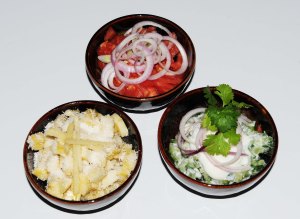
SAMBALS TO SERVE WITH INDIAN FOOD


SAMBALS

SAMBAL 1:
Papaya and banana coated with coconut
Makes about 2 cups/500 ml
1 small papaya, cut into 2 cm/0.7 in pieces
1 banana, cut into 2 cm/0.7 in pieces
4 tablespoons/60 ml cup lemon juice
desiccated coconut

Sprinkle the lemon juice over the banana and papaya and toss in enough desiccated coconut to coat each piece. Serve immediately at room temperature.

SAMBAL 2:
Tomato and onion salsa
Makes about 2 cups/500 ml
4 ripe tomatoes, unpeeled, seeded and cut into 1 cm/0.4 in pieces
1 red onion, finely chopped
3 tablespoons/45 ml coriander leaves, finely chopped
1-2/15-30 ml tablespoons lime juice
1 teaspoon/5 ml soft brown sugar
salt and freshly ground black pepper

Combine all the ingredients and gently mix together.  Cover with plastic wrap and refrigerate for 15 minutes.

Chef’s note: The reason for not peeling the tomato, is simply to keep the tomato pieces intact and not losing too much juice.

 SAMBAL 3:
Cucumber and yogurt mix (Raita)
Makes about 2 cups
1 teaspoon/5 ml each of ground cumin  and mustard seeds, toasted
1 cucumber, seeded and diced
1 cup/250 ml plain yoghurt
½ teaspoon/3 ml ginger, freshly grated
3 sprigs of mint, finely chopped
salt and freshly ground black pepper

Fry spices in a dry pan for 1 minute until fragrant and set aside.  In a separate bowl, put the cut cucumber and sprinkle salt over.  Set aside to draw out all the water.   Just before serving the meal, drain the cucumber and mix with the cucumber and yogurt and add the toasted spices, ginger and mint.  Mix gently to combine well.  Serve chilled.

Categories
SOUPS/SAUCES/CONDIMENTS

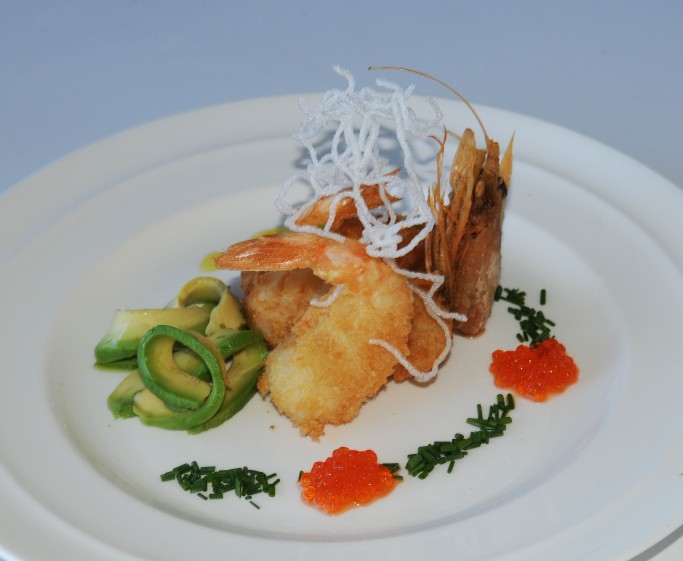
Fish and prawn tempura with an Oriental dipping sauce


The tempura prawns can also be served on a potato cake, toast or rice cake; serve also with salmon roe, chopped chives and/or avocado.

SEAFOOD TEMPURAServes 4

The fish:

320 g /11 oz firm white fish, skin removed
8 tiger prawns, shelled and de-veined (always reserve and freeze prawn shells for later use to make seafood stock. )
flour for dusting
salt and freshly ground black pepper
oil for deep-frying

The tempura batter:
1 cup/250 ml self-raising flour
1 tablespoon/15 ml cornstarch
1 cup/250 ml soda water
a few blocks of ice

The dressing:
3 tablespoons/45 ml hot water
1 teaspoon/5 ml dashi granules
1-2 teaspoons/5-10 ml mirin
2 tablespoon/30 l soy sauce

The garnish:
fresh coriander leaves for serving
salmon roe or caviar


See the Glossary for safety tips on deep-frying.

  • Heat the oil in a deep frying pan to about 180°C/356°F.
  • Cut the fish in strips of 3 x 8 cm/1 x 3 in and butterfly the prawns.
  • For the dipping sauce, dissolve the dashi granules in the hot water and let it cool.
  • Add the mirin and soy sauce and mix well.

The mirin is quite sweet but after tasting the sauce you can decide whether you want to add more.

  • In a large bowl, mix the two flours with the or soda water until just combined, but still quite lumpy. Add the blocks of ice to keep the mixture cold.
  • Dust the pieces of fish and prawns lightly with flour and season well.
  • Dip the fish in the batter, gently shake off the excess and place in the hot oil (not more than four pieces at a time).
  • Deep-fry in batches until golden and drain on paper towel.
  • Before adding the next batch, make sure the oil is back to the correct temperature.
  • Keep the cooked fish uncovered in a low oven until you are ready to serve.
  • Serve immediately.

To serve:
Serve the fish tempura pieces stacked on each plate with garnishes of your choice, and the dipping sauce in a small bowl for each serving.

Categories
MAIN COURSE

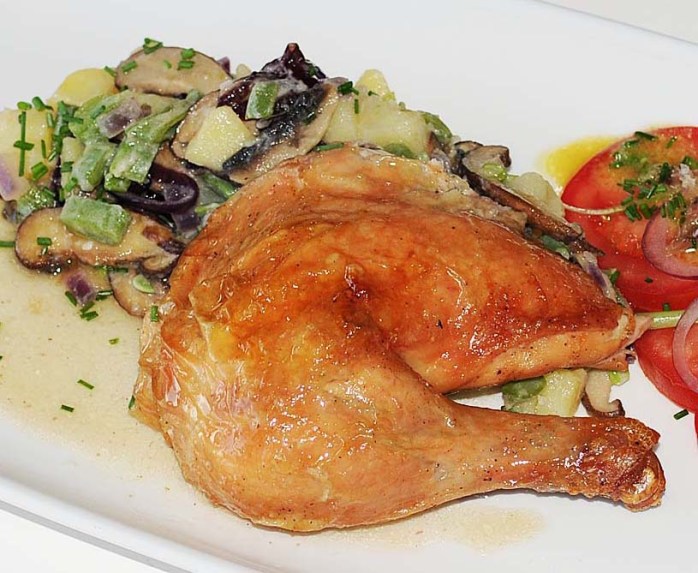
Thyme smoked chicken (Done on a Weber)


Served with a creamy white wine and thyme sauce, served rice and any vegetables. 


To smoke food, means to slowly cook over indirect heat and a low fire with smoldering flavorings such as herbs or special wood. For this recipe however it is a combination of smoking and roasting. Here we serve the chicken with a Bulgur wheat salad with fennel, egg, grapes and sun-dried tomatoes and a Roast potato with rosemary.

THYME SMOKED CHICKEN

Serves 4

The chicken:
1 large free-range chicken, washed inside and out, and dried
3 tablespoons/45 ml olive oil
salt and freshly ground black pepper
juice of ½ lemon
20 sprigs of fresh thyme, tied in two bundles
2 cups/500 ml chicken stock

The sauce:
1 teaspoon garlic, minced
1 shallot, finely chopped
1 cup/250 ml chicken stock
the pan drippings
1cup/250 ml fresh cream (optional)
salt and freshly ground black pepper

The bulgur wheat salad:
250 g/9 oz bulgur wheat
4 small free-range eggs (small hen’s eggs or quail eggs)
1 fennel bulb, halved and finely sliced
1 bunch spring onions, chopped
25 g/0.8 oz sun-dried tomatoes in oil, drained and sliced
a handful of green seedless grapes, cut in half
3 tablespoons/45 ml chopped fresh parsley
2 tablespoons/30 ml chopped fresh mint
75 g (2.6 oz) black olives, stoned
¼ cup/60 ml olive oil
1 small garlic clove, minced
2 tablespoons/30 ml lemon juice
salt and ground black pepper


For the smoking, we strongly recommend using the indirect cooking method in a kettle barbecue. Set up your grill for indirect heat by building a 2 zone fire, one on each side – drip pan goes in the middle under the meat. Make a charcoal fire and let burn until the coals are coated lightly with white ash.

  • Rub the oil over the skin of the chicken and season inside and out with salt and pepper.
  • Prepare the fire with two side fires and a central position for a drip try.
  • Generously rub with olive oil all over, then place the chicken, breasts up, on top of the wire racks of the barbeque, over the hot coals (with the dripping tray directly underneath), then position the sprigs of thyme on each side of the chicken.
  • Place the lid firmly on but keep the grill vents open, and cook for about 20 minutes. Then remove and discard the burnt thyme.
  • Tip the carcass to let the juice in the cavity run into the dripping tray (do this every 10 minutes from now on), pour the chicken stock in the dripping tray, and place the chicken back on the grid with the breasts facing down.
  • Replace the lid firmly again and continue cooking for another 20 minutes.
  • Then make a small incision in the inside of each leg. If the juices run clear it is cooked, otherwise leave it for 5-10 minutes longer.
  • Another way of seeing whether the chicken is cooked, tip it again to see whether the juices in the cavity is clear. If you are satisfied that the juices are clear, remove the chicken from the grill and leave to rest in a warm place, breasts side down, for at least 25 minutes.
  • While the chicken is cooking, heat the oil in a saucepan and gently fry the garlic and shallot until golden.
  • Turn up the heat then add the chicken stock and reduce until syrupy. Put aside until the chicken is cooked.
  • When the chicken is cooked and while resting it, remove the dripping tray from the barbeque and drain off the excess oil.
  • Pour the contents of the dripping through a strainer (scraping off all the bits that are stuck to the tray) into the reduced chicken stock and over medium heat, bring to the boil then add the cream (if using).
  • Pour through a fine sift again into a clean pan and simmer gently until the sauce has thickened, stirring continuously. Check the seasoning.

To serve:

  • Joint the chicken and place a serving of joints on warm serving plates.
  • Spoon the sauce around and garnish with a sprig of fresh thyme.
  • Serve with the rice and other side dishes of your choice.
  • If you wish, cut the chicken in easy serving pieces the Chinese way. A description of this method is in the Glossary.
Categories
SOUPS/SAUCES/CONDIMENTS

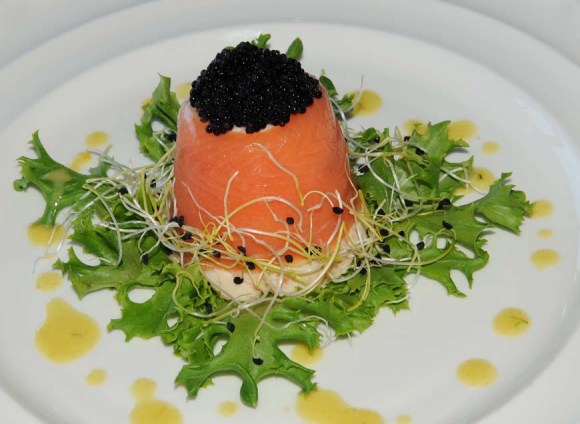
Smoked trout mousse


Served with horseradish and micro salad leaves

SMOKED TROUT MOUSSEServes 4

The mousse:
4-8 ribbons of smoked trout (to line the ramekins)
2 smoked trout fillets
½ cup/125 ml full cream, chilled
1 tablespoon/30 ml butter at room temperature
Tobasco sauce, a few drops
2 tablespoons/30 ml fresh lemon juice
salt
1 sheet gelatin
1 tablespoon/15 ml water
1½ cup/750 ml chilled full cream
4 tablespoons/60 ml caviar (if caviar is not available, finely chopped chives will do)

The horseradish cream:
3 tablespoons/45 ml fresh horseradish, grated
1 tablespoon/15 ml white wine vinegar or lemon juice
1 teaspoon/5 ml sugar
1 tablespoon/30 ml fresh dill, finely chopped
1 cup/250 ml fresh full cream
salt and freshly ground black pepper


This horseradish cream also goes well with  beef, beets, chicken, eggs, fish, pork, salmon, sausages, shellfish, smoked fish, etc. Covered, the sauce will keep for 2 to 3 days in a refrigerator.

The garnish:
micro salad leaves and sprouts
horseradish cream
dill sprigs
small wedges of lemon

  • Have ready four ramekins lined with cling wrap with excess all round to cover the mousse, then line the inside of each ramekin with the trout ribbons, leaving the bottom open.
  • In a food processor, blend the trout, cream, butter and lemon juice and add salt to taste.
  • Soak the sheets of gelatin in a bowl of cold water and after 5 minutes, drain and squeeze out the excess water.
  • Heat a small saucepan on low heat and add the gelatin with one tablespoon of water.
  • Let the gelatin dissolve thoroughly, then remove from the heat and add to the trout puree.
  • Whisk the cream until stiff and fold into the trout puree. Taste for seasoning.
  • Fill the ramekins with the mousse, then cover with the overhanging cling wrap and chill the mousse for at least 8 hours or overnight.
  • For the horseradish cream, blend the horseradish, vinegar and lemon juice, sugar and dill in a food processor.
  • In a separate bowl, whisk the cream until stiff then fold in the horseradish mixture.
  • Season to taste, then strain if you prefer a smooth texture and refrigerate for 4 – 8 hours.

To serve:
Arrange the salad leaves and sprouts in the center of each serving plate and turn the mousse out onto the greens. Carefully peal off the cling wrap then spoon some caviar (or chives, if using) on top and drizzle the horseradish cream around the mousse. Decorate with a few sprigs of dill and the wedges of lemon and serve immediately.