Categories
MAIN COURSE

Duck breast fritters with Basmati rice and roast peaches


If you wish to serve another vegetable,  cabbage, lightly poached in butter and seasoned with nutmeg, goes very well with this dish.

Serves 4
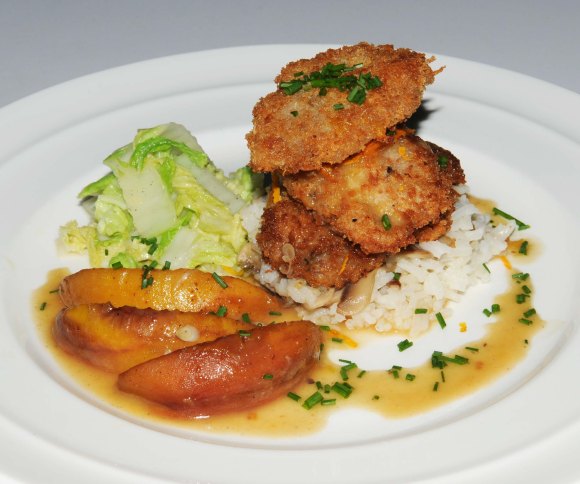
DUCK BREAST FRITTERS

The duck:
4 free-range duck breasts
2 tablespoons/30 ml shoa xing rice wine (available at Asian supermarkets)
1 tablespoon/15 ml szechuan pepper, ground (available at Asian supermarkets)
1 clove garlic, minced
salt
flour for sprinkling
2 free-range eggs, whisked
Japanese breadcrumbs (Panko breadcrumbs)
oil for deep-frying

The peaches:
1 tablespoon/15 ml sugar
1 tablespoon/15 ml butter
4 ripe peaches, stoned and quartered (use canned peaches if fresh ones are unavailable but cut down on the sugar)
2 cloves, ground
2 tablespoons/30 ml Peach Schnapps

The rice:
450 g/15.8 oz Basmati rice
4 cups/1 liter chicken stock
75 g/2.6 oz butter
salt

The garnish:
2 tablespoons/30 ml orange zest, grated
2 tablespoons/30 ml fresh chives, chopped

Score the breasts on the fat side with 2 cm/0.8 in space between each cut. Mix the rice wine, pepper, garlic and salt and rub onto the breasts on both sides. Set aside in the refrigerator for at least 2 hours.

When ready to cook, wipe most of the marinade of the breasts, heat a non-stick pan and sear the breasts on the fat side only, until crispy (about 3 minutes). Remove the breasts from the pan and set aside to cool. Store the rendered fat in a container for another time to fry potatoes, etc.

When the meat has rested for at least ½ hour (it will be quite raw still), slice the meat into 4 thick slices across. Place each slice of breast between two pieces of cling film and with a mallet, flatten the meat until about 15 mm/1 in) thick.

Sprinkle each slice with flour, then dip it in the egg and finally coat with the breadcrumbs. Heat the oil in a large saucepan,  fry the crumbed slices in the hot oil until crispy — not longer than 30 seconds on each side. Remove from the pan and let drain on kitchen paper.

Meanwhile, in a saucepan, melt the sugar and butter and saute the peach quarters in it for about 1 minute on each side, de-glaze with the schnapps, sprinkle over the ground cloves and let simmer for another 2 minutes or until just tender.

Add the rice, salt and chicken stock to a medium saucepan. Bring to the boil, lower the heat, then cover with a tightly-fitting lid. Cook for 15-20 minutes then turn off the heat and leave the rice to stand, still covered, until about 5 minutes before serving. When ready to serve,add the butter and fluff up the rice with a fork.

To serve:
On each heated serving plate, spoon some rice and stack four duck breast fritters on top.  Divide the peaches and place around the rice and drizzle some of the peach juices over.
Categories
MAIN COURSE

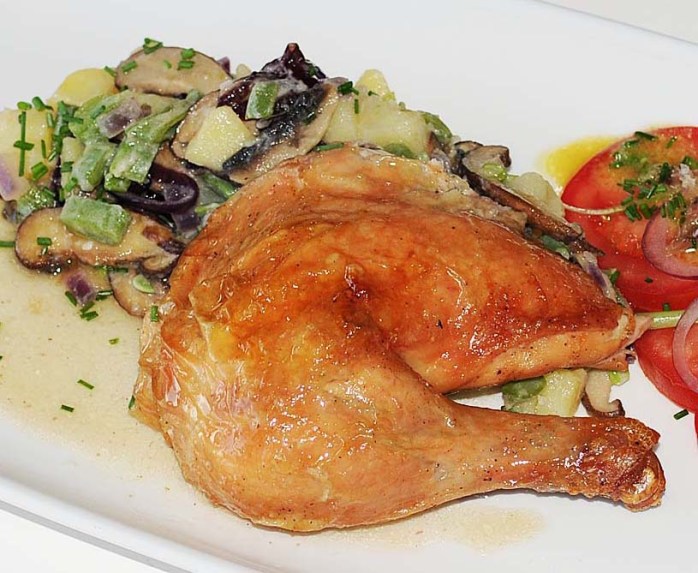
Thyme smoked chicken (Done on a Weber)


Served with a creamy white wine and thyme sauce, served rice and any vegetables. 


To smoke food, means to slowly cook over indirect heat and a low fire with smoldering flavorings such as herbs or special wood. For this recipe however it is a combination of smoking and roasting. Here we serve the chicken with a Bulgur wheat salad with fennel, egg, grapes and sun-dried tomatoes and a Roast potato with rosemary.

THYME SMOKED CHICKEN

Serves 4

The chicken:
1 large free-range chicken, washed inside and out, and dried
3 tablespoons/45 ml olive oil
salt and freshly ground black pepper
juice of ½ lemon
20 sprigs of fresh thyme, tied in two bundles
2 cups/500 ml chicken stock

The sauce:
1 teaspoon garlic, minced
1 shallot, finely chopped
1 cup/250 ml chicken stock
the pan drippings
1cup/250 ml fresh cream (optional)
salt and freshly ground black pepper

The bulgur wheat salad:
250 g/9 oz bulgur wheat
4 small free-range eggs (small hen’s eggs or quail eggs)
1 fennel bulb, halved and finely sliced
1 bunch spring onions, chopped
25 g/0.8 oz sun-dried tomatoes in oil, drained and sliced
a handful of green seedless grapes, cut in half
3 tablespoons/45 ml chopped fresh parsley
2 tablespoons/30 ml chopped fresh mint
75 g (2.6 oz) black olives, stoned
¼ cup/60 ml olive oil
1 small garlic clove, minced
2 tablespoons/30 ml lemon juice
salt and ground black pepper


For the smoking, we strongly recommend using the indirect cooking method in a kettle barbecue. Set up your grill for indirect heat by building a 2 zone fire, one on each side – drip pan goes in the middle under the meat. Make a charcoal fire and let burn until the coals are coated lightly with white ash.

  • Rub the oil over the skin of the chicken and season inside and out with salt and pepper.
  • Prepare the fire with two side fires and a central position for a drip try.
  • Generously rub with olive oil all over, then place the chicken, breasts up, on top of the wire racks of the barbeque, over the hot coals (with the dripping tray directly underneath), then position the sprigs of thyme on each side of the chicken.
  • Place the lid firmly on but keep the grill vents open, and cook for about 20 minutes. Then remove and discard the burnt thyme.
  • Tip the carcass to let the juice in the cavity run into the dripping tray (do this every 10 minutes from now on), pour the chicken stock in the dripping tray, and place the chicken back on the grid with the breasts facing down.
  • Replace the lid firmly again and continue cooking for another 20 minutes.
  • Then make a small incision in the inside of each leg. If the juices run clear it is cooked, otherwise leave it for 5-10 minutes longer.
  • Another way of seeing whether the chicken is cooked, tip it again to see whether the juices in the cavity is clear. If you are satisfied that the juices are clear, remove the chicken from the grill and leave to rest in a warm place, breasts side down, for at least 25 minutes.
  • While the chicken is cooking, heat the oil in a saucepan and gently fry the garlic and shallot until golden.
  • Turn up the heat then add the chicken stock and reduce until syrupy. Put aside until the chicken is cooked.
  • When the chicken is cooked and while resting it, remove the dripping tray from the barbeque and drain off the excess oil.
  • Pour the contents of the dripping through a strainer (scraping off all the bits that are stuck to the tray) into the reduced chicken stock and over medium heat, bring to the boil then add the cream (if using).
  • Pour through a fine sift again into a clean pan and simmer gently until the sauce has thickened, stirring continuously. Check the seasoning.

To serve:

  • Joint the chicken and place a serving of joints on warm serving plates.
  • Spoon the sauce around and garnish with a sprig of fresh thyme.
  • Serve with the rice and other side dishes of your choice.
  • If you wish, cut the chicken in easy serving pieces the Chinese way. A description of this method is in the Glossary.
Categories
SOUPS/SAUCES/CONDIMENTS

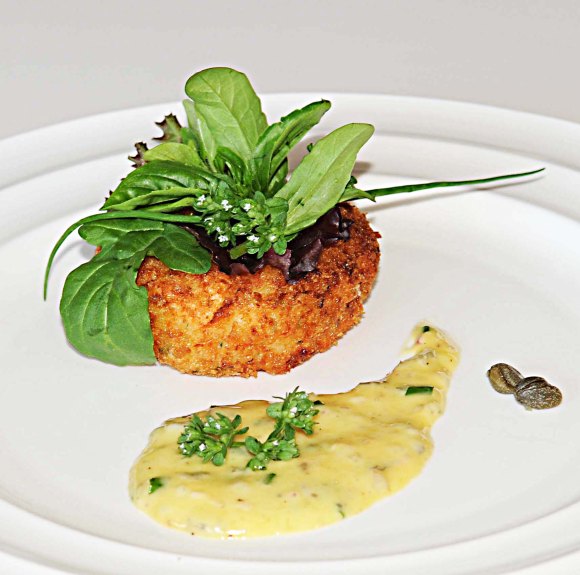
Seafood cakes with a caper sauce and mixed herbs


The fishcakes can be made with any leftover fish from a previous meal.

Serves 4
SEAFOOD CAKES

The mashed potatoes:
300 g/0.5 oz potatoes, peeled
2 tablespoons/30 ml créme fraîsche (make your own)
2 tablespoons/30 ml milk, heated
salt and freshly ground white pepper

The seafood:
1 tablespoon/15 ml olive oil
8 medium prawns, shelled, deveined
200 g/7 oz firm white fish OR 100 g/3.5 oz  salmon and 100 g/3.5 oz
firm white fish
100 g/3.5 oz smoked salmon
1 medium shallot, finely chopped
1 small mild red chili, finely chopped
1 tablespoon/15 ml lemon juice
1 egg lightly beaten
1 tablespoon/15 ml parsley, finely chopped
1 tablespoon fresh coriander, finely chopped
salt and fresh ground black pepper
Japanese breadcrumbs (Panko)
oil for deep-frying

The sauce:
2 hard-boiled egg
½ teaspoon/3 ml Dijon mustard
salt and freshly ground black pepper
½ cup/125 ml peanut oil
2 teaspoons/10 ml white wine vinegar
1 tablespoon/15 ml capers, drained, rinsed and roughly chopped
2 tablespoons/30 ml gherkins (cornichons), finely chopped
1 tablespoon/15 ml of each of parsley, tarragon, chives and chervil, finely chopped

The garnish:
a mixture of fresh herb leaves
paprika for sprinkling

Cut the potatoes into even chunks and boil in salted water until tender (about 15 minutes). Drain and return to the pan and over gentle heat, reheat the potatoes until any excess moisture has evaporated.  Push the potato chunks through a potato ricer.  In the meantime, slowly add the heated milk to the potatoes whilst whisking it with a fork. Mix in the créme fraîsche, salt and pepper to taste, then cover and set aside in a warm place.

To get the potato mash even smoother, push it through a drum sieve.

In a frying pan, heat the oil and lightly fry the prawns for 1 minute.  Remove with a slotted spoon and drain on kitchen towel.  Then fry the fish until just cooked – about 2 minutes.  Remove with a slotted spoon and drain on kitchen towel.  When the prawns and fish have cooled completely, roughly chop all of it and put in a bowl.  Cut the smoked salmon into small pieces and add to the fish and prawns.  Add the rest of the ingredients and the mashed potatoes, except the crumbs and oil, and mix well.  Put in the refrigerator for about 15 minutes to set, then remove and form the cakes.  Divide the mixture into 8 equal sized cakes.  (If you find that the cakes are too big, make smaller ones to get 12 cakes.)

To make sure that all the cakes are the same size, weigh them!

Heat the oil to about 170°C/335°F. (See safety tips for deep frying.)

Roll each cake in the crumbs, making sure the crumbs stick well, then fry in the oil – about 1-2 minutes on each side until they are golden brown.  Drain on kitchen towel and keep warm until ready to serve.

Put the yolks of the boiled eggs with the mustard and salt and pepper in a blender and blend well until a smooth paste forms.  While mixing, add half the oil, drop for drop, until all the ingredients amalgamated well.  Carry on mixing and add the vinegar, then slowly add the rest of the oil.  Transfer the mixture to a bowl and mix in the rest of the ingredients except the paprika.  Check the seasoning and adjust if necessary.  The paprika will be sprinkled over the sauce once it has be spooned onto the serving plates. Keep the sauce refrigerated until ready to serve.

To serve:
Place two or three fishcakes in the center of each serving plate, then put a posy of herb leaves on top or next to the cakes, and drizzle the sauce around.  Lightly sprinkle some paprika onto the sauce.

Categories
METHODS

Clarifying stock for clear soups or aspic


As used in Quail egg and prawn set in aspic molds

Clarified stock is used for clear soups and savory jellies. During the clarifying process a certain amount of flavor will be lost.  To avoid this, add additional finely chopped aromatic vegetables (vegetables, celery, leek, parsley, etc) together with the specified amount of gelatin to the stock.   Then add lightly whisked egg white (2 or 3 depending on the volume of the stock) and bring the stock up to the boil.  The egg white will start to form a crust on top to which all the impurities (that make the liquid cloudy) in the stock get trapped.  Do not stir the stock at all. This process will take about ten minutes after boiling started, then turn the heat of and carefully remove the crust.  Through a sieve lined with double cheesecloth and over a large bowl, slowly ladle the stock through. Do not squeeze the cheesecloth or force the liquid through. The stock is now clarified.  Seasoning are added then to flavor the aspic according to the recipe of the dish you are preparing.

Categories
MAIN COURSE

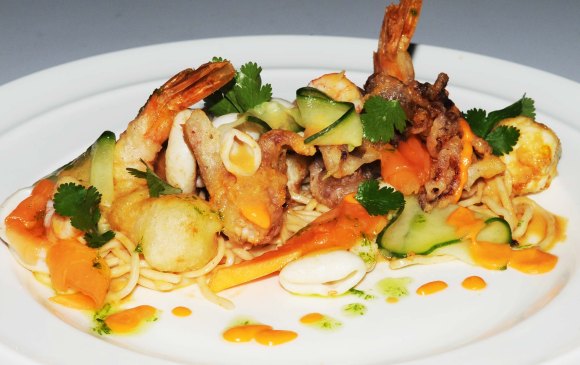
Deep-fried fish, mixed seafood and onion rings


Served on a bed of noodles and cucumber ribbons with a creamy caper mayonnaise dressing
BLOCK HORIZONTAL LINE
Serves 4

The best way to complete a successful deep-fried meal is to prepare all the ingredients in advance and have the salad and dressing ready before cooking the fish and seafood.

DEEP-FRIED FISH AND SEAFOOD PASTA SALAD

The batter:
½ cup/125 ml cream
1 clove garlic, creamed
3 egg yolks
2 tablespoons/30 ml Parmesan cheese, finely grated
1 tablespoon/15 ml plain flour
1 tablespoon/15 ml cornstarch
½ cup/125 ml beer
pinch of salt and freshly ground black pepper

 The fish and seafood:
120 g/4 oz firm white fish, skinned
120 g/4 oz prawns,
120 g/4 oz squid with tentacles
2 large onions, cut into 1 cm/0.4 in rings
flour for dusting
salt and freshly ground black pepper
oil for deep-frying

The caper mayonnaise:
2 hard-boiled eggs
½ teaspoon/3 ml Dijon mustard
salt and freshly ground black pepper
½ cup/125 ml peanut oil
2 teaspoons/10 ml white wine vinegar
1 tablespoon/15 ml capers, drained, rinsed and roughly chopped
2 tablespoons/30 ml gherkins (cornichons), finely chopped
1 tablespoon/15 ml of each of parsley, tarragon, chives and chervil,
finely chopped
paprika for sprinkling

This recipe contains raw eggs and is not suitable for pregnant women, the elderly or very young children.

The noodle salad:
250 g/9 oz noodles
1 tablespoon/15 ml olive oil
1 cucumber

For the batter:  In a large bowl mix cream, garlic, egg yolks, cheese, flour and cornstarch, then add the beer to make a smooth batter (you may not need all the beer).   Season with freshly ground black pepper.  It is important to be aware of the danger of working with hot oil.  See the safety tips for deep-frying.

Heat enough oil to 180° C/356° F in a pan suitable for deep-frying.
Cut the fish into 3 x 3 cm/1 x 1 in pieces, and peel and devein the prawns (reserving the shells for later use).  Remove the tentacles from the squid body (remove the beak from the tentacle), cut the squid open lengthwise, score on the inside.  

Working in batches, dust the fish and seafood with the seasoned flour and  shake off the excess.  Starting with the fish, dip into the batter, coating it all over, letting the excess batter drip off, then deep-fry for 2-3 minutes until golden brown.  Drain on kitchen towel and set aside in a  warm oven with the door ajar.  Repeat with the prawns but cook for 1 minute only.  Repeat with the tentacles, which will need to cook for only about 30 seconds. (Let the oil come back to the right temperature before frying each batch.)

Break the onion rings up and repeat the process for deep-frying, drain and set aside with the seafood.

Heat about ¼ cup/60 ml of oil in another frying pan and quickly fry the squid.  Keep warm.

For the caper mayonnaise: put the yolks of the boiled eggs with the mustard and salt and pepper in a pestle and mortar or blender and mix well until a smooth paste forms.  While mixing, add half the oil, drop by drop, until all the ingredients amalgamated well.  Carry on mixing and add the vinegar, then slowly add the rest of the oil.  Transfer the mixture to a bowl and mix in the rest of the ingredients except the paprika.  Check the seasoning and adjust if necessary. The paprika will be sprinkled over the sauce once it has be spooned onto the serving plates. Keep the sauce refrigerated until ready to serve.

Cook the noodles in salted water, until they still  have a bite to it.  Drain and toss with the olive oil.

On a mandolin, cut the cucumber into ribbons, sprinkle with salt, sugar and rice wine vinegar.  Set aside.

By the time you are ready to deep-fry, everything else must be prepared and ready for use as the crispiness of the batter will spoil if it sits for too long before serving.

To serve:
Serve the seafood and onion rings on a bed of noodles with the drained cucumber ribbons.  Drizzle the mayonnaise around and sprinkle the paprika over the mayonnaise.

Categories
MAIN COURSE

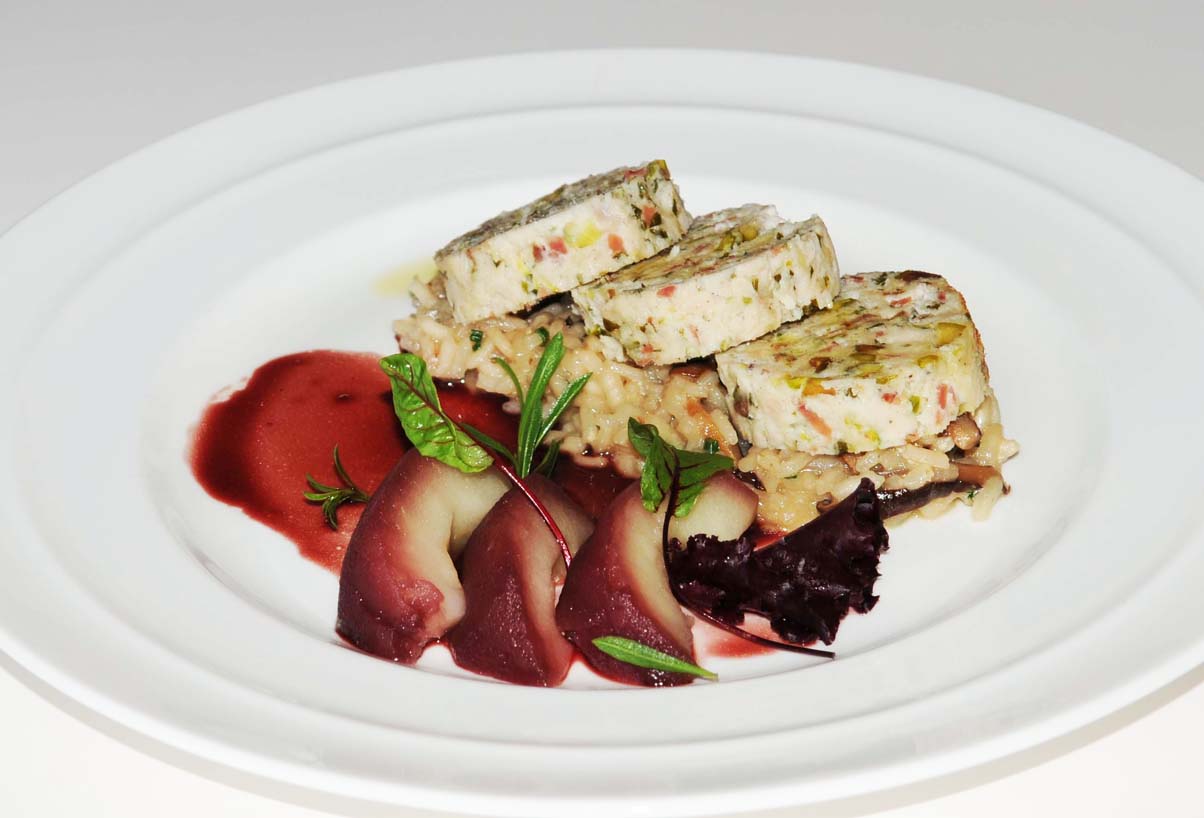
Chicken sausage with pistachios and ham


Chicken sausage with pistachios and hamServe with mushroom risotto and apples poached in red wine

CHICKEN SAUSAGEServes 4

If you wish, double or triple the recipe, make the sausages the size you want, cook the quantity you want and freeze the rest for another occasion. When needed, let defrost in the refrigerator and cook as instructed in the recipe.

The chicken:
4 free-range chicken breasts, skin and bones removed, cut into small dice
½ cup spring onions
1 large clove garlic, minced
3 tablespoons coriander, chopped
2 tablespoons/ pistachios, roughly chopped
½ cup/ white breadcrumbs
1 cup/ prosciuto, roughly chopped
pinch nutmeg
salt and freshly ground black pepper
2½ cups/ fresh cream
1 egg white
1 tablespoon/45 ml olive oil

The apples in red wine:
4 cups cold water
juice of 1 lemon
2 Granny Smith apples, peeled and cored, keep whole
½ bottle red wine
4 tablespoons sugar
1 strip orange rind
2 whole cloves
¼ cinnamon stick

The risotto:
2 cups chicken stock
6 dried shiitake mushrooms
2 tablespoons vegetable oil (for the mushrooms and onions)
150 g mixed mushrooms, finely sliced
1 onion, finely chopped
2 tablespoons olive oil (for the risotto)
150 g Arborio rice 
2/3 cup white wine
1 tablespoon truffle trimmings (optional or use 1 teaspoon truffle oil)
½ cup Parmesan cheese, finely grated
4 tablespoons chives, finely chopped
salt and freshly ground black pepper

Preheat the oven to 180°C/350°F.

The chicken:

  • Process the chicken until smooth, then mix with the spring onions, garlic, coriander, pistachios, bread crumbs, prosciuto, nutmeg and salt and pepper.
  • Whisk the cream until stiff and fold into the chicken mixture.
  • Then whisk the egg white until stiff and carefully fold it also into the chicken mixture.
  • Take a large piece of foil and generously brush with some oil.  Form the chicken mixture into a cylindrical shape about 6 cm/2.5 in in diameter, then roll into sausage.  Twist the ends of the foil to seal well, then place in a baking dish and bake for 1 hour.

The apples:

  • Peel the apples, cut a small slice from the base of each apple so it can sit without toppling, then leave in a bowl of lemon water until ready to use. 
  • In a small saucepan big enough to fit the whole apples snugly, combine the wine, sugar, orange rind, clove and cinnamon and bring to a simmer over medium heat, stirring until the sugar has dissolved.
  • Add the apples, submerging them with a round piece of parchment paper over the liquid and a small plate on top. Simmer for 25 minutes or until they are almost tender when pierced with a skewer.
  • Remove from the heat and leave the apple to cool completely in the liquid.
  • Strain about one-third of the poaching liquid and bring to a boil over high heat.
  • Reduce until it becomes a syrupy glaze with a consistency of runny honey.  If it is too sticky, add a little more of the poaching liquid.

The risotto:

  • In a medium saucepan, bring the stock to a simmer.  Pour out 1 cup of the stock into a bowl with the dried mushrooms.  Set aside to soak until soft — about 15 minutes.  Keep the rest of the stock hot for the risotto.
  • Remove the soaked mushrooms from the soaking liquid and finely slice them.  Strain the soaking liquid of the mushrooms into the simmering stock.
  • In a clean saucepan, heat 2 tablespoons of the oil, then add the all the mushrooms (the shiitake mushrooms included) and onion and fry until cooked.  Remove from the saucepan and set aside.
  • Wipe the saucepan and heat 2 tablespoons olive oil, then add the rice and stir to coat until it is lightly toasted but not coloured.
  • Add the wine and bring to the boil until all the alcohol has evaporated. Stir in half a cup of the stock and stir until almost all the liquid has been absorbed.
  • Continue adding the remaining stock, half a cup at a time, to the rice whilst stirring constantly, until almost all but half a cup of stock remains. This should take about 25 minutes.
  • Add the cooked mushrooms, the onions and the balance of the stock.  Stir to heat through.  Remove from the heat, stir in the truffle trimmings (or truffle oil), the cheese and chives, and season to taste.
  • Serve immediately with the chicken sausage and poached apples and drizzle the sauce around.
Categories
SOUPS/SAUCES/CONDIMENTS

Quail egg and prawn set in aspic molds


Serve with young salad leaves and tomato and thyme oil

Serves 4 

QUAIL'S EGG AND PRAWNS IN ASPIC


Start 24 hours before planning to serve this dish.

The aspic:
1 cup/250 ml clear fish stock, heated
4 sheets leaf gelatin, soaked in cold water and drained, or 4 teaspoons gelatin granules
1 cup/250 ml tomato water
1 teaspoon/5 ml lemon juice

The dish:
2 quail’s egg
oil for brushing the insides of the ramekins
4 small fresh dill sprigs
4 onion rings
8 small prawns, shelled, deveined, cooked and cut in half lengthwise

The garnish:
a selection of small salad leaves
tomato oil to drizzle
balsamic vinegar glaze  to drizzle

It is quite important that the stock is very clear. If the stock you will be using is not clear enough, clarify it by using the method given in the Glossary for clarifying stock.
Heat half a cup of the clarified stock and add the gelatin. Let it dissolve then add the rest of the stock and the tomato water. Leave in the refrigerator until it begins to set.

Have ready a bowl of iced water.
In a small saucepan, bring some water to a boil, enough to cover the quail’s eggs. (If one of the eggs just happens to be cracked, rub the cracked area with lemon juice or vinegar and lower the egg very gently into the water.) Boil the eggs for 1 minute, remove from the heat and leave in the hot water for 30 seconds. Transfer the eggs to the reserved iced water and leave for 1 minute, then remove and peel.
Take four ramekins of about 7 cm/2½ in diameter, brush the inside lightly with the oil and pour the stock with gelatin into each ramekin about 1 cm/0.4 in deep. Refrigerate for 5 minutes.
Place a dill sprig on top of the chilled aspic in the molds, place a peeled half a boiled quail’s egg (yolk side facing down) on top of the dill, then put an onion ring on top of the quail egg. Arrange four prawn halves (cut side facing up) around each the eggs, overlapping, then slowly spoon in the rest of the stock to fill the molds, taking care not to disturb the layers. Hold any of the ingredients that tends to float down with a toothpick. Refrigerate for at least 4 hours.

To serve:
When ready to serve, run the tip of a knife around the inside of the jelly, then briefly dip the bottom part of the ramekins in warm water and invert onto each serving plate. Place a bouquet of the salad leaves next to the mold and drizzle some of the tomato oil and balsamic vinegar glaze around. Serve immediately.

Categories
SOUPS/SAUCES/CONDIMENTS

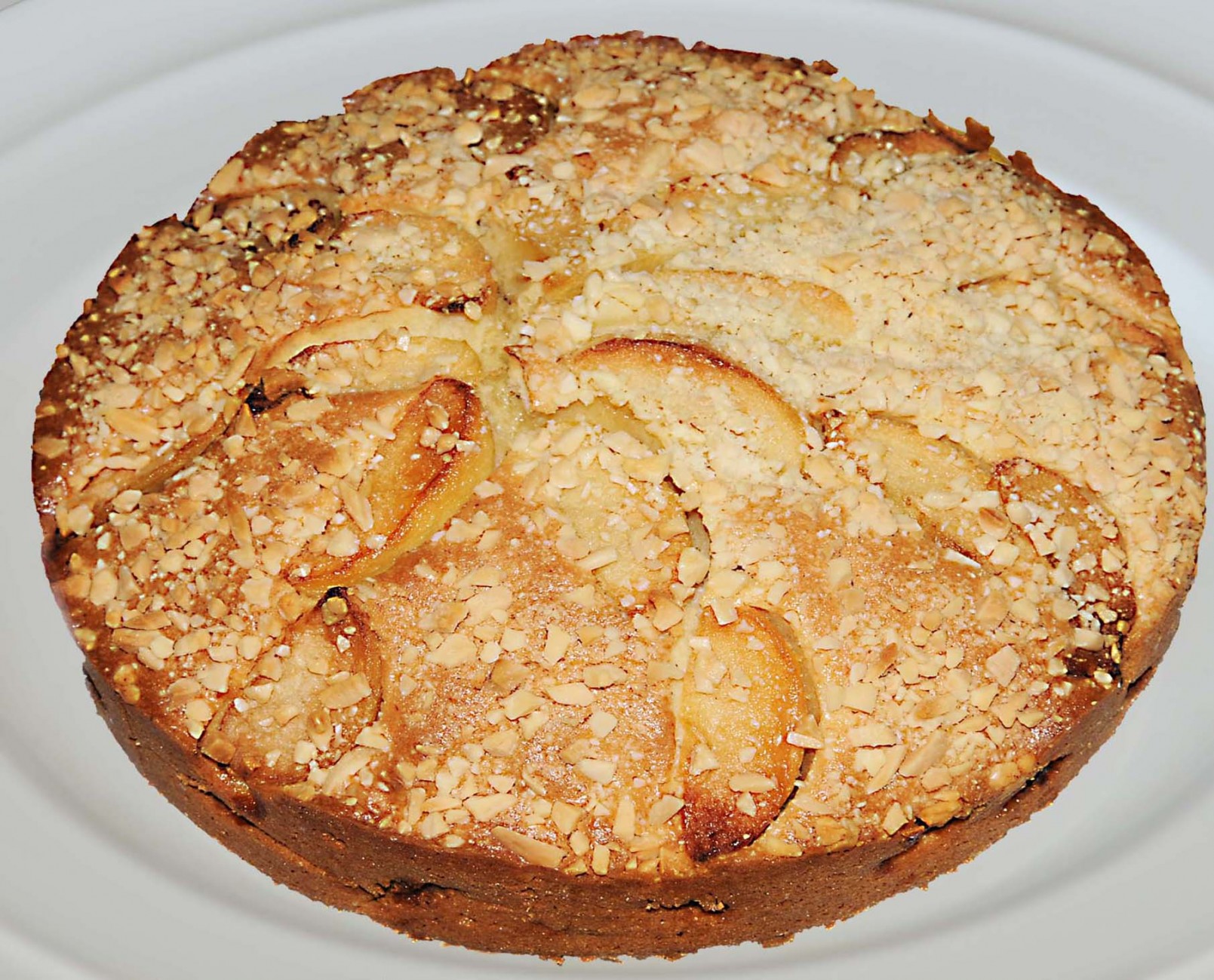
Apple and Calvados biscuit with whipped fresh cream


This cake/tart has it’s origin in France and was originally created without the apples — a hard and dry biscuit that would last for months for the sailors at sea.  But bakers found other uses for it and it developed into this delightful soft biscuit with layers of batter and apples.

APPLE BISCUIT

You will need:
4 large Granny Smith apples, peeled, cored and quartered
45 g/1½ oz butter
2 tablespoons/30 ml Calvados (apple brandy)
200 g/7 oz flour
3 tablespoons/45 ml cornstarch
185 g/6.5 oz caster sugar
salt
2 teaspoons/10 ml cinnamon, freshly ground
1 teaspoon/5 ml vanilla extract
2 teaspoons/10 ml baking powder
½ cup/125 ml fresh orange juice
2/3 cup/150 ml peanut oil
2 eggs
45 g/1½ oz chopped almonds
icing sugar for sprinkling

Once you have scraped the seeds from the vanilla pod, store the empty pod in an airtight container filled with sugar. This will provide you with vanilla flavored sugar in just a few days.

Preheat the oven to 180°C/56°F.
Grease a 23 cm/9 in diameter cake tin.
Cut each apple quarter into 3 slices.  Melt the butter in a nonstick pan and brown the apple slices for 1 minutes on each side.  Pour the Calvados over the apples and ignite.  Shake the pan until the flame dies down and the Calvados has reduced to almost nothing, then remove the apples with a slotted spoon and set aside to cool.

Combine the flour, cornstarch, sugar, salt, cinnamon, vanilla, baking powder, orange juice, oil and eggs. Mix well until the mixture is smooth, then pour one-third of the batter into the greased cake tin.

Arrange half of the apple slices on top, cover them with half of the remaining batter, then arrange the rest of the apples on top and cover with the remaining batter.  Smooth the surface with a spatula and sprinkle with the almonds.  Sprinkle the top generously with the icing sugar and bake in the preheated oven for 55 minutes. Remove from the oven and let it cool in the tin for 5 minutes before turning it out.

To serve:
Serves with custard or freshly whipped cream.

Categories
SOUPS/SAUCES/CONDIMENTS

Carnival fritters served with a chocolate soup


These traditional fritters are very much appreciated all around Italy during Carnival days which root back in medieval times.
BLOCK HORIZONTAL LINE
Serves 4

CARNIVAL FRITTERS


The fritters:
250 g/8 oz flour, sifted
salt
1 egg
2 egg yolks
seeds of half a vanilla pod

Once you have scraped the seeds from the vanilla pod, store it in an airtight container filled with sugar. This will provide you with vanilla flavored sugar in just a few days.

grated zest from half an orange
1 teaspoon/5 ml olive oil
2 tablespoons/30 ml milk
1 tablespoon/15 ml dark rum
25 g/0.8 oz butter, melted
oil for deep-frying
icing sugar for sprinkling

The chocolate soup:
125 g/4.5 oz dark chocolate
pinch of sea salt
1 teaspoon/5 ml instant coffee dissolved in
1 tablespoon/15 ml hot water
½ cup/125 ml Drambuie

Process the flour, salt, eggs, vanilla, orange zest, olive oil, milk and rum to form a dough. Cover in cling film and  refrigerate for 1 hour.
Roll out with a pasta machine until 5 mm thick.  Brush the entire length of the pasta sheet with butter, then fold in two.  Roll out again until it is 5 mm thick.  Repeat this process three times then cut into long strips of 1½ cm/0.6 in wide and cut each strip into 12 cm/4.7 in long pieces. Tie a loose knot with each piece, then working in small batches, deep-fry the pastry knots in the hot oil until golden all over.  Remove from the oil and place on paper towels to drain.

Combine the cream and milk in a heavy, medium saucepan and bring to a simmer over medium heat.  Add the chocolate and cook, whisking constantly until smooth, about 4 minutes.  Remove from the heat and add the liqueur.  Cover and keep warm.

To serve:
On four plates, pile a helping of the fritters off center and sprinkle generously with the icing sugar.  Place a small dipping bowl or small coffee cup next to the fritters and fill with the chocolate soup. Serve warm.

Categories
SOUPS/SAUCES/CONDIMENTS

Current tart served with Creme de Casis syrup


This is a tribute to my mother for “inventing” this very special dessert  which became a big  favorite with family and friends, young and old.

BLOCK HORIZONTAL LINE

CURRENT TART


Preheat the oven to 180ºC (356°F).

The base:
225 g (8 oz) self-raising flour
½ level teaspoon baking powder
225 g (8 oz) caster sugar
225 g (8 oz) unsalted butter (melted and cooled)
½ cup milk and water mixed
1 large free-range egg
zest of 1 lemon
pinch of salt

The topping:
1½ cup black currents
1 tablespoon sugar
2 egg yolks
2 tablespoons Creme de Cassis
1 cup fresh cream, whipped until it forms stiff peaks

If you do not have Creme de Casis or prefer not to use alcohol, black currant syrup (similar flavor, non-alcoholic) is a good substitute, otherwise raspberry liqueur is also good.

The syrup:
½ cup sugar
juice of half a lemon
¼ cup Creme de Cassis
½ cup water

Grease a cake pan of about 22 cm (8.6 in) in diameter with a loose bottom, and then dredge all over inside with a mixture of flour and caster sugar.
Into a mixing bowl, sieve the flour, baking powder, salt and sugar.  Mix in the egg, butter, milk and water and whisk together until the mixture forms a smooth batter.
Pour into the prepared cake tin and bake in the preheated oven for 30-35 minutes, until well risen and golden.  Remove from the oven and leave for 5 minutes.  Remove the cake from the cake tin and leave to cool totally.
In a small saucepan bring the currents and enough water to cover it, add the sugar and bring to a boil.  Cook until the currents are nice and swollen and the sauce is syrupy (you should have about  ¾ cup/175 ml of syrup – if it is not enough, add a little bit more water), then remove from the heat and immediately add the egg yolks whilst stirring vigorously to avoid the yolks from scrambling.  It should be a creamy consistency.  Add the liqueur, reserve 4 tablespoons of the sauce, and set aside to cool completely.
In a small saucepan and over very low heat, heat all the ingredients until it becomes syrupy.  Remove from the heat and set aside to cool right down to room temperature.

To assemble:
Spoon the cooked currents on top of the cake with enough syrup to soak in, then top with the whipped cream and pour the Creme de Cassis syrup around.  Cut the cake to the desired size for serving.