Categories
STARTERS/SIDES

ANTIPASTO PLATTERS


ANTIPASTA1


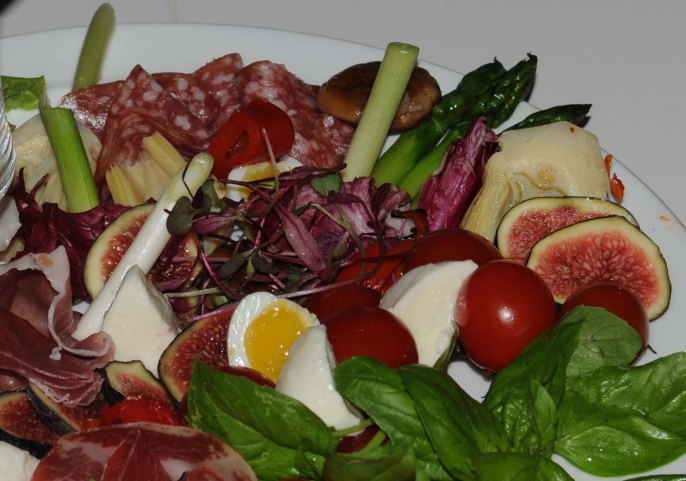
In English, it is called the appetizer course, the French call it the hors d’oeuvre and in Italy, it’s called the antipasto — an exciting way to announce the start of a glorious feast. In true Italian tradition, antipasti are selected for color, flavor, texture and how well the different components work together.  When you start preparing the dish, it truly is a blank canvas and with the help of a few marinated and pickled vegetables, fresh seasonal fruit and vegetables, cured meats, olives, cheese, nuts, and bread of your choice, all beautifully arranged … how can you not create a masterpiece?


Omit the meat, add a few more nuts, and you have a perfect vegetarian starter.
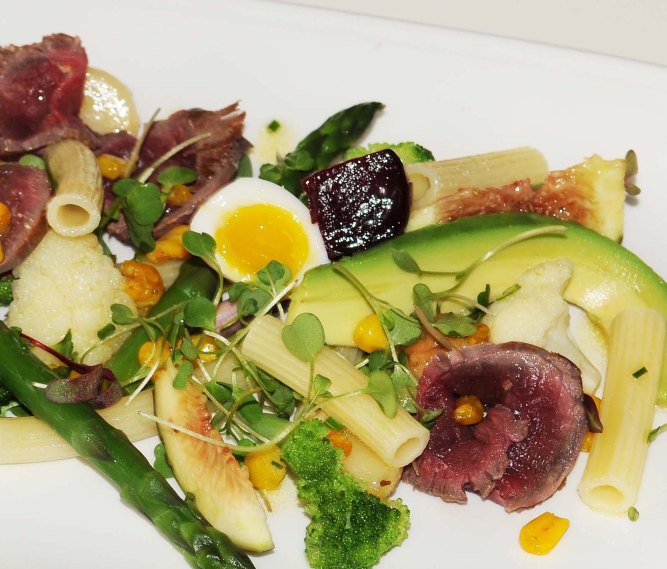
SEARED VENISON ANTIPASTO PLATTER 2

Here are the choices:
breadsticks or focaccia cut into bite size pieces
basil pesto
black olive tapenade 
stuffed green olives
Kalamata olives
Provolone cheese
Camembert cheese
Fontina
Parmesan crisps
Feta
fresh figs
melon
bunches of grapes
cherry tomatoes
spring onions
marinated mushrooms
pickled pearl onions
marinated artichoke hearts (from your supermarket or deli)
sun-dried tomatoes
roasted red peppers
roasted aubergine
Spanakopita
quail eggs


How to boil a quail egg to medium soft: Have ready a bowl of iced water. In a small saucepan, bring some water to a boil, enough to cover the quail’s eggs. (If one of the eggs just happens to be cracked, rub the cracked area with lemon juice or vinegar and lower the egg very gently into the water.) Boil the eggs for 1 minute, remove the pan from the heat and leave in the hot water for 30 seconds. Transfer the eggs to the reserved iced water and leave for 1 minute, then remove and peel.

thinly sliced salami
Prosciutto
anchovy fillets (drained)
nuts (try the Rosemary spiced mixed nuts)

Some basic rules:

  • With any antipasto platter, the quantity of each food item on the platter is a personal choice and is dependent on the number of guests.
  • Use your best judgment to create a balanced and interesting platter.
  • One large tray makes a nice visual impact, but one or more smaller plates will also work.
  • Prepare all the different elements of your platter and refrigerate separate in sealed containers. Assemble the plate just before serving.  Everything will look fresh and crispy.
  • Roll or fold sliced meats for a nice presentation.
  • Cut or shave pieces of cheese.
  • Keep sea salt and a pepper grinder handy for seasoning.
  • Have extra-virgin olive oil and aged balsamic vinegar, or a special vinaigrette ready for drizzling.
  • Consider using small bowls placed on the tray for marinated condiments, nuts or olives.
  • Place bread away from moist veggies and pickles.

Use your imagination and flair to create a beautiful platter of delicious nibbles.
Categories
MAIN COURSE

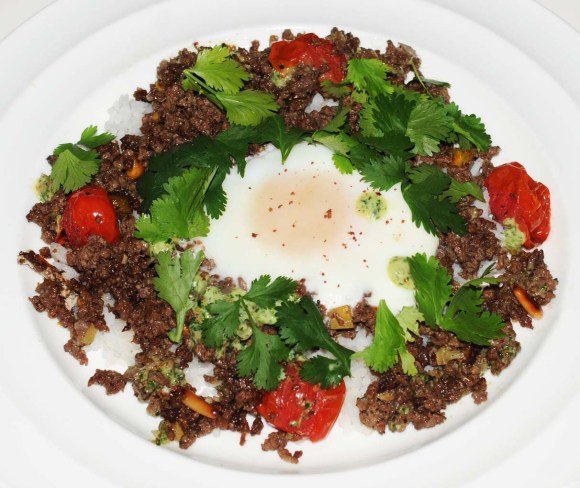
LAMB MINCE WITH BAKED EGG, SUMAC AND ROAST TOMATOES


Learning about the cuisine of other cultures and the fusion of flavors happening as a result of immigrants bringing their traditional cooking methods, herbs and family favorites into your country, has made cooking a very interesting and delicious hobby. This dish (inspired by fusion food served in Jerusalem) is a delightful and surprising result.  Yet another version of comfort food you can add to your repertoire.

Lamb mince with baked egg, sumace and harissa

360 h/12.7 oz Basmati rice

The lamb:
2 tablespoons/30 ml olive oil
12 shallots, finely sliced
2 cloves garlic, minced
350 g/12 oz lamb mince
2 cups/500 ml lamb stock
2 tablespoons/30 ml sumac (availalable at well stocked supermarkets)


Sumac, from the berries of the sumac bush (vaguely related to Poison Ivy although not poisonous) are dried and in some instances you can buy the berries whole or already ground. It is dark brick red in color and adds a delightful color and zing to food without overpowering it — subtle and refreshing. Add it to scramble eggs, a vinaigrette, garlic mayonnaise, tomato salad, etc. Try it with chicken, fish, butternut soup …. the possibilities are endless. Use your imagination.

1 tablespoon/15 ml za’atar (available in shops that specialise in Middle Eastern spices or make you own)
1 tablespoon/15 ml cumin
2 tablespoons/30 ml pine nuts
salt and freshly ground black pepper

The tomatoes:
2 tablespoons/30 ml olive oil
24 cherry tomatoes
1 teaspoon/5 ml coarse sea salt
sprinkle of sugar
1 teaspoon/5 ml balsamic vinegar

The garnish:
4 fresh eggs
plain thick Greek yogurt
bunch coriander leaves

  • In a small bowl mix the vinegar with the salt and add the onion. Set aside for the onions to soften.
  • Boil the rice and keep warm.
  • Preheat the oven to 220°C.
  • In a heatproof baking dish mix the cherry tomatoes with the olive oil, salt, sugar and vinegar and roast in the oven until the skins burst open and the juices start sizzling. Remove from the oven and set aside.
  • For the lamb:  in a big enough pan, heat the olive oil and fry the shallots and garlic briefly then add the mince.
  • Break up the mince as much as possible to avoid having clumps of meat.
  • When it becomes nice and caramelized, add half the stock, sumac, za’tar, cumin and salt and pepper and cook until most of the liquid has evaporated.
  • Add the rest of the stock and simmer for 5 minutes.
  • With a large spoon, move the meat aside to form four hollow spots. Break an egg into each hollow, then cover the pan with a lid and steam the eggs for about 5 minutes or until the eggs are cooked but the yolks still soft.

I find it much easier to fry the eggs separately and place it on top of the dish when ready to serve.  But it is up to you. It does not affect the outcome of the dish or spoil its authenticity.

  • To serve: on each warmed plate spoon the rice and spread out quite a bit.
  • Spoon the lamb and a cooked egg over the rice, being careful not the break the yolk.
  • Dot the surface of the meat with spoons full of yogurt, scatter the roast tomatoes around and sprinkle over the coriander. Serve immediately.

Extra sumac sprinkled over gives the dish an extra tang and color but use sparingly.

Categories
SOUPS/SAUCES/CONDIMENTS

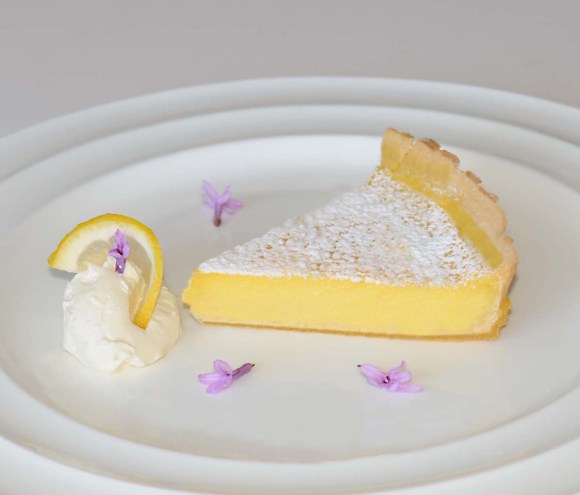
LEMON TART WITH LIMONCELLO CREAM


LEMON TART

The pastry:
125 g/4.5 oz butter, room temperature
90 g/3 oz caster sugar
1 egg
250 g/9 oz cake flour
pinch of salt
ice water

The filling:
2 eggs
4 egg yolks
180 g/6.4 oz caster sugar
1¾ cup/426 ml full cream
5 tablespoons/75 ml lemon juice

The garnish:

icing sugar for sprinkling
1 cup/250 ml fresh cream
1 teaspoon/5 ml Limoncello

Limoncello, and Italian liqueur, mainly produced in the southern parts of Italy, has a strong lemon flavor without the sourness or bitterness of pure lemon juice. Traditionally, it is made from the zest of Sorrento lemons using the zest, or peels without the pith, and is steeped in a neutral spirit until the oil is released. The resulting yellow liquid is then mixed with simple syrup. Varying sugar to water ratio and temperature will affect the clarity, viscosity, and flavor.

Heat the oven to 190°C/374°F and grease a tart pan with a loose bottom of about 20 cm/7.8 in diameter.

In a processor, cream the butter and sugar, then add the egg. Mix well, then add the flour and salt and mix. The dough should be soft and pliable, but if for some reason it feels too dry, add a few drops of ice water. Roll the pastry into a flat disk and roll up in plastic film. Refrigerate for about 30 minutes.

On a lightly floured surface, roll out the pastry to about 4 cm/0.15 in thickness and line the tart pan with it. Cover the pastry with parchment paper and fill it with baking beans, then bake blind for about 15 minutes. Remove the baking beans and paper and bake for 5 minutes longer. The pastry should be a light golden color.

Lower the oven temperature to 140°C/175°F.
Whisk the eggs and sugar until well blended, then add the cream and the lemon juice and stir to mix well. Strain the mixture into a container with a spout. Place the tart on a baking tray and place halfway into the oven. Carefully pour the filling into the tart shell and slowly move the baking tray to the center of the oven. Bake for 50 minutes. The filling should have set but still wobbly. Remove from the oven and cool completely. Carefully remove the cooled tart from the pan. If you prefer, sprinkle icing sugar over the whole tart, otherwise leave it as is.

When cutting the tart, dip the knife into hot water and use soft pressure.

Whip the cream with the Limoncello and put a blob on each plate.


Categories
SOUPS/SAUCES/CONDIMENTS

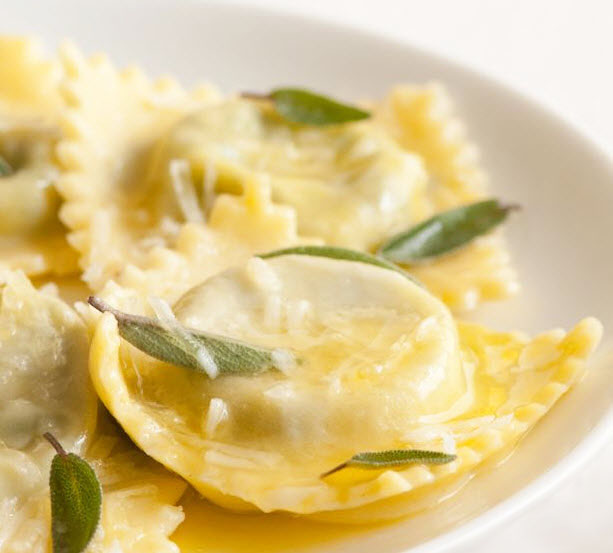
SPINACH AND RICOTTA RAVIOLI


Making ravioli at home using a pasta machine is time consuming but incredibly rewarding, especially when you choose a filling that you enjoy.   These ravioli make a gorgeous vegetarian dish or can be served with Deep fried pork loin sandwich with a spicy sauce.

RAVIOLI


For the filling:
1 tablespoon/15 ml olive oil
2 cloves garlic, finely chopped
225 g/8 oz Swiss chard, finely chopped
250 ml/1 cup ricotta (make your own)
3 tablespoons/45 ml pine nuts, toasted
4 tablespoons/60 ml Parmesan cheese, finely grated
extra Parmesan cheese for serving

For the ravioli:
See recipe for fresh pasta.

  • To make the filling, heat the oil in a saucepan over medium-high heat and add the garlic and the spinach and cook until the stalks of the chard is almost soft.  Remove from the heat and drain.
  • When cool enough squeeze as much of the liquid as possible out of the chard.
  • Add to a food processor with all the other ingredients and pulse until everything is reasonably fine but still with some texture.  Set aside until ready to use.
  • To make the ravioli, bring the pasta dough up to room temperature and then divide it in two.
  • Roll both the pieces of pasta out to the second narrowest setting. Dust the counter with flour and lay out the two long sheets of pasta next to each other.
  • Spoon about 1 tablespoon/15 ml of the filling 50 mm/2 in apart on the  one sheet and repeat until you reach the end of the pasta sheet.
  • Brush all round the fillings with water, then lay the other sheet of pasta on top of the filling portions.
  • You might have to stretch the pasta a little bit to meet the other edge.
  • Press down around the filling to press out any air and then, using the blunt end of a pastry cutter, just big enough to fit over the filling, to gently press down on the pasta to make sure that the filling is “locked” in.  Then, with a slightly bigger cutter, cut the ravioli.

    The ravioli can be cooked straight away or stored on a sheet pan dusted with fine semolina for up to two hours. You can also freeze them at this stage and then cook them from frozen when you are ready.

  • Bring a large pot of salted water to a boil over high heat.
  • Add the ravioli, and cook until for about 4 minutes or until they rise to the surface of the water.
  • Using a slotted spoon, transfer the ravioli to serving bowls.  Sprinkle liberally with Parmesan and serve immediately.
  • This ravioli can be served as a vegetarian dish or with Deep fried pork loin sandwich with a spicy sauce.
Categories
SOUPS/SAUCES/CONDIMENTS

Strawberry cake with thick custard and a meringue and almond topping


STRAWBERRY CAKE WITH MERINGUE TOPPING

2 cups/500 ml thick custard
60 g/2 oz of 1 sponge cake (page 25)
zest of 1 lemon
180 g/6.3 oz strawberries, hulled and sliced
5 egg whites
75 g/2.6 oz caster sugar
1 tablespoon/15 ml almonds, flaked

The custard:
3 egg yolks
60 g/2 oz sugar
1¼ cups/355 ml milk
1b cup/400 ml fresh full cream, lightly whisked
20 g/0.7 oz flour
20 g/0.7 oz cornstarch
seeds from 1 vanilla pod

Preheat the oven to 120°C/248°F.
Make the custard and cool, then refrigerate for 2 hours.
Line the base of a greased ovenproof soufflé dish with the sponge cake – about 2 cm/0.7 in thick. Sprinkle the grated lemon zest over.
Whisk the egg whites with a pinch of salt, until it forms soft peaks. Add 3 tablespoons of the sugar and whisk until stiff and glossy peaks forms.
Pour the custard over the cake, then arrange the sliced strawberries on top of the custard. Pile the meringue roughly on top, completely covering the custard. Scatter the remaining caster sugar and flaked almonds over the meringue and bake in the preheated oven for 25-30 minutes, until the top of the meringue is crisp with golden tips. Serve immediately.

Whisk the egg yolks and sugar until pale and fluffy. Heat the milk but remove from the heat just before it starts boiling. Mix a few spoons of the hot milk with the egg mixture, then add the two flours and vanilla seeds and mix well. Pour the whole mixture back into the rest of the heated milk, mix well and bring slowly to the boil, stirring continuously. When the sauce has thickened sufficiently, remove from the heat and pour into a cooled bowl. Set aside, covered with greaseproof paper, to cool until ready to use.


Categories
GLOSSARY / METHODS

PASTRY CREAM (CUSTARD)


As used for making Strawberry cake with custard and meringue and Trifle

3 free-range egg yolks
60 g/2 oz sugar
1¼ cups/310 ml milk
⅓ cup/80 ml fresh full cream, lightly whisked
20 g/0.7 oz flour
20 g/0.7 oz cornstarch
seeds from 1 vanilla pod

Whisk the egg yolks and sugar until pale and fluffy. Heat the milk but remove from the heat just before it starts boiling.  Mix a few spoons of the hot milk with the egg mixture, then add the flours and vanilla seeds and mix well.  Pour the whole mixture back into the rest of the heated milk, mix well and bring slowly to the boil, stirring continuously. When the sauce has thickened sufficiently, remove from the heat and pour into a cooled bowl.  Set aside, covered with greaseproof paper, to cool until ready to use.

Categories
SOUPS/SAUCES/CONDIMENTS

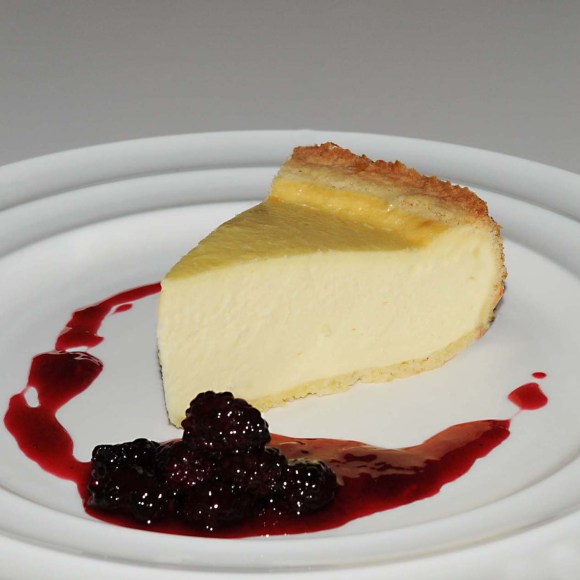
Baked cheesecake with blackberry sauce


Avoid over-baking. Because of variations in ovens, it is difficult to give the exact baking time for the cheesecake. It will continue baking after it had been removed from the oven, therefore keep an eye on it while it is baking. The cake is perfectly done when the spot in the middle of the cheesecake is still a little bit wobbly. The texture will smooth out as it cools.

CHEESECAKE

The pastry:
100 g/3.5 oz butter, softened
100 g/3.5 oz sugar
1 free-range egg
120 g/4.2 oz cake flour
a pinch each of baking powder and salt
2 tablespoons/30 ml cornflour
rind of 1 lemon, finely grated
the seeds of ½ vanilla bean
a few drops lemon essence

Once you have scraped the seeds from the vanilla pod, store the empty bean in an airtight container filled with sugar. This will provide you with vanilla flavored sugar in just a few days.

The filling:
4 free-range eggs
1 cup/250 ml sugar
2 tablespoons/30 ml lemon juice
3 x 250 g/8.8 oz smooth cottage cheese
1 cup/250 ml cream
½ cup/125 ml flour

The sauce:
350 g /12.3 oz blackberries, fresh or frozen and defrosted
¼ cup 60 ml Kirsch
 cup sugar syrup
juice of half a lemon

Whisk the butter and sugar until pale and fluffy, then add the egg and mix well. Sift the dry ingredients and add to the egg mixture with the lemon rind, vanilla and lemon essence. Mix well, then wrap in cling film and place in the refrigerator for 2 hours.

Grease a 24 cm/9.5 in cake tin with a loose bottom. Press the dough into the cake tin then place in the refrigerator for another hour to firm up.
Meanwhile preheat the oven to 180°C/356°F.

Beat the eggs and sugar until light and creamy. Add the lemon juice, cottage cheese, cream and flour and mix well.  Pour the filling into the baked crust and bake for 10 minutes in the preheated oven.

Reduce the temperature to 120-130 °C/248-266°F and bake for an hour until the filling is firm but still slightly soft in the center.
Remove from the oven and leave to cool.

When ready to serve, reserve a few blackberries and puree the rest with the rest of the sauce ingredients in a blender. Rub the sauce through a sieve and and serve with a slice of the cheesecake and a few whole berries.


Categories
GLOSSARY / METHODS

FRESH PASTA


Ingredients:
300 g/10.5 oz “00” flour (see note), or strong white flour
3 eggs
pinch of salt

“00” flour
Flour is graded in Italy according to its coarseness, which designates its ideal use. It is marked “00”(very white and fine) to “04” (close to whole meal). Type “00” flour has a finer grain than commercial plain flours, resulting in light and airy bread and soft and delicate pasta.

Combine the flour, eggs and salt in a food processor until the mixture forms a dough.  Wrap in cling film and leave to rest for 30 minutes in the refrigerator.   When ready to roll the pasta, remove from the refrigerator and  bring up to room temperature.

WORKING WITH FRESH PASTA
Always allow pasta dough to come up to room temperature before rolling. It allows the gluten to relax which makes the dough much more flexible and easier to work with. Always keep the dough that you are not immediately working with, covered with a damp cloth to prevent it from drying out.

See Spinach and ricotta cheese ravioli for the method of rolling the pasta and making ravioli.

Categories
SOUPS/SAUCES/CONDIMENTS

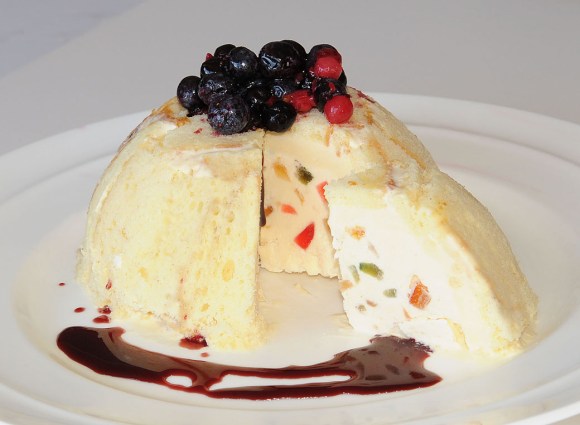
CASSATA (Glazed fruit ice-cream cake with a fresh strawberry compote)


This dessert definitely has the wow factor and can be prepared well in advanced, therefore ideal for entertaining.

CASSATA

The sponge cake:
225 g/8 oz self-raising flour
½ level teaspoon baking powder
225 g/8 oz caster sugar
225 g/8 oz unsalted butter (melted and cooled)
½ cup/125 ml milk and water mixed
1 large egg
zest of 1 lemon
pinch of salt

The candied fruit:
4 tablespoons/60 ml candied fruit
4 tablespoons/60 ml rum

The vanilla ice-cream: 

As a time saver, use a good quality bought vanilla ice-cream.

150 g/5 oz sugar
6 free-range eggs
1 cup/250 ml milk
1 cup/250 ml full cream
beans of 1 vanilla pod
grated peel of 1 lemon

The cream:
2 free-range egg whites
75 g (2.6 oz) sugar
the soaked and drained candied fruit
¼ cup/60 ml crème fraîche, stirred until smooth

Any left over egg whites can be frozen and thawed for future use. Freeze each egg white in an ice-cube tray and then transfer to either a freezer bag or a container. Once thawed, whites will beat to a better volume if allowed to sit at room temperature for about 30 minutes.

The strawberry compote:
1 cup/250 ml sugar syrup
½ cup/125 ml fresh orange juice
1 cup/250 ml fresh strawberries, hulled and roughly chopped

The garnish:
a selection of red berries (optional)

Preheat the oven to 180ºC/356°F. Grease a cake pan with a loose bottom, about 22 cm/8.6 in diameter, then dredge the inside with a mixture of flour and caster sugar.

Into a mixing bowl, sieve the flour, baking powder, salt and sugar. Whisk together the egg, butter, milk and water and mix into the flour until it forms a smooth batter.  Pour into the prepared cake tin and bake in the preheated oven for 30-35 minutes, until well risen and golden. Remove from the oven and leave for 5 minutes. Remove the cake from the cake tin and leave to cool totally.

Cut the cake into strips of 2 cm/0.7 in thick each. Line 1 ℓ/1 qrt bowl with cling wrap, then line with the strips of the sponge cake.

Soak the candied fruit in the rum for about 4 hours or overnight.

Whisk the sugar and egg yolks in a bowl until pale. Bring the milk and cream with the vanilla beans to the boil and pour half of it onto the sugar and egg mixture.

The ice-cream recipe contains raw eggs and is not suitable for pregnant women, the elderly or very young children.

Whisk well, then pour the mixture back into the saucepan with the remaining milk and return to very low heat. Stir continuously with a wooden spoon until the mixture thickens enough to coat the back of the spoon. Remove from the heat and pass through a sieve into a clean bowl placed over a bowl of ice cubes and water to cool the mixture as quickly as possible. Pour into an ice-cream machine and churn, otherwise you can still-freeze it.

Fill the cake lined bowl with the ice-cream, leaving an ample hollow space to fill later with the candied fruit cream. Put back into the freezer for about 1 hour or until frozen.

Beat the egg whites and sugar until stiff. Drain the candied fruits and add to the egg whites. Gently stir in the crème fraîche until the whole mixture becomes well blended. Fill the bowl (lined with the cake and frozen ice-cream) with this mixture and smooth with a knife. Cover and freeze overnight.

Bring the syrup and orange juice to the boil and pour over the strawberries. Leave to cool then refrigerate until ready to use.

To serve:
Turn the mold out onto a plate, slice it to reveal the center and pour the strawberry compote on the side. Garnish with a selection of the red fruits.


Categories
STARTERS/SIDES

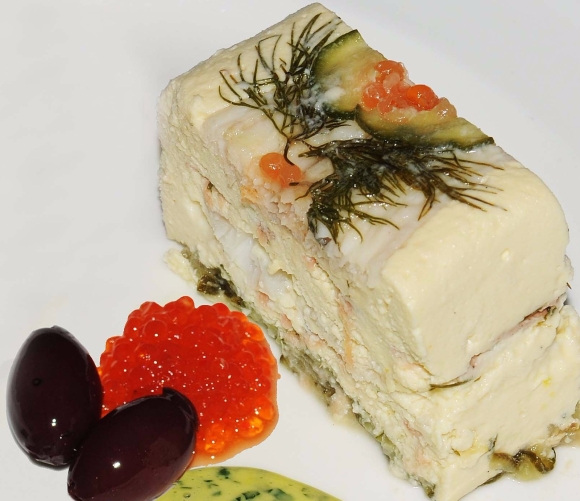
Terrine of fish and cucumber with watercress mayonnaise


To give time for the flavors to develop, this dish needs to be made at least 24 hours ahead, therefore it is ideal for entertaining. This is perfect as a starter to a dinner as well as for a lunch — even as a main course for dinner on a hot summers evening.

terrine-of-fish-and-cucumber-e1513152159747.jpg

The terrine:
500 g/18 oz firm white fish fillets, half in fillets and the rest cut into small pieces
whites of 2 eggs, lightly beaten (reserve the yolks for the mayonnaise)
1 egg
salt and freshly ground white pepper
a pinch of cayenne pepper
2 cups/500 ml crème fraîche (make your own)
250 g/9 oz smoked salmon, thinly sliced
3 tablespoons/45 ml dill, chopped
freshly ground black pepper

The vegetable mixture:
30 g/1 oz butter
1 large onion, finely chopped
English cucumber, thinly sliced

The watercress mayonnaise:
basic mayonnaise recipe using 2 egg yolks
½ cup/125 ml watercress leaves, chopped, tightly packed
1 teaspoon/5 ml dill, finely chopped
½ onion, finely chopped
1 teaspoon/5 ml lemon juice

The garnish:
a selection of herbs
carrots, pickled cucumber, etc, cut into decorative patterns
50 g/1.7 oz red lumpfish roe

The fish mixture:

  • In a processor, mince the cubed white fish, add the egg whites, whole egg, salt and cayenne pepper and blend well.
  • Cover with plastic film, and refrigerate for 30 minutes.
  • Process the fish mixture again, slowly adding half the crème fraîche, scraping down the sides of the bowl, then slowly add the remaining crème fraîche.
  • Place in the refrigerator on a bowl of ice for at least half and hour.
  • Season the whole white fish fillets with salt.
  • Season the smoked salmon with black pepper and dill.

The vegetable mixture:

  • In the meantime, in a saucepan melt the butter, add the onion and cook over low heat for a few minutes.
  • Add the cucumber, stirring until the moisture has evaporated.
  • Spoon into a dish, allow to cool, then refrigerate.

The mayonnaise:

  • Process the watercress, dill and onion and stir into the mayonnaise.
  • Taste and adjust the seasoning, then stir in the lemon juice.

This mayonnrecipe contains raw eggs and is not suitable for pregnant women, the elderly or very young children.

The terrine layering:

  • Preheat the oven to 160°C/320°F.
  • Paint the inside of a terrine dish with a little olive oil, and on the bottom place the herbs, the small vegetable pieces and the lump fish roe decoratively (use your imagination), and press down into the oil to secure it.
  • Now, carefully place half the white fish fillets over the decorations, covering the whole bottom part of the terrine dish — the “good” side of the fish facing downwards.
  • Spoon half of the fish mixture over the fish fillets and evenly spread it around.
  • Then cover the fish mixture with half the salmon.
  • Spread the rest of the fish mixture over the salmon, and add the rest of the white fish fillets.
  • Cover with the rest of the fish mixture, the rest of the salmon, and finally the vegetable mixture.
  • Lightly knock the terrine on the worktop to force out any air and cover with buttered foil. Secure the lid on top of the terrine.
  • Fill a large baking dish with warm water and place the terrine dish in it. Bake at 160°C/320°F for 1½ hours, then remove from the oven.
  • Remove the lid, then place a piece of board cut big enough the cover the terrine directly.
  • Place a weight on top and let the terrine cool to room temperature. Refrigerate for 24 – 48 hours.

To serve:
When ready to serve, turn the terrine out onto a plate and drain carefully before turning it out onto a cutting board. Cut the terrine into slices with a serrated knife and serve with the watercress mayonnaise and some extra lumpfish roe scattered over.