Categories
GLOSSARY / METHODS

MASCARPONE CHEESE


As used in the recipe for Tirimasu

Make your own:
Heat 2 cups/1 liter cream in a stainless steel double boiler to 85°C/185°F.  Dissolve a pinch of tartaric acid in 2 tablespoons/30 ml water and stir into the hot cream, stir well. It should start to thicken almost immediately. Maintain the 85°C/185°F for five minutes, stirring occasionally. Refrigerate covered for 12 hours in a plastic container in which time the whey should separate somewhat. Transfer to a sterile muslin cloth, and suspend over a bowl for 24 hours in the refrigerator to allow the whey to drain out.  Transfer the finished mascarpone to a smaller air tight container, store in the refrigerator and use within a week to ten days.

Categories
SOUPS/SAUCES/CONDIMENTS

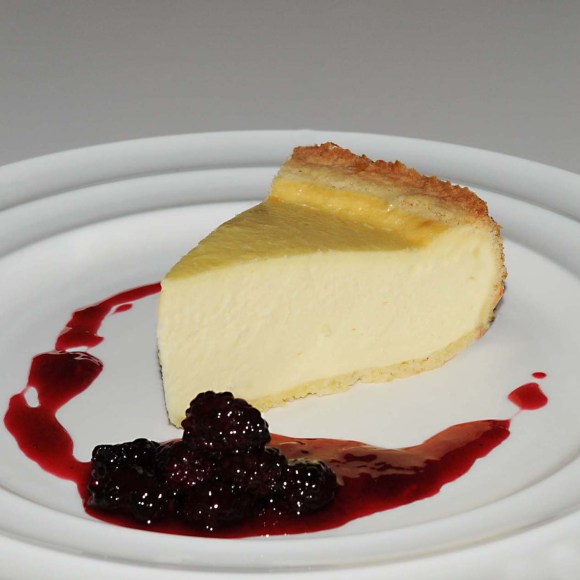
Baked cheesecake with blackberry sauce


Avoid over-baking. Because of variations in ovens, it is difficult to give the exact baking time for the cheesecake. It will continue baking after it had been removed from the oven, therefore keep an eye on it while it is baking. The cake is perfectly done when the spot in the middle of the cheesecake is still a little bit wobbly. The texture will smooth out as it cools.

CHEESECAKE

The pastry:
100 g/3.5 oz butter, softened
100 g/3.5 oz sugar
1 free-range egg
120 g/4.2 oz cake flour
a pinch each of baking powder and salt
2 tablespoons/30 ml cornflour
rind of 1 lemon, finely grated
the seeds of ½ vanilla bean
a few drops lemon essence

Once you have scraped the seeds from the vanilla pod, store the empty bean in an airtight container filled with sugar. This will provide you with vanilla flavored sugar in just a few days.

The filling:
4 free-range eggs
1 cup/250 ml sugar
2 tablespoons/30 ml lemon juice
3 x 250 g/8.8 oz smooth cottage cheese
1 cup/250 ml cream
½ cup/125 ml flour

The sauce:
350 g /12.3 oz blackberries, fresh or frozen and defrosted
¼ cup 60 ml Kirsch
 cup sugar syrup
juice of half a lemon

Whisk the butter and sugar until pale and fluffy, then add the egg and mix well. Sift the dry ingredients and add to the egg mixture with the lemon rind, vanilla and lemon essence. Mix well, then wrap in cling film and place in the refrigerator for 2 hours.

Grease a 24 cm/9.5 in cake tin with a loose bottom. Press the dough into the cake tin then place in the refrigerator for another hour to firm up.
Meanwhile preheat the oven to 180°C/356°F.

Beat the eggs and sugar until light and creamy. Add the lemon juice, cottage cheese, cream and flour and mix well.  Pour the filling into the baked crust and bake for 10 minutes in the preheated oven.

Reduce the temperature to 120-130 °C/248-266°F and bake for an hour until the filling is firm but still slightly soft in the center.
Remove from the oven and leave to cool.

When ready to serve, reserve a few blackberries and puree the rest with the rest of the sauce ingredients in a blender. Rub the sauce through a sieve and and serve with a slice of the cheesecake and a few whole berries.


Categories
MAIN COURSE

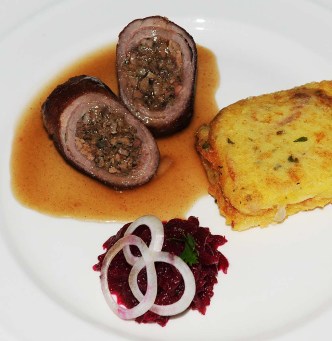
Veal rolls stuffed with chicken liver and prosciuto in a Marsala and white wine sauce


Serve it with polenta cakes and pickled beetroot.

LINE

Serves 4

The rolls can be prepared the previous day and cooked just before serving.VEAL ROLLS

The filling for the veal rolls:
15 ml/1 tablespoon oil
15 ml/1 tablespoon onion, finely chopped
2 rashers of bacon, finely diced
2 free-range chicken livers
5 ml/1 teaspoon rosemary, finely chopped
30 ml/2 tablespoons fresh white breadcrumbs
30 ml/2 tablespoons Parmesan cheese, freshly grated
5 ml/1 teaspoon parsley, finely chopped
1 free-range egg, beaten
pinch nutmeg, freshly grated
5ml/1 teaspoon lemon juice
salt and freshly ground black pepper

The veal:
12 thin slices of veal
12 slices of prosciuto
50 g/1.7 oz butter

The sauce:
30 ml/1 tablespoons olive oil 125ml/½ cup shallots, thinly sliced
5 ml/1 teaspoon garlic, minced
80ml/⅓ cup beef stock
80ml/⅓ cup Marsala wine
salt
10 ml/2 teaspoons fresh rosemary, finely chopped
10 ml/2 teaspoons parsley, finely chopped

If Marsala wine is not available, use port or sherry.

The polenta:
2 liters/4.3 pts milk
300 g/10.5 oz polenta
50 g/1.7 oz Parmesan cheese, grated
50 g/1.7 oz butter
1125 ml/½ cup chopped fresh chives
salt
150 g/5.2 oz butter for frying the mushrooms
500 g/1 lb mixed mushrooms
freshly ground black pepper
60 ml/¼ cup vegetable oil

Heat the oil and fry the onion and bacon until crisp, remove from the pan and drain on paper towel. Add the chicken liver to the same pan and fry for 1 minute, remove and drain, then chop the liver fine and mix well with the bacon and the rest of the filling ingredients. Divide up into twelve portions.

Between two sheets of cling-film, beat the slices of veal flat with a mallet. Put a portion of filling on top of each of the veal slices and carefully roll up the veal with the filling, taking care no to let the filling push out on the sides. Put each roll on top of a slice of prosciuto and roll up again. Secure with toothpicks. Cover and place in the refrigerator for one hour.
In a heavy based saucepan and over medium heat, melt the butter and fry the veal rolls until they are evenly cooked and golden brown – about 3 minutes on each side. Remove from the pan and keep aside in a warm place for 10 minutes.

Add the olive oil to the saucepan in which the veal rolls were cooked, add the shallots and over low heat saute for about 2 minutes, then add the garlic. Turn the heat up and deglaze the pan with the Marsala wine, then add the chicken stock, parsley and rosemary and cook until the liquid is reduced by half. Season to taste and return the veal rolls and any accumulated juices to the pan. Spoon the sauce over the veal rolls and simmer for about 1 minute.

Meanwhile, bring 2 liters/4.3 pts milk to the boil in a large saucepan, add the polenta gradually in a thin, steady stream, stirring all the time. Add salt and cook over low heat for about 45 minutes, stirring frequently.

Remove the polenta from the heat and gently stir in the Parmesan cheese and chives. In a frying pan, heat the butter then fry the mushrooms until cooked and mix in with to the polenta which should be quite soft.  Pour the hot polenta into a square dish about 2 cm/0.7 in thick. Leave to set then slice into squares of about 8 x 8 cm/3 x 3 in.
Heat a frying pan with the oil until quite hot. Gently lower the polenta squares one by one into the hot pan and fry until golden on both sides. Drain on kitchen towel.

Serve the veal rolls sliced at a slant across with the polenta and Pickled beetroot salad. Drizzle the sauce around and serve immediately.

Categories
SOUPS/SAUCES/CONDIMENTS

Roast butternut and figs with pine nuts and goat’s cheese


1 small butternut
75ml olive oil
salt and freshly ground black pepper
12 spring onions
1 teaspoon/5 ml chili powder (or more if you want it stronger)
8 fresh, ripe figs, halved
40 ml balsamic vinegar
20g caster sugar
2 tablespoons/30 ml pine nuts, toasted
½ cup/125 ml soft goat’s cheese, crumbled

Heat the oven to 220°C/425°F. Peel the butternut , cut in half lengthways, then cut into smaller wedges and pack loosely in a baking tray. Pour three tablespoons/45 ml of the olive oil over and season well with the salt and freshly ground black pepper. Roast for 25 minutes until soft, then remove from the oven and set aside. Heat the rest of the olive oil in a frying and add the spring onions. Fry until tender and sprinkle over the chili powder. Remove from the pan and set aside. Then add the figs cut side down to the same pan and fry until lightly caramelized.

Meanwhile, make the dressing. Put the balsamic vinegar and sugar in a small saucepan, bring to a boil, then reduce the heat and simmer for two to four minutes, until it thickens but is still runny. Remove from the heat.

Arrange the butternut on a serving plate and add the figs and spring onions. Sprinkle over the pine nuts and scatter the cheese crumbs all round. This dish can be served hot or at room temperature.

Categories
MAIN COURSE STARTERS/SIDES

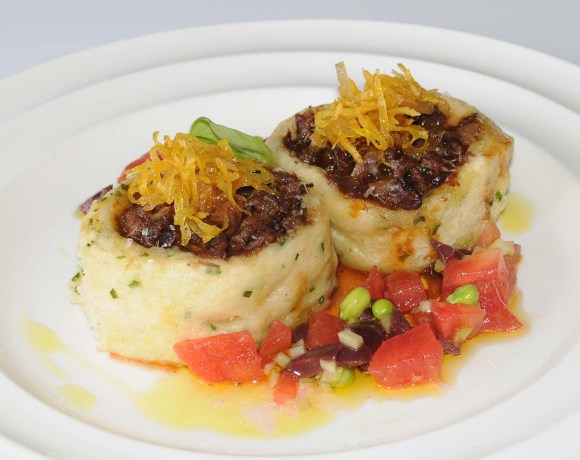
Oxtail wrapped in a herb dumpling


Serve with rice and fried glazed ginger and lemon confit with glazed baby beetroot and horseradish cream.


This can be made with leftover oxtail.

The meat should be very tender and come off the bone quite easily after the cooking process. If you prefer, leave the meat on the bone and serve the dumplings, steamed in a bamboo steamer, separately.

OXTAIL WRAPPED IN A HERB DUMPLING, SERVED WITH FRIED GLAZED GINGER AND LEMON CONFIT AND A WARM RUSSIAN SALAD

Serves 4 with possible leftovers
If you have the time (and inclination), prepare a separate stock to strengthen the flavor of your dish.  It is optional but worth it.  Start making this sauce before starting to cook the oxtail.

Additional flavor: (Optional)
1 tablespoon olive oil
any trimmings from the oxtail
1 medium onion, diced
1 garlic clove, finely chopped
2 cups beef stock, heated
2 cups of water
reserved tomato peels and seeds plus 1 extra tomato finely diced
3 juniper berries
1 teaspoon fennel seeds
2 thyme sprigs
1 teaspoon apple cider vinegar
season to taste
In a saucepan, add all the above ingredients and bring to a boil, skimming the surface all the time to remove all the impurities.  Cook for 30 minutes and let sit for another 30 minutes whilst preparing for the cooking of the oxtail.

The oxtail:
1 oxtail, trimmed and wiped dry, reserve the trimmings
2 tablespoons vegetable oil
½ bottle of red wine
1 large onion, chopped finely
3 cloves of garlic, chopped finely
1 cinnamon stick, whole
2 bay leaves
4 whole cloves
2 cups beef stock, heated (or the stock you prepared earlier, if you did)
salt and freshly ground pepper

1 large tomato, peeled, seeded and finely diced
1 onion, finely chopped

The lemon confit:
6 lemons, zest and juice
150 g (5.2 oz) castor sugar

The garnish: (optional)
glazed ginger, sliced and lightly fried in butter

The beetroot:
8 baby beetroot
1 tablespoon olive oil
1 sprig of thyme
1 clove garlic, roughly chopped
salt and freshly ground black pepper
1 small onion, thinly sliced
¼ cup apple cider vinegar
1 tablespoon honey, or to taste
1 teaspoon port

The horseradish cream:
¼ cup fresh horseradish, grated
1 tablespoon mustard
½ teaspoon lemon juice
½ castor sugar or to taste
1 tablespoon dill
salt and pepper
1 cup cream, whipped

The oxtail:

  • Heat the oil in a cast iron pan and add the oxtail pieces. Fry over moderate heat until brown all over, then add the red wine and bring to a boil until nearly dry, stirring regularly.
  • Add the onions, garlic, cinnamon, bay leaves, cloves, hot stock (or the above prepared sauce, strained), and salt and pepper, and cover tightly with the pan lid. Turn down the heat to a moderate simmer.

If you prefer to cook the oxtail in the oven, now is the time to put it in an oven preheated to 180°C/356°F.

  • Cook for at least two hours, checking at regular intervals that it does not cook dry. Top up with 1 cup boiling water and repeat every time it seems to be cooking dry.
  • When the meat separates easily from the bones, remove from the heat.  Spoon the meat in a separate container and leave the sauce, which should have formed a thick sludge by now, behind and keep warm.
  • Check the seasoning of the sauce, discard the cinnamon stick and bay leaves (and cloves if you can find them!), then reduce the sauce to a syrupy consistency and remove from the heat. Set aside in a warm place.

If you plan to serve the oxtail on the bone with the steamed dumplings, your oxtail is ready to be served now.

  • If you want to serve it with the dumplings wrapped around the meat, remove the bones from the meat and discard.
  • Roughly chop the meat, and mix in the tomato and onion. Shape the mixture into a sausage about 6 cm/2.5 in in diameter, and roll it in plastic film.
  • Twist the ends to seal well, then refrigerate to set.

For the dumplings:

  • Into a food processor bowl, sift the flour and baking powder, add oil and enough milk to bind the mixture and pulse until it just comes together as a dough.
  • Add the cheese and chives and pulse again to just combine.
  • Transfer the mixture to a lightly floured surface and knead very lightly. Roll out the pastry to a rectangle measuring 18 x 48 cm/7 x 19 x in.
  • Carefully remove the plastic film from the oxtail sausage and place the meat in the center of the dumpling dough. Roll the dough over the meat and seal the edges. Trim the two ends of the sausage then cut it into 8 even slices.
  • Prepare the steamer and line each steam basket with some cabbage leaves rubbed with oil. Place the oxtail dumplings flat on the cabbage leaves (this is to prevent the oxtail from sticking to the basket) so that the meat is visible and steam for 15 minutes.
  • Halfway through the steaming process change the steamer baskets around so that they both get equal steam.
  • Carefully remove each dumpling and put on a warm plate. Discard the cabbage leaves.

For the lemon confit:

  • Peel the lemons, leaving the pith behind, and slice the zest as fine as possible. Place the zest in a saucepan and just cover it with water. Bring to the boil but drain as soon as it starts boiling.
  • Repeat the whole process twice, starting off with fresh cold water every time.
  • After the final draining, place the zest back in the saucepan and cover with the lemon juice and the sugar and, if necessary, add a little water. Cook over very low heat (barely simmering) until the zest is tender and the juice becomes syrupy.

The beetroot:

  • On a large piece of foil, place the beetroot in the centre and drizzle with the olive oil, then add thyme and garlic. Season with salt and pepper.
  • Enclose the foil and seal, then place on a baking tray. Bake for about 1 hour until very tender.
  • Remove from the oven and, unwrap the foil and tip the beetroot into a bowl. Cover the bowl with some plastic film and leave for 20 minutes to allow the skins to loosen and the beetroot to cool.
  • Remove the plastic film and discard the thyme and garlic.
  • Rub off the skins of the beetroot and cut in half. Put all the beetroot in a bowl and add the onion.
  • In a saucepan, bring to a boil the vinegar, honey, port and 1 tablespoon cold water. Reduce until it starts to thicken to a rich glaze. Add the cooked beetroot and stir to cover with the glaze, remove from the heat and leave to cool.

For the horseradish:

  • In a food processor blend the horseradish, lemon juice, sugar and dill.
  • In a separate bowl, whisk the cream until stiff then fold into the horseradish mixture.
  • Season to taste, then strain through a sieve (optional) and refrigerate for 4 – 8 hours.

To serve:
Pour the sauce in the center of the plate and place two of the oxtail dumplings on top. Spoon the lemon confit and ginger on top of the oxtail and serve on rice with glazed baby beetroot and horseradish cream.


Categories
SOUPS/SAUCES/CONDIMENTS

MIXED MUSHROOM RISOTTO


4 cups/1 liter chicken stock
6 fresh shiitake mushrooms, finely sliced (or 6 dried ones — see note)
150 g/5.3 oz mixed wild mushrooms, finely sliced
2 tablespoons/30 ml vegetable oil (for frying the mushrooms and onions)
1 onion, finely chopped
2 tablespoons/30 ml olive oil (for the risotto)
150 g/5.3 oz Arborio rice
⅔ cup/150 ml white wine
1 tablespoon/15 ml truffle trimmings (optional or use 1 teaspoon/5 ml truffle oil)
½ cup/125 ml Parmesan cheese, finely grated
¼ cup/60 ml chives, finely chopped
salt and freshly ground black pepper

If using dried shiitake mushrooms, pour out 1 cup/250 ml of the stock into a bowl containing the dried mushrooms. Set aside to soak until soft. Keep the rest of the stock simmering for the risotto. Remove the soaked mushrooms from the soaking liquid and finely slice them. Strain the soaking liquid of the mushrooms into the simmering stock.

In a medium saucepan, bring the stock to a simmer.
In a clean saucepan, heat the vegetable oil, then add all the mushrooms and onion and fry until cooked. Remove from the saucepan and set aside. (If using the dried shiitake mushrooms, strain at this stage and slice finely, then add it to the pan with the other mushrooms). 

Wipe the saucepan and heat 2 tablespoons/30 ml olive oil, then add the rice and stir to coat until it is lightly toasted but not colored. Add the wine and bring to the boil until all the alcohol has evaporated — stirring occasionally.  Stir in half a cup of the stock and cook until almost all the liquid has been absorbed.  Keep stirring  occasionally.  Continue adding the remaining stock, half a cup at a time, to the rice until almost all but half a cup of stock remains. This should take about 25 minutes. Add the cooked mushrooms, the onions and the balance of the stock. Stir to heat through. Remove from the heat, stir in the truffle trimmings (or truffle oil), the cheese and chives, and season to taste. Serve immediately.

Categories
METHODS SOUPS/SAUCES/CONDIMENTS

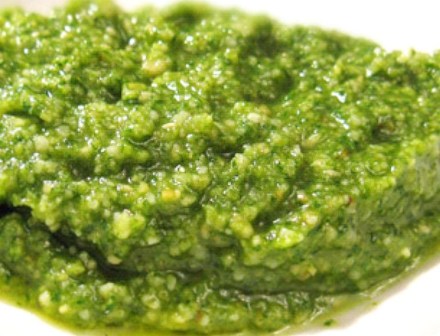
BASIL PESTO


BASIL PESTO


The quantity that this recipe gives can easily be doubled or tripled.

1 cup/250 ml (tightly packed) fresh basil leaves
1 garlic clove
25g/1 oz pine nuts, toasted
½ cup/125ml olive oil
4 tablespoons/60 ml Pecorino cheese, freshly grated
4 tablespoons/60 ml Parmesan, freshly grated
salt to taste
½ teaspoon/3 ml lemon juice

  • Put the basil, garlic, pine nuts and Pecorino cheese in an electric mixer and blend very briefly until you have a rough consistency.
  • Then slowly add the olive oil, checking regularly whether it is the consistency you want.
  • Keep on adding oil until you are satisfied. When the sauce has reached the consistency you want, add the Parmesan cheese, stir in well and check the seasoning.

The amount of salt depends on the piquancy of the Pecorino used.

  • Store in a jar with a tight-fitting lid in the refrigerator for about 3 days.
Categories
MAIN COURSE

BOLOGNESE


The difference between this and the traditional Bolognese recipe is that I do not let it cook for very long because I do not use canned tomatoes. I prefer the freshness and lightness the fresh tomatoes give the dish.

BOLOGNESE

To start:
25 g/8 oz butter
25 g/8 oz olive oil
2 cloves garlic, finely chopped
1 carrot, finely chopped
2 celery stalks, finely chopped
2 large mushrooms, finely chopped

The meat:
25 g/8 oz butter
25 g/8 oz olive oil
70 g/2½ oz pancetta, finely sliced
1 onion, finely chopped
300 g/10.6 oz beef, minced
100 g/3.5 oz pork, minced
2 large, fresh tomatoes, peeled, deseeded and finely diced
¾ cup/175 ml white wine
1 cup/250 ml beef stock
¾ cup/175 ml whole milk

The pasta:
spaghetti (for 4 servings)
2 tablespoons/30 ml olive oil
2 tablespoons/30 ml parsley, finely chopped
grated Parmesan cheese, to serve

To start:
Melt the butter and oil in a heavy-based pan over medium heat, then add the garlic, carrot and celery and fry for 2 minutes. Add the mushroom and cook until the mushroom are cooked. Remove the vegetables from the pan with a slotted spoon and add some more butter and oil.

Turn up the heat then add the onion and pancetta and let it cook for a minute or so. Add the minced beef and pork, breaking it up with wooden spoon and leave to brown without stirring. Then stir and let brown some more. Stir in the reserved mushrooms and vegetables and the milk and stir through until the milk is well absorbed. Add the white wine and let it cook down, then add the tomatoes and half the stock. Cook until nearly dry then add the rest of the stock and cook some 15 minutes longer. Season to taste and remove from the heat. Keep it warm.

While the Bolognese is “resting”, cook the pasta until al dente in a deep saucepan with lots of salted water. Drain and pour back into the saucepan and drizzle some olive oil over. Stir through the parsley.

With a pasta serving fork, roll up the pasta and gently slide it onto a warm serving plate. Neatly spoon the meat sauce over the pasta, top it with freshly grated Parmesan cheese and more parsley if preferred.

Make double the meat sauce and use leftovers for making:
Stuffed roast peppers
Stuffed mushrooms
Sausage rolls with puff pastry.

For leftover spaghetti:
Mix with breadcrumbs, herbs and cheese and put it under the grill for a few minutes for a delightful snack or with a salad for lunch.

Categories
MAIN COURSE

Lamb and aubergine lasagne


Serves 4

To save time, the white sauce may be made up to two days ahead, the surface covered with plastic wrap and stored in the refrigerator until ready to use. Dried lasagne sheets, blanched, can be used in stead of fresh pasta. LASAGNE
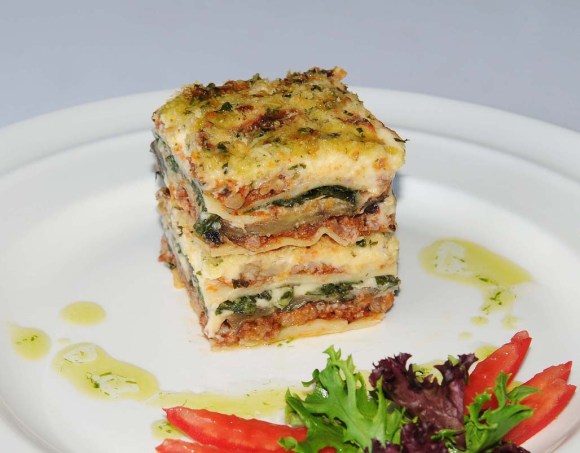
Please note that this is not strictly the traditional Lasagne, which I believe comes without aubergine, mushrooms and spinach — contrary to this recipe. So, apologies to all the purists out there.

The vegetables:
2 large aubergines, thinly sliced horizontally
2 tablespoons/30 ml olive oil
1 tablespoon/15 ml butter
16 large field mushrooms, roughly chopped
1 cup/25 ml cooked spinach
salt and freshly ground black pepper

The meat sauce:
2 tablespoons/20 ml olive oil
2 large onions, chopped
3 garlic cloves, minced
3 tablespoons/45 ml bacon, finely chopped
450 g/15.8 oz pork, minced
450 g/15.8 oz lamb, minced
750 g/1½ lb tomatoes, skinned, seeded and chopped
½ teaspoon/3 ml fennel seeds, crushed
2 tablespoons/30 ml tomato paste
½ teaspoon/3 ml cinnamon
pinch allspice, ground
salt and freshly ground pepper

The white sauce:
1 cup prepared Bechamel sauce

The topping:
1 cup/250 ml fresh breadcrumbs
2 tablespoons/30 ml fresh parsley, finely chopped
1 tablespoon/15 ml garlic
250 g/9 oz Parmesan cheese, finely grated

Additional ingredients:
125 g/4.4 oz cheddar cheese, grated
125 g/4.4 oz Buffalo mozzarella cheese, sliced
12 fresh pasta sheets (cut to 14 x 7 cm/5.5 in x 2.7 in)

Preheat the oven to 180°C/356°F.

Sprinkle the aubergines with salt and set aside for 30 minutes, then rinse the aubergines and pat dry.

Heat the olive oil and butter in a large heavy non-stick pan and fry the mushrooms until cooked through. Remove from the pan with a slotted spoon, season and set aside.

Heat some more oil and fry the aubergine slices until golden brown on both sides, then drain on kitchen towel and set aside.

In the same pan, heat the oil and fry the onions, garlic and bacon over moderate heat, until softened. Add the pork and lamb and cook, stirring to break up, until it is crisp and starting to caramelize. Stir in the remaining meat sauce ingredients and salt and pepper to taste. Cook for about 5 minutes more, uncovered.

Mix all the ingredients for the topping and set aside.

Assemble the dish:
Grease an ovenproof dish with a lid, approximately 34 x 24 cm/13 in x 9.5 in. Arrange enough pasta sheets to cover the bottom of the dish. Place the aubergine slices in a single layer over the pasta, then spread half of the meat sauce over the whole surface. Mix the mushroom mixture with the spinach and spread half of this over the meat sauce. Scatter half the mozzarella cheese over and pour half the white sauce over the cheese. Repeat the above steps once more ending with the white sauce. Sprinkle the topping over, drizzle some olive oil over, then cover the dish with the lid and bake in the middle of the oven for 30 minutes.

Remove the lid and bake the Lasagne for 10 minutes longer until the top is bubbling. For extra crispy and golden topping, grill under a preheated grill for about 2 minutes. Let the Lasagne stand for 5-10 minutes before serving. Serve with a simple fresh salad.2

Categories
STARTERS/SIDES

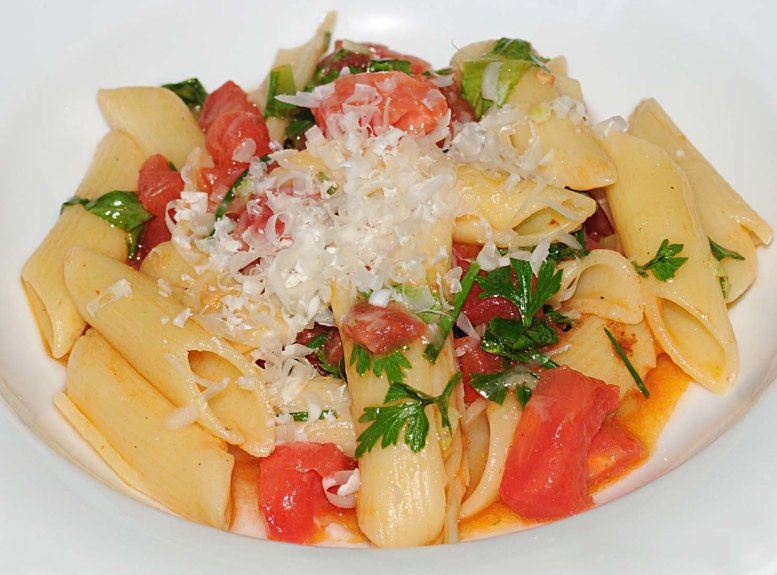
Pasta with a fresh tomato and brie sauce


This is a delightfully light and fresh tasting starter or light summer lunch. Served with some fresh crusty bread and a crispy white wine, guarantees total satisfaction.

PASTA WITH TOMATO AND BRIE SAUCEServes 4

olive oil
4 shallots, finely sliced
3 garlic cloves, finely chopped
8 rashers of bacon, finely chopped (omit if for vegetarians)
375 g penne pasta
250 g/8.8 oz good quality brie, roughly chopped
8 tomatoes, skinned and roughly chopped
salt and fresh ground pepper
2 tablespoons fresh parsley, finely chopped
2 cups Parmesan cheese
1 cup fresh basil, finely sliced


For every 100 g/3.5 oz of pasta, you’ll need 5 cups water and 2 teaspoons salt in a large saucepan. It is important to use lots of water when cooking pasta to enable the pasta to move around while cooking. Bring the water to the boil and add salt before you add the pasta. The best way to judge whether the pasta is cooked, is to taste it.

  • Heat 2 tablespoons olive oil in a frying pan and fry the shallots, garlic and bacon for about 4 minutes, until lightly caramelized. Remove from the heat.
  • Meanwhile, cook the pasta until tender but still have a bite to it. Drain but reserve one cup of the cooking liquid.
  • Place the saucepan with the pasta back onto low heat and mix in 2 tablespoons olive oil.
  • Reheat the pan with the fried onion mix and deglaze with the reserved liquid.
  • Add this mixture to the pasta, stir in the brie and let it melt slightly, then add the tomatoes, salt and pepper to taste, parsley and half of the Parmesan cheese.
  • Let simmer for about 2 minutes, then remove from the heat.
  • Dish up immediately with the basil and the rest of the Parmesan sprinkled over.