Categories
METHODS SALADS/VINAIGRETTES STARTERS/SIDES

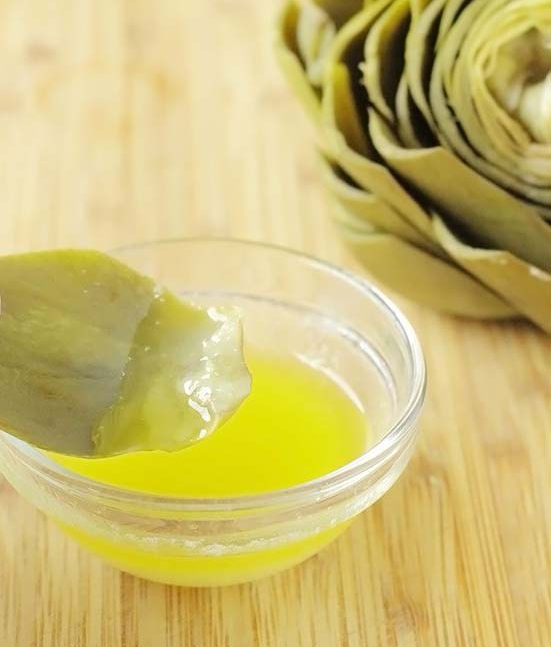
Steamed artichokes with garlic butter


When buying artichokes, choose those in which the petals are still rather closed, not open. They will be more fresh and more tender and should look as if it had been “frost kissed”.

artichokes-and-butter.jpg

  • Slice about 2 cm/¾ inch off the tip of the artichoke and pull off any smaller leaves towards the base and on the stem.
  • Rinse the artichokes in running cold water.
  • Steam the artichokes over water with a clove of garlic, a slice of lemon, and a bay leaf for 25 to 45 minutes or until the outer leaves can easily be pulled off.

Cooking time depends on how large the artichoke is, the larger, the longer it takes to cook.

How to Eat an Artichoke

  • For maximum flavour and delight, the artichokes should be eaten comfortably hot.
  • Serve with a dip, either melted butter mixed with creamed garlic (if you wish), or mayonnaise with a little sherry vinegar mixed in is also delicious.
  • Pull off outer petals, one at a time, dip the white fleshy end in the melted butter or sauce. then tightly grip the other end of the petal.
  • Place as much of the leave as you can in the mouth, and pull through the teeth to remove the soft, pulpy, delicious portion of the petal. Discard the remaining petal.
  • Continue until all of the petals are removed.
  • With a knife or spoon, scrape out and discard the inedible fuzzy part (called the “choke”) which covers the artichoke heart.
  • The remaining bottom of the artichoke is the heart. Cut into smaller pieces and mix with the rest of the garlic butter.
Messy, but does it matter?
Categories
STARTERS/SIDES

Puy lentils with celeriac, hazelnuts and mint


Serves 4

Celeriac is probably my favourite root vegetable and Puy lentils an all time favourite pulse. Celeriac has a delicate, yet very nutty flavour, and has an elegant, almost, creamy smoothness. Like all good vegetables, it is marvellous, simply with a bit of olive oil. This recipe combines the lentils with the celeriac and nuts to create a hearty autumn vegetarian main course. Serve it warm, with a radish, cucumber and dill salad dressed with soured cream and olive oil. Or, allow it to cool down, then take it to work for lunch or on a picnic. It makes a marvelous side-dish with pork or duck.  (See Crispy skin duck breast with Puy lentils and glazed peaches and Marinated pork belly “sous vide”.

¾ cup/180 ml Puy lentils
3 cups/750 ml vegetable stock (or chicken stock if not for vegetarians)
1 tablespoon/15 ml carrot, finely diced
1 tablespoon/15 ml onion, finely diced
4 thyme sprigs
1 cup/250 ml celeriac, cut into 1 cm/¾” blocks
4 tablespoons/60 ml olive oil
3 tablespoons/45 ml hazelnut oil
3 tablespoons/45 ml good-quality red wine vinegar
4 tabelspoons/60 ml chopped mint
60g/2 oz whole hazelnuts, roasted and chopped roughly
salt and black pepper

Combine the lentils, stock, carrot and onion, and thyme in a small saucepan. Bring to the boil, then simmer for 10 minutes, then add the celeriac, and cook for another 10 minutes or until the lentils are al dente. Drain in a sieve.

In a large bowl mix the hot lentils (if they have cooled down they won’t soak up all the flavours) with the olive oil, 2 tablespoons of the hazelnut oil, the vinegar, some black pepper and plenty of salt. Taste and adjust the seasoning.
To serve straight away, stir in half the mint and half the hazelnuts. Pile onto a serving dish or in a bowl and drizzle the remaining hazelnut oil on top. Garnish with the rest of the mint and hazelnuts.
To serve cold, wait for the lentils and celeriac to cool down before finally adjusting the seasoning and possibly adding some more vinegar, if you like. Add hazelnut oil, mint and nuts in the same way as when serving hot.

Categories
STARTERS/SIDES

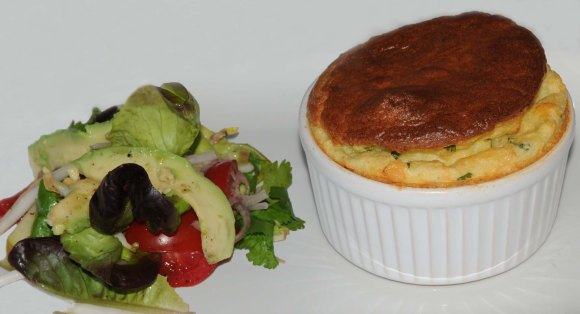
Potato souffle made with leftover mashed potato


Cooking a soufflé is extremely easy and lots of fun as long as you stick to the basic rules.  The ramekins for example should be prepared correctly — a generous coating of melted butter and fine breadcrumbs inside is necessary to help the soufflé rising much easier. Use a pastry brush to paint the inside of the ramekins with butter and lightly coat with fine breadcrumbs, then place the ramekins in the fridge for at least 15 minutes before use.

The oven needs to be preheated to a high temperature. The soufflés will take anywhere between 7 and 10 minutes even up to 15 minutes to cook, depending on the size. Another rule is to never open the oven door until the end of the cooking process. This will cause the soufflé to fall (deflate) and all your hard work will go to waste.

The eggs are the most important component in the preparation of the soufflé because it is the air trapped inside the egg white what makes the soufflés rise in the oven. The egg whites should be whipped to very stiff peaks, then finally and very gently folded into the base whilst trying to keep as much of the air in as possible.

The baked soufflé should be served immediately before your lovely puffed soufflés starts deflating. It is therefore very important to have everything else you serve with the soufflé ready to be served.

POTATO SOUFFLE

2 tablespoons/30 g butter, plus extra for greasing
3 teaspoons/15 ml fine breadcrumbs for coating the ramekins
1¼ cup/300 g mashed potato (leftover or made from scratch
1⅓ cups/85g cheddar, grated
⅓ cups/30g Parmesan cheese, finely grated
2 tablespoons/30 ml fresh chives, finely chopped
2 eggs
freshly ground black pepper
6 tablespoons/90 ml milk
paprika, for garnish (optional)

  • Preheat the oven to 220ºC/450ºF and put a baking sheet in the oven to heat up.
  • Butter 4 ramekin dishes and dust with breadcrumbs and place in the refrigerator. Do this at least 15 minutes before baking.
  • Separate the eggs and add the egg yolks together with the cheese, chives and black pepper to the mashed potato. Stir very well to combine.
  • In a small pan warm the milk with the butter until the butter melts and pour over the potato mixture. Stir again until totally combine.
  • Whisk the egg whites until stiff peaks form, then first fold one third of the egg whites into the potato mixture.
  • Finally, gently fold the rest of the egg white into the potato mixture keeping as much air in as possible.
  • Fill the prepared ramekins with the potato mixture and sprinkle paprika (if using) on top.
  • Place in the oven on the preheated baking sheet and bake for 10-15 minutes until puffed and golden. Serve immediately

For variation and to add extra interest and flavor, add chopped cooked bacon or any other fresh herbs.


Categories
MAIN COURSE STARTERS/SIDES

Macaroni and cheese


This ultimate comfort food with its golden, buttery, crunchy topping, is always a welcome friend to all people young and old, for any occasion — it and can be made for one person or a big group of family and friends.  Just adjust the quantities.  It freezes well and a big quantity can be made in advance and frozen in portions.  Easy and quick and together with a fresh crunchy salad, a simple feast ….. and its vegetarian!

—————– Photograph to come——————————

For the cheese sauce:
1 liter/1¾ pt milk, heated
50 g/1¾ oz butter
50 g/1¾ oz plain flour, sifted
250 g/9 oz cheddar, grated
1 teaspoon/5 ml English mustard
½ teaspoon garlic powder (optional)

For the Parmesan and crumb topping:
2 tablespoons butter (or olive oil)
1½ cup/375 ml dried breadcrumbs
½ cup/ 120 ml grated Parmesan cheese

For the macaroni:
400 g/14 oz dried macaroni, rigatoni or penne, etc
salt
1 tablespoon/15 ml olive oil
6 spring onions, finely sliced
1 tablespoon/15 ml sour cream (or plain yoghurt)
200 g/7 oz tomatoes, peeled and sliced thinly
2 tablespoons/30 ml fresh parsley, finely chopped

  • Preheat the oven to 200°C/390ºF.
  • Lightly grease an heat-proof dish the size required.
  • In a saucepan over medium heat, melt the butter, then stir in the flour and cook for 1-2 minutes.
  • Gradually stir in the hot milk and cook gently, whilst whisking constantly, until all the milk is used up and a smooth sauce is formed.
  • Reduce the heat and simmer for 3-4 minutes or until thickened.
  • Remove from the heat and add the cheese and mustard, then season well with salt and freshly ground white pepper and the garlic powder (if using).
  • Meanwhile, for the crumb topping, melt the butter (or heat the oil) over medium heat and add the breadcrumbs.
  • Stir constantly to avoid the crumbs burning, then remove from the heat and add the Parmesan cheese. Mix thoroughly and set aside.
  • Fill a large saucepan more than half full with water and bring to the boil.
  • Add salt and cook the pasta until al dente.
  • Drain the pasta, discard the water and pour the pasta back into the saucepan.
  • Drizzle the olive oil over and stir gently, then add the spring onions and the sour cream (or yoghurt) and mix well.
  • Pour the sauce over the pasta, mix well and then spoon a third of the mixture into the prepared baking dish.
  • Place the sliced tomato and parsley in a layer over the pasta, sprinkle over some salt, then pour the rest of the pasta mixture in and smooth the top.
  • Sprinkle the Parmesan and crumb mixture evenly on top and bake in the oven until the crumbs are golden and the sauce is bubbling lightly around the edges. It should take about 12-15 minutes.
  • Remove from the oven and let sit for about 10 minutes before serving.
Categories
STARTERS/SIDES

Melanzane


MELANZANEServes 6

Melanzane, the dish as I got to know it, is actually called Aubergine Parmigiana or Melanzane alla Parmigiana in the big culinary world out there. Whatever it’s called, it is totally delicious, and works on a warm day or a cold winter’s day; it is also vegetarian and the copious amounts of cheese sort out the comforting aspect.
There are questions, though. To salt or not to salt, to peel or not to peel? To use tinned tomatoes or fresh ones?

Salting the aubergine beforehand is simply to remove the bitterness, is the general opinion, and the true belief by the aubergine lovers is that it prevents the aubergine from soaking up too much oil when frying. It may be true, but for me the salt gives it more flavor and makes me feel better about the possible bitterness. As far as frying is concerned, I think it will soak up the oil anyway and a good draining and patting with kitchen paper will do the trick.

Peeling the aubergine skin is simply a personal issue and the skin provides a welcome textural contrast in a dish that can otherwise tend to be mushy. It also prevents the slices from falling apart when fried. When the dish is finally baked and put in front of you, I see no harm in the individual removing the skin without much trouble.

I have nothing against canned tomatoes, but I tend to taste the tin and that is a no-no for me. I prefer using fresh ones even if it is quite cumbersome to peel and seed, and the flavor in the end is the winner.

This Melanzane recipe, nevertheless, is a great way to serve aubergine. By frying and layering it with Parmesan, mozarella and tomatoes and then baking it until golden on top, makes a very satisfying vegetarian dish, and is also great served as a side-dish to roast meat or fish.

3 large aubergine
olive oil
1 onion, finely chopped
1 clove regular garlic, finely sliced
1 teaspoon dried oregano
1 kg/2  lb fresh ripe tomatoes, peeled, seeded and diced
2 large tomatoes, peeled and cut in slices
salt and freshly ground black pepper
wine vinegar
1 cup fresh basil, roughly torn
2-3 cups Parmesan cheese, freshly grated finely
2 cups dried breadcrumbs
a little fresh oregano, leaves chopped
2 cups hard mozzarella, roughly sliced and chopped, or grated
vegetable oil for frying

  • Slice the aubergine in 1 cm/¼ in slices, arrange on a large cooling rack and sprinkle liberally with salt on both sides of each slice. Let it sit for about 30 minutes.
  • Meanwhile, heat some all in a frying pan and lightly fry the onion, garlic and dried oregano until the onion is soft and the garlic golden.
  • Add the chopped tomatoes to the onion mixture, give it a good stir, add salt and pepper, then put a lid on the pan and simmer for 15 minutes.
  • When its reduced and sweet, add a few drops of the wine vinegar.
  • Meanwhile, in a large frying pan pour the oil about 1½ cm/1 in deep and heat to about 170ºC/330ºF.
  • Rinse the aubergine slices very well to get rid of the excess salt, and pat dry.
  • Fry the aubergine slices until lightly golden on both sides and tender. Remove from the oil with a slotted spoon and drain on kitchen paper. You may have to do this in batches.
  • Grease a heat-proof dish (25 x 15cm/9½ x 12 in) or six individual dishes.
  • Pour all the tomato sauce in the dish and spread it evenly, then put a single layer of aubergines on top of that, followed by a generous sprinkle of parmesan cheese.
  • Next comes a layer of sliced tomato, a few bits of torn basil and some salt and then a layer of mozzarella cheese.
  • Repeat these layers until you’ve used up all the ingredients, finishing with a little sauce and the rest of the Parmesan, mixed with the breadcrumbs, a little olive oil, and the chopped fresh oregano.

    If you have any mozzarella left over, mix that in too.

  • Bake the Melanzane in the oven at 190°C/375°F for half an hour until golden, crisp and bubbly.
  • It is best eaten straight away while the mozzarella is still gooey.
 

Categories
STARTERS/SIDES

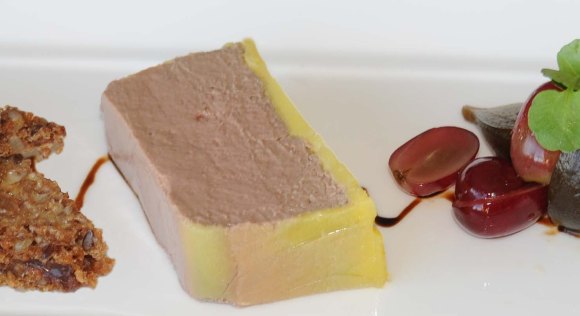
Chicken liver paté with figs, grapes and herb salad and whole-wheat bread


For the paté:
1¾ cup/420 ml milk
400 g/14 oz chicken livers, trimmed
2 tablespoons/15 ml olive oil
1 medium shallot, finely chopped
1 garlic clove, finely chopped
1 sprig of thyme
3 tablespoons/45 ml brandy
3 tablespoons/45 ml port
3 tablespoons/45 ml Madeira
50 g/1.75 oz clarified butter, melted
3 eggs
1 egg yolk
salt and freshly ground black pepper
300 g/10.5 oz butter, melted (to seal the paté)

To finish:
75 g/3 oz softened butter
75 g/3 oz softened lard

The fig and grape salad:
4 firm-ripe fresh figs, halved lengthwise
4 cups/1 liter rocket leaves
½ cup/120 ml grapes, cut in half
2 tablespoons/30 ml extra-virgin olive oil
salt and freshly ground pepper to taste
balsamic glaze
whole-wheat bread, thinly sliced, buttered and lightly toasted

For the paté:

  • Soak the livers in the milk for at least four hours, then drain, rinse and pat dry.
  • Heat the oven to 120°C/248ºF).
  • Grease a terrine mold and line with plastic film.
  • Heat the oil in a frying pan and add the shallot and garlic. Fry until translucent, then add the thyme.
  • Add the brandy and flambé, and when the flames have died down, add the port, Madeira and reduce by two thirds.
  • Leave to cool slightly, then add the butter, eggs and the cleaned livers and season with salt and pepper. Do not bring to a boil again, this is just to get all the ingredients up to the same temperature. Discard the thyme.
  • Transfer the liver mixture to a food processor and blend until smooth.
  • Pour the blended mixture through a fine sieve, rubbing the mixture with the back of a ladle into a bowl. Discard any solids left behind.
  • Line the base and sides of a 23 cm x 9 cm x 8 cm/9 in x 3½ in x 3 in terrine mold with greaseproof paper, leaving a 3 cm/1 in overlap above the top of the tin.

    The paper will protect the paté from direct heat and prevent it discolouring and becoming hard.

  • Pour the liver mixture into the mold, put a piece of tin foil over the top of the dish (it must not touch the liver mixture) and place the lid on top.
  • Put the dish into a roasting tin, filled halfway with hot water, then place on the middle shelf of the oven and bake for 45 minutes.
  • Test the internal temperature and if it has not reached 65°C/149°F, place it back into the oven for another 10 minutes and check it again.

    Do not overcook or it will split and lose its fine texture.

  • When the paté is cooked, remove the terrine mold from the baking tray, leave it to cool for 30 minutes at room temperature then refrigerate.

  • Discard the greaseproof paper from the top of the paté then dip the tin in a deep tray of hot water.

  • Slide a hot knife between the sides of the mold and the greaseproof lining then hold the edges of the lining and carefully lift the paté from the tin onto a chopping board.

  • Peel away the greaseproof paper from the sides of the paté .

  • Warm a palette knife in hot water and smooth the top and sides of the paté , trimming away any discolouration on the top.

  • Return the paté to the fridge for at least 30 minutes to firm it up, or place it in the freezer for 15 minutes.

  • To finish, beat the softened butter and lard together and spread a thin layer over the top of the paté using a palette knife.

  • On a clean plate, flip the paté over and spread the remaining butter/lard mixture over the sides and what has now become the top.


    Covering all the surfaces of the paté with this mixture will prevent it from oxidising and discolouring.

  • Decorate the top surface with herbs to your liking, pressing them lightly down to adhere.

  • Return the paté , covered, to the fridge and chill for at least one day before serving.


    This will keep for up to 3 days.

To serve:

  • Dip a large sharp knife into hot water and carefully slice the paté to the thickness desired.
  • Plate each slice on suitable serving plates with the fig and grape salad and the whole-wheat bread.

For the fig salad:

  • Heat the grill to medium hot.
  • Drizzle a few drops of olive oil over the fig halves (on cut side) and briefly put under the grill. Remove and let cool.
  • Gently toss the rocket and grapes with olive oil, a pinch of salt, and freshly ground black pepper, and divide into four servings.
  • Arrange it on each plate with the paté, and place the two fig halves on each mound of salad. Drizzle with the balsamic glaze all round.
Categories
STARTERS/SIDES

Pasta spiral with a mushroom filling, a light cheese sauce and truffle vinaigrette


This is a wonderful vegetarian dish, but if you do not want to present this dish as described in the recipe, simply rearrange the ingredients. Cut the pasta into linguini or fettucini, mix the mushroom filling and the cheese sauce and spoon it over the pasta.  Drizzle the truffle (if using) over the mushrooms and sprinkle with some chopped parsley and chives.

pasta-spiral4.jpg

The filling:
1 tablespoon olive oil
500 g/17.6 oz mixed mushrooms, finely chopped (reserve a few whole ones for garnish)
2 shallots, finely chopped
1 clove garlic, minced
4 tablespoons chicken stock, heated
1 tablespoon parsley, finely chopped
1 tablespoon dried porcini mushrooms, finely ground
salt and freshly ground black pepper

The vinaigrette:
¼ cup olive oil
3 shallots, finely chopped
1 teaspoon fresh parsley, finely chopped
⅓ cup white wine vinegar
2 teaspoons truffle oil (optional)
1 tablespoon Dijon mustard
salt and freshly ground black pepper
2 teaspoons preserved truffle (finely chopped if using)

The pasta:
100 g/3.5 oz strong flour
100 g/3.5 oz Durham wheat
2 eggs

The cheese sauce:
2 cups chicken stock
1 clove garlic, crushed
1 bay leaf
2 sprigs of fresh thyme
3 tablespoons butter
3 tablespoons flour
50 g/¾ oz Gruyère cheese
4 tablespoons fresh cream
½ teaspoon nutmeg, ground
salt and freshly ground white pepper
2 teaspoons Parmesan cheese

The garnish:
the reserved mushrooms
1 tablespoon parsley, finely chopped
1 tablespoon chives, finely sliced
truffle vinaigrette (if using)

  • Preheat the oven to 180° C/356° F.
  • For the mushrooms, heat the oil and brown the mushrooms (also the whole ones for the garnish), add the shallots, garlic, the chicken stock, parsley, and the porcini mushroom powder.
  • Simmer for a few minutes until the liquid has reduced, season to taste, then set aside to cool.
  • Retrieve the whole mushrooms and set aside.
  • For the vinaigrette, mix all the ingredients together and store in a squeeze bottle in the refrigerator.
  • For the pasta, place all the ingredients in a food processor and process until it becomes smooth and silky. Roll in plastic film and refrigerate for 30 minutes.
  • Roll the pasta out thinly and cut into 2 x 4 cm/1.5 in x 50 cm/19.6 in long strips.
  • Spread the mushroom mixture over each noodle ribbon and roll the ribbon up in a spiral.
  • Place each spiral in a steam basket lined with cabbage leaves (rubbed with some oil to prevent it from sticking to the basket) and steam for 10 minutes.
  • Carefully remove each spiral and arrange in a greased oven-proof dish. Discard the cabbage leaves.
  • Pour the ¾ of the cheese sauce over the spirals and top with the Parmesan cheese.
  • Bake in the oven for 10 – 15 minutes until the top is golden and the sauce is bubbling.
  • For the cheese sauce, heat the chicken stock in a saucepan with the garlic, bay leaf and thyme.
  • In another saucepan and over medium heat, melt the butter, stir in the flour and cook for 2 minutes whilst stirring.
  • Strain the stock then whisk into the flour mixture, ½ cup at a time and whisk until smooth.
  • Bring the liquid to a boil, then reduce the heat to a simmer and cook for 15 minutes.
  • Remove from the heat then add the Gruyère cheese, cream and nutmeg, and season with salt and freshly ground white pepper.
  • To serve:
    Place a spiral on each heated serving plate, spoon around the rest of the cheese sauce and garnish with a whole mushroom and the chopped parsley and chives. Finally, lightly drizzle the vinaigrette over.
Categories
MAIN COURSE STARTERS/SIDES

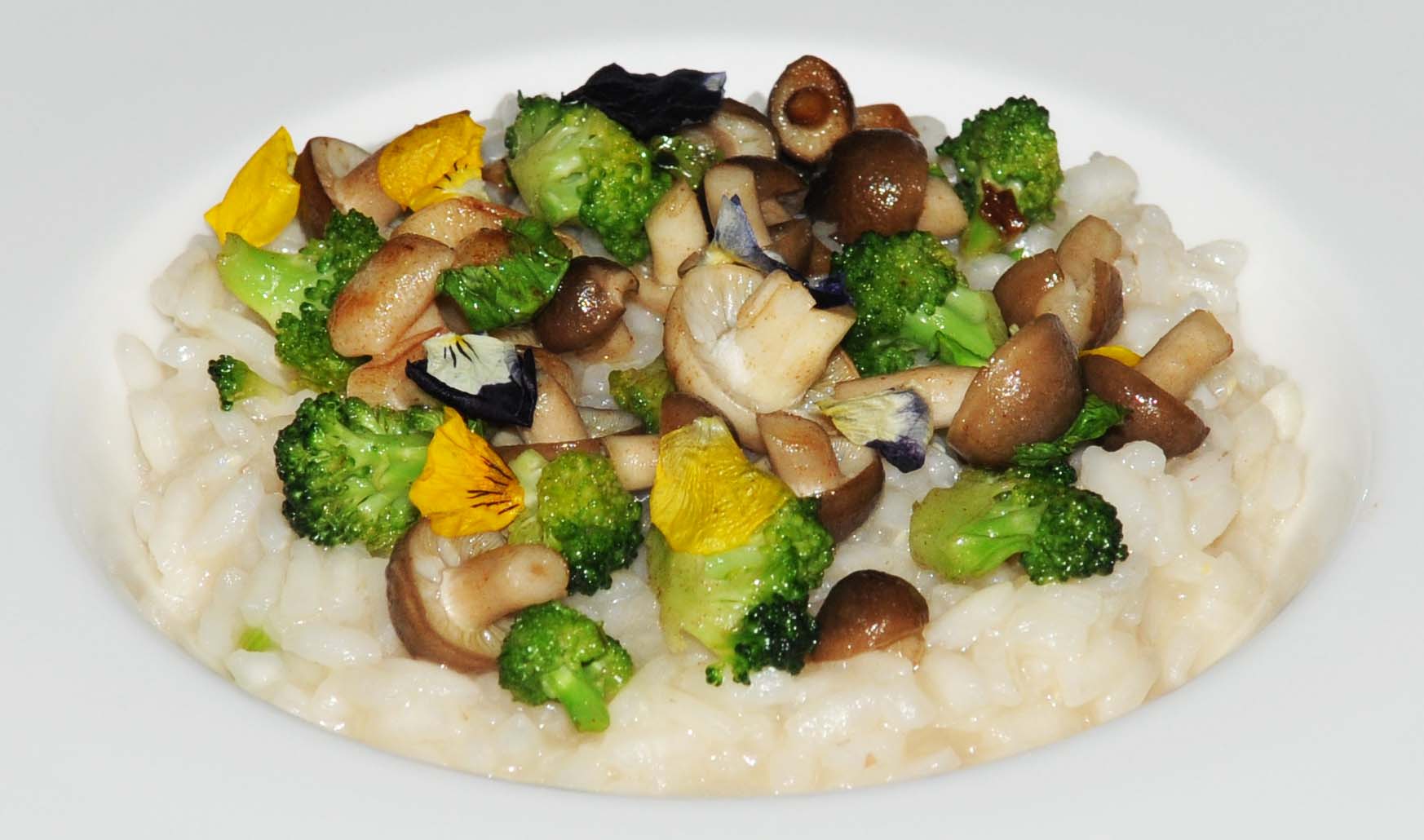
Mixed vegetable risotto


Risotto, a creamy rice dish, originally from northern Italy, is easy to make, its versatile and also quite comforting. You can chop and change the additional flavors to the rice to suit your desire or according to the ingredients available; it can be served as a light vegetarian lunch, or a side dish for a main course with meat. There are few rules, however. The most important is that the correct variety of rice must be used. Risotto rice, which is quite round and looks very different from long-grain rice, releases lots of starch during the cooking process so the finished dish is very creamy and rich which is characteristic of risotto.

MIXED VEGETABLE RISOTTO
Serves 2 as a main dish and 4 as a side dish.

For the risotto:
12 tablespoons butter
3 shallots, finely chopped
1 cup Arborio (risotto) rice
½ cup white wine
3 cups hot vegetable stock (make you own or buy from the supermarket – not stock cubes!)
2 teaspoons fresh thyme, finely chopped
2 tablespoons sour cream
4 tablespoons Parmesan, finely grated
salt and freshly ground white pepper
125 g/4½ oz cold butter, diced (or less if desired)
cabernet sauvignon vinegar, to taste, or a few drops of lemon juice

For the mushrooms:
1 tablespoon butter
2 cups shimeji mushrooms
salt to taste

For the vegetables:
about 20 broccoli florets
salt to taste

For the garnish:
edible flower petals (optional)
Parmesan shavings
mixed herbs and micro leaves

For the broccoli:

  • Bring a sauce pan with about 2 cups of water to the boil. Add 1 teaspoon salt and add the broccoli.
  • Boil for 1 to 1½ minutes until crisp-tender. Remove with a slotted spoon and set aside in a warm place.

For the mushrooms:

  • Empty the saucepan, then add the butter and fry the mushrooms for about 2 minutes before the mushrooms and butter turns brown.
  • Remove from the pan and set aside in a warm place.

For the risotto:

  • In a large saucepan and over medium heat, heat the 2 tablespoons of butter and add the onion. Cook until the onion is translucent.
  • Add the rice and stir for 2 to 3 minutes, then add the wine and stir until the liquid is absorbed.
  • Increase the heat to medium-high and stir in 1 cup of the broth and cook uncovered, stirring frequently with a wooden spoon, until all the liquid is absorbed,.
  • Then add more broth, allowing the liquid to be absorbed before adding some more.
  • Cook for approximately 25 to 30 minutes or until the rice is tender (but still with a bite) and the mixture has a creamy consistency.
  • Stir in the sour cream, cheese, salt and freshly ground white pepper, and remaining butter. Stir until mixture is creamy, about 2 minutes then remove from the heat.
  • Taste for seasoning and add the vinegar or lemon juice if required and stir through.

    A few drops of vinegar or lemon can change the dish you have prepared miraculously. It not only mellows a too rich sauce or soup, but it perks up your taste buds and brings brightness to the other ingredients in a dish — guaranteeing that lasting element of surprise.

  • Spoon the risotto into four serving bowls and garnish with the mushrooms, broccoli, Parmesan shavings and flowers (if using).
  • Serve immediately.
Categories
STARTERS/SIDES

Potato, green bean and avocado salad


POTATOES GREEN BEAN AVOCADO SALAD

2 medium size, potatoes, peeled and cut into large cubes
2 cup green beans, trimmed and cut into short lengths
2 medium sized avocados, peeled and cubed
3 garlic cloves, crushed
⅔ cup/180 ml fresh coriander, finely chopped
juice of one lemon
⅓ cup/80 ml extra virgin olive oil
salt and freshly ground black pepper

  • Place the potatoes in a large pot, cover with water and bring to a boil.
  • Boil until almost tender, but still hold their shape.
  • Drain in a colander and leave them to dry out until completely cool.
  • Meanwhile boil the beans in salted water and cook until tender.
  • Drain and place in a large bowl, add the crushed garlic and mix thoroughly to infuse the beans with the garlic.
  • When the potatoes have completely cooled down, add to the green beans and lastly the avocados.
  • Toss the lemon juice and olive oil, add the chopped cilantro and salt and pepper.
  • Pour over the salad and combine gently.

Serve as a side dish for Teriyaki infused chicken cordon bleu, or as a light vegetarian lunch.

Categories
STARTERS/SIDES

Potatoes roasted in duck fat with Rosemary


1.5 kg/3 lbs floury potatoes, cut into 3 pieces, depending on size
1 cup/250 ml duck fat
Maldon sea salt
2 tablespoons/30 ml rosemary needles

Preheat the oven to 180°C.

Place the potatoes in a saucepan of cold salted water and bring to the boil. Cook until halfway done (some resistance when pierced with a pointed knife). Drain, then return to the pan and shake well over medium heat to dry out and rough up the edges.  This is necessary to obtain the crispy edges.

Place the duck fat in a roasting pan, then heat for 5 minutes. Remove from the oven, carefully add the potatoes to the duck fat and spoon over some of the fat. Sprinkle over the Maldon sea salt and rosemary, then return to the oven and roast, turning twice, for 45 minutes or until golden and crispy. Serve immediately