Categories
SOUPS/SAUCES/CONDIMENTS

Teriyaki sauce


This is the sauce I used to flavor my Teryaki chicken cordon bleu


This is a homemade version of the commercial Teriyaki sauce.  It keeps well in a covered container and refrigerated, and can be used as a dipping sauce for many other dishes.

1 cup water
5 tablespoons brown sugar
¼ cup soy sauce
1-2 teaspoons honey, or to taste
1 large garlic clove, finely minced
½ teaspoon ground ginger
2 tablespoons cornstarch
¼ cup cold water

  • Combine the water, brown sugar, soy sauce, honey, garlic and ginger in a medium saucepan and set over medium heat.
  • In a small bowl, combine the cornstarch with the ¼ cup water and whisk until dissolved.
  • Add the cornstarch mixture to the saucepan.
  • Heat the sauce until it thickens to your taste. If the sauce becomes too thick, add more water to thin it out.
  • Pour in a screw top container.
Categories
SOUPS/SAUCES/CONDIMENTS

Ravioli filled with creamy chicken mousse


Serve with a drizzle of roast almond dressing and micro herbs scattered over the top


This is a very romantic dish, fit for part of dinner to impress a seriously love one.


RAVIOLO WITH CHICKEN MOUSE AND YOLK

For the filling:
100 g/3.5 oz chicken mousse (recipe follows)
1 clove garlic, minced
50 g/1.7 oz ricotta (make your own)
125 ml/½ cup soft goats cheese
¼ cup/60 ml Parmesan cheese, finely grated
1 tablespoon/15 ml pine nuts, toasted and roughly chopped
4 fresh quail egg yolks extra Parmesan cheese for serving
4 leaves basil micro herbs

The ravioli:
See recipe for fresh pasta
1 egg plus
1 tablespoon/15 ml of water to prepare the egg wash

The dressing:
25 g/1 oz toasted almonds, ground
¼ cup/60 ml olive oil
1 tablespoon/15 ml lemon juice
2 teaspoons/10 ml grainy mustard pinch of sugar

The filling:
Prepare the chicken mousse (recipe follows) and keep refrigerated until ready to use. Mix the garlic, ricotta, goats cheese and Parmesan cheese and add to the chicken mousse. Stir through the pine nuts and put the whole mixture in a piping bag. Keep refrigerated until ready to use.

The almond dressing:
Mix all the ingredients together and season with salt and freshly ground black pepper to taste.

The ravioli:

  • Roll out the pasta dough to the thinnest setting of your pasta machine. Cut 8 circles of 150 ml/6 in diameter, cover 4 of the circles with plastic wrap and set aside.
  • For the other four circles, pipe on each one the chicken mousse mixture about 12 ml/½ in from the edge creating a hollow centre.
  • Slip an egg yolk into each center, then brush the rim with the egg wash. Place a second disc from the ones kept aside, over the filling and carefully press the edges together, working all round making sure to exclude any air before the final seal. (You might have to stretch the dough ever so slightly).

Make sure that you handle each ravioli with the greatest care to preserve your delicate egg yolk.

  • Bring a large pot of salted water to a boil over high heat and add 2 tablespoons/30 ml salt.
  • Lower the heat to a simmer and then, using a wide flat spatula, lower each raviolo into the water — depending on the size of your saucepan, cook all four at the same time.
  • Cook them for about 2 minutes then gently remove from the water, let them drain properly and place on a lightly oiled surface.

To serve: Place a raviolo in the center of each plate, drizzle the almond dressing over and scatter some micro herbs over and serve immediately.

The chicken mousse:
225 g/8 oz chicken breast, cut into small pieces
1 teaspoon/5 ml salt
1 egg white
¾ cup/200 ml thickened cream

  • Start the chicken mousse, making sure that all the ingredients using are very cold.
  • Pulse the chicken and salt in a food processor until finely chopped.
  • Add the egg white and process more until well combined.
  • Keep the motor running and slowly pour in cream and process until smooth.
  • Transfer the mixture to a bowl and refrigerate until ready to use.
Categories
SOUPS/SAUCES/CONDIMENTS

SPICY CRAB AND AVOCADO SALAD


Edible flowers can be a boon for innovative cooks, not only do they add a fresh flourish of color they can also introduce unusual flavors to your dishes. For centuries roses were used for cooking and flavoring food, rose water was also put in fountains and baths to help people freshen up. Choose flowers you have grown yourself, or know to be safe for consumption. Flowers from a florist or nursery has probably been treated with pesticides or other chemicals and are certainly not safe for culinary use.

Avocado and crab salad
Serves 2

½ cup/125 ml crab meat (preferably lumps of the white meat)
1 tablespoon/15 ml mayonnaise
1 tablespoon/15 ml fresh cilantro, chopped
1 small shallot, diced finely
1-2 teaspoons/10 ml jalapeño, diced finely (optional)
1 teaspoon/5 ml lime zest
Juice from ½ a lime
sea salt and freshly cracked pepper, to taste
a sprinkle of dashi granules or botarga (optional)
a selection of micro herbs
1 avocado, stone removed, cut lengthwise
olive oil for drizzling
tomato mayonnaise for drizzling (recipe follows)

Combine the lump crab meat, mayonnaise, cilantro, red onion, jalapeño (if using), lime zest, lime juice, salt and pepper, dashi or botarga (if using). Take one slice of avocado, spoon the crab mixture over plus the herbs of your choice and place another half of avocado on top. Garnish with more herbs, edible flowers and a drizzle of olive oil and tomato mayonnaise.

Categories
SOUPS/SAUCES/CONDIMENTS

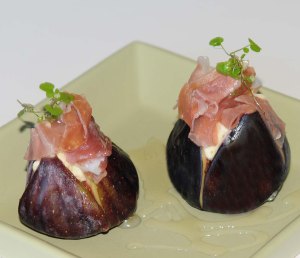
Roast figs with Gorgonzola and Prosciutto


This dish is ideal as an appetizer, as part of an antipasto platter or baked in puff pastry as a dessert.

LINE

Figs are very versatile and are delicious in savory or sweet dishes. They are also seasonal and should be made use of as much as possible while they are available.  See also Roast butternut and figs with pine nuts and goat’s cheese. 

FIGS WITH CHEESE AND HONEY

Serves 2

4 ripe figs, sliced into quarters halfway through
4 tablespoons/60 ml gorgonzola, or to your preference
2 slices prosciutto, each cut into two, lengthways
honey for drizzling
olive oil for drizzling
micro herbs

Preheat the oven grill. Place the four figs on a baking tray and lightly squeeze them to flare open. Push the gorgonzola lightly into the cavity and place under the preheated grill for 5 minutes, or until the gorgonzola is melted to your liking. Crush the strips of prosciutto to fit neatly on top of the cheese. Place back under the grill if you wish, otherwise just drizzle the honey and olive oil over and around the figs. Finally sprinkle the micro herbs over and serve.

Categories
SOUPS/SAUCES/CONDIMENTS

STARTERS/LIGHT LUNCHES


PASTA SPIRAL


Pasta spiral with a mushroom filling, a light cheese sauce and truffle vinaigrette


DEEPFRIED BRIEDeep-fried brie on toast with figs, crispy glass noodles and a port vinaigrette


PORK SPRING ROLLSPork spring rolls with Oriental dipping sauce


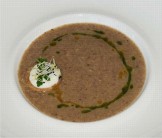
MUSHROOM SOUP

Mixed  mushroom soup with cream, chives and truffle oil vinaigrette


THAI  SPICED CHICKEN SOUP

Thai spiced chicken and coconut soup


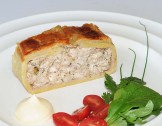
CHICKEN PATEChicken pate in pastry with tomato salad and a creamy salad dressing


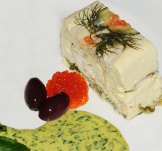
TERRINE OF FISH AND CUCUMBER

Terrine of fish and cucumber with watercress mayonnaise


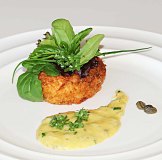
SEAFOOD CAKES

Seafood cakes with a caper sauce and mixed herbs


STUFFED SQUID

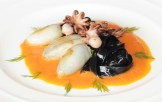
Prawn and mushroom stuffed squid with squid ink pasta and a spicy tomato sauce


PRAWN AND VEGETABLE COCKTAIL

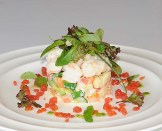
Prawn and vegetable cocktail with a creamy saffron and dill dressing


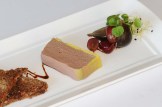
CHICKEN LIVER PAFEChicken liver parfait with figs, grapes and herb salad and whole-wheat bread


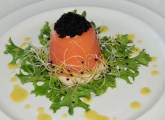
Spicy salmon mousse in filo pastry cups

Spicy salmon mousse in filo pastry cups served with balsamic vinegar dressing


SMOKED TROUT MOUSSE Smoked trout mousse with micro salad leaves and tomato and tarragon


SEAFOOD TEMPURA

Fish and prawn tempura with an Oriental dipping sauce


Categories
SOUPS/SAUCES/CONDIMENTS

DATES, NUTS AND BRANDY TART WITH MASCARPONE CHEESE


DATE AND NUT TART

The tart:
125 g/4.4 oz dates, stoned and chopped
½ cup/125 ml boiling water
½ teaspoon/3 ml bicarbonate of soda
½ cup/125 ml butter, room temperature
100 g/3.5 oz soft brown sugar
1 large egg, beaten
1 cup/250 ml cake flour
½ teaspoon/3 ml baking powder
a pinch salt
50 g /1.7 oz walnuts or pecan nuts (chopped)
½ teaspoon/3 ml cinnamon
½ teaspoon/3 ml nutmeg
2 teaspoons/10 ml fresh ginger, minced
zest of 1 orange

The syrup:
2 teaspoons/10 ml butter
½ cup/125 ml soft brown sugar
⅓  cup/80 ml water
1 cinnamon quill
¼ cup/60 ml brandy
1 teaspoon/5 ml vanilla paste
pinch of salt

The garnish:
200 g/7 oz mascarpone cheese
or 200 g/7 oz fresh cream, whipped

Mascarpone is a thick, double or triple cream, soft cream cheese with a very high fat content. The texture is that of thickened cream that is on its way to becoming butter. Making your own mascarpone at home is simple, cheaper than the shop bought ones and utterly delicious. It can be used for both sweet and savory dishes and enhances the flavor of the dish without overwhelming the original taste. Mascarpone is used in ie the Italian dessert, Tiramisu, cheesecake (see Baked cheesecake with blackberry sauce) or served alone with fruit or fruit syrup. It makes charming canopies, topped with anchovies, tomato, smoked salmon, etc in fact, any topping you would normally put on top of a cream cheese snack. Mascarpone needs to be consumed within a few days.

Preheat the oven to 180° C/356°F.
Pour the boiling water over the chopped dates in a saucepan and heat to boiling point. Remove from heat and mix the bicarbonate of soda into the mixture and leave to cool.

Cream the butter and sugar and add the egg. Beat well to make a smooth batter. Sift the flour, baking powder and salt and fold into the creamed mixture. Add the nuts, stir in the date mixture, the spices and orange zest, and mix well. Pour the batter into a well greased 23 cm/9 in) baking tin (preferably with a loose bottom), and bake for 30 to 40 minutes. Have the syrup ready and pour over the hot tart as soon as it comes out of the oven.

Prepare the syrup while the tart is baking. Heat the butter, sugar, water and cinnamon for approximately 5 minutes. Take off the heat and stir in the brandy, vanilla and salt. Keep the syrup hot. Remove the cinnamon quill and pour the hot syrup over the pudding as soon as it is removed from the oven, reserving half a cup for drizzling when serving. Let the tart cool to room temperature before serving.

To serve:
Cut a slice from the tart and serve it with a dollop of mascarpone cheese (optional) or fresh cream. Drizzle the reserved syrup around and serve.


Categories
SOUPS/SAUCES/CONDIMENTS

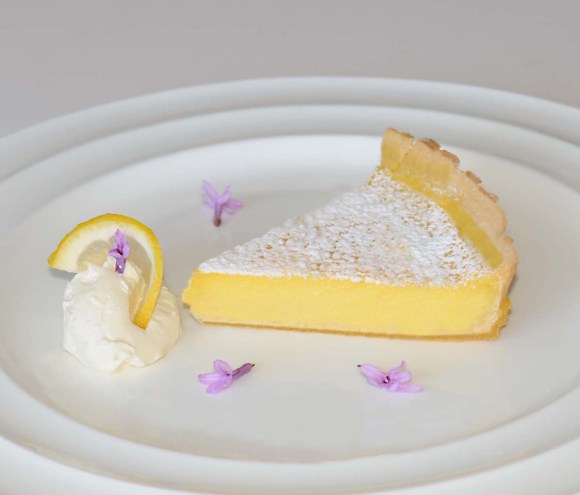
LEMON TART WITH LIMONCELLO CREAM


LEMON TART

The pastry:
125 g/4.5 oz butter, room temperature
90 g/3 oz caster sugar
1 egg
250 g/9 oz cake flour
pinch of salt
ice water

The filling:
2 eggs
4 egg yolks
180 g/6.4 oz caster sugar
1¾ cup/426 ml full cream
5 tablespoons/75 ml lemon juice

The garnish:

icing sugar for sprinkling
1 cup/250 ml fresh cream
1 teaspoon/5 ml Limoncello

Limoncello, and Italian liqueur, mainly produced in the southern parts of Italy, has a strong lemon flavor without the sourness or bitterness of pure lemon juice. Traditionally, it is made from the zest of Sorrento lemons using the zest, or peels without the pith, and is steeped in a neutral spirit until the oil is released. The resulting yellow liquid is then mixed with simple syrup. Varying sugar to water ratio and temperature will affect the clarity, viscosity, and flavor.

Heat the oven to 190°C/374°F and grease a tart pan with a loose bottom of about 20 cm/7.8 in diameter.

In a processor, cream the butter and sugar, then add the egg. Mix well, then add the flour and salt and mix. The dough should be soft and pliable, but if for some reason it feels too dry, add a few drops of ice water. Roll the pastry into a flat disk and roll up in plastic film. Refrigerate for about 30 minutes.

On a lightly floured surface, roll out the pastry to about 4 cm/0.15 in thickness and line the tart pan with it. Cover the pastry with parchment paper and fill it with baking beans, then bake blind for about 15 minutes. Remove the baking beans and paper and bake for 5 minutes longer. The pastry should be a light golden color.

Lower the oven temperature to 140°C/175°F.
Whisk the eggs and sugar until well blended, then add the cream and the lemon juice and stir to mix well. Strain the mixture into a container with a spout. Place the tart on a baking tray and place halfway into the oven. Carefully pour the filling into the tart shell and slowly move the baking tray to the center of the oven. Bake for 50 minutes. The filling should have set but still wobbly. Remove from the oven and cool completely. Carefully remove the cooled tart from the pan. If you prefer, sprinkle icing sugar over the whole tart, otherwise leave it as is.

When cutting the tart, dip the knife into hot water and use soft pressure.

Whip the cream with the Limoncello and put a blob on each plate.


Categories
SOUPS/SAUCES/CONDIMENTS

PRAWN AND MUSHROOM STUFFED SQUID WITH SQUID INK PASTA AND A SPICY TOMATO SAUCE


There are a wide variety of stuffing recipes for squid.  See the Glossary for a recipe for ground Thai pork stuffing.

Serves 4
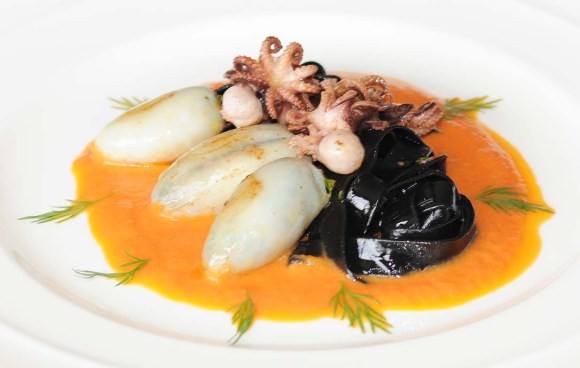
STUFFED SQUID

For the squid:
12 medium squid hoods with tentacles

The stuffing:
1 tablespoon/15 ml olive oil
¼ cup/60 l onion, finely chopped
1 garlic clove, finely minced
½ teaspoon/3 ml salt
57 g/2 oz raw prawns, shelled and deveined (reserve the shells for the sauce)
2 tablespoons/30 ml tomato, finely chopped
2 teaspoons/10 ml lemon zest
2 teaspoons/10 ml fresh ginger, finely chopped
1 teaspoon/5 ml fresh parsley leaves, finely chopped
½ teaspoon/3 ml freshly ground black pepper
¼ cup/60 ml fresh bread crumbs

The sauce:
30 g/1 oz butter
1 garlic clove, crushed
12 medium prawns, shelled, reserve prawns for later use
2 cups/500 ml fish stock
2 tomatoes peeled, seeded and chopped
2 garlic cloves
2 salt anchovies, rinsed, filleted and chopped
pinch of paprika
freshly ground black pepper and cayenne pepper

The pasta:
250 g/8.8 oz squid ink pasta (store bought)
1 tablespoon/15 ml olive oil

To serve:
1 tablespoon/15 ml olive oil
reserved tentacles
½ cup/125 ml dill sprigs

Clean the squid thoroughly and separate from the tentacles. Reserve the tentacles.  Wash the cleaned squid hood under cold running water.  Drain.  Remove and discard the clear, hard quill from inside the hood. Turn the tubes inside out (because the outside skin tends to curl outward, it will hold the stuffing better inside out), and put into a bowl.  Leave in the refrigerator until ready to use.

Heat the olive oil in a frying pan over medium heat, add the onions, garlic and salt and sauté until the onions turn translucent, about 1 to 2 minutes. Do not brown. Transfer the mixture to a medium mixing bowl and set aside to cool.

Place the prawns in a food processor and pulse about 4 times, then add the tomato, lemon zest, ginger, parsley and pepper and pulse until well mixed but not smooth. Add to the onion and garlic in the bowl, then add the bread crumbs and stir to combine well.
Place the mixture into a piping bag and pipe the stuffing into the tubes, (or use a small spoon) making sure that you do not over-stuff them. Seal with toothpicks.

Heat the butter in a frying pan, add the garlic and the reserved prawn shells and cook until the shells are pink and aromatic. Add the fish stock and cook for 5 minutes. Strain the stock and discard the solids.

Using the same pan, heat the olive oil and add the tomatoes, garlic, anchovies, black pepper and paprika. When the anchovies have blended into the sauce, add the stock and cook until the sauce thickens slightly. Remove from the heat, strain again if you want a smooth sauce and put aside.

Boil the pasta in salted water until tender but still have a bite to it, drain and return to the pan. Pour over the olive oil over and keep warm.

Heat the olive in a large frying pan. Fry the tentacles for about 3 minutes or until crisp. Remove and drain on paper towel.
Add the squid to the hot pan and cook for 3 minutes on each side. Remove from the pan and drain on paper towel.

Twirl the pasta around a fork and place in the center of a deep plate. Remove the toothpicks from the squid and place three on top of the pasta. Scatter the crispy fried tentacles over the squid. Drizzle the sauce around and garnish with a few sprigs of dill.
Categories
SOUPS/SAUCES/CONDIMENTS

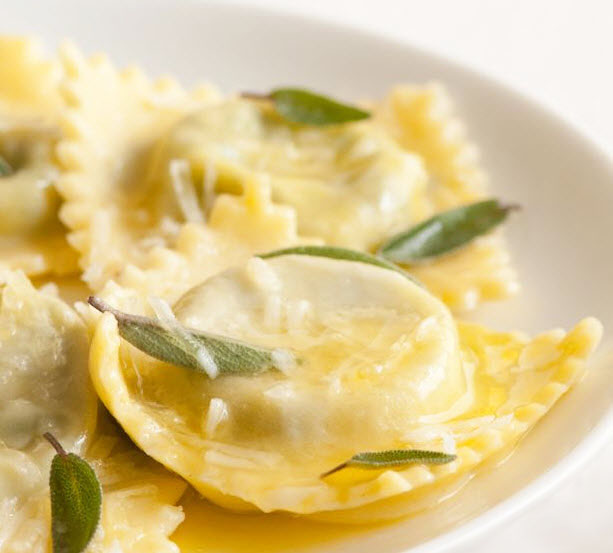
SPINACH AND RICOTTA RAVIOLI


Making ravioli at home using a pasta machine is time consuming but incredibly rewarding, especially when you choose a filling that you enjoy.   These ravioli make a gorgeous vegetarian dish or can be served with Deep fried pork loin sandwich with a spicy sauce.

RAVIOLI


For the filling:
1 tablespoon/15 ml olive oil
2 cloves garlic, finely chopped
225 g/8 oz Swiss chard, finely chopped
250 ml/1 cup ricotta (make your own)
3 tablespoons/45 ml pine nuts, toasted
4 tablespoons/60 ml Parmesan cheese, finely grated
extra Parmesan cheese for serving

For the ravioli:
See recipe for fresh pasta.

  • To make the filling, heat the oil in a saucepan over medium-high heat and add the garlic and the spinach and cook until the stalks of the chard is almost soft.  Remove from the heat and drain.
  • When cool enough squeeze as much of the liquid as possible out of the chard.
  • Add to a food processor with all the other ingredients and pulse until everything is reasonably fine but still with some texture.  Set aside until ready to use.
  • To make the ravioli, bring the pasta dough up to room temperature and then divide it in two.
  • Roll both the pieces of pasta out to the second narrowest setting. Dust the counter with flour and lay out the two long sheets of pasta next to each other.
  • Spoon about 1 tablespoon/15 ml of the filling 50 mm/2 in apart on the  one sheet and repeat until you reach the end of the pasta sheet.
  • Brush all round the fillings with water, then lay the other sheet of pasta on top of the filling portions.
  • You might have to stretch the pasta a little bit to meet the other edge.
  • Press down around the filling to press out any air and then, using the blunt end of a pastry cutter, just big enough to fit over the filling, to gently press down on the pasta to make sure that the filling is “locked” in.  Then, with a slightly bigger cutter, cut the ravioli.

    The ravioli can be cooked straight away or stored on a sheet pan dusted with fine semolina for up to two hours. You can also freeze them at this stage and then cook them from frozen when you are ready.

  • Bring a large pot of salted water to a boil over high heat.
  • Add the ravioli, and cook until for about 4 minutes or until they rise to the surface of the water.
  • Using a slotted spoon, transfer the ravioli to serving bowls.  Sprinkle liberally with Parmesan and serve immediately.
  • This ravioli can be served as a vegetarian dish or with Deep fried pork loin sandwich with a spicy sauce.
Categories
SOUPS/SAUCES/CONDIMENTS

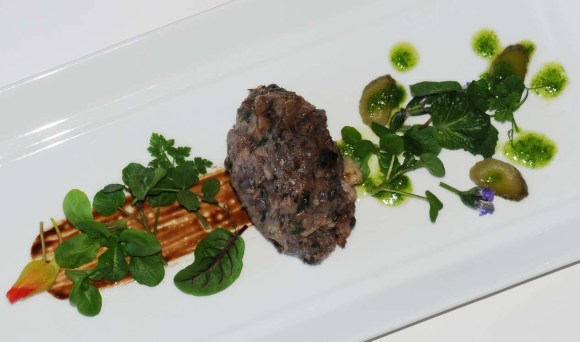
ROAST PIG’S HEAD AND DUCK GIBLET CONFIT PATé


LINEThis is one of the many dishes that can develop out of a roasted pig’s head

PIG'S HEAD PATE 2

For the pig’s head:
½ pig’s head (if you can only buy a whole head, ask you butcher to cut it in half for you and freeze the other half for later use)
1 carrot, roughly chopped
1 medium onion, roughly chopped
1 stick celery, roughly chopped
2 garlic cloves, crushed
4 cloves
salt and pepper
1 liter/2 pts pork stock
½ cup duck fat, hot

For the duck giblets confit:
500g/1 lb duck giblets (excluding the liver)
salt and pepper
1 liter/2 pts duck fat

For the paté:
the cooked pork meat
the cooked duck giblets
a pinch of five-spice powder
1 tablespoon/15 ml rice wine vinegar
2 tablespoons/30 ml spring onions, finely chopped

Remove any hair on the skin, paying special attention to the eyes, ears and snout, by using a blow torch.  Then scrub well in all the crevices using a vegetable brush.  If need be you will have to shave off the stubborn hairs but hopefully the butchery will see to that.  Rub the salt all over into the skin, fold a clean cloth (not plastic) loosely around it and let sit in the refrigerator for at least 24 hours.

Rinse well with cold water and pat dry.  There will be lots of excess fat and it is better to remove as much as possible.  (It can be rendered down for use some other time.)  Place the head on a cake rack in the sink and pour a kettle full of boiling water over.  Leave to cool.

Preheat the oven to 190°C/375°F.

Rub salt and pepper all over the skin and underneath. I suggest that you cover the ears with some foil to stop it from burning.  I did not do it and the ears dried out quite a lot.

Prepare a baking tray big enough for the pig’s head to fit in and add the carrots, onions, celery, garlic and onion with the pork stock.  Place the head on top of the vegetables, then pour the hot duck fat over the head.  Bake in the preheated oven for 1½ hours then lower the heat to 160°C/325°F and bake for an additional 2 hours.  When the head is cooked and browned nicely, remove it from the oven and cool until it is comfortable to handle.  Strain the pan juices and reduce to a syrupy consistency, removing as much of the fat as possible.

Carefully remove the skin so that you have quite a few large pieces and set aside.  Cut away as much as possible and separate the rest from the meat.  Finely slice the meat and moisten it with the reduced pan juices.  At this stage serve with a salad or on bread but if you want to continue with the recipe and add the Duck giblets to it, put it in a sealed container and refrigerate.

When the pork is out of the oven, lower the oven heat to 80°C/175°F.

Clean the duck giblets and cut away all the loose bits of fat and sinew.  Cut off the tough stomach wall and slice everything into small cubes.  In a small ovenproof saucepan, heat the duck fat to 80°C/175°F, season the giblets with salt and pepper and add to the fat.  Place the saucepan in the heated oven and cook for 3 hours.  Remove from the oven and let the giblets cool in the fat.

When ready to assemble the paté, remove the giblets from the fat and drain, trying to get rid of as much of the fat as possible.

Assemble the paté:
Mix all the ingredients together, check the seasoning and add more salt if necessary.  Put everything in a food processor and pulse until you have a rough consistency.

If you want a smooth paté, grind it longer until you are satisfied.

Pack the mixture tightly into ramekins or any other container in which you can serve the paté directly.  Keep in the refrigerator for at least 24 hours to give the flavors a chance develop.

Serve with thin slices of toasted bread, mango chutney and cornichons. Add some salad leaves if you wish.