Categories
MAIN COURSE

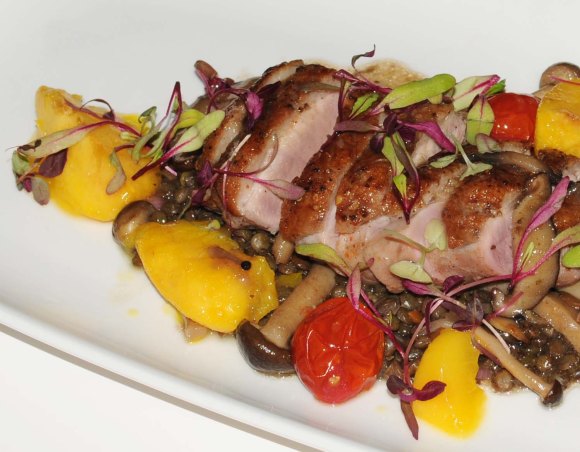
Crispy skin duck breast with Puy lentils and glazed peaches


DUCK BREAST WITH PUY LENTILS AND CARAMELIZED PEACHED
Serves 4

4 duck breasts
2 teaspoons/10 ml five spice powder
salt

For the Puy lentils:
1½ cup/375 ml chicken stock
1 cup/250 ml Puy lentils
2 tablespoons/30 ml carrots, finely diced
1 tablespoons/15 ml celery, finely diced
1 tablespoon/15 ml shallot, finely diced
4 thyme sprigs


These choice lentils were originally from Puy in France, but are also grown in North America and Italy. They are a very good source of cholesterol-lowering fiber but are a special benefit in managing blood sugar levels. They are especially good in salads since they remain firm after cooking and have a rich flavor. See the recipe for Puy lentil, celeriac and hazelnut salad.

2 teaspoons/10 ml Sherry vinegar
1 teaspoon/5 ml coarse sea salt
1 medium red onion, finely diced
1 tablespoon/15 ml olive oil

For the peaches:
juice of two oranges
1 tablespoon/15 ml butter
2 tablespoons/30 ml sugar (depending on the sweetness of the peaches)
4 firm ripe peaches, peeled and quartered
2 tablespoons/30 ml Peach Schnapps (optional)

For the sauce:
1 tablespoon/15 ml butter
trimmings from the duck breasts
1 small onion, finely diced
½ cup/125 ml red wine
2 cups/500 ml duck stock (or chicken stock)
2 teaspoons/10 ml tomato paste
1 tablespoon/30 ml soy sauce

Start with the Puy lentils:  

  • In a saucepan bring the chicken stock to a boil, add the lentils, vegetables and the thyme and cook for about 20 minutes.

    Do not add salt at this time as it will prevent the lentils from becoming tender.

  • Test by squashing a lentil between two fingers. If it is soft and gives way then the lentils are cooked.
  • If not all the liquid has evaporated, drain the excess off, stir in the vinegar, salt, onion and olive oil and keep in a warm place.

For the duck breasts:

  • Trim the duck breasts and reserve the trimmings.
  • Lightly score the skins of the duck breasts and rub the five spice on the meat side.
  • Leave to stand for about 10 minutes.
  • Heat a dry heavy-based large frying pan to medium and lay the duck breasts, skin side down.
  • Fry for about 8 minutes, until most of the fat has rendered and the skin is golden brown.
  • Turn the duck breasts over and lightly brown the other side for about 3 minutes.
  • They should feel slightly springy when pressed.
  • Remove from the pan and leave to rest in a warm place while you make the sauce.

For the sauce:

  • In a wide pan, melt the butter, then fry the duck trimmings and onion until the onion is transluscent.
  • Deglaze with the red wine and boil until all the wine has evaporated.
  • Add the duck stock (or chicken stock), mix in the tomato paste and add the soy sauce.
  • Bring to a boil, skimming off the fat constantly, and reduce to half.
  • Season to taste.

For the peaches:

  • In a frying pan, bring the orange juice to a boil with the sugar and butter, then add the peaches.
  • Cook until the peaches are tender and the sauce starts to caramelize.
  • Add the Schnapps (if using), swirl around the pan to glaze all the peaches thorougly.
  • Set aside in a warm place until ready to serve.
 

Categories
MAIN COURSE

Chicken and mushroom pie


It is welcome at any buffet dinner party, family gathering, or festive celebration where delicious food and good company come together. This creates an inviting atmosphere that encourages mingling and enjoyment, allowing everyone to indulge in a variety of culinary delights while forging lasting memories with friends and loved ones.

Categories
MAIN COURSE STARTERS/SIDES

Macaroni and cheese


This ultimate comfort food with its golden, buttery, crunchy topping, is always a welcome friend to all people young and old, for any occasion — it and can be made for one person or a big group of family and friends.  Just adjust the quantities.  It freezes well and a big quantity can be made in advance and frozen in portions.  Easy and quick and together with a fresh crunchy salad, a simple feast ….. and its vegetarian!

—————– Photograph to come——————————

For the cheese sauce:
1 liter/1¾ pt milk, heated
50 g/1¾ oz butter
50 g/1¾ oz plain flour, sifted
250 g/9 oz cheddar, grated
1 teaspoon/5 ml English mustard
½ teaspoon garlic powder (optional)

For the Parmesan and crumb topping:
2 tablespoons butter (or olive oil)
1½ cup/375 ml dried breadcrumbs
½ cup/ 120 ml grated Parmesan cheese

For the macaroni:
400 g/14 oz dried macaroni, rigatoni or penne, etc
salt
1 tablespoon/15 ml olive oil
6 spring onions, finely sliced
1 tablespoon/15 ml sour cream (or plain yoghurt)
200 g/7 oz tomatoes, peeled and sliced thinly
2 tablespoons/30 ml fresh parsley, finely chopped

  • Preheat the oven to 200°C/390ºF.
  • Lightly grease an heat-proof dish the size required.
  • In a saucepan over medium heat, melt the butter, then stir in the flour and cook for 1-2 minutes.
  • Gradually stir in the hot milk and cook gently, whilst whisking constantly, until all the milk is used up and a smooth sauce is formed.
  • Reduce the heat and simmer for 3-4 minutes or until thickened.
  • Remove from the heat and add the cheese and mustard, then season well with salt and freshly ground white pepper and the garlic powder (if using).
  • Meanwhile, for the crumb topping, melt the butter (or heat the oil) over medium heat and add the breadcrumbs.
  • Stir constantly to avoid the crumbs burning, then remove from the heat and add the Parmesan cheese. Mix thoroughly and set aside.
  • Fill a large saucepan more than half full with water and bring to the boil.
  • Add salt and cook the pasta until al dente.
  • Drain the pasta, discard the water and pour the pasta back into the saucepan.
  • Drizzle the olive oil over and stir gently, then add the spring onions and the sour cream (or yoghurt) and mix well.
  • Pour the sauce over the pasta, mix well and then spoon a third of the mixture into the prepared baking dish.
  • Place the sliced tomato and parsley in a layer over the pasta, sprinkle over some salt, then pour the rest of the pasta mixture in and smooth the top.
  • Sprinkle the Parmesan and crumb mixture evenly on top and bake in the oven until the crumbs are golden and the sauce is bubbling lightly around the edges. It should take about 12-15 minutes.
  • Remove from the oven and let sit for about 10 minutes before serving.
Categories
MAIN COURSE STARTERS/SIDES

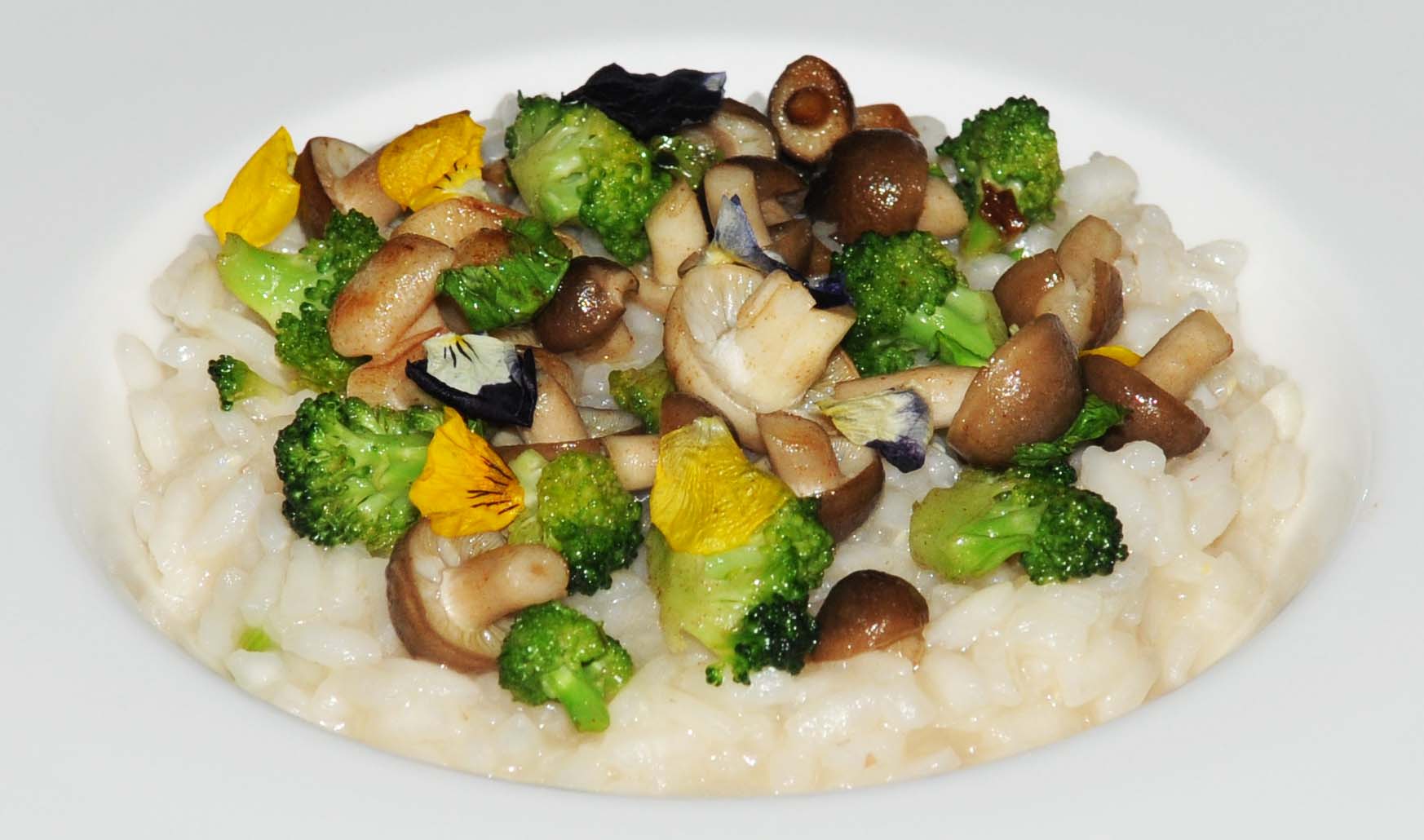
Mixed vegetable risotto


Risotto, a creamy rice dish, originally from northern Italy, is easy to make, its versatile and also quite comforting. You can chop and change the additional flavors to the rice to suit your desire or according to the ingredients available; it can be served as a light vegetarian lunch, or a side dish for a main course with meat. There are few rules, however. The most important is that the correct variety of rice must be used. Risotto rice, which is quite round and looks very different from long-grain rice, releases lots of starch during the cooking process so the finished dish is very creamy and rich which is characteristic of risotto.

MIXED VEGETABLE RISOTTO
Serves 2 as a main dish and 4 as a side dish.

For the risotto:
12 tablespoons butter
3 shallots, finely chopped
1 cup Arborio (risotto) rice
½ cup white wine
3 cups hot vegetable stock (make you own or buy from the supermarket – not stock cubes!)
2 teaspoons fresh thyme, finely chopped
2 tablespoons sour cream
4 tablespoons Parmesan, finely grated
salt and freshly ground white pepper
125 g/4½ oz cold butter, diced (or less if desired)
cabernet sauvignon vinegar, to taste, or a few drops of lemon juice

For the mushrooms:
1 tablespoon butter
2 cups shimeji mushrooms
salt to taste

For the vegetables:
about 20 broccoli florets
salt to taste

For the garnish:
edible flower petals (optional)
Parmesan shavings
mixed herbs and micro leaves

For the broccoli:

  • Bring a sauce pan with about 2 cups of water to the boil. Add 1 teaspoon salt and add the broccoli.
  • Boil for 1 to 1½ minutes until crisp-tender. Remove with a slotted spoon and set aside in a warm place.

For the mushrooms:

  • Empty the saucepan, then add the butter and fry the mushrooms for about 2 minutes before the mushrooms and butter turns brown.
  • Remove from the pan and set aside in a warm place.

For the risotto:

  • In a large saucepan and over medium heat, heat the 2 tablespoons of butter and add the onion. Cook until the onion is translucent.
  • Add the rice and stir for 2 to 3 minutes, then add the wine and stir until the liquid is absorbed.
  • Increase the heat to medium-high and stir in 1 cup of the broth and cook uncovered, stirring frequently with a wooden spoon, until all the liquid is absorbed,.
  • Then add more broth, allowing the liquid to be absorbed before adding some more.
  • Cook for approximately 25 to 30 minutes or until the rice is tender (but still with a bite) and the mixture has a creamy consistency.
  • Stir in the sour cream, cheese, salt and freshly ground white pepper, and remaining butter. Stir until mixture is creamy, about 2 minutes then remove from the heat.
  • Taste for seasoning and add the vinegar or lemon juice if required and stir through.

    A few drops of vinegar or lemon can change the dish you have prepared miraculously. It not only mellows a too rich sauce or soup, but it perks up your taste buds and brings brightness to the other ingredients in a dish — guaranteeing that lasting element of surprise.

  • Spoon the risotto into four serving bowls and garnish with the mushrooms, broccoli, Parmesan shavings and flowers (if using).
  • Serve immediately.
Categories
MAIN COURSE

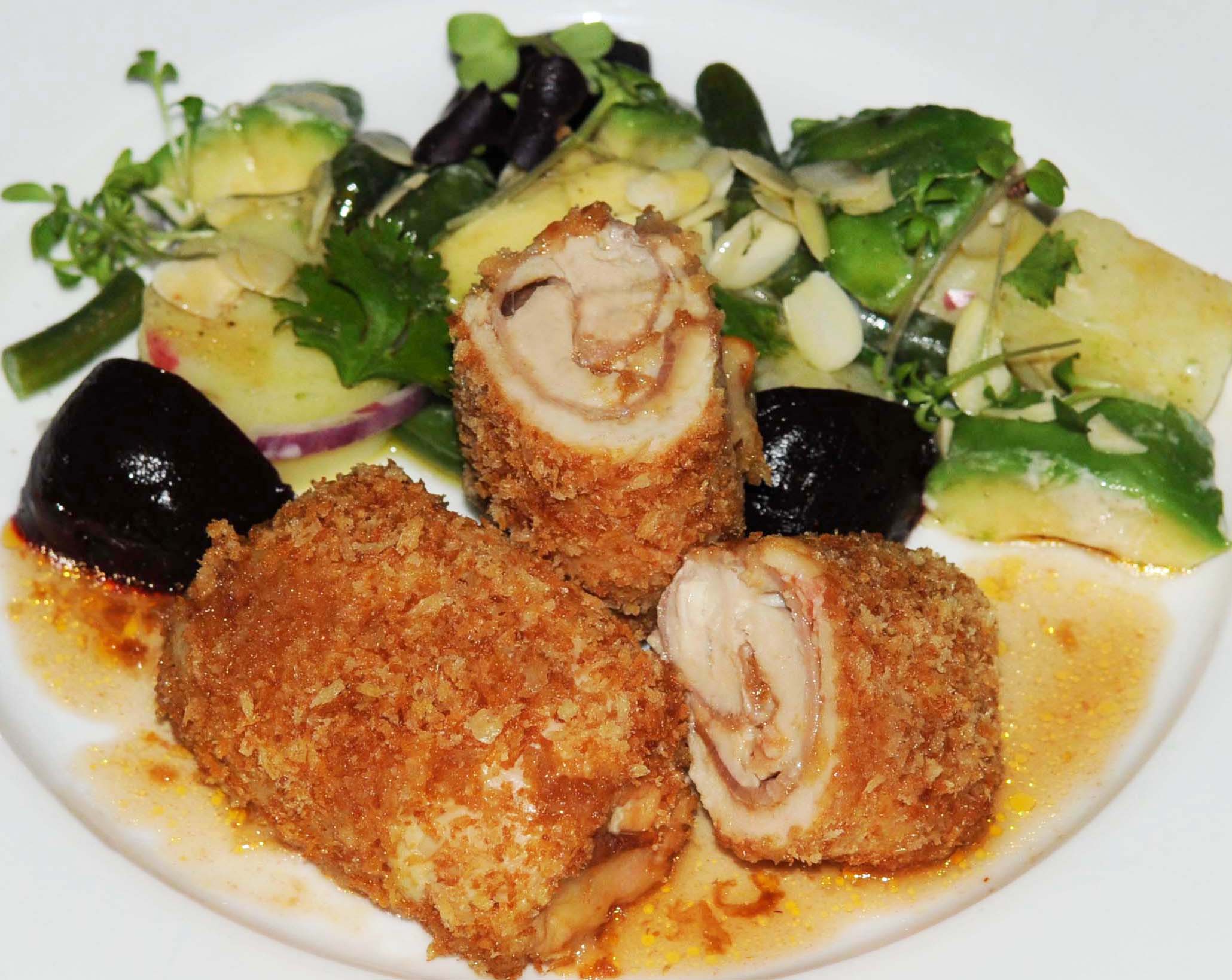
Teryaki infused chicken cordon bleu


Although Teryaki chicken is one of the most popular chicken dishes in Japan, this is not the streetfood version you would expect to find there. The Teryaki sauce here is used more to season the chicken cordon bleu, but the result is so delicious that I’m sure I’ll be forgiven for using it in this way.

TERYAKI CHICKEN CORDON BLEUServes 4

4 skinless, boneless chicken breasts
1 cup Teryaki sauce (see recipe for homemade version below)
1 tablespoon sweet chili sauce
olive oil 
4 slices ham or prosciutto
8 tablespoons cheddar cheese, grated (or more)
1 cup panko bread crumbs

  • Butterfly each chicken breasts and between cling-film pound with the smooth side of a meat mallet to make them thinner, flatter and equal thickness.
  • Cut each butterflied breast in four equal lengths.
  • Preheat the oven to 175ºC/350ºF.
  • Line a baking tray with parchment paper, lightly greased.
  • Whisk together the Teryaki sauce ingredients and paint each piece of chicken with the sauce.
  • Lay each piece flat, then layer with a slice of ham and spread a tablespoon or more grated cheese on top of the ham.
  • Roll up each chicken thigh from the smallest end and secure each roll with a toothpick. 
  • Brush the outside of each roll again with the Teryaki sauce and then roll in the panko breadcrumbs, patting the crumbs down securely. 
  • Refrigerate for a while to settle.
  • Bake the chicken bundles until no longer pink in the center and the juices run clear, 30 to 35 minutes.
  • An instant-read thermometer inserted into the center of the chicken should read not more than 68ºC/154ºF. 

The safe cooked temperature for chicken is 74ºC/165ºF but if you leave it  in the oven till then, and by the time it has rested before serving, it will be way overcooked and dry.  While the chicken rests, the temperature still rises, therefore, and to keep the inside juicy, remove it sooner and let it rest in a warm place.

Serve with rice and/or Potato, green bean and avocado salad.

Teryaki sauce:


This is a homemade version of the commercial Teryaki sauce.  It keeps well in a covered container and refrigerated, and can be used as a dipping sauce for many other dishes.

1 cup water
5 tablespoons brown sugar
¼ cup soy sauce
1-2 teaspoons honey, or to taste
1 large garlic clove, finely minced
½ teaspoon ground ginger
2 tablespoons cornstarch
¼ cup cold water

  • Combine the water, brown sugar, soy sauce, honey, garlic and ginger in a medium saucepan and set over medium heat.
  • In a small bowl, combine the cornstarch with the ¼ cup water and whisk until dissolved.
  • Add the cornstarch mixture to the saucepan.
  • Heat the sauce until it thickens to your taste. If the sauce becomes too thick, add more water to thin it out.
  • Pour in a screw top container and keep refrigerated.
Categories
MAIN COURSE

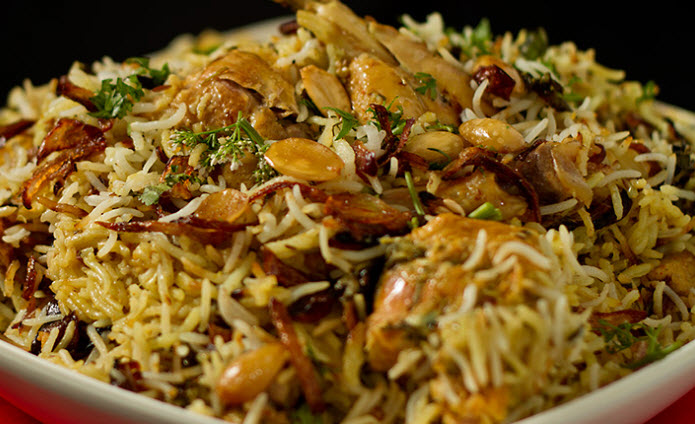
Chicken and rosewater biryani


 A world-renowned Indian dish, biryani is a special occasion dish flavoured with a selection of exotic spices such as saffron and is layered with meat, rice, fried onions, rosewater, cashew nuts.  It is then cooked covered over low heat until the entire dish is permeated with total deliciousness. There are several main types of biryani, and they are also specific to a certain community. This recipe is not for a specific region but has a combination of flavors representing many of the regions.

AA SNAG

For the chicken marinade:
1 cup natural yogurt
6 garlic cloves, finely crushed
6cm/2½in piece ginger, finely grated
3 green chillies, finely chopped, with seeds
1 teaspoon chilli powder (optional)
1 teaspoon ground coriander
½ teaspoon ground turmeric
500g/1lb 2oz chicken thighs, cut in half
salt


The drumettes we were discussing for Chicken wing confit used for the Vaul-au-vent with confit chicken wings, is ideal to use for this dish.

For the crisp fried onions:
¾ cup vegetable oil
3 medium onions, thinly sliced

For the sauce:
10 whole cloves
6cm/2½in piece cinnamon stick
5 green cardamom pods, bruised in a pestle and mortar
2 bay leaves
1 teaspoon cumin seeds
2 medium tomatoes, chopped
1 cup chicken stock

For the rice:
600g/1lb 5oz Basmati rice
salt

To assemble:
½ cup ghee
pinch saffron soaked in 4 tablespoons warm milk for 15 minutes
2 teaspoons rosewater
2 tablespoons cashew nuts and 2 tablespoons shelled pistachios, roasted and chopped
raita, to serve
fresh coriander, picked

  • In a shallow bowl large enough to contain all the chicken pieces, combine all the marinade ingredients.
  • Toss to coat well and then set aside to marinate for an hour.
  • For the crisp fried onions, heat the vegetable oil in a heavy bottom saucepan  over a medium heat until hot.
  • Add the onions and fry for 10–15 minutes, or until deep golden-brown. Remove with a slotted spoon and drain on a plate lined with kitchen paper. Set aside.
  • Pour off the oil but leave about three tablespoons in the pan.

For the sauce:

  • Add the whole spices to the pan and fry for one minute.
  • Add the tomatoes and the stock and bring to the boil.
  • Boil until the sauce is reduced to about ½ cup.
  • Strain the sauce and discard the pulp.  Set aside

For the chicken:

  • Heat a little oil in the wiped saucepan, then add the chicken and its marinade.
  • Bring to a simmer, then stir in the tomatoes sauce.
  • Simmer over medium heat for 30 minutes, or until the chicken is cooked through and the sauce is clinging to the chicken.


If it cooks dry, add a splash of water to the pan. It is, however, important that the sauce is almost dry by this stage and just coating the chicken.

Meanwhile cook the rice.

  • For the rice, cook until done but still firm in the middle.
  • Drain well.

Assemble the biryani while the rice is still hot:


You are aiming for five layers: rice, rosewater, saffron, chicken, crispy onion, cashew nuts, and repeat layers ending with rice on top.  Reserve some onions and nuts to sprinkle on top.

  • First pour about three tablespoons of water and half of the ghee into a deep, heavy-based cooking pot or casserole, then start the layering.
  • Drizzle the remaining ghee around the edges of the rice so that it drips down the inside of the pan.
  • Cover with a well-fitting lid and put over a high heat to get the ghee hot and some steam going. As soon as you see steam rising, turn down to a very low heat and cook for 30 minutes.
  • Spoon out onto a large serving platter and scatter with the rest of the crisp onions and toasted cashews and pistachios.
  • Serve with raita and fresh coriander.
Categories
MAIN COURSE

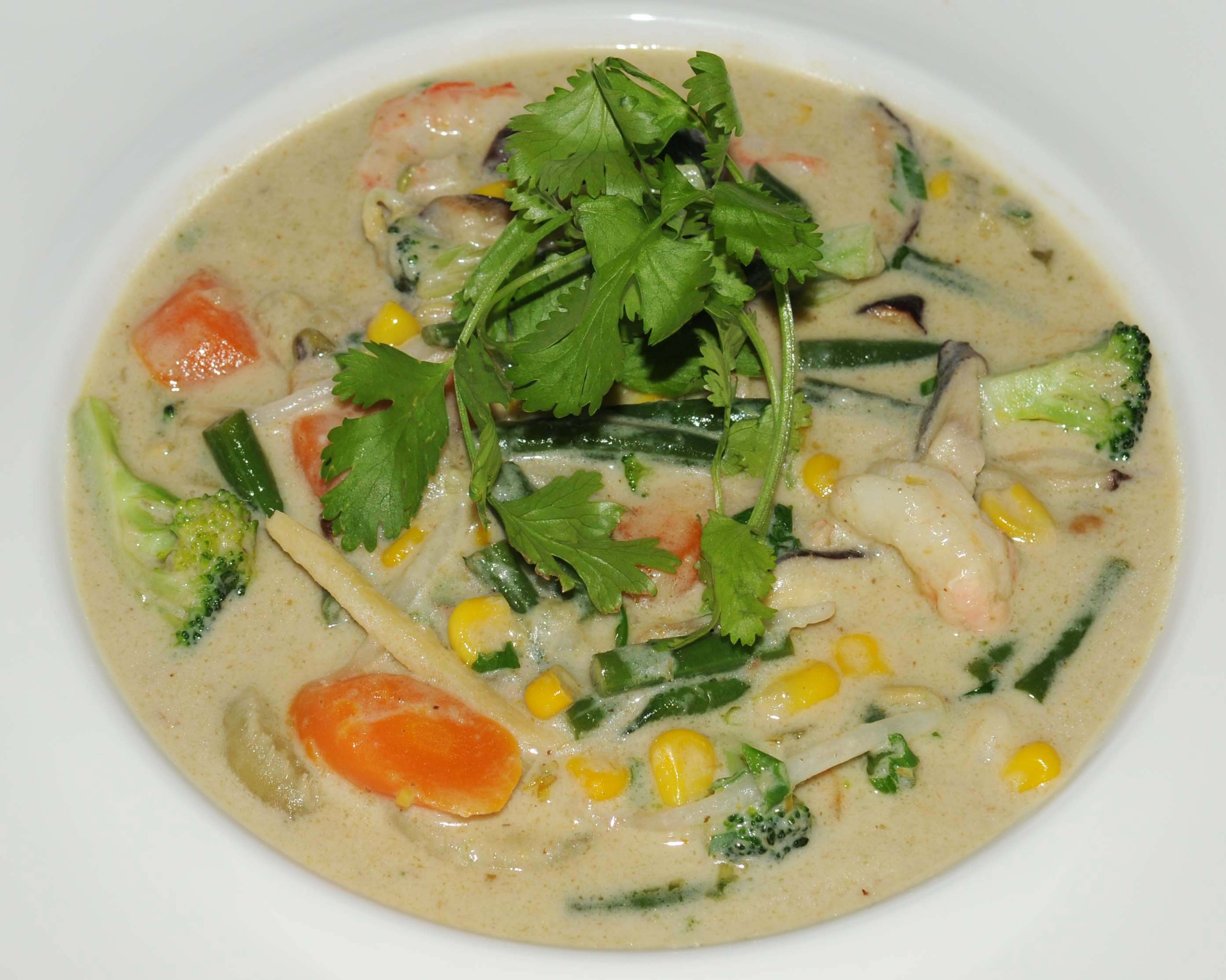
Thai vegetable curry


This is an ideal vegetarian dish to serve at any occasion.  For variation you can add some peeled prawns or chicken pieces, but try it first with only vegetables.  The curry can be quite strong but you can control it by simply put half the amount for the recipe and add gradually until you are satisfied.  Remember, though, that the longer it cooks the stronger it will become.  So it will be wise to go slowly.  You can also use different vegetables such as red pepper, celery, butternut or peas.  It’s your call.

THAI VEGETABLE CURRY

Serves 4

For the soup:
1 tablespoon/15 ml vegetable oil
1 medium onion, finely chopped
1-2 tablespoons/15-30 ml green curry paste (shop bought or make your own — see recipe at the bottom of the page)
1½ cups/375 ml coconut milk
1 cup/250 ml vegetable stock (or water)
1 cup/250 ml green beans, cut in short lengths
2 medium carrots, peeled and cut in pieces
1 cup/250 ml broccoli florets
4 kaffir limes (dry is good)
½ cup/125 ml corn, frozen and defrosted
2 tablespoons/30 ml fish sauce
2 tablespoon/30 ml lime juice
2 teaspoons/10 ml finely grated lime rind
1-2 teaspoons/5-10 ml sugar (optional)
fresh coriander, picked
spring onions, cut in lengths

  • Heat the oil in a large wok or saucepan and add the onions and curry paste.
  • Cook for 3 minutes over medium heat, whilst stirring.
  • Add the coconut and stock (or water) and bring to the boil.  Stir then reduce the heat and cook uncovered for 5 minutes.
  • Add the beans, carrots and broccoli, kaffir limes and corn to the pan and cook uncovered for 5 minutes. 
  • Add the corn, fish sauce, lime juice and rind, and sugar, if using, after tasting.
    Ladle the soup into deep bowls and sprinkle over some coriander and spring onions.

This can also be served with rice, if desired.


Make your own Green curry paste:
1 tablespoon/15 ml coriander seeds
2 teaspoon/10 ml cumin seeds
1 teaspoon/5 ml black peppercorns
2 teaspoons/10 ml dried shrimp paste
8 large fresh green chilies, roughly chopped
1 cup/250 ml shallots, chopped
1 tablespoon/15 ml ginger, chopped
12 small cloves garlic, chopped
1 cup/250 ml fresh coriander leaves, chopped
6 kaffir lime leaves, chopped
3 stems lemon grass (white part only), finely chopped
2 teaspoons/10 ml grated lime rind
2 teaspoons/10 ml salt
2 tablespoons/30 ml vegetables oil
Makes approximately 1 cup.
  • Place the coriander and cumin seeds in a dry frying pan and heat for 2-3 minutes, shaking the pan constantly.
  • Pour the roasted spices and peppercorns in a mortar and pestle or spice grinder and grind until fine.
  • Grill the shrimp paste for 2-3 minutes, then add to the spices.  Add all to a processor.
  • Add the remaining ingredients and process fo 20 seconds until the mixture forms a smooth paste — periodically scrape down the sides of the bowl.
Categories
MAIN COURSE

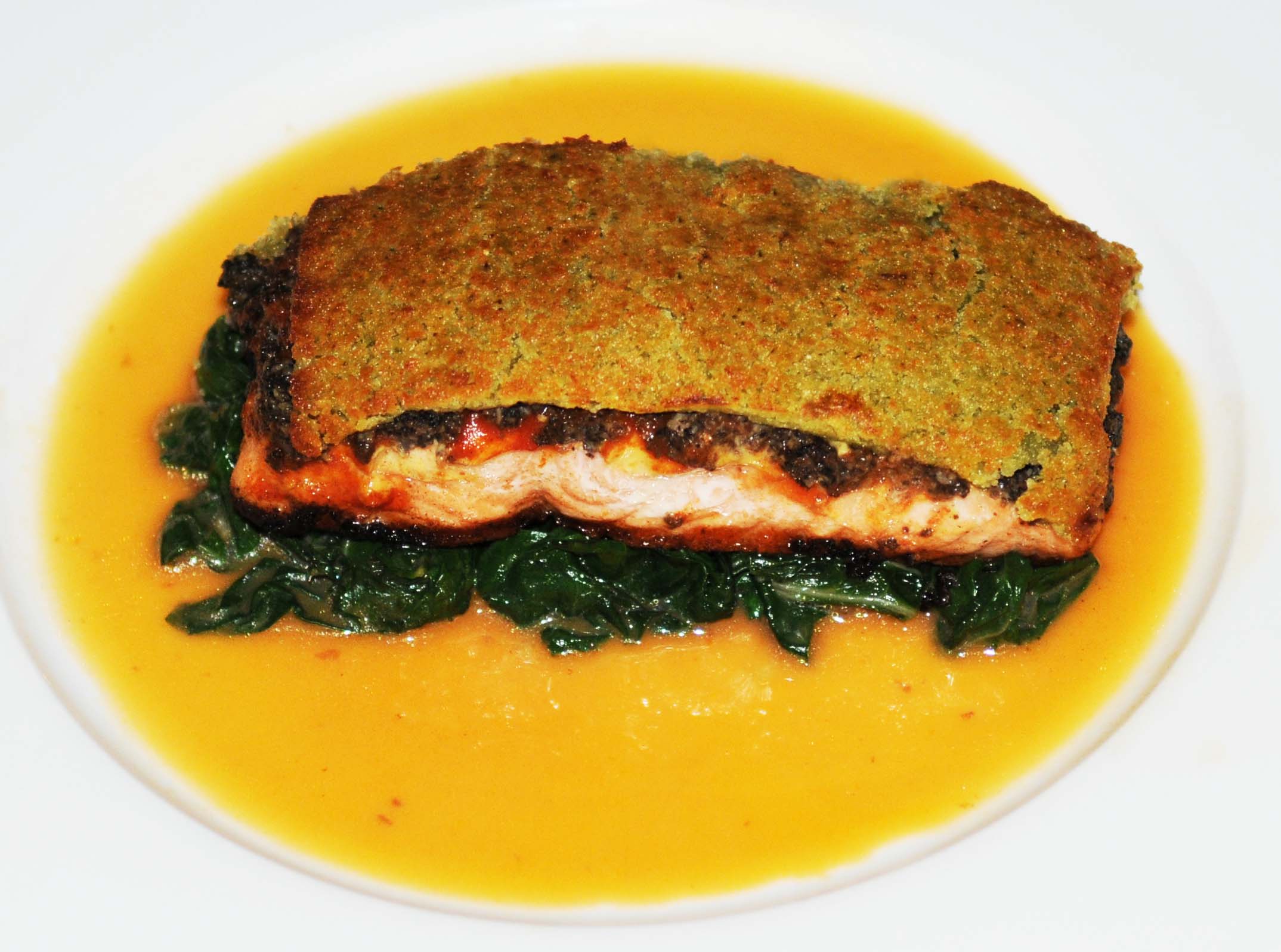
Herb crusted salmon with Swiss chard


This is a very elegant and delicious dish to serve at your next dinner party.  Most of the components can be prepared well in advance.

SALMON WITH HERB CRUST

Serves 4

Preheat the oven to 220ºC/430ºF.

 800 g/1.8 lb salmon, skinned, bones removed
salt and freshly ground white pepper
1 tablespoon mustard
2 tablespoons tomato sauce (recipe follows)
2 tablespoons mushroom duxelle (recipe follows)
200 g soft herb crust (recipe follows)

Cut the salmon in even portions and season with salt and pepper. Lightly spread Dijon mustard on top of each piece of fish,  then a spread of the tomato sauce, then the mushroom duxelle. Place a neat tile (the size of the fish) of the soft herb crust on top of the fish.  Heat an ovenproof pan with a splash of oil and put the salmon in with the crusted side facing up. Cook for 1 minutes then place the pan in the preheated oven for 6-8 minutes.


Keep an eye on it so that the crust does not burn.  Set aside to rest for 5 minutes.

Tomato sauce:
100 ml/3.4 fl oz olive oil
½ shallot, finely chopped
1 clove garlic, minced
6-8 large ripe tomatoes, peeled, seeded and finely diced
1 sprig fresh thyme
¼ bay leaf

Heat the olive oil in a pan and sauté the shallots and garlic for a few minutes without coloring. Add the tomato and thyme and continue cooking very gently until all the moisture of the tomato has evaporated and you are left with a dry tomato paste. Remove the sprig of thyme and bay leaf, and put the mixture in a blender and blend until smooth.

The mushroom duxelles:
2 cups mixed mushrooms, finely chopped
salt and freshly ground white pepper
1 tablespoon cream

Wipe the mushrooms and trim the stalks if necessary. Chop very finely in a processor or by hand, then cook in a dry pan until all their liquid has evaporated and the mushrooms formed a paste.

Add the cream and mix in to bind the mushrooms.


Yoghurt can be used instead of cream, but add it right at the end of cooking the mushrooms and do not bring to a boil.


The herb crust:

175 g/6 oz fresh breadcrumbs
80 g/2.8 oz Gruyère cheese
50 g/1.87 oz mixture of fresh parsley, fresh tarragon, and fresh thyme leaves, finely
chopped
125 g/4.4 oz unsalted butter
salt and freshly ground pepper

Place all the ingredients into a food processor and process until thoroughly mixed. On a tray lined with greaseproof paper, spread the crumb mixture about 2 mm/0.07 in thick on to a tray and freeze uncovered.  Cut the crust big enough to fit nicely on top of each portion of the fish.


There will be some left over.  Cover it tightly and freeze for later us.


The sauce:

500 g/1 lb  butter
1 tablespoon shallots, minced
100 ml/3.4 fl oz white wine
1½ cup fish stock
pinch of kosher salt
pinch of white pepper
lemon juice

Heat 1 tablespoon butter and add the shallots.  Sauté until translucent (do not brown), then add the wine.  Reduce until there are only about 1 tablespoon of the wine left, then add the fish stock and reduce until half.  Set the pan over low heat and whisk 2 knobs of butter into the reduction and continue whisking the rest of the butter, a knob at a time, allowing each piece to dissolve into the sauce before adding more.  When all the butter is used up, remove the pan from the heat and whisk in the lemon juice.  Taste and adjust the seasoning, then strain through a fine sieve into a bowl.  Keep warm.

The Swiss chard:
1 large bunch of Swiss chard, freshly picked
1 small clove garlic, sliced
1 tablespoon/15 ml butter
salt

Rinse out the Swiss chard leaves thoroughly, then remove the tough stalk and cut the leaves into wide strips.

Heat a saucepan on medium heat, add the olive oil and the garlic and sauté for a few seconds, then add the sliced Swiss chard leaves and salt. With tongs lift and stir the leaves constantly to ensure that the bottom ones don’t overcook. (It should not be necessary to add water because the chard releases quite a bit of moisture.) Do this for no longer than 5 minutes. It will become soft and silky and still is bright green.  Taste a piece and add seasoning if necessary.  Set aside until needed. 

To serve:
In the centre of each serving plate, spoon the Swiss chard, place the salmon on top and spoon the sauce around.  Serve immediately.


Categories
MAIN COURSE

Oxtail wrapped in a herb dumpling


Serve with rice and fried glazed ginger and lemon confit with glazed baby beetroot and horseradish cream.


This can be made with leftover oxtail.

The meat should be very tender and come off the bone quite easily after the cooking process. If you prefer, leave the meat on the bone and serve the dumplings, steamed in a bamboo steamer, separately.
OXTAILServes 4 with possible leftovers
If you have the time (and inclination), prepare a separate stock to strengthen the flavor of your dish.  It is optional but worth it.  Start making this sauce before starting to cook the oxtail.

Additional flavor: (Optional)
1 tablespoon olive oil
any trimmings from the oxtail
1 medium onion, diced
1 garlic clove, finely chopped
2 cups beef stock, heated
2 cups of water

reserved tomato peels and seeds plus 1 extra tomato finely diced
3 juniper berries
1 teaspoon fennel seeds
2 thyme sprigs
1 teaspoon apple cider vinegar
season to taste
In a saucepan, add all the above ingredients and bring to a boil, skimming the surface all the time to remove all the impurities.  Cook for 30 minutes and let sit for another 30 minutes whilst preparing for the cooking of the oxtail.

The oxtail:
1 oxtail, trimmed and wiped dry, reserve the trimmings
2 tablespoons vegetable oil
½ bottle of red wine
1 large onion, chopped finely
3 cloves of garlic, chopped finely
1 cinnamon stick, whole
2 bay leaves
4 whole cloves
2 cups beef stock, heated (or the stock you prepared earlier, if you did)
salt and freshly ground pepper

1 large tomato, peeled, seeded and finely diced
1 onion, finely chopped

The lemon confit:
6 lemons, zest and juice
150 g (5.2 oz) castor sugar

The garnish: (optional)
glazed ginger, sliced and lightly fried in butter

The beetroot:
8 baby beetroot
1 tablespoon olive oil
1 sprig of thyme
1 clove garlic, roughly chopped
salt and freshly ground black pepper
1 small onion, thinly sliced
¼ cup apple cider vinegar
1 tablespoon honey, or to taste
1 teaspoon port

The horseradish cream:
¼ cup fresh horseradish, grated
1 tablespoon mustard
½ teaspoon lemon juice
½ castor sugar or to taste
1 tablespoon dill
salt and pepper
1 cup cream, whipped

The oxtail:

  • Heat the oil in a cast iron pan and add the oxtail pieces. Fry over moderate heat until brown all over, then add the red wine and bring to a boil until nearly dry, stirring regularly.
  • Add the onions, garlic, cinnamon, bay leaves, cloves, hot stock (or the above prepared sauce, strained), and salt and pepper, and cover tightly with the pan lid. Turn down the heat to a moderate simmer.

If you prefer to cook the oxtail in the oven, now is the time to put it in an oven preheated to 180°C/356°F.

  • Cook for at least two hours, checking at regular intervals that it does not cook dry. Top up with 1 cup boiling water and repeat every time it seems to be cooking dry.
  • When the meat separates easily from the bones, remove from the heat.  Spoon the meat in a separate container and leave the sauce, which should have formed a thick sludge by now, behind and keep warm.
  • Check the seasoning of the sauce, discard the cinnamon stick and bay leaves (and cloves if you can find them!), then reduce the sauce to a syrupy consistency and remove from the heat. Set aside in a warm place.

If you plan to serve the oxtail on the bone with the steamed dumplings, your oxtail is ready to be served now.

  • If you want to serve it with the dumplings wrapped around the meat, remove the bones from the meat and discard.
  • Roughly chop the meat, and mix in the tomato and onion. Shape the mixture into a sausage about 6 cm/2.5 in in diameter, and roll it in plastic film.
  • Twist the ends to seal well, then refrigerate to set.

For the dumplings:

  • Into a food processor bowl, sift the flour and baking powder, add oil and enough milk to bind the mixture and pulse until it just comes together as a dough.
  • Add the cheese and chives and pulse again to just combine.
  • Transfer the mixture to a lightly floured surface and knead very lightly. Roll out the pastry to a rectangle measuring 18 x 48 cm/7 x 19 x in.
  • Carefully remove the plastic film from the oxtail sausage and place the meat in the center of the dumpling dough. Roll the dough over the meat and seal the edges. Trim the two ends of the sausage then cut it into 8 even slices.
  • Prepare the steamer and line each steam basket with some cabbage leaves rubbed with oil. Place the oxtail dumplings flat on the cabbage leaves (this is to prevent the oxtail from sticking to the basket) so that the meat is visible and steam for 15 minutes.
  • Halfway through the steaming process change the steamer baskets around so that they both get equal steam.
  • Carefully remove each dumpling and put on a warm plate. Discard the cabbage leaves.

For the lemon confit:

  • Peel the lemons, leaving the pith behind, and slice the zest as fine as possible. Place the zest in a saucepan and just cover it with water. Bring to the boil but drain as soon as it starts boiling.
  • Repeat the whole process twice, starting off with fresh cold water every time.
  • After the final draining, place the zest back in the saucepan and cover with the lemon juice and the sugar and, if necessary, add a little water. Cook over very low heat (barely simmering) until the zest is tender and the juice becomes syrupy.

The beetroot:

  • On a large piece of foil, place the beetroot in the centre and drizzle with the olive oil, then add thyme and garlic. Season with salt and pepper.
  • Enclose the foil and seal, then place on a baking tray. Bake for about 1 hour until very tender.
  • Remove from the oven and, unwrap the foil and tip the beetroot into a bowl. Cover the bowl with some plastic film and leave for 20 minutes to allow the skins to loosen and the beetroot to cool.
  • Remove the plastic film and discard the thyme and garlic.
  • Rub off the skins of the beetroot and cut in half. Put all the beetroot in a bowl and add the onion.
  • In a saucepan, bring to a boil the vinegar, honey, port and 1 tablespoon cold water. Reduce until it starts to thicken to a rich glaze. Add the cooked beetroot and stir to cover with the glaze, remove from the heat and leave to cool.

For the horseradish:

  • In a food processor blend the horseradish, lemon juice, sugar and dill.
  • In a separate bowl, whisk the cream until stiff then fold into the horseradish mixture.
  • Season to taste, then strain through a sieve (optional) and refrigerate for 4 – 8 hours.

To serve:
Pour the sauce in the center of the plate and place two of the oxtail dumplings on top. Spoon the lemon confit and ginger on top of the oxtail and serve on rice with glazed baby beetroot and horseradish cream.

Categories
MAIN COURSE

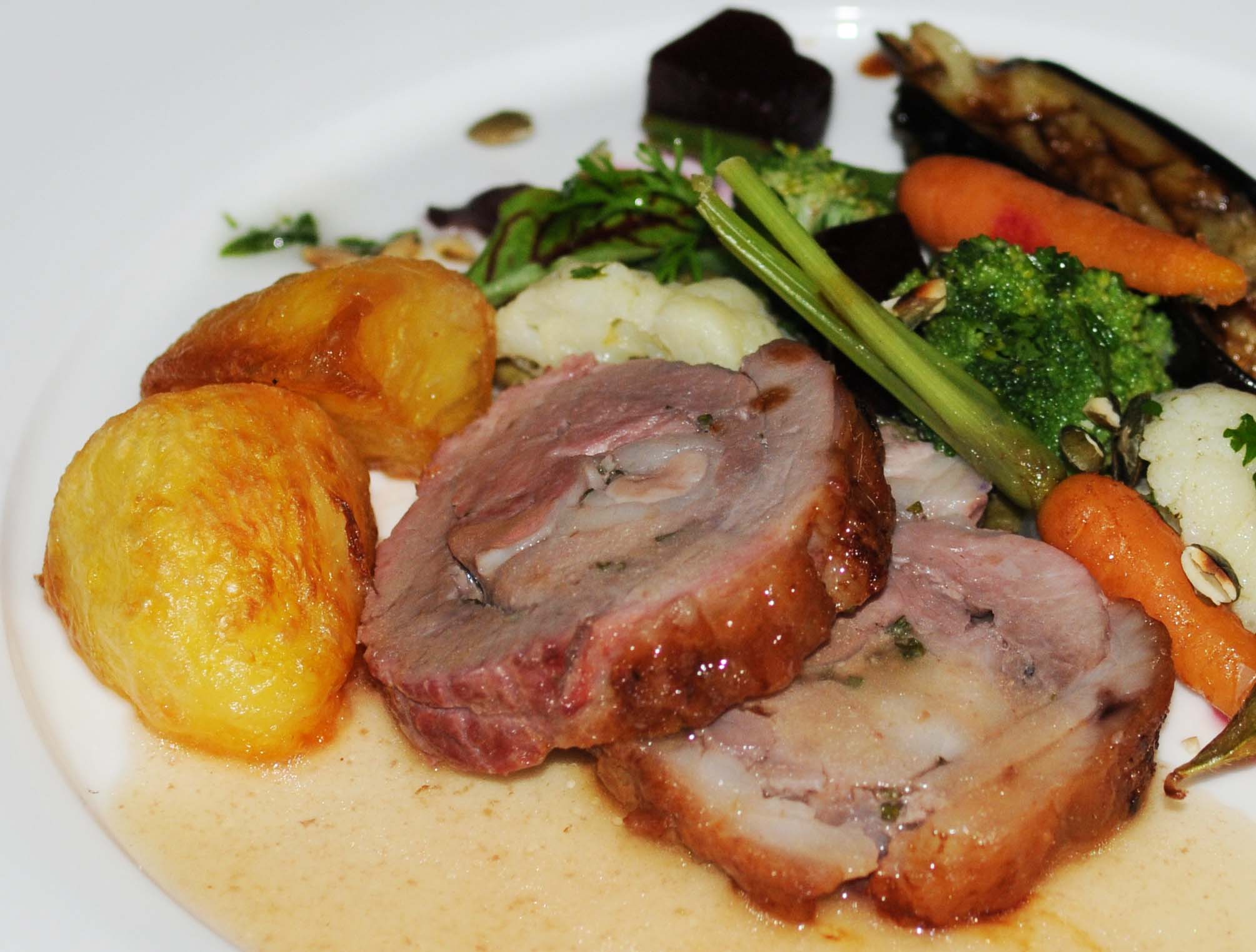
Leg of lamb, deboned, rolled and stuffed with rosemary and garlic


Serve with Potatoes roasted in duck fat.
Serves 4

LAMB ROLL STUFFED WITH ROSEMARY AND GARLIC WITH ROAST POTATOES AND MIXED VEGETABLESServes 4 with leftovers

For the lamb:
approx. 1 k/2 lbs leg of lamb, deboned* and butterflied — do it yourself or ask your butcher to do it but make sure you keep the bones and any off-cuts for making the lamb stock.


*Deboning it yourself:
When you put the leg, meatier side down on a large chopping board, it is easy to locate the bone. With a sharp knife, cut along the length of the bone through the thin flesh right onto the bone, then work your knife vertically along and around the bone whilst pushing as much meat as possible away from the bone. Do this all round the bone until you can lift the bone free. There are numerous instructing videos showing exactly how to do this and soon you will be able to master this seemingly daunting task. Otherwise simply ask you butcher to do it for you.

For the sauce:
750 ml lamb stock
1 medium size carrot, chopped
1 medium size onion, chopped
1 stick celery, chopped
5 garlic cloves, crushed
1 tablespoon fresh rosemary, finely chopped
2 tablespoons white wine vinegar
2 tablespoons tomato puree
1 tablespoon cornstarch mixed with cold water to form a thick slurry.

  • The secret for making an even roll is to get the thickness of the surface of the meat as even as possible.
  • Use a piece of cling film, place it over the meat and bash the thicker parts of the surface with a mallet to flatten it.
  • To be able to make a neat roll, cut off the uneven ends so that you have a neat rectangular piece.  Do not discard the off-cuts.
  • Open up the meat, “skin”-side down, sprinkle the vinegar over the surface and rub in the rosemary, garlic and salt mixture.
  • Sprinkle some salt over the off-cuts and place them close to the end of the meat where you would start rolling.
  • Now start rolling from any end depending on how thick you want your roll.
  • If you start rolling from the long side of the rectangle, you will have a thinner roll and vice versa.
  • Roll it as tight as possible (using skewers to keep the shape if you need to).
  • Once you have completed the roll and tucked in all the loose bits (if any), tie the meat with butcher’s twine to keep it together.  (Learn to make a butchers knot https://www.youtube.com/watch?v=UcgMtjtkeSg)
  • Cover the meat and refrigerate until ready to cook. Remove from the refrigerator at least one hour before cooking.
  • Rub olive oil all over the surface, then season with salt and freshly ground black pepper.
  • Heat the barbecue to 200°C/400°F then place the roll on the grid. Close the cooker and cook for an initial period of 20 minutes (depending on the thickness for medium rare in the middle) turning the roll every five minutes until cooked.
  • Remove from the heat and let it rest for at least 10 minutes.
  • Check the internal temperature of the lamb just before the estimated cooking time is up.
  • For the juiciest result, remove the meat from the heat just short of the temperature goal as the internal temperature of the meat can rise a bit more as it rests.

A meat thermometer is the easiest and most accurate way to tell if a roast or steak is ready. When your meat is done (be it a steak or a roast), the internal temperature of the meat will be:
Rare 60ºC

Medium rare 60-65ºC
Medium 65-70ºC
Medium well done 70ºC
Well done 75ºC

  • To cook the sauce, heat the oil in a saucepan and add the carrot, onion, celery, garlic and rosemary and lightly sauté for 5 minutes over medium heat.
  • Deglaze with the vinegar and as soon as the vinegar has evaporated, add the stock and tomato puree.
  • Reduce the stock by half, then gradually stir in the cornstarch slurry.  Keep stirring until the sauce has thickened.  (You may not need all the cornstarch.)
  • Strain the sauce and set aside in a warm place. After the meat has rested, pour the juices that was released from the lamb back into the sauce.  Reheat for serving.
  • To serve, slice the meat in the desired thickness and serve with Potatoes roasted in duck fat (see recipe below) and Mixed vegetables with beetroot gel.
  • Pour the sauce over the meat and reserve extra to be served at the table.

For the potatoes roasted in duck fat:
1.5 kg/3 lbs floury potatoes, cut into 3 pieces, depending on size
1 cup/250 ml duck fat
Maldon sea salt
2 tablespoons/30 ml rosemary needles

  • Preheat the oven to 180°C.
  • Place the potatoes in a saucepan of cold salted water and bring to the boil. Cook until halfway done (some resistance when pierced with a pointed knife).
  • Drain, then return to the pan and shake well over medium heat to dry out and rough up the edges.  This is necessary to obtain the crispy edges.
  • Place the duck fat in a roasting pan, then heat for 5 minutes. Remove from the oven, carefully add the potatoes to the duck fat and spoon over some of the fat.
  • Sprinkle over the Maldon sea salt and rosemary, then return to the oven and roast, turning twice, for 45 minutes or until golden and crispy.
  • Serve immediately.