Botarga is sun-dried salted Mullet roe, powdered. In Spain it is called Botarga, in Greece Avgotaraho, in France Boutargue and in Italy it is Bottarga. Whatever language you may use, you are sure of an exotic taste and a wonderful gourmet addition to pasta, fish and salads.
Author: STELLA
I have had no formal chef’s training. Classical piano was my parents’ choice, and that took care of the first 20 years of my life. Journalism and radio followed (my own choices, this time), and these opened many doors for me into different countries, people, cultures — and, of course, foods. In a six week series on radio I used it as a platform for my love of food and shared lots of interesting recipes and food news with listeners.
My earliest memories of food come from the family kitchen at home; I can still remember the wonderful smells of the dishes my mother prepared. I became aware of the flavors of her creations at an early age. Some I enjoyed and preferred, while others depressed me with their lack of interesting flavors. My mother was a good cook, but not a gourmet, and sadly this often showed. What I did appreciate was that she always involved me in the preparation, sharing her knowledge of nutrition, flavor, color, and the harmonies of each plate she dished up. She was also a genius with leftovers and quick meals when unexpected guests arrived. This is one of the things that stands out in my mind, and it inspired me to create wonderful dishes from leftover foods myself.
I carried on with the tradition of carefully planning meals to combine nutrition, color and flavor, while at the same time offering variety and elegant presentation. In the process, I developed a passion for seeking out the best available products, adhering to each season’s offerings, and treating it with the respect it deserves, which eventually became part of my daily culinary life and travels. I did these things not because I wanted to become a chef, but to satisfy myself, family and friends with creations of gorgeous food and exciting flavors. All of which, I hope, is reflected in this blog.
Edible flowers can be a boon for innovative cooks, not only do they add a fresh flourish of color they can also introduce unusual flavors to your dishes. For centuries roses were used for cooking and flavoring food, rose water was also put in fountains and baths to help people freshen up. Choose flowers you have grown yourself, or know to be safe for consumption. Flowers from a florist or nursery has probably been treated with pesticides or other chemicals and are certainly not safe for culinary use.

Serves 2
½ cup/125 ml crab meat (preferably lumps of the white meat)
1 tablespoon/15 ml mayonnaise
1 tablespoon/15 ml fresh cilantro, chopped
1 small shallot, diced finely
1-2 teaspoons/10 ml jalapeño, diced finely (optional)
1 teaspoon/5 ml lime zest
Juice from ½ a lime
sea salt and freshly cracked pepper, to taste
a sprinkle of dashi granules or botarga (optional)
a selection of micro herbs
1 avocado, stone removed, cut lengthwise
olive oil for drizzling
tomato mayonnaise for drizzling (recipe follows)
Combine the lump crab meat, mayonnaise, cilantro, red onion, jalapeño (if using), lime zest, lime juice, salt and pepper, dashi or botarga (if using). Take one slice of avocado, spoon the crab mixture over plus the herbs of your choice and place another half of avocado on top. Garnish with more herbs, edible flowers and a drizzle of olive oil and tomato mayonnaise.
This dish is ideal as an appetizer, as part of an antipasto platter or baked in puff pastry as a dessert.

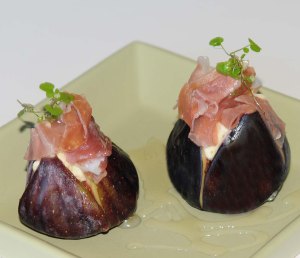
Figs are very versatile and are delicious in savory or sweet dishes. They are also seasonal and should be made use of as much as possible while they are available. See also Roast butternut and figs with pine nuts and goat’s cheese.

Serves 2
4 ripe figs, sliced into quarters halfway through
4 tablespoons/60 ml gorgonzola, or to your preference
2 slices prosciutto, each cut into two, lengthways
honey for drizzling
olive oil for drizzling
micro herbs
Preheat the oven grill. Place the four figs on a baking tray and lightly squeeze them to flare open. Push the gorgonzola lightly into the cavity and place under the preheated grill for 5 minutes, or until the gorgonzola is melted to your liking. Crush the strips of prosciutto to fit neatly on top of the cheese. Place back under the grill if you wish, otherwise just drizzle the honey and olive oil over and around the figs. Finally sprinkle the micro herbs over and serve.
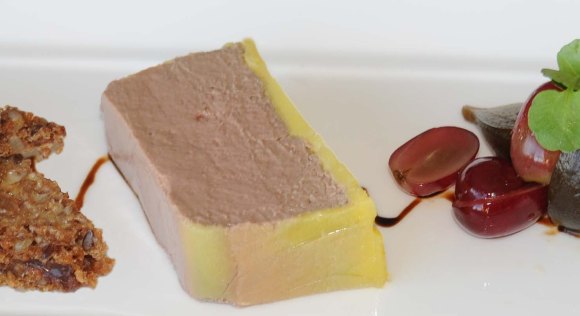
Chicken liver parfait
Serve with figs, grapes and herb salad and whole-wheat bread
Make this silky and rich parfait at least a day in advance if possible so the flavors can fully develop and mature. Go to the extra trouble with the sieving by pushing the mixture through twice. This will guarantee the parfait’s smooth and delicate texture.

For the parfait:
1¾ cup milk
400 g/14 oz chicken livers, trimmed
2 tablespoons olive oil
1 medium shallot, finely chopped
1 garlic clove, finely chopped
1 sprig of thyme
3 tablespoons brandy
3 tablespoons port
3 tablespoons of Madeira
50 g/1.8 oz clarified butter*, melted
3 eggs
1 egg yolk
salt and freshly ground black pepper
300 g/10.5 oz butter, melted (to seal the parfait)
balsamic glaze for drizzling
Clarified butter
This is butter that has had the whey and the milk solids removed which allows the butter to be heated to a higher temperature without burning.
To make clarified butter:
Heat the butter in a saucepan over medium heat. As it melts, the butter will start sizzling as the water evaporates and the butter breaks up in three layers. A sediment will form in the base of the pan, a froth will form on top and the clear butter in the middle. The sediment on the bottom should not go brown in the process and the froth on top has to be skimmed. Pour the butter through a sieve lined with cheesecloth to trap the milk solids. Store the clarified butter covered in the refrigerator for up to 3 weeks or freeze it for 3 months.
When the recipe calls for foaming butter, do not use clarified butter because the impurities that you remove when clarifying, is in fact, what encourages the foaming.
For the garnish:
4 ripe figs
a few pitted grapes
micro herbs
whole wheat bread, thinly sliced
To make the parfait:
- Soak the livers in the milk for at least four hours, then drain, rinse and pat dry. Discard the milk.
- Heat the oven to 120°C/248°F. Grease a terrine mold and line with plastic film.
- Heat the oil in a frying pan and add the shallot and garlic. Fry until translucent, then add the thyme.
- Add the brandy and flambé, and when the flames have died down, add the port, Madeira and reduce by two-thirds.
- Leave to cool slightly, then add the butter, eggs and the cleaned livers and season with salt and pepper.
- Do not bring to a boil again, this is just to get all the ingredients up to the same temperature.
- Discard the thyme.
- Transfer the liver mixture to a food processor and blend until smooth.
- Pour the blended mixture through a fine sieve, rubbing the mixture with the back of a ladle into a bowl.
- Discard any solids left behind.
- Pour the liver mixture into the mold, put a piece of tin foil over the top of the dish (it must not touch the liver mixture) and place the lid on top.
- Put the dish into a roasting tin, fill it halfway with hot water, place on the middle shelf of the oven and bake for 45 minutes.
- Test the internal temperature and if it has not reached 65°C/149°F, place it back into the oven for another 10 minutes and check it again.
- When the parfait is cooked, remove it from the oven and leave to cool in the dish until it has reached room temperature.
- Spoon the clarified butter over the parfait and decorate with herbs to your liking, pressing them lightly into the butter to adhere.
- Place the mold in the fridge to set overnight.
- The next day, place a large enough plate over the parfait and tip the board and plate over to leave the parfait on the plate with the decorated surface facing up.
- Peel off the plastic film and discard.
- Return the terrine to the fridge until ready to serve. This will keep for up to 3 days.
The flavors improve tremendously if you leave the parfait to rest for at least 24 hours.
For the garnish:
- Heat the grill to medium hot.
- Cut the figs in half and drizzle a few drops of olive oil over the cut side of the fig halves and briefly put under the grill (cut side up). Remove and let cool.
- Gently toss the micro herbs and grapes with olive oil, a pinch of salt, and a few grinds of pepper.
- Divide into four servings.
To serve:
Dip a large sharp knife into hot water and carefully slice the parfait to the thickness desired. Plate each slice on suitable serving plates with the fig and grapes and the whole-wheat bread on the side. Drizzle with the balsamic glaze all round.
Spicy corn and tomato salsa
This salsa is excellent with the Deep fried pork chop crumbed and stuffed with brie
1 small red onion, diced
salt
juice of 1 lime
4 green jalapeño chiles, seeded and finely chopped (pickled jalapeño chiles can be used)
4 medium tomatoes, diced
1 cup fresh or frozen (thawed) corn kernels
1 cup fresh coriander, finely chopped
- Place the diced onion in a bowl, sprinkle with the salt and squeeze the lime juice over.
- Set aside for 15 to 20 minutes then squeeze out the excess lizuid and add to the chiles, tomatoes, corn and coriander.
- Mix to combine and serve immediately.
MUSHOOM STOCK
1 tablespoon/15 ml olive oil
1 large yellow onion, sliced
1 leek top, chopped
2 medium carrots, chopped
4 garlic cloves, crushed
500 g/1 lb white mushrooms, sliced
30 g/1 oz dried shiitake mushrooms, whole
4 liters/17 cups cold water
6 sprigs parsley
2 sprigs fresh thyme
1 bay leaf
1 teaspoon/5 ml black peppercorns
Heat the oil in a large pot over medium-high heat, then add the onion, leek, and carrot and cook, stirring occasionally, until the onions and leeks have softened, about 8 minutes. Add the garlic and cook, stirring occasionally, until fragrant, about 1 minute. Add the white mushrooms and cook for 5 minutes.
Add the water and bring to a boil, then add the shiitake mushrooms, parsley, thyme, bay leaf and peppercorns and bring to the boil, then reduce the heat to simmer for about an hour, skimming the surface constantly. Remove from the heat and let stand until cool (to infuse furthermore). Strain through a fine-mesh strainer into a large enough container or several smaller ones. Discard the solids. Let cool furthermore then refrigerate for up to 3 days or freeze for up to 1 month.
Trim the wings by cutting off the tips and drummette and use just the center part for the purpose of the confit. Use the tips for making stock and for the drummettes see Chicken and rosewater biryani.

The marinade:
2 teaspoons five spice powder
1 garlic clove, crushed
1 teaspoon coarse salt
1 teaspoon Sechuan pepper
1 tablespoon Shaoxing wine
Sichuan peppercorns are not strictly speaking pepper but berries of a shrub called prickly ash. Sichuan pepper, unlike ordinary pepper, has a pungent flavor and the aftertaste, rather than being hot as is in the case of pepper, is numbing. The “peppercorns” should be crushed and dry-roasted to bring out their full flavor.
Shaoxing wine is made from rice, millet, yeast and water, aged for at least 3 years, then bottled. As a drink, rice wine is served warm in small cups. Dry sherry is the best substitute.
12 chicken wings
4 cups duck fat, melted
The mushrooms:
1 tablespoon olive oil
1 tablespoon butter
1 onion, peeled and finely chopped
1 clove garlic, minced
2 cups mixed wild mushrooms, wiped and sliced
⅔ cup chicken stock
½ cup crème fraîche
1 tablespoon parsley, freshly chopped
salt and freshly ground black pepper
The Vol-au-vent:
300 g/10.6 oz puff pastry
2 eggs
The garnish:
1 cup of shimej mushrooms
pea tendrils or any other fine herbs
The dressing:
2 tablespoons balsamic vinegar
½ teaspoon honey (or to taste)
2 tablespoons extra virgin olive oil
a dash of soy sauce
½ teaspoons ginger, finely grated
½ teaspoons garlic powder
toasted sesame seeds to sprinkle
The mushrooms:
- In a pan, heat the olive oil and butter, add the onion and clove and sauté lightly.
- Add the mushrooms and sauté until the mushrooms have released or their liquid.
- Add the chicken stock and bring to the boil. Reduce until about 1 tablespoon of liquid is left in the pan.
- Stir in the crème fraîche and leat heat through.
- Remove from the heat and stir in the parsley, salt and pepper. Keep warm until ready to use.
The wings:
- Grind all the spices and salt together and rub into the wings. Cover and leave in the refrigerator for at least 4 hours or overnight.
- When ready to cook the wings, preheat the oven to 100°C/212°F.
- Wipe as much of the marinade off the wings as possible, then place in an oven proof dish (with a lid) big enough to take all the wings in a single layer.
- Pour over the duck fat and place a circle of parchment paper on top of the fat to make sure the wings stay submerged in the fat.
Store the paper your butter comes wrapped in the freezer and use for this purpose if you don’t have parchment paper.
- Cover the dish and bake in the oven for 2-3 hours. When the wings are cooked, let cool slightly then lift the wings from the fat.
- To remove the bones, lay the wing on a chopping board and cut off the tips of the bone where the knobble of cartilage is.
It will make the task of pulling out the bones much easier, and at the same time neaten the shape of the wing.
- Very carefully pull out the bones one by one whilst with the other hand keeps the wing intact.
- When all is done, pack them tightly together in a greaseproof lined tray with another piece of greaseproof paper on top.
- Place a second tray on top with some weights to compress the wings.
- Set aside in a warm place until ready to use.
The Vol-au-vent:
- Roll out the puff pastry to a thickness of 5 mm/¼ in.
- With a round pastry cutter, cut out the vol-au-vents to the size you want.
- With a slightly smaller pastry cutter, press halfway down into the pastry circle, taking care not to cut through the bottom.
- Brush a little beaten egg mixed with a pinch of salt and 1 teaspoon water over the top of the cases, making sure the egg wash doesn’t run down the sides.
This can cause the layers to stick together at the edges and prevent the pastry from rising up evenly.
- Bake in the oven at 200°C/400°F for 10-12 minutes, or until risen and golden-brown.
- When ready, remove the cases from the oven and allow them to cool.
- Using a knife, dig out any raw pastry from the center of the case and discard. Return the cases to the oven for a further 4-5 minutes to dry slightly.
Fold unused pieces of puff pastry and roll it out again. Do not crunch into a ball, as it will disturb the layers and will not puff up again when baked. Remove the excess pastry. This can be rerolled to make more Vol-au-vents if you wish.
To make the dressing:
Whisk all the ingredients except the sesame seeds together and set aside until ready to serve.
To finish the Vaul-au-vent:
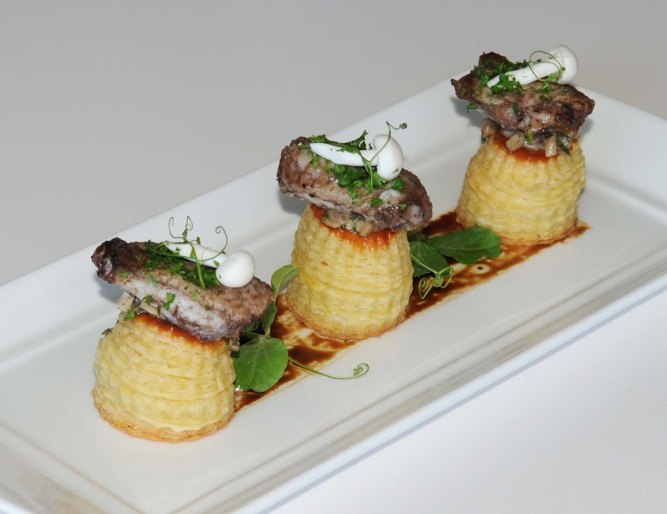
- Serve two or three for each guest on a long plate.
- Spoon the mushrooms into the hollow part of the vaul-au-vent and top each with one wing, mushrooms and pea tendrils or any other fine herbs.
- Serve with the vinaigrette drizzled around and a sprinkle of sesame seed over the vinaigrette.
ZA’ATAR
The Za’atar plant, originally called “hyssop”, is a herbaceous perennial native to the Middle East. Strongly aromatic, pungent and delicious. But since the Israeli authorities have declared the herb and endangered species and banned picking in the wild, those who were used to using this herb freely has come to terms with making their own blend of a few herbs and spices to imitate the same flavor. I don’t know the real flavor of the authentic mix but I am so delighted to have found a recipe that is so satisfactory — sharp, warm and slightly pungent. Sprinkle it over pita bread with olive oil, or stir into Goat’s cheese mousse (to spread over freshly baked bread). Use this mixture as a dry rub for fish or chicken or add to marinades for roasted vegetables. Mix it into a party dip with fresh garlic, feta cheese and olive oil…
1 tablespoon/15 ml roasted sesame seeds
1 tablespoon/15 ml cumin
¼ cup/60 ml sumac
2 tablespoons/30 ml dried thyme
2 tablespoons/30 ml dried marjoram
2 tablespoons/30 ml dried oregano
1 teaspoon/5 ml coarse salt
If you grow your own herbs, try and dry them by picking them at their prime, stick them in brown paper bags to protect them from any dust and hang it up somewhere drafty and dry.
Lightly toast your cumin and sesame seeds in a heavy based frying pan. Tip all of the ingredients into a spice blender and work into a fine powder. Store in an airtight container in a cool place away from strong light.
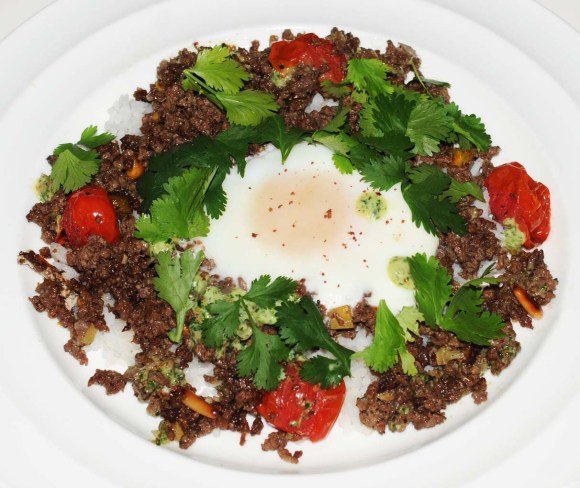
Learning about the cuisine of other cultures and the fusion of flavors happening as a result of immigrants bringing their traditional cooking methods, herbs and family favorites into your country, has made cooking a very interesting and delicious hobby. This dish (inspired by fusion food served in Jerusalem) is a delightful and surprising result. Yet another version of comfort food you can add to your repertoire.

360 h/12.7 oz Basmati rice
The lamb:
2 tablespoons/30 ml olive oil
12 shallots, finely sliced
2 cloves garlic, minced
350 g/12 oz lamb mince
2 cups/500 ml lamb stock
2 tablespoons/30 ml sumac (availalable at well stocked supermarkets)
Sumac, from the berries of the sumac bush (vaguely related to Poison Ivy although not poisonous) are dried and in some instances you can buy the berries whole or already ground. It is dark brick red in color and adds a delightful color and zing to food without overpowering it — subtle and refreshing. Add it to scramble eggs, a vinaigrette, garlic mayonnaise, tomato salad, etc. Try it with chicken, fish, butternut soup …. the possibilities are endless. Use your imagination.
1 tablespoon/15 ml za’atar (available in shops that specialise in Middle Eastern spices or make you own)
1 tablespoon/15 ml cumin
2 tablespoons/30 ml pine nuts
salt and freshly ground black pepper
The tomatoes:
2 tablespoons/30 ml olive oil
24 cherry tomatoes
1 teaspoon/5 ml coarse sea salt
sprinkle of sugar
1 teaspoon/5 ml balsamic vinegar
The garnish:
4 fresh eggs
plain thick Greek yogurt
bunch coriander leaves
- In a small bowl mix the vinegar with the salt and add the onion. Set aside for the onions to soften.
- Boil the rice and keep warm.
- Preheat the oven to 220°C.
- In a heatproof baking dish mix the cherry tomatoes with the olive oil, salt, sugar and vinegar and roast in the oven until the skins burst open and the juices start sizzling. Remove from the oven and set aside.
- For the lamb: in a big enough pan, heat the olive oil and fry the shallots and garlic briefly then add the mince.
- Break up the mince as much as possible to avoid having clumps of meat.
- When it becomes nice and caramelized, add half the stock, sumac, za’tar, cumin and salt and pepper and cook until most of the liquid has evaporated.
- Add the rest of the stock and simmer for 5 minutes.
- With a large spoon, move the meat aside to form four hollow spots. Break an egg into each hollow, then cover the pan with a lid and steam the eggs for about 5 minutes or until the eggs are cooked but the yolks still soft.
I find it much easier to fry the eggs separately and place it on top of the dish when ready to serve. But it is up to you. It does not affect the outcome of the dish or spoil its authenticity.
- To serve: on each warmed plate spoon the rice and spread out quite a bit.
- Spoon the lamb and a cooked egg over the rice, being careful not the break the yolk.
- Dot the surface of the meat with spoons full of yogurt, scatter the roast tomatoes around and sprinkle over the coriander. Serve immediately.
Extra sumac sprinkled over gives the dish an extra tang and color but use sparingly.
MIXED SEAFOOD PASTA
This dish is a bit daunting if you are entertaining, because it has to be done the last minute. But if you are well organized and have done all the preparations, it should be fine. The seafood preparation can be done the previous day as well as all the measuring of the ingredients, and kept covered and refrigerated.

The fish and seafood:
25 g/0.9 oz butter
2 tablespoons/30 ml olive oil
120 g/4 oz firm white fish, skinned
120 g/4 oz prawns,
120 g/4 oz squid with tentacles
2 tablespoons/30 ml extra-virgin olive oil
½ onion, thinly sliced into rings
3 garlic cloves, thinly sliced
1 teaspoon/5 ml dried red chile flakes
4 anchovy fillets in oil, drained, rinsed and dried
1 kg/2 lbs black mussels, scrubbed and de-bearded
1 cup/250 ml dry white wine
2 tablespoons/30 ml salted capers, rinsed and drained
1 bunch Italian parsley leaves, finely chopped
salt and freshly ground black pepper
The seafood sauce:
25 g butter
2 garlic cloves
reserved prawn shells
trimmings of squid and fish
1 cup/250 ml white wine
4 cups/1 ℓ fish stock, heated
1 tablespoon/15 ml tomato paste
1 teaspoon/5 ml Pernod
1 tablespoon/15 ml agar-agar, mixed with 4 tablespoons/60 ml cold water
1 cup/250 ml double cream
2 tablespoons/30 ml tarragon leaves
For the fish, prawns and squid, cut the fish into 3 x 3 cm/1 x 1 in pieces, and peel and devein the prawns (reserving the shells for later use). Remove the tentacles from the squid body (remove the beak from the tentacles, reserving all the trimmings), and cut the squid into rings about 1 cm/0.4 in wide. In a big frying pan, heat the olive oil and butter and sauté the fish, prawns, squid and tentacles in batches, seasoning adequately as you go along, being careful at the same time not to overcook. Set aside and keep warm. Keep the saucepan with pan juices to make the sauce later.
Meanwhile, in a large saucepan, heat the olive oil and lightly saute the red onion, garlic and chile flakes. Saute until fragrant, then add the anchovies and cook until the anchovies have disintegrated. Add the mussels and white wine, and cover quickly, so the steam cooks the mussels. Shake the pot after 1 minute, and again after 2 more minutes. Check the mussels, if they are open and plump, they are cooked. Check the seasoning, then stir in the parsley. Set aside and keep warm.
For the seafood sauce: use the saucepan the seafood was cooked in and heat to medium. Add the butter add the garlic. Saute for a few seconds then add the prawn shells and all the other trimmings. Cook for about 3 minutes then add the wine. Reduce until about a third is left then add the heated fish stock. Bring to the boil and add the tomato paste and Pernod. Cook until the liquid has reduced by about one third then check the seasoning. Stir in the dissolved agar-agar little by little until you reach the desired consistency which should be like pouring cream. Strain the sauce and keep warm. Just before serving, roughly chop the tarragon then mix into the seafood sauce.
To serve:
On a large warmed serving plate, arrange the fish, prawns, squid and mussels and pour the mussel juice over. Serve the Seafood sauce separately.