Categories
STARTERS/SIDES

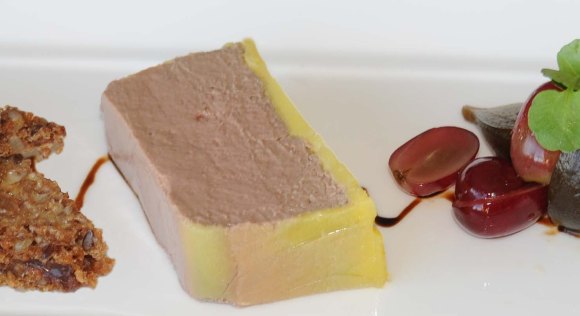
Chicken liver paté with figs, grapes and herb salad and whole-wheat bread


For the paté:
1¾ cup/420 ml milk
400 g/14 oz chicken livers, trimmed
2 tablespoons/15 ml olive oil
1 medium shallot, finely chopped
1 garlic clove, finely chopped
1 sprig of thyme
3 tablespoons/45 ml brandy
3 tablespoons/45 ml port
3 tablespoons/45 ml Madeira
50 g/1.75 oz clarified butter, melted
3 eggs
1 egg yolk
salt and freshly ground black pepper
300 g/10.5 oz butter, melted (to seal the paté)

To finish:
75 g/3 oz softened butter
75 g/3 oz softened lard

The fig and grape salad:
4 firm-ripe fresh figs, halved lengthwise
4 cups/1 liter rocket leaves
½ cup/120 ml grapes, cut in half
2 tablespoons/30 ml extra-virgin olive oil
salt and freshly ground pepper to taste
balsamic glaze
whole-wheat bread, thinly sliced, buttered and lightly toasted

For the paté:

  • Soak the livers in the milk for at least four hours, then drain, rinse and pat dry.
  • Heat the oven to 120°C/248ºF).
  • Grease a terrine mold and line with plastic film.
  • Heat the oil in a frying pan and add the shallot and garlic. Fry until translucent, then add the thyme.
  • Add the brandy and flambé, and when the flames have died down, add the port, Madeira and reduce by two thirds.
  • Leave to cool slightly, then add the butter, eggs and the cleaned livers and season with salt and pepper. Do not bring to a boil again, this is just to get all the ingredients up to the same temperature. Discard the thyme.
  • Transfer the liver mixture to a food processor and blend until smooth.
  • Pour the blended mixture through a fine sieve, rubbing the mixture with the back of a ladle into a bowl. Discard any solids left behind.
  • Line the base and sides of a 23 cm x 9 cm x 8 cm/9 in x 3½ in x 3 in terrine mold with greaseproof paper, leaving a 3 cm/1 in overlap above the top of the tin.

    The paper will protect the paté from direct heat and prevent it discolouring and becoming hard.

  • Pour the liver mixture into the mold, put a piece of tin foil over the top of the dish (it must not touch the liver mixture) and place the lid on top.
  • Put the dish into a roasting tin, filled halfway with hot water, then place on the middle shelf of the oven and bake for 45 minutes.
  • Test the internal temperature and if it has not reached 65°C/149°F, place it back into the oven for another 10 minutes and check it again.

    Do not overcook or it will split and lose its fine texture.

  • When the paté is cooked, remove the terrine mold from the baking tray, leave it to cool for 30 minutes at room temperature then refrigerate.

  • Discard the greaseproof paper from the top of the paté then dip the tin in a deep tray of hot water.

  • Slide a hot knife between the sides of the mold and the greaseproof lining then hold the edges of the lining and carefully lift the paté from the tin onto a chopping board.

  • Peel away the greaseproof paper from the sides of the paté .

  • Warm a palette knife in hot water and smooth the top and sides of the paté , trimming away any discolouration on the top.

  • Return the paté to the fridge for at least 30 minutes to firm it up, or place it in the freezer for 15 minutes.

  • To finish, beat the softened butter and lard together and spread a thin layer over the top of the paté using a palette knife.

  • On a clean plate, flip the paté over and spread the remaining butter/lard mixture over the sides and what has now become the top.


    Covering all the surfaces of the paté with this mixture will prevent it from oxidising and discolouring.

  • Decorate the top surface with herbs to your liking, pressing them lightly down to adhere.

  • Return the paté , covered, to the fridge and chill for at least one day before serving.


    This will keep for up to 3 days.

To serve:

  • Dip a large sharp knife into hot water and carefully slice the paté to the thickness desired.
  • Plate each slice on suitable serving plates with the fig and grape salad and the whole-wheat bread.

For the fig salad:

  • Heat the grill to medium hot.
  • Drizzle a few drops of olive oil over the fig halves (on cut side) and briefly put under the grill. Remove and let cool.
  • Gently toss the rocket and grapes with olive oil, a pinch of salt, and freshly ground black pepper, and divide into four servings.
  • Arrange it on each plate with the paté, and place the two fig halves on each mound of salad. Drizzle with the balsamic glaze all round.
Categories
GLOSSARY / METHODS

Clarified butter


Clarified butter
This is butter that has had the whey and the milk solids removed which allows the butter to be heated to a higher temperature without burning.

To make clarified butter:
Heat the butter in a saucepan over medium heat.  As it melts, the butter will start sizzling as the water evaporates and the butter breaks up in three layers.  A sediment will form in the base of the pan, a froth will form on top and the clear butter in the middle. The sediment on the bottom should not go brown in the process and the froth on top has to be skimmed. Pour the butter through a sieve lined with cheesecloth to trap the milk solids. Store the clarified butter covered in the refrigerator for up to 3 weeks or freeze it for 3 months.

When the recipe calls for foaming butter, do not use clarified butter because the impurities that you remove when clarifying, is in fact, what encourages the foaming.

Categories
STARTERS/SIDES

Pasta spiral with a mushroom filling, a light cheese sauce and truffle vinaigrette


This is a wonderful vegetarian dish, but if you do not want to present this dish as described in the recipe, simply rearrange the ingredients. Cut the pasta into linguini or fettucini, mix the mushroom filling and the cheese sauce and spoon it over the pasta.  Drizzle the truffle (if using) over the mushrooms and sprinkle with some chopped parsley and chives.

pasta-spiral4.jpg

The filling:
1 tablespoon olive oil
500 g/17.6 oz mixed mushrooms, finely chopped (reserve a few whole ones for garnish)
2 shallots, finely chopped
1 clove garlic, minced
4 tablespoons chicken stock, heated
1 tablespoon parsley, finely chopped
1 tablespoon dried porcini mushrooms, finely ground
salt and freshly ground black pepper

The vinaigrette:
¼ cup olive oil
3 shallots, finely chopped
1 teaspoon fresh parsley, finely chopped
⅓ cup white wine vinegar
2 teaspoons truffle oil (optional)
1 tablespoon Dijon mustard
salt and freshly ground black pepper
2 teaspoons preserved truffle (finely chopped if using)

The pasta:
100 g/3.5 oz strong flour
100 g/3.5 oz Durham wheat
2 eggs

The cheese sauce:
2 cups chicken stock
1 clove garlic, crushed
1 bay leaf
2 sprigs of fresh thyme
3 tablespoons butter
3 tablespoons flour
50 g/¾ oz Gruyère cheese
4 tablespoons fresh cream
½ teaspoon nutmeg, ground
salt and freshly ground white pepper
2 teaspoons Parmesan cheese

The garnish:
the reserved mushrooms
1 tablespoon parsley, finely chopped
1 tablespoon chives, finely sliced
truffle vinaigrette (if using)

  • Preheat the oven to 180° C/356° F.
  • For the mushrooms, heat the oil and brown the mushrooms (also the whole ones for the garnish), add the shallots, garlic, the chicken stock, parsley, and the porcini mushroom powder.
  • Simmer for a few minutes until the liquid has reduced, season to taste, then set aside to cool.
  • Retrieve the whole mushrooms and set aside.
  • For the vinaigrette, mix all the ingredients together and store in a squeeze bottle in the refrigerator.
  • For the pasta, place all the ingredients in a food processor and process until it becomes smooth and silky. Roll in plastic film and refrigerate for 30 minutes.
  • Roll the pasta out thinly and cut into 2 x 4 cm/1.5 in x 50 cm/19.6 in long strips.
  • Spread the mushroom mixture over each noodle ribbon and roll the ribbon up in a spiral.
  • Place each spiral in a steam basket lined with cabbage leaves (rubbed with some oil to prevent it from sticking to the basket) and steam for 10 minutes.
  • Carefully remove each spiral and arrange in a greased oven-proof dish. Discard the cabbage leaves.
  • Pour the ¾ of the cheese sauce over the spirals and top with the Parmesan cheese.
  • Bake in the oven for 10 – 15 minutes until the top is golden and the sauce is bubbling.
  • For the cheese sauce, heat the chicken stock in a saucepan with the garlic, bay leaf and thyme.
  • In another saucepan and over medium heat, melt the butter, stir in the flour and cook for 2 minutes whilst stirring.
  • Strain the stock then whisk into the flour mixture, ½ cup at a time and whisk until smooth.
  • Bring the liquid to a boil, then reduce the heat to a simmer and cook for 15 minutes.
  • Remove from the heat then add the Gruyère cheese, cream and nutmeg, and season with salt and freshly ground white pepper.
  • To serve:
    Place a spiral on each heated serving plate, spoon around the rest of the cheese sauce and garnish with a whole mushroom and the chopped parsley and chives. Finally, lightly drizzle the vinaigrette over.
Categories
MAIN COURSE STARTERS/SIDES

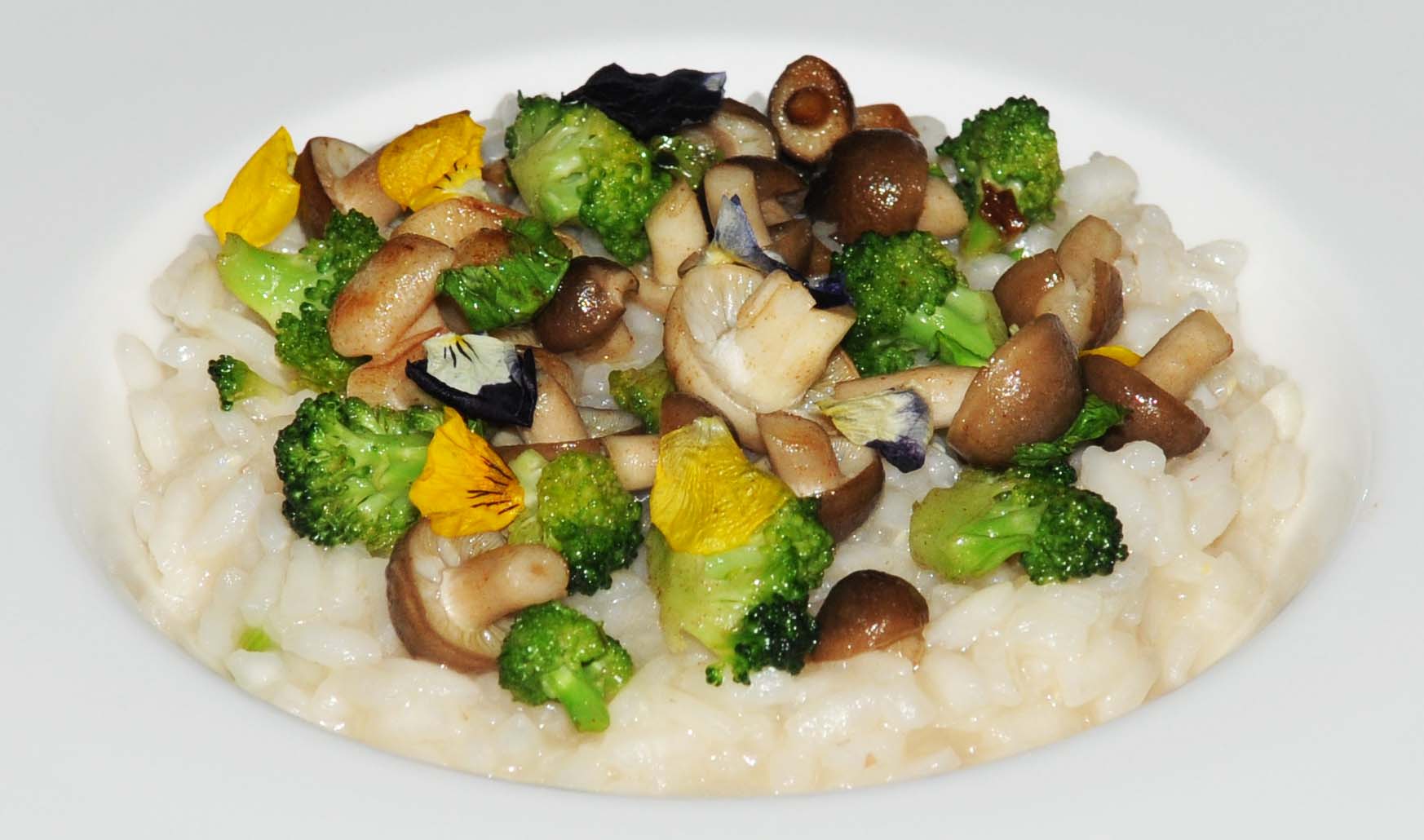
Mixed vegetable risotto


Risotto, a creamy rice dish, originally from northern Italy, is easy to make, its versatile and also quite comforting. You can chop and change the additional flavors to the rice to suit your desire or according to the ingredients available; it can be served as a light vegetarian lunch, or a side dish for a main course with meat. There are few rules, however. The most important is that the correct variety of rice must be used. Risotto rice, which is quite round and looks very different from long-grain rice, releases lots of starch during the cooking process so the finished dish is very creamy and rich which is characteristic of risotto.

MIXED VEGETABLE RISOTTO
Serves 2 as a main dish and 4 as a side dish.

For the risotto:
12 tablespoons butter
3 shallots, finely chopped
1 cup Arborio (risotto) rice
½ cup white wine
3 cups hot vegetable stock (make you own or buy from the supermarket – not stock cubes!)
2 teaspoons fresh thyme, finely chopped
2 tablespoons sour cream
4 tablespoons Parmesan, finely grated
salt and freshly ground white pepper
125 g/4½ oz cold butter, diced (or less if desired)
cabernet sauvignon vinegar, to taste, or a few drops of lemon juice

For the mushrooms:
1 tablespoon butter
2 cups shimeji mushrooms
salt to taste

For the vegetables:
about 20 broccoli florets
salt to taste

For the garnish:
edible flower petals (optional)
Parmesan shavings
mixed herbs and micro leaves

For the broccoli:

  • Bring a sauce pan with about 2 cups of water to the boil. Add 1 teaspoon salt and add the broccoli.
  • Boil for 1 to 1½ minutes until crisp-tender. Remove with a slotted spoon and set aside in a warm place.

For the mushrooms:

  • Empty the saucepan, then add the butter and fry the mushrooms for about 2 minutes before the mushrooms and butter turns brown.
  • Remove from the pan and set aside in a warm place.

For the risotto:

  • In a large saucepan and over medium heat, heat the 2 tablespoons of butter and add the onion. Cook until the onion is translucent.
  • Add the rice and stir for 2 to 3 minutes, then add the wine and stir until the liquid is absorbed.
  • Increase the heat to medium-high and stir in 1 cup of the broth and cook uncovered, stirring frequently with a wooden spoon, until all the liquid is absorbed,.
  • Then add more broth, allowing the liquid to be absorbed before adding some more.
  • Cook for approximately 25 to 30 minutes or until the rice is tender (but still with a bite) and the mixture has a creamy consistency.
  • Stir in the sour cream, cheese, salt and freshly ground white pepper, and remaining butter. Stir until mixture is creamy, about 2 minutes then remove from the heat.
  • Taste for seasoning and add the vinegar or lemon juice if required and stir through.

    A few drops of vinegar or lemon can change the dish you have prepared miraculously. It not only mellows a too rich sauce or soup, but it perks up your taste buds and brings brightness to the other ingredients in a dish — guaranteeing that lasting element of surprise.

  • Spoon the risotto into four serving bowls and garnish with the mushrooms, broccoli, Parmesan shavings and flowers (if using).
  • Serve immediately.
Categories
SOUPS/SAUCES/CONDIMENTS

Teriyaki sauce


This is the sauce I used to flavor my Teryaki chicken cordon bleu


This is a homemade version of the commercial Teriyaki sauce.  It keeps well in a covered container and refrigerated, and can be used as a dipping sauce for many other dishes.

1 cup water
5 tablespoons brown sugar
¼ cup soy sauce
1-2 teaspoons honey, or to taste
1 large garlic clove, finely minced
½ teaspoon ground ginger
2 tablespoons cornstarch
¼ cup cold water

  • Combine the water, brown sugar, soy sauce, honey, garlic and ginger in a medium saucepan and set over medium heat.
  • In a small bowl, combine the cornstarch with the ¼ cup water and whisk until dissolved.
  • Add the cornstarch mixture to the saucepan.
  • Heat the sauce until it thickens to your taste. If the sauce becomes too thick, add more water to thin it out.
  • Pour in a screw top container.
Categories
MAIN COURSE

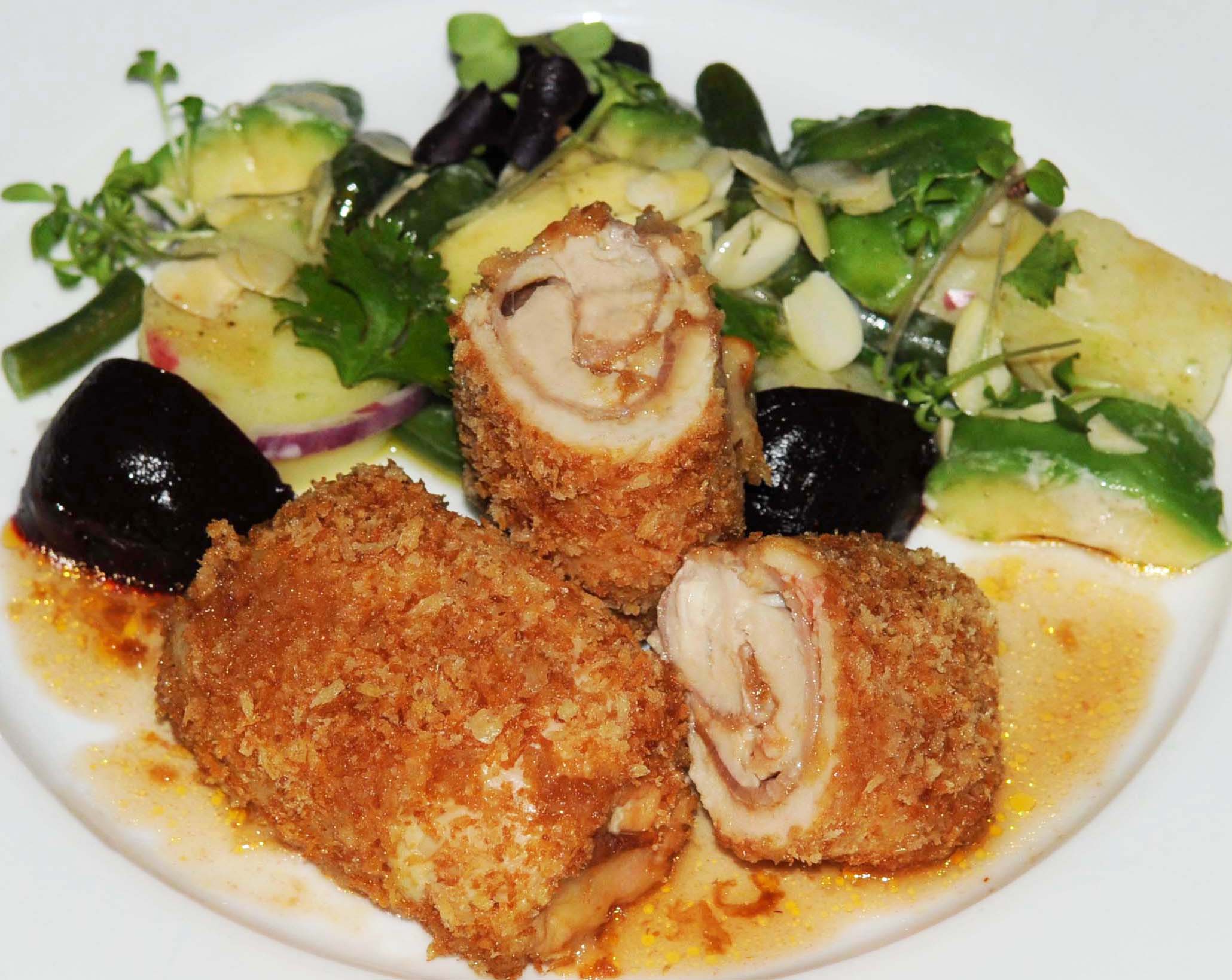
Teryaki infused chicken cordon bleu


Although Teryaki chicken is one of the most popular chicken dishes in Japan, this is not the streetfood version you would expect to find there. The Teryaki sauce here is used more to season the chicken cordon bleu, but the result is so delicious that I’m sure I’ll be forgiven for using it in this way.

TERYAKI CHICKEN CORDON BLEUServes 4

4 skinless, boneless chicken breasts
1 cup Teryaki sauce (see recipe for homemade version below)
1 tablespoon sweet chili sauce
olive oil 
4 slices ham or prosciutto
8 tablespoons cheddar cheese, grated (or more)
1 cup panko bread crumbs

  • Butterfly each chicken breasts and between cling-film pound with the smooth side of a meat mallet to make them thinner, flatter and equal thickness.
  • Cut each butterflied breast in four equal lengths.
  • Preheat the oven to 175ºC/350ºF.
  • Line a baking tray with parchment paper, lightly greased.
  • Whisk together the Teryaki sauce ingredients and paint each piece of chicken with the sauce.
  • Lay each piece flat, then layer with a slice of ham and spread a tablespoon or more grated cheese on top of the ham.
  • Roll up each chicken thigh from the smallest end and secure each roll with a toothpick. 
  • Brush the outside of each roll again with the Teryaki sauce and then roll in the panko breadcrumbs, patting the crumbs down securely. 
  • Refrigerate for a while to settle.
  • Bake the chicken bundles until no longer pink in the center and the juices run clear, 30 to 35 minutes.
  • An instant-read thermometer inserted into the center of the chicken should read not more than 68ºC/154ºF. 

The safe cooked temperature for chicken is 74ºC/165ºF but if you leave it  in the oven till then, and by the time it has rested before serving, it will be way overcooked and dry.  While the chicken rests, the temperature still rises, therefore, and to keep the inside juicy, remove it sooner and let it rest in a warm place.

Serve with rice and/or Potato, green bean and avocado salad.

Teryaki sauce:


This is a homemade version of the commercial Teryaki sauce.  It keeps well in a covered container and refrigerated, and can be used as a dipping sauce for many other dishes.

1 cup water
5 tablespoons brown sugar
¼ cup soy sauce
1-2 teaspoons honey, or to taste
1 large garlic clove, finely minced
½ teaspoon ground ginger
2 tablespoons cornstarch
¼ cup cold water

  • Combine the water, brown sugar, soy sauce, honey, garlic and ginger in a medium saucepan and set over medium heat.
  • In a small bowl, combine the cornstarch with the ¼ cup water and whisk until dissolved.
  • Add the cornstarch mixture to the saucepan.
  • Heat the sauce until it thickens to your taste. If the sauce becomes too thick, add more water to thin it out.
  • Pour in a screw top container and keep refrigerated.
Categories
STARTERS/SIDES

Potato, green bean and avocado salad


POTATOES GREEN BEAN AVOCADO SALAD

2 medium size, potatoes, peeled and cut into large cubes
2 cup green beans, trimmed and cut into short lengths
2 medium sized avocados, peeled and cubed
3 garlic cloves, crushed
⅔ cup/180 ml fresh coriander, finely chopped
juice of one lemon
⅓ cup/80 ml extra virgin olive oil
salt and freshly ground black pepper

  • Place the potatoes in a large pot, cover with water and bring to a boil.
  • Boil until almost tender, but still hold their shape.
  • Drain in a colander and leave them to dry out until completely cool.
  • Meanwhile boil the beans in salted water and cook until tender.
  • Drain and place in a large bowl, add the crushed garlic and mix thoroughly to infuse the beans with the garlic.
  • When the potatoes have completely cooled down, add to the green beans and lastly the avocados.
  • Toss the lemon juice and olive oil, add the chopped cilantro and salt and pepper.
  • Pour over the salad and combine gently.

Serve as a side dish for Teriyaki infused chicken cordon bleu, or as a light vegetarian lunch.

Categories
MAIN COURSE

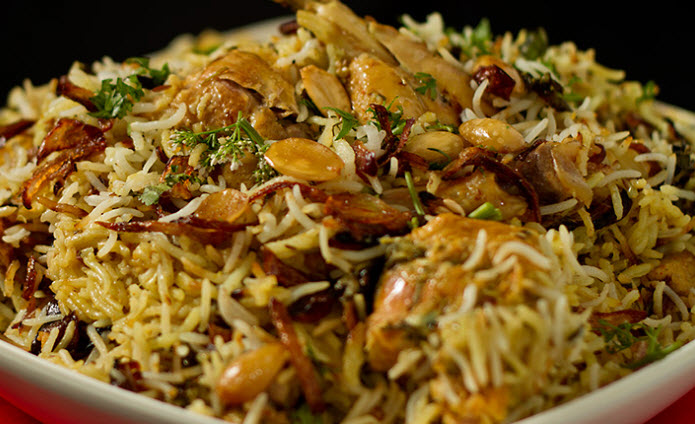
Chicken and rosewater biryani


 A world-renowned Indian dish, biryani is a special occasion dish flavoured with a selection of exotic spices such as saffron and is layered with meat, rice, fried onions, rosewater, cashew nuts.  It is then cooked covered over low heat until the entire dish is permeated with total deliciousness. There are several main types of biryani, and they are also specific to a certain community. This recipe is not for a specific region but has a combination of flavors representing many of the regions.

AA SNAG

For the chicken marinade:
1 cup natural yogurt
6 garlic cloves, finely crushed
6cm/2½in piece ginger, finely grated
3 green chillies, finely chopped, with seeds
1 teaspoon chilli powder (optional)
1 teaspoon ground coriander
½ teaspoon ground turmeric
500g/1lb 2oz chicken thighs, cut in half
salt


The drumettes we were discussing for Chicken wing confit used for the Vaul-au-vent with confit chicken wings, is ideal to use for this dish.

For the crisp fried onions:
¾ cup vegetable oil
3 medium onions, thinly sliced

For the sauce:
10 whole cloves
6cm/2½in piece cinnamon stick
5 green cardamom pods, bruised in a pestle and mortar
2 bay leaves
1 teaspoon cumin seeds
2 medium tomatoes, chopped
1 cup chicken stock

For the rice:
600g/1lb 5oz Basmati rice
salt

To assemble:
½ cup ghee
pinch saffron soaked in 4 tablespoons warm milk for 15 minutes
2 teaspoons rosewater
2 tablespoons cashew nuts and 2 tablespoons shelled pistachios, roasted and chopped
raita, to serve
fresh coriander, picked

  • In a shallow bowl large enough to contain all the chicken pieces, combine all the marinade ingredients.
  • Toss to coat well and then set aside to marinate for an hour.
  • For the crisp fried onions, heat the vegetable oil in a heavy bottom saucepan  over a medium heat until hot.
  • Add the onions and fry for 10–15 minutes, or until deep golden-brown. Remove with a slotted spoon and drain on a plate lined with kitchen paper. Set aside.
  • Pour off the oil but leave about three tablespoons in the pan.

For the sauce:

  • Add the whole spices to the pan and fry for one minute.
  • Add the tomatoes and the stock and bring to the boil.
  • Boil until the sauce is reduced to about ½ cup.
  • Strain the sauce and discard the pulp.  Set aside

For the chicken:

  • Heat a little oil in the wiped saucepan, then add the chicken and its marinade.
  • Bring to a simmer, then stir in the tomatoes sauce.
  • Simmer over medium heat for 30 minutes, or until the chicken is cooked through and the sauce is clinging to the chicken.


If it cooks dry, add a splash of water to the pan. It is, however, important that the sauce is almost dry by this stage and just coating the chicken.

Meanwhile cook the rice.

  • For the rice, cook until done but still firm in the middle.
  • Drain well.

Assemble the biryani while the rice is still hot:


You are aiming for five layers: rice, rosewater, saffron, chicken, crispy onion, cashew nuts, and repeat layers ending with rice on top.  Reserve some onions and nuts to sprinkle on top.

  • First pour about three tablespoons of water and half of the ghee into a deep, heavy-based cooking pot or casserole, then start the layering.
  • Drizzle the remaining ghee around the edges of the rice so that it drips down the inside of the pan.
  • Cover with a well-fitting lid and put over a high heat to get the ghee hot and some steam going. As soon as you see steam rising, turn down to a very low heat and cook for 30 minutes.
  • Spoon out onto a large serving platter and scatter with the rest of the crisp onions and toasted cashews and pistachios.
  • Serve with raita and fresh coriander.
Categories
MAIN COURSE

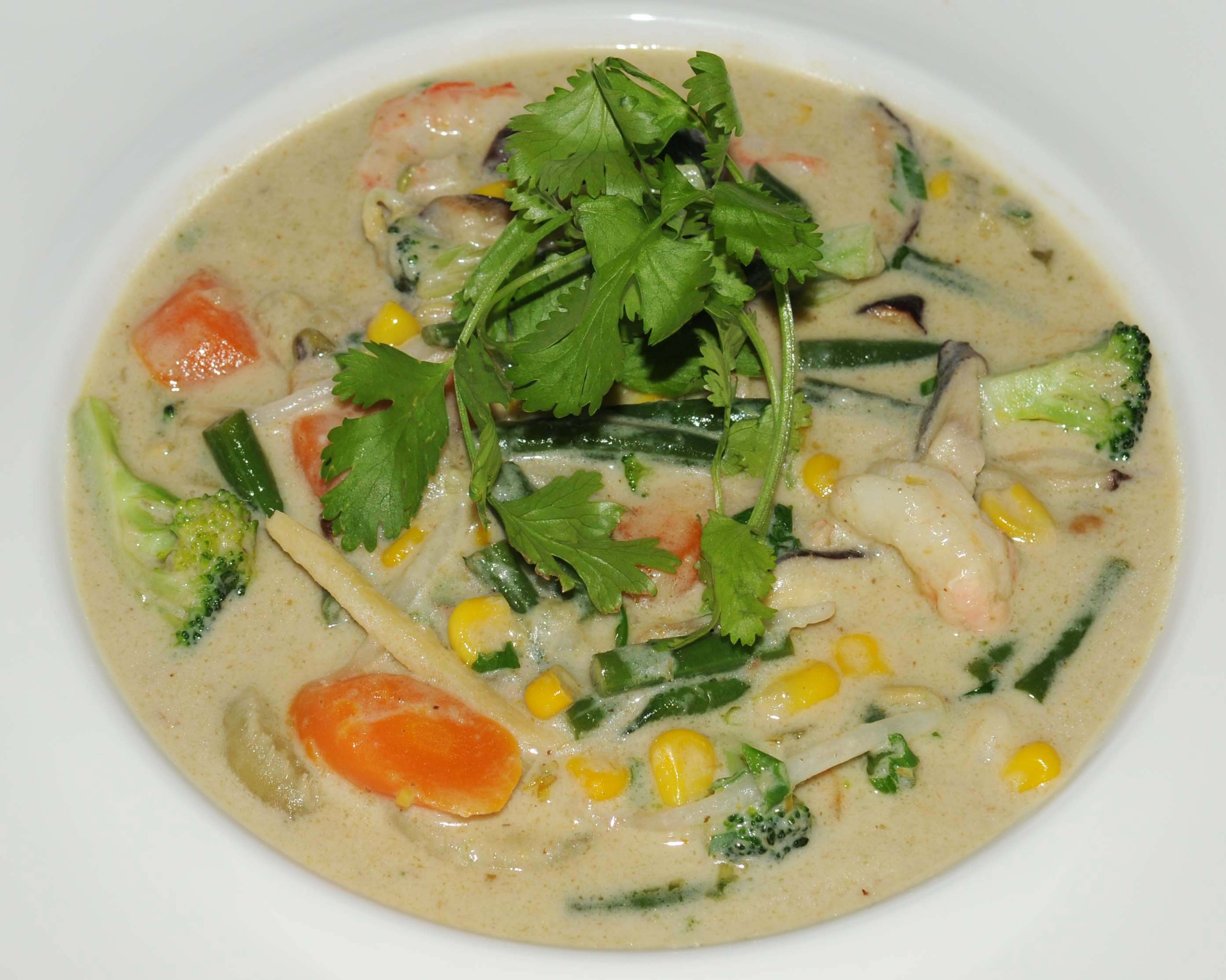
Thai vegetable curry


This is an ideal vegetarian dish to serve at any occasion.  For variation you can add some peeled prawns or chicken pieces, but try it first with only vegetables.  The curry can be quite strong but you can control it by simply put half the amount for the recipe and add gradually until you are satisfied.  Remember, though, that the longer it cooks the stronger it will become.  So it will be wise to go slowly.  You can also use different vegetables such as red pepper, celery, butternut or peas.  It’s your call.

THAI VEGETABLE CURRY

Serves 4

For the soup:
1 tablespoon/15 ml vegetable oil
1 medium onion, finely chopped
1-2 tablespoons/15-30 ml green curry paste (shop bought or make your own — see recipe at the bottom of the page)
1½ cups/375 ml coconut milk
1 cup/250 ml vegetable stock (or water)
1 cup/250 ml green beans, cut in short lengths
2 medium carrots, peeled and cut in pieces
1 cup/250 ml broccoli florets
4 kaffir limes (dry is good)
½ cup/125 ml corn, frozen and defrosted
2 tablespoons/30 ml fish sauce
2 tablespoon/30 ml lime juice
2 teaspoons/10 ml finely grated lime rind
1-2 teaspoons/5-10 ml sugar (optional)
fresh coriander, picked
spring onions, cut in lengths

  • Heat the oil in a large wok or saucepan and add the onions and curry paste.
  • Cook for 3 minutes over medium heat, whilst stirring.
  • Add the coconut and stock (or water) and bring to the boil.  Stir then reduce the heat and cook uncovered for 5 minutes.
  • Add the beans, carrots and broccoli, kaffir limes and corn to the pan and cook uncovered for 5 minutes. 
  • Add the corn, fish sauce, lime juice and rind, and sugar, if using, after tasting.
    Ladle the soup into deep bowls and sprinkle over some coriander and spring onions.

This can also be served with rice, if desired.


Make your own Green curry paste:
1 tablespoon/15 ml coriander seeds
2 teaspoon/10 ml cumin seeds
1 teaspoon/5 ml black peppercorns
2 teaspoons/10 ml dried shrimp paste
8 large fresh green chilies, roughly chopped
1 cup/250 ml shallots, chopped
1 tablespoon/15 ml ginger, chopped
12 small cloves garlic, chopped
1 cup/250 ml fresh coriander leaves, chopped
6 kaffir lime leaves, chopped
3 stems lemon grass (white part only), finely chopped
2 teaspoons/10 ml grated lime rind
2 teaspoons/10 ml salt
2 tablespoons/30 ml vegetables oil
Makes approximately 1 cup.
  • Place the coriander and cumin seeds in a dry frying pan and heat for 2-3 minutes, shaking the pan constantly.
  • Pour the roasted spices and peppercorns in a mortar and pestle or spice grinder and grind until fine.
  • Grill the shrimp paste for 2-3 minutes, then add to the spices.  Add all to a processor.
  • Add the remaining ingredients and process fo 20 seconds until the mixture forms a smooth paste — periodically scrape down the sides of the bowl.
Categories
MAIN COURSE

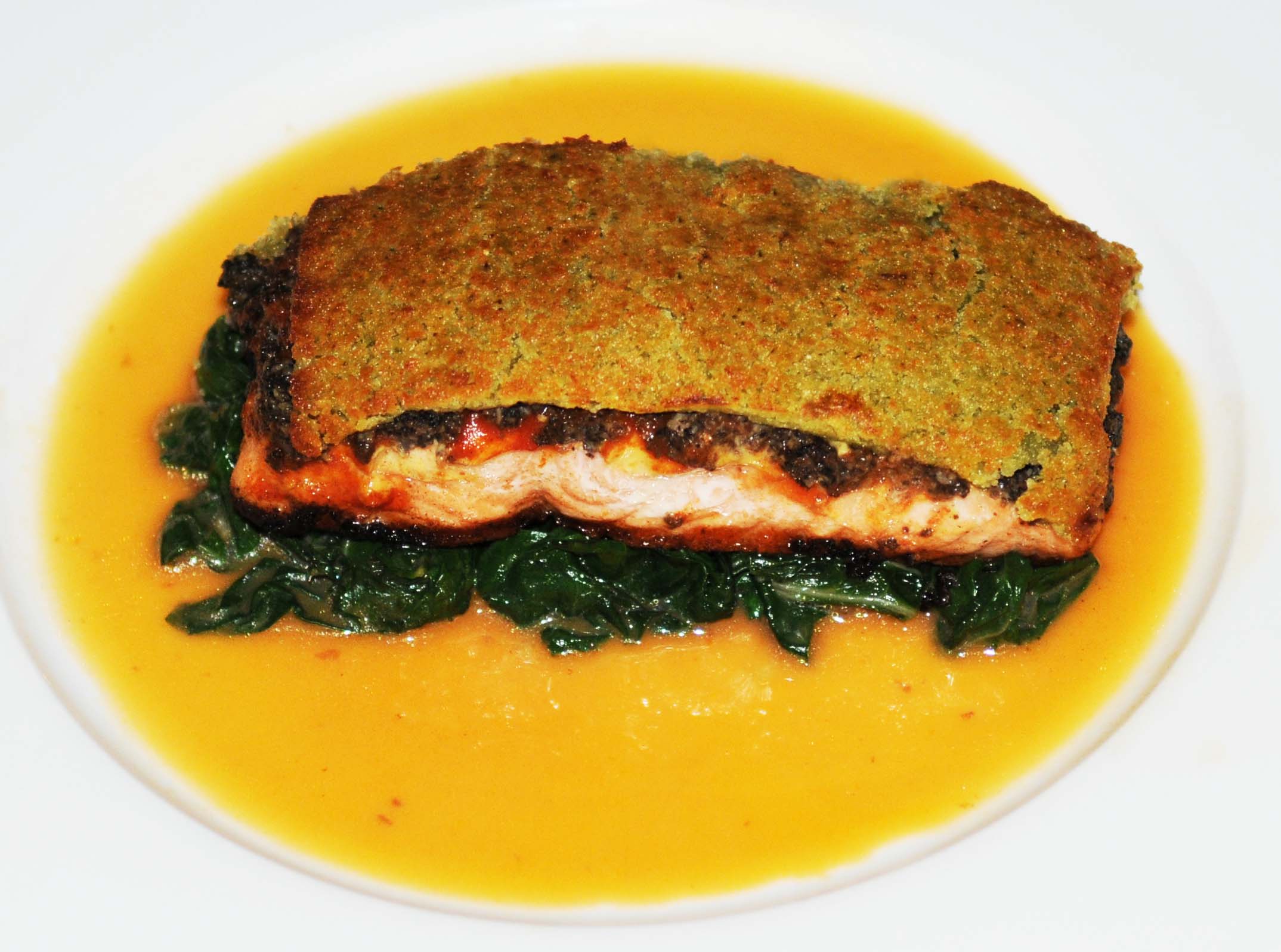
Herb crusted salmon with Swiss chard


This is a very elegant and delicious dish to serve at your next dinner party.  Most of the components can be prepared well in advance.

SALMON WITH HERB CRUST

Serves 4

Preheat the oven to 220ºC/430ºF.

 800 g/1.8 lb salmon, skinned, bones removed
salt and freshly ground white pepper
1 tablespoon mustard
2 tablespoons tomato sauce (recipe follows)
2 tablespoons mushroom duxelle (recipe follows)
200 g soft herb crust (recipe follows)

Cut the salmon in even portions and season with salt and pepper. Lightly spread Dijon mustard on top of each piece of fish,  then a spread of the tomato sauce, then the mushroom duxelle. Place a neat tile (the size of the fish) of the soft herb crust on top of the fish.  Heat an ovenproof pan with a splash of oil and put the salmon in with the crusted side facing up. Cook for 1 minutes then place the pan in the preheated oven for 6-8 minutes.


Keep an eye on it so that the crust does not burn.  Set aside to rest for 5 minutes.

Tomato sauce:
100 ml/3.4 fl oz olive oil
½ shallot, finely chopped
1 clove garlic, minced
6-8 large ripe tomatoes, peeled, seeded and finely diced
1 sprig fresh thyme
¼ bay leaf

Heat the olive oil in a pan and sauté the shallots and garlic for a few minutes without coloring. Add the tomato and thyme and continue cooking very gently until all the moisture of the tomato has evaporated and you are left with a dry tomato paste. Remove the sprig of thyme and bay leaf, and put the mixture in a blender and blend until smooth.

The mushroom duxelles:
2 cups mixed mushrooms, finely chopped
salt and freshly ground white pepper
1 tablespoon cream

Wipe the mushrooms and trim the stalks if necessary. Chop very finely in a processor or by hand, then cook in a dry pan until all their liquid has evaporated and the mushrooms formed a paste.

Add the cream and mix in to bind the mushrooms.


Yoghurt can be used instead of cream, but add it right at the end of cooking the mushrooms and do not bring to a boil.


The herb crust:

175 g/6 oz fresh breadcrumbs
80 g/2.8 oz Gruyère cheese
50 g/1.87 oz mixture of fresh parsley, fresh tarragon, and fresh thyme leaves, finely
chopped
125 g/4.4 oz unsalted butter
salt and freshly ground pepper

Place all the ingredients into a food processor and process until thoroughly mixed. On a tray lined with greaseproof paper, spread the crumb mixture about 2 mm/0.07 in thick on to a tray and freeze uncovered.  Cut the crust big enough to fit nicely on top of each portion of the fish.


There will be some left over.  Cover it tightly and freeze for later us.


The sauce:

500 g/1 lb  butter
1 tablespoon shallots, minced
100 ml/3.4 fl oz white wine
1½ cup fish stock
pinch of kosher salt
pinch of white pepper
lemon juice

Heat 1 tablespoon butter and add the shallots.  Sauté until translucent (do not brown), then add the wine.  Reduce until there are only about 1 tablespoon of the wine left, then add the fish stock and reduce until half.  Set the pan over low heat and whisk 2 knobs of butter into the reduction and continue whisking the rest of the butter, a knob at a time, allowing each piece to dissolve into the sauce before adding more.  When all the butter is used up, remove the pan from the heat and whisk in the lemon juice.  Taste and adjust the seasoning, then strain through a fine sieve into a bowl.  Keep warm.

The Swiss chard:
1 large bunch of Swiss chard, freshly picked
1 small clove garlic, sliced
1 tablespoon/15 ml butter
salt

Rinse out the Swiss chard leaves thoroughly, then remove the tough stalk and cut the leaves into wide strips.

Heat a saucepan on medium heat, add the olive oil and the garlic and sauté for a few seconds, then add the sliced Swiss chard leaves and salt. With tongs lift and stir the leaves constantly to ensure that the bottom ones don’t overcook. (It should not be necessary to add water because the chard releases quite a bit of moisture.) Do this for no longer than 5 minutes. It will become soft and silky and still is bright green.  Taste a piece and add seasoning if necessary.  Set aside until needed. 

To serve:
In the centre of each serving plate, spoon the Swiss chard, place the salmon on top and spoon the sauce around.  Serve immediately.