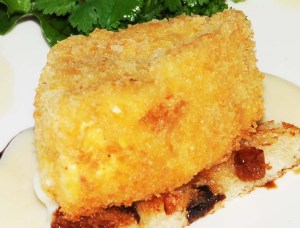
Panko breadcrumbs, made from white bread with the crusts cut off, have a coarser texture and a more elongated shape than ordinary breadcrumbs. It also exhibits a porous structure that results in a tender/crisp texture and therefore makes for a much lighter and crunchier topping or coating. They brown better when fried, do not get soggy on the inside and stay crunchier on the outside. Panko breadcrumbs are available in Asian food stores or well stock supermarkets.
Author: STELLA
I have had no formal chef’s training. Classical piano was my parents’ choice, and that took care of the first 20 years of my life. Journalism and radio followed (my own choices, this time), and these opened many doors for me into different countries, people, cultures — and, of course, foods. In a six week series on radio I used it as a platform for my love of food and shared lots of interesting recipes and food news with listeners.
My earliest memories of food come from the family kitchen at home; I can still remember the wonderful smells of the dishes my mother prepared. I became aware of the flavors of her creations at an early age. Some I enjoyed and preferred, while others depressed me with their lack of interesting flavors. My mother was a good cook, but not a gourmet, and sadly this often showed. What I did appreciate was that she always involved me in the preparation, sharing her knowledge of nutrition, flavor, color, and the harmonies of each plate she dished up. She was also a genius with leftovers and quick meals when unexpected guests arrived. This is one of the things that stands out in my mind, and it inspired me to create wonderful dishes from leftover foods myself.
I carried on with the tradition of carefully planning meals to combine nutrition, color and flavor, while at the same time offering variety and elegant presentation. In the process, I developed a passion for seeking out the best available products, adhering to each season’s offerings, and treating it with the respect it deserves, which eventually became part of my daily culinary life and travels. I did these things not because I wanted to become a chef, but to satisfy myself, family and friends with creations of gorgeous food and exciting flavors. All of which, I hope, is reflected in this blog.
PORCINI POWDER
To make the porcini mushroom powder, take a whole packet of dried porcini mushrooms and grind to a powder in a spice grinder. Store in a sealed glass jar and use to strengthen the mushroom soup flavor, sprinkle over baked potatoes, stir into mushroom risotto, serve with scrambled egg, etc.
Vegetable stock
3 onions, coarsely chopped
1 leek, coarsely chopped
2 celery sticks, coarsely chopped
6 carrots, coarsely chopped
1 whole head garlic, split in half
1 lemon, cut into 6 wedges
4 white peppercorns
4 pink peppercorns
½ bay leaf
4 star anise
8 cups/1 liter cold water
1 sprig each of tarragon, basil, coriander, thyme, parsley and chervil
½ cup/125 ml dry white wine
Place the prepared vegetables, the lemon wedges, peppercorns, bay leaf and star anise in a large pot. Add the water and bring to the boil. Reduce the heat and simmer for about 10 minutes. Remove the pot from the heat and add the herbs and submerge it. Set aside to cool and to allow the herbs to infuse the stock. Pass the stock through a double layer of muslin and leave to cool. Pour small amounts in suitable containers and freeze for up to 2-3 months.
SAFETY AND PRACTICAL TIPS FOR DEEP FRYING
- To check the temperature of oil without a thermometer, test by carefully putting a cube of bread in the hot oil. If the bread browns within —
60 seconds, the temperature is about 160°C/320°F (low)
40 seconds, the temperature is about 180°C/356°F (moderate)
20 seconds, the oil is about 190°C/374°F (hot)
- To cool the oil down when it is too hot, turn off the stove or fryer and add slices of bread to the oil to help cooling it down. Discard the bread when the oil has reached the correct temperature.
- If using an electric fryer, dip the basket of the fryer in the hot oil to coat the wires before adding the food. This will prevent the food from sticking.
- Cook the food in small batches. If you crowd the pan, the oil will cool down and the food will absorb too much oil, thus preventing it from becoming brown and crispy.
- Always drain deep-fried food on paper towel placed on top of folded newspaper to absorb the excess oil.
- Fried food needs a free circulation of air to stay crisp when keeping it warm. Spread it out on an oven rack and leave in a warm oven with the oven door ajar.
- Deep fryers are preferable to chip pans because they are less likely to tip and generally have thermometers to prevent overheating and fires.
- Water in hot oil cause splatters and fires. In case of fire, do not use water, use a fire blanket or suitable extinguisher.
- Have a fire blanket immediately to hand, to smother fires, or a specialized fire extinguisher
- Do not overheat the oil . Oil is flammable and oil fires are extremely dangerous. Oil for deep frying is generally between 175º and 190 °C/345–375 °F.
- Do not overfill the fryer. There must be space in the fryer for food to be added otherwise the oil can overflow causing fire or burns. Always cook smaller quantities at a time.
- Use metal utensils to manipulate food in a fryer – a wire cage is the main tool, and a spider or long-handled chopsticks can be used for additional manipulation.
- Valuable rules:
- do not leave unattended
- do not allow small children near the frying area
If marzipan is difficult to get where you are, see in the Glossary how you can make your own.
Serves 4
The marinade:
2 teaspoons/10 ml brown sugar
¼ teaspoon/pinch of cinnamon
1½ cup/375 ml banana liqueur
juice of 1 lemon
4 bananas, peeled
The spring rolls:
2 sheets spring roll wrappers, cut in half
1 free-range egg, lightly beaten
4 strips of marzipan, 2 cm/0.7 in wide/ 8 cm/3 in long and 2 mm/0.07 in thick
oil for deep-frying
- Combine the sugar, cinnamon and banana liqueur in a shallow glass dish.
- Cut the peeled bananas lengthways in half and each half in quarters, then add to the marinade and leave for 30 minutes.
- Drain and reserve the marinade.
- Brush the edges of each pastry sheet with the beaten egg as you go along.
- Put a strip of marzipan between two quarters of banana and place on a sheet of pastry.
- Roll the pastry up, folding in the sides to prevent the filling from squeezing out, and put aside under a damp cloth.
- Repeat with the rest of the ingredients.
- Heat the oil to about 180°C/356°F and deep-fry the spring rolls until golden, and drain on kitchen paper.
- Keep warm uncovered.
See the Glossary for safety tips on deep-frying.
To serve:
- Slice each roll in half at an angle and arrange on the servings plates.
- Pour the reserved marinade into dipping bowls and serve immediately.
Lamb stock
5 kg/11 lbs lamb bones
2 pig’s trotters, cleaned thoroughly and split in half (ask your butcher to do it for you)
50 ml olive oil
2 medium onions, roughly chopped
4 carrots, roughly chopped
1 celery stalk, roughly chopped
6 liters/12.5 pts/ cold water
5 medium size ripe tomatoes, cut in quarters
Preheat the oven to 200°C/400°F.
Place the lamb bones and the trotters on an oven tray and cook in the preheated oven until browned all over. In a large stockpot, heat the oil and lightly fry the onions, carrots and celery, then add the lamb bones and trotters. Add the water, and bring to the boil. Turn down the heat and simmer gently over low-medium heat, regularly skimming the brown foam that forms on the surface. Simmer for 5 hours, then remove from the heat. Cool to room temperature, then strain, do not press down on the solids as this will cause the stock to become cloudy. Cover and refrigerate until cold, then remove the fat from the surface. Refrigerate for up to 2 days or frozen in smaller containers for up to 3 months. Discard the solids.
Marzipan (almond icing) — make your own
Marzipan is an almond and sugar paste used to ice cakes and other pastries, and sculpted into a variety of shapes to be eaten as candy or used as cake decorations. It is simply a mixture of almond paste, powdered sugar, and a moistening agent such as water, corn syrup, glucose, fondant, or egg whites. After the ingredients are mixed, marzipan reaches a consistency of dough or soft rubber and can be rolled, shaped, cut, or molded.
To make your own:
This recipe will cover a cake of about 20-22 cm/8-8.6 in.
500 g/17.6 oz sifted icing sugar
450 g/1 lb ground almonds
2 egg whites
½ teaspoon/3 ml vanilla flavoring (optional)
1 teaspoon/5 ml lemon juice
Please note: this recipe contains raw eggs.
- Sift the icing sugar in a bowl with the ground almonds.
- Add the remaining ingredients and mix to make a stiff paste, then knead until smooth.
As a substitute to raw eggs, it is possible to use a little water mixed with brandy to bind the paste.
- Wrap well in cling film and store in a cool place for 1 hour before use or up to 24 hours.
- As used for the Banana marzipan spring rolls.
Preserved lemons
8 to 10 lemons, un-waxed and scrubbed thoroughly
1 tablespoon/15 ml kosher salt for each lemon
1 wide mouth jar with lid big enough for all the lemons to fit.
Sterilize the jar in boiling water for 15 minutes. Add a tablespoon or two of salt on the bottom of the bottle. Cut each lemon in quarters (but not right through) so that the pieces are still attached at the stem end, then stuff each lemon with a tablespoon of salt and squeeze it closed. Place each lemon in the jar, pushing down on them and squeezing them to release the juices. Fill the jar but leave some headroom. The lemons should be completely submerged in juice. If you can’t get enough juice out of them, squeeze some additional lemon and top up the jar. Add more salt on top, then seal the jar.
Let the jar sit at room temperature for 2 to 3 days, turning it over every day. After 3 days, put the jar in the refrigerator and continue turning it upside down every other day or so. The lemons will be ready in three weeks when the rinds have softened. Before using, scoop out and discard the pulp, and rinse the lemon peel under the tap to get rid of the salt. These preserved lemons will keep in the refrigerator for six months.
Lamb shanks poached in a spicy broth
Served with harissa yogurt, couscous and roast vegetables and spicy aubergine and shiitaki mushrooms

Serves 4

The shanks:
olive oil
4 lamb shanks
1 carrot, diced
1 leek, diced
1 celery stick, diced
4 garlic cloves
1 bay leaf
1 rosemary sprig
1 star anise
4 cardamom pods
1½ cup/375 ml dry white wine
7 cups/1¾ liter lamb stock, heated
sea salt and freshly ground black pepper
The couscous:
2 tablespoons/30 ml butter
3 spring onions, thinly sliced
½ cup/250 ml raisins
cinnamon stick
salt and freshly ground black pepper
3 cups/740 ml chicken stock
2 cups/250 ml couscous
¼ cup/60 ml almonds, slithered
¼ cup/60 ml fresh mint, chopped
The aubergines:
olive oil
4 medium aubergines, sliced in thin sliced
12 shiittaki mushrooms, sliced
salt and freshly ground black pepper
½ teaspoon/3 ml sesame oil
½ teaspoon/3 ml oyster sauce
½ tablespoon/7 ml balsamic vinegar
½ tablespoon/7 ml lemon juice
1 tablespoon.15 ml soy sauce
2 teaspoons/10 ml mirin
The yoghurt and harissa sauce:
2 tablespoons/30 ml fresh cream
4 tablespoons/60 ml plain yoghurt
2 teaspoons/20 ml lemon juice
salt and pepper to taste
harissa paste
Preheat the oven to 120°C/250ºF.
Heat a little olive oil in a large ovenproof pan and brown the shanks all over. Remove and set aside. Add some more olive oil to the same pan, then saute the carrot, leek, celery and garlic until light golden. Add the herbs and spices, pour in the wine and cook until the alcohol has evaporated.
Place the lamb shanks back into the pan with the vegetables, then pour in the stock. Season well, then cover and put in the preheated oven. Cook for about 3 hours, then remove from the oven and leave in the liquid for 30 minutes. Remove the meat and keep in a warm place. Strain the liquid, discard the solids, then skim of the fat that rises to the top. Reduce the liquid over high heat until thick and glossy. Check the seasoning and add more salt and pepper if necessary.
In a saucepan, melt the butter then add the spring onions, raisins, cinnamon stick, salt and pepper and stir until everything is well coated with the butter. Add the stock and bring to a boil. Put the couscous in a heatproof bowl and pour the spiced stock over. Cover and allow to sit for 5-10 minutes. Uncover, fluff the couscous with a fork, and stir in the almonds. Serve warm at room temperature with the mint sprinkled over.
Preheat the oven to 180°C/356°F.
Sprinkle the aubergines with salt and set aside for 30 minutes, then rinse the aubergines and pat dry. Heat some oil and fry the aubergine slices until golden brown on both sides. Drain on kitchen towel and set aside.
In the same pan heat some more oil and fry the mushrooms until tender. Remove from the pan and drain on kitchen towel. Set aside.
Mix together the rest of the ingredients for the dressing and season to taste. Mix the dressing with the fried mushrooms and aubergines and gently stir through to coat all the vegetables. Set aside until ready to serve warm at room temperature.
Whisk the cream until stiff, then fold in the yoghurt, lemon juice and salt and pepper. Taste and adjust the seasoning to your liking. Set aside until ready to use.
Just before serving, add some of the harissa paste to the yoghurt and mix through. Taste and add more paste if you wish.
1 preserved lemon, finely chopped OR 1 tablespoon lemon zest
1 bunch fresh coriander, including stalks, chopped
2 small hot green chilies (or more if you like it stronger)
1 teaspoon/5 ml salt
2-3 garlic cloves
½ cup/125 ml fresh mint leaves
1 tablespoon/15 ml coriander seed, toasted and ground
1 cup/250 ml olive oil.
In a pestle and mortar grind the lemon, coriander and chilies, then add the rest of the ingredients, pouring the oil in in a steady stream. Once you have reached the desired consistency, set aside for for an hour or two to allow the flavors to develop.