Categories
GLOSSARY / METHODS

SICHUAN PEPPERCORNS


Sichuan peppercorns is not strictly speaking pepper but berries of a shrub called prickly ash.  Sichuan pepper, unlike ordinary pepper, has a pungent flavor and the aftertaste, rather than being hot as is in the case of pepper, is numbing.  The “peppercorns” should be crushed and dry-roasted to bring out their full flavor.

Categories
METHODS

Chicken cut into pieces the Chinese way


Cutting the chicken this way, makes it much easier to serve when entertaining a large group of people.

  • Use a cleaver or a large sharp knife and with the chicken breast facing upwards, cut right through the chicken against the side of the backbone into two halves.
  • Cut each chicken half diagonally across to give you two pieces each of a breast and a wing, and two pieces of a leg and a thigh.
  • Find the joint between each breast and wing and cut right through to separate the breast from the wing. Do the same with the leg and thigh.  You will now have eight pieces.
  • Cut each wing into two pieces on the joint, and chop each leg into three pieces.  (If you wish, you can then put the tips of the wing and the leg aside to make stock later on.)
  • Cut each breast into three pieces diagonally, and do the same with the thighs.
    You should now have 20 pieces if you do not discard the tips of the wings and legs.
Categories
MAIN COURSE

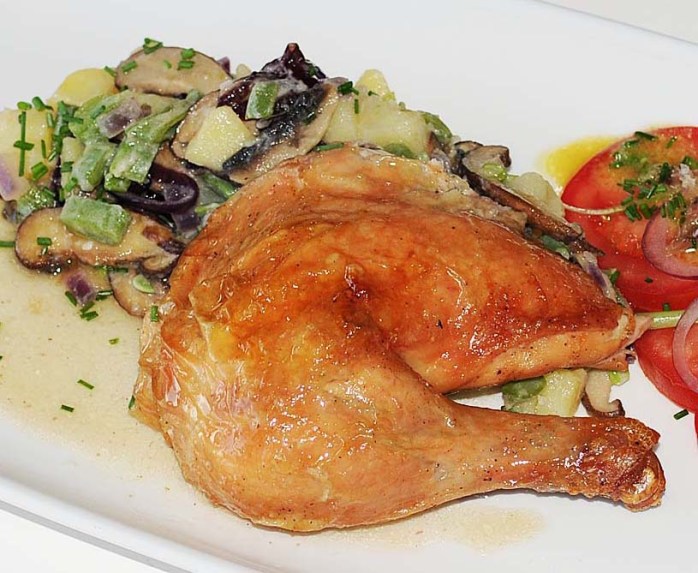
Thyme smoked chicken (Done on a Weber)


Served with a creamy white wine and thyme sauce, served rice and any vegetables. 


To smoke food, means to slowly cook over indirect heat and a low fire with smoldering flavorings such as herbs or special wood. For this recipe however it is a combination of smoking and roasting. Here we serve the chicken with a Bulgur wheat salad with fennel, egg, grapes and sun-dried tomatoes and a Roast potato with rosemary.

THYME SMOKED CHICKEN

Serves 4

The chicken:
1 large free-range chicken, washed inside and out, and dried
3 tablespoons/45 ml olive oil
salt and freshly ground black pepper
juice of ½ lemon
20 sprigs of fresh thyme, tied in two bundles
2 cups/500 ml chicken stock

The sauce:
1 teaspoon garlic, minced
1 shallot, finely chopped
1 cup/250 ml chicken stock
the pan drippings
1cup/250 ml fresh cream (optional)
salt and freshly ground black pepper

The bulgur wheat salad:
250 g/9 oz bulgur wheat
4 small free-range eggs (small hen’s eggs or quail eggs)
1 fennel bulb, halved and finely sliced
1 bunch spring onions, chopped
25 g/0.8 oz sun-dried tomatoes in oil, drained and sliced
a handful of green seedless grapes, cut in half
3 tablespoons/45 ml chopped fresh parsley
2 tablespoons/30 ml chopped fresh mint
75 g (2.6 oz) black olives, stoned
¼ cup/60 ml olive oil
1 small garlic clove, minced
2 tablespoons/30 ml lemon juice
salt and ground black pepper


For the smoking, we strongly recommend using the indirect cooking method in a kettle barbecue. Set up your grill for indirect heat by building a 2 zone fire, one on each side – drip pan goes in the middle under the meat. Make a charcoal fire and let burn until the coals are coated lightly with white ash.

  • Rub the oil over the skin of the chicken and season inside and out with salt and pepper.
  • Prepare the fire with two side fires and a central position for a drip try.
  • Generously rub with olive oil all over, then place the chicken, breasts up, on top of the wire racks of the barbeque, over the hot coals (with the dripping tray directly underneath), then position the sprigs of thyme on each side of the chicken.
  • Place the lid firmly on but keep the grill vents open, and cook for about 20 minutes. Then remove and discard the burnt thyme.
  • Tip the carcass to let the juice in the cavity run into the dripping tray (do this every 10 minutes from now on), pour the chicken stock in the dripping tray, and place the chicken back on the grid with the breasts facing down.
  • Replace the lid firmly again and continue cooking for another 20 minutes.
  • Then make a small incision in the inside of each leg. If the juices run clear it is cooked, otherwise leave it for 5-10 minutes longer.
  • Another way of seeing whether the chicken is cooked, tip it again to see whether the juices in the cavity is clear. If you are satisfied that the juices are clear, remove the chicken from the grill and leave to rest in a warm place, breasts side down, for at least 25 minutes.
  • While the chicken is cooking, heat the oil in a saucepan and gently fry the garlic and shallot until golden.
  • Turn up the heat then add the chicken stock and reduce until syrupy. Put aside until the chicken is cooked.
  • When the chicken is cooked and while resting it, remove the dripping tray from the barbeque and drain off the excess oil.
  • Pour the contents of the dripping through a strainer (scraping off all the bits that are stuck to the tray) into the reduced chicken stock and over medium heat, bring to the boil then add the cream (if using).
  • Pour through a fine sift again into a clean pan and simmer gently until the sauce has thickened, stirring continuously. Check the seasoning.

To serve:

  • Joint the chicken and place a serving of joints on warm serving plates.
  • Spoon the sauce around and garnish with a sprig of fresh thyme.
  • Serve with the rice and other side dishes of your choice.
  • If you wish, cut the chicken in easy serving pieces the Chinese way. A description of this method is in the Glossary.
Categories
SOUPS/SAUCES/CONDIMENTS

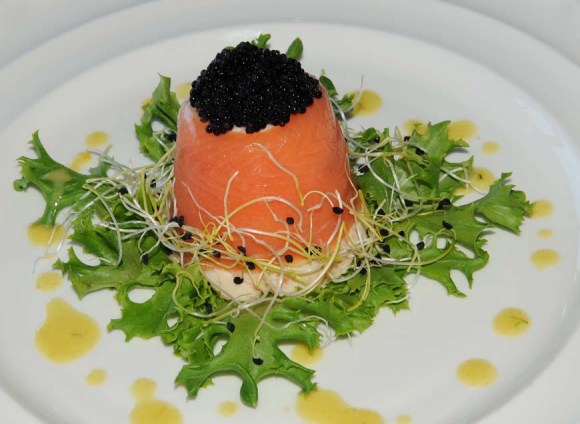
Smoked trout mousse


Served with horseradish and micro salad leaves

SMOKED TROUT MOUSSEServes 4

The mousse:
4-8 ribbons of smoked trout (to line the ramekins)
2 smoked trout fillets
½ cup/125 ml full cream, chilled
1 tablespoon/30 ml butter at room temperature
Tobasco sauce, a few drops
2 tablespoons/30 ml fresh lemon juice
salt
1 sheet gelatin
1 tablespoon/15 ml water
1½ cup/750 ml chilled full cream
4 tablespoons/60 ml caviar (if caviar is not available, finely chopped chives will do)

The horseradish cream:
3 tablespoons/45 ml fresh horseradish, grated
1 tablespoon/15 ml white wine vinegar or lemon juice
1 teaspoon/5 ml sugar
1 tablespoon/30 ml fresh dill, finely chopped
1 cup/250 ml fresh full cream
salt and freshly ground black pepper


This horseradish cream also goes well with  beef, beets, chicken, eggs, fish, pork, salmon, sausages, shellfish, smoked fish, etc. Covered, the sauce will keep for 2 to 3 days in a refrigerator.

The garnish:
micro salad leaves and sprouts
horseradish cream
dill sprigs
small wedges of lemon

  • Have ready four ramekins lined with cling wrap with excess all round to cover the mousse, then line the inside of each ramekin with the trout ribbons, leaving the bottom open.
  • In a food processor, blend the trout, cream, butter and lemon juice and add salt to taste.
  • Soak the sheets of gelatin in a bowl of cold water and after 5 minutes, drain and squeeze out the excess water.
  • Heat a small saucepan on low heat and add the gelatin with one tablespoon of water.
  • Let the gelatin dissolve thoroughly, then remove from the heat and add to the trout puree.
  • Whisk the cream until stiff and fold into the trout puree. Taste for seasoning.
  • Fill the ramekins with the mousse, then cover with the overhanging cling wrap and chill the mousse for at least 8 hours or overnight.
  • For the horseradish cream, blend the horseradish, vinegar and lemon juice, sugar and dill in a food processor.
  • In a separate bowl, whisk the cream until stiff then fold in the horseradish mixture.
  • Season to taste, then strain if you prefer a smooth texture and refrigerate for 4 – 8 hours.

To serve:
Arrange the salad leaves and sprouts in the center of each serving plate and turn the mousse out onto the greens. Carefully peal off the cling wrap then spoon some caviar (or chives, if using) on top and drizzle the horseradish cream around the mousse. Decorate with a few sprigs of dill and the wedges of lemon and serve immediately.

Categories
METHODS

STILL-FREEZING


Place the empty shallow container in which you wish to freeze the ice cream in the freezer for about 30 minutes before pouring the cream mixture into it.  Ice crystals form in the inside of the container as the mixture freezes and it needs to be broken down and mixed into the rest.  Do this after 30 minutes by whisking (or processing with the pulse setting) the mixture until it is smooth again.  Return to the freezer and repeat every half hour for about 3 hours or until it become more solid and smooth.  Take care not to overwork the mixture as it might become grainy.

Categories
SOUPS/SAUCES/CONDIMENTS

Sponge cake – basic recipe


For use with Current tart served with Crème de Cassis syrup and Cassata (Glazed fruit ice-cream cake with a fresh strawberry compote), and Strawberry cake with thick custard and a meringue and almond  topping.

The cake:
225 g/8 oz self-raising flour
½ level teaspoon/3 ml baking powder
225 g/8 oz castor sugar
225 g/8 oz unsalted butter (melted and cooled)
½ cup/125 ml milk and water mixed
1 large free-range egg
zest of 1 lemon
pinch of salt

The syrup: (optional)
3 tablespoons/45 ml castor sugar
zest and juice of 1 lemon
1 tablespoon/15 ml Cointreau (or freshly squeezed orange juice)
50 g/1.8 oz unsalted butter

Preheat the oven to 180ºC/356°F.
Grease a cake pan of about 22 cm/8.6 in in diameter with a loose bottom, and then dredge all over inside with a mixture of flour and castor sugar.
Into a mixing bowl, sieve the flour, baking powder and salt. Mix in the sugar, egg, butter, milk and water and whisk together until the mixture forms a smooth batter.
Pour into the prepared cake tin and bake in the preheated oven for 30-35 minutes, until well risen and golden. Remove from the oven and leave for 5 minutes. Remove the cake from the cake tin and (if using the syrup) prick it all over with a skewer. Spoon half the amount of syrup over, and use the rest to spoon on the plates when serving.

While the cake is baking, heat the sugar and lemon in a small saucepan and bring to the boil. Cook for 1 or 2 minutes, then add the Cointreau (or orange juice). Beat in the butter, a little at a time, until the sauce thickens.

Categories
METHODS

SUGAR SYRUP


Combine 400 g/14 oz caster sugar, 1½ cups/750 ml cold water and 2 tablespoons/30 ml liquid glucose in a saucepan and heat gently, stirring continuously with a wooden spoon until the sugar has dissolved.  Skim off any scum that may rise to the surface. Then boil hard for 3 minutes.  Leave to cool down completely, pass through a sieve, and if not using immediately, store covered in the refrigerator  for use later.

Chef’s note: It is useful to have a supply of sugar syrup to make a quick sauce for a simple dessert.
Categories
MAIN COURSE

Marinated belly pork “sous vide”


“Sous-vide”-cooking is a method used to cook food sealed in airtight plastic bags in a water bath for longer than normal cooking times, sometimes as long as 72 hours, at a regulated temperature much lower than normally used for cooking. The intention is to cook the item (mostly tough cuts of meat) evenly, preventing the food from overcooking whilst keeping it juicy, succulent and tender.

PORK BELLY

For the pork:
1 kg/2 lb pork belly, without bone
300 ml pork stock
2 tablespoons/30 ml vegetable oil

The marinade:
1 stalk lemongrass, hard outside removed, the core finely chopped
1 teaspoon/5 ml white pepper, freshly ground
2 teaspoons/10 ml Chinese five-spice powder (mix your own)
4 cloves garlic, crushed
2 teaspoons/10 ml fresh ginger, peeled and finely chopped
Kosher salt
1-2 red chilies, seeds removed, finely chopped

  • For the marinade, mix the lemongrass, spices, garlic, ginger, salt and red chilies together in a small bowl, then rub the marinade into the pork belly all round.  Cover with cling film and marinate for at least two hours, or up to 12 hours, in the fridge.
  • Preheat the oven to 100ºC/212ºF.
  • Place the marinated pork in a food grade plastic bag and pour in the stock.
  • Seal the bag in the vacuum packing machine.
  • Meanwhile heat water in the ovenproof  basking dish to the same temperature as you have set the oven.
  • Carefully lower the sealed bag into the hot water and make sure the bag is totally covered with the water.

A good idea is to put a circle of greaseproof paper with a small hole in the middle, on top of the meat before you secure the lid on.

  • Place the baking dish in the oven and set your timer for 3 hours.
  • When the cooking time is up, carefully remove the bag from the hot water with tongs and place in a deep dish.
  • Cut the bag open and let the meat and juices slide out of the bag into the dish.
  • Pour out the sauce in a saucepan.
  • Press the meat between two baking trays with a weight on top to flatten the skin and place in the fridge to chill for 1-2 hours.
  • Just before serving set the oven to grill and place the pork belly, skin side up, about 30 cm/12 in from the grill.

Keep an eye on the skin as it can burn in an instant.


The sauce will have all the flavors of the marinade as well as the meat. 


Categories
METHODS

CHINESE FIVE SPICE


Five-spice powder is a spice mixture of five spices, used primarily in Chinese cuisine but also used in other Asian and Arabic cookery.

1 teaspoon/5 ml Szechwan peppercorns
2 whole star anise
1 teaspoon/5 ml fennel seeds
1 teaspoon/5 ml whole cloves
1 stick cinnamon 

In a dry pan over medium heat, toast all the spices until fragrant, stirring regularly to prevent the seeds from burning. Allow to cool.  In a spice grinder grind all the spices until a fine powder is formed.  Store the powder in an airtight container away from direct light. The spice blend will stay good for several months.

Categories
SOUPS/SAUCES/CONDIMENTS

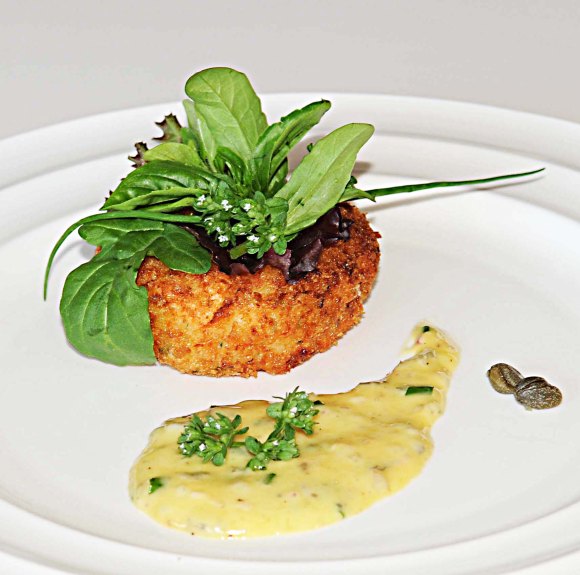
Seafood cakes with a caper sauce and mixed herbs


The fishcakes can be made with any leftover fish from a previous meal.

Serves 4
SEAFOOD CAKES

The mashed potatoes:
300 g/0.5 oz potatoes, peeled
2 tablespoons/30 ml créme fraîsche (make your own)
2 tablespoons/30 ml milk, heated
salt and freshly ground white pepper

The seafood:
1 tablespoon/15 ml olive oil
8 medium prawns, shelled, deveined
200 g/7 oz firm white fish OR 100 g/3.5 oz  salmon and 100 g/3.5 oz
firm white fish
100 g/3.5 oz smoked salmon
1 medium shallot, finely chopped
1 small mild red chili, finely chopped
1 tablespoon/15 ml lemon juice
1 egg lightly beaten
1 tablespoon/15 ml parsley, finely chopped
1 tablespoon fresh coriander, finely chopped
salt and fresh ground black pepper
Japanese breadcrumbs (Panko)
oil for deep-frying

The sauce:
2 hard-boiled egg
½ teaspoon/3 ml Dijon mustard
salt and freshly ground black pepper
½ cup/125 ml peanut oil
2 teaspoons/10 ml white wine vinegar
1 tablespoon/15 ml capers, drained, rinsed and roughly chopped
2 tablespoons/30 ml gherkins (cornichons), finely chopped
1 tablespoon/15 ml of each of parsley, tarragon, chives and chervil, finely chopped

The garnish:
a mixture of fresh herb leaves
paprika for sprinkling

Cut the potatoes into even chunks and boil in salted water until tender (about 15 minutes). Drain and return to the pan and over gentle heat, reheat the potatoes until any excess moisture has evaporated.  Push the potato chunks through a potato ricer.  In the meantime, slowly add the heated milk to the potatoes whilst whisking it with a fork. Mix in the créme fraîsche, salt and pepper to taste, then cover and set aside in a warm place.

To get the potato mash even smoother, push it through a drum sieve.

In a frying pan, heat the oil and lightly fry the prawns for 1 minute.  Remove with a slotted spoon and drain on kitchen towel.  Then fry the fish until just cooked – about 2 minutes.  Remove with a slotted spoon and drain on kitchen towel.  When the prawns and fish have cooled completely, roughly chop all of it and put in a bowl.  Cut the smoked salmon into small pieces and add to the fish and prawns.  Add the rest of the ingredients and the mashed potatoes, except the crumbs and oil, and mix well.  Put in the refrigerator for about 15 minutes to set, then remove and form the cakes.  Divide the mixture into 8 equal sized cakes.  (If you find that the cakes are too big, make smaller ones to get 12 cakes.)

To make sure that all the cakes are the same size, weigh them!

Heat the oil to about 170°C/335°F. (See safety tips for deep frying.)

Roll each cake in the crumbs, making sure the crumbs stick well, then fry in the oil – about 1-2 minutes on each side until they are golden brown.  Drain on kitchen towel and keep warm until ready to serve.

Put the yolks of the boiled eggs with the mustard and salt and pepper in a blender and blend well until a smooth paste forms.  While mixing, add half the oil, drop for drop, until all the ingredients amalgamated well.  Carry on mixing and add the vinegar, then slowly add the rest of the oil.  Transfer the mixture to a bowl and mix in the rest of the ingredients except the paprika.  Check the seasoning and adjust if necessary.  The paprika will be sprinkled over the sauce once it has be spooned onto the serving plates. Keep the sauce refrigerated until ready to serve.

To serve:
Place two or three fishcakes in the center of each serving plate, then put a posy of herb leaves on top or next to the cakes, and drizzle the sauce around.  Lightly sprinkle some paprika onto the sauce.