Categories
METHODS

Lamb stock


5 kg/11 lbs lamb bones
2 pig’s trotters, cleaned thoroughly and split in half (ask your butcher to do it for you)
50 ml olive oil
2 medium onions, roughly chopped
4 carrots, roughly chopped
1 celery stalk, roughly chopped
6 liters/12.5 pts/ cold water
5 medium size ripe tomatoes, cut in quarters

Preheat the oven to 200°C/400°F.
Place the lamb bones and the trotters on an oven tray and cook in the preheated oven until browned all over.  In a large stockpot, heat the oil and lightly fry the onions, carrots and celery, then add the lamb bones and trotters. Add the water, and bring to the boil.  Turn down the heat and simmer gently over low-medium heat, regularly skimming the brown foam that forms on the surface.  Simmer for 5 hours, then remove from the heat. Cool to room temperature, then strain, do not press down on the solids as this will cause the stock to become cloudy.  Cover and refrigerate until cold, then remove the fat from the  surface.  Refrigerate for up to 2 days or frozen in smaller containers for up to 3 months.  Discard the solids.

Categories
METHODS

Marzipan (almond icing) — make your own


Marzipan is an almond and sugar paste used to ice cakes and other pastries, and sculpted into a variety of shapes to be eaten as candy or used as cake decorations. It is simply a mixture of almond paste, powdered sugar, and a moistening agent such as water, corn syrup, glucose, fondant, or egg whites. After the ingredients are mixed, marzipan reaches a consistency of dough or soft rubber and can be rolled, shaped, cut, or molded.

To make your own:
This recipe will cover a cake of about 20-22 cm/8-8.6 in.
500 g/17.6 oz sifted icing sugar
450 g/1 lb ground almonds
2 egg whites
½ teaspoon/3 ml vanilla flavoring (optional)
1 teaspoon/5 ml lemon juice


Please note: this recipe contains raw eggs.

  • Sift the icing sugar in a bowl with the ground almonds.
  • Add the remaining ingredients and mix to make a stiff paste, then knead until smooth.

As a substitute to raw eggs, it is possible to use a little water mixed with brandy to bind the paste.


Categories
METHODS

Preserved lemons


8 to 10 lemons, un-waxed and scrubbed thoroughly
1 tablespoon/15 ml kosher salt for each lemon
1 wide mouth jar with lid big enough for all the lemons to fit.

Sterilize the jar in boiling water for 15 minutes. Add a tablespoon or two of salt on the bottom of the bottle.  Cut each lemon in quarters (but not right through) so that the pieces are still attached at the stem end, then stuff each lemon with a tablespoon of salt and squeeze it closed.  Place each lemon in the jar, pushing down on them and squeezing them to release the juices. Fill the jar but leave some headroom. The lemons should be completely submerged in juice. If you can’t get enough juice out of them, squeeze some additional lemon and top up the jar.  Add more salt on top, then seal the jar.

Let the jar sit at room temperature for 2 to 3 days, turning it over every day.  After 3 days, put the jar in the refrigerator and continue turning it upside down every other day or so. The lemons will be ready in three weeks when the rinds have softened.  Before using, scoop out and discard the pulp, and rinse the lemon peel under the tap to get rid of the salt. These preserved lemons will keep in the refrigerator for six months.

Categories
MAIN COURSE

Lamb shanks poached in a spicy broth


Served with harissa yogurt,  couscous and roast vegetables and spicy aubergine and shiitaki mushrooms

BLOCK HORIZONTAL LINE
Serves 4

LAMB SHANKS WITH HARISSA

The shanks:
olive oil
4 lamb shanks
1 carrot, diced
1 leek, diced
1 celery stick, diced
4 garlic cloves
1 bay leaf
1 rosemary sprig
1 star anise
4 cardamom pods
1½ cup/375 ml dry white wine
7 cups/1¾ liter lamb stock, heated
sea salt and freshly ground black pepper

The couscous:
2 tablespoons/30 ml butter
3 spring onions, thinly sliced
½ cup/250 ml raisins
cinnamon stick
salt and freshly ground black pepper
3 cups/740 ml chicken stock
2 cups/250 ml couscous
¼ cup/60 ml almonds, slithered
¼ cup/60 ml fresh mint, chopped

The aubergines:
olive oil
4 medium aubergines, sliced in thin sliced
12 shiittaki mushrooms, sliced
salt and freshly ground black pepper
½ teaspoon/3 ml sesame oil
½ teaspoon/3 ml oyster sauce
½ tablespoon/7 ml balsamic vinegar
½ tablespoon/7 ml lemon juice
1 tablespoon.15 ml soy sauce
2 teaspoons/10 ml mirin

The yoghurt and harissa sauce:
2 tablespoons/30 ml fresh cream
4 tablespoons/60 ml plain yoghurt
2 teaspoons/20 ml lemon juice
salt and pepper to taste
harissa paste

Preheat the oven to 120°C/250ºF.
Heat a little olive oil in a large ovenproof pan and brown the shanks all over. Remove and set aside. Add some more olive oil to the same pan, then saute the carrot, leek, celery and garlic until light golden. Add the herbs and spices, pour in the wine and cook until the alcohol has evaporated.
Place the lamb shanks back into the pan with the vegetables, then pour in the stock. Season well, then cover and put in the preheated oven. Cook for about 3 hours, then remove from the oven and leave in the liquid for 30 minutes. Remove the meat and keep in a warm place. Strain the liquid, discard the solids, then skim of the fat that rises to the top. Reduce the liquid over high heat until thick and glossy. Check the seasoning and add more salt and pepper if necessary.

In a saucepan, melt the butter then add the spring onions, raisins, cinnamon stick, salt and pepper and stir until everything is well coated with the butter. Add the stock and bring to a boil. Put the couscous in a heatproof bowl and pour the spiced stock over. Cover and allow to sit for 5-10 minutes. Uncover, fluff the couscous with a fork, and stir in the almonds. Serve warm at room temperature with the mint sprinkled over.

Preheat the oven to 180°C/356°F.
Sprinkle the aubergines with salt and set aside for 30 minutes, then rinse the aubergines and pat dry. Heat some oil and fry the aubergine slices until golden brown on both sides. Drain on kitchen towel and set aside.

In the same pan heat some more oil and fry the mushrooms until tender. Remove from the pan and drain on kitchen towel. Set aside.
Mix together the rest of the ingredients for the dressing and season to taste. Mix the dressing with the fried mushrooms and aubergines and gently stir through to coat all the vegetables. Set aside until ready to serve warm at room temperature.

Whisk the cream until stiff, then fold in the yoghurt, lemon juice and salt and pepper. Taste and adjust the seasoning to your liking. Set aside until ready to use.
Just before serving, add some of the harissa paste to the yoghurt and mix through. Taste and add more paste if you wish.
Categories
METHODS

HARISSA


1 preserved lemon, finely chopped OR 1 tablespoon lemon zest
1 bunch fresh coriander, including stalks, chopped
2 small hot green chilies (or more if you like it stronger)
1 teaspoon/5 ml salt
2-3 garlic cloves
½ cup/125 ml fresh mint leaves
1 tablespoon/15 ml coriander seed, toasted and ground
1 cup/250 ml olive oil.

In a pestle and mortar grind the lemon, coriander and chilies, then add the rest of the ingredients, pouring the oil in in a steady stream. Once you have reached the desired consistency, set aside for for an hour or two to allow the flavors to develop.

Categories
SOUPS/SAUCES/CONDIMENTS

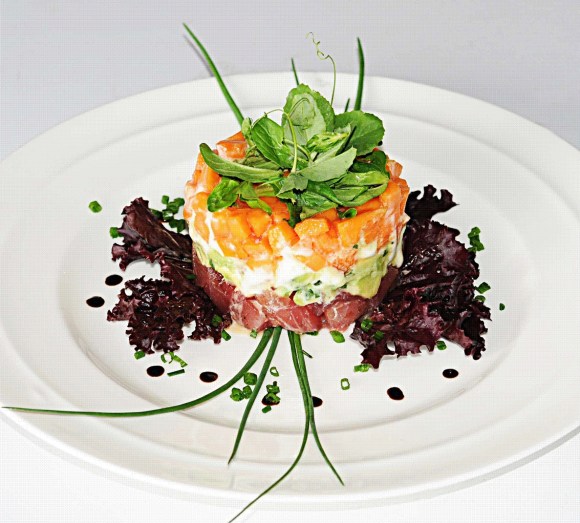
Marinated tuna salad with avocado pear, yogurt cream and mint papaya


Served with avocado pear,yogurt cream and mint papaya.

BLOCK HORIZONTAL LINE

Serves 4

The preparations for this dish should only be done just before serving to ensure utter freshness.The tuna can be replaced with fresh salmon or any other sashimi fresh fish.

MARINATED TUNA SALAD

The tuna:
2 cups/500 ml very fresh raw tuna, cut into small dice
1 tablespoon/15 ml olive oil
½ teaspoon/3 ml balsamic vinegar
salt and freshly ground pepper

The avocado:
2 cups/500 ml avocado pear, cut into small dice
½ teaspoon/3 ml lemon juice
salt and freshly ground black pepper

The yogurt cream:
1 tablespoon fresh/15 ml cream
1 tablespoons/15 ml plain yogurt
1 tablespoon/15 ml chives, finely chopped

The papaya:
2 cups/250 ml papaya, cut into small dice
2 mint leaves, finely chopped
½ teaspoon/3 ml lemon juice
½ teaspoon/3 ml fine sugar

The dressing:
2 tablespoons/30 ml Japanese mayonnaise, mixed with rice wine vinegar and a pinch sugar
extra chives, finely dice

The garnish:
a selection of fine herbs
chive oil
balsamic vinegar syrup

For the tuna, gently mix the tuna with the olive oil, balsamic vinegar and salt and pepper. Cover and set aside.

For the avocado, sprinkle the lemon juice and salt and pepper over the avocado and set aside.

For the yogurt cream, whisk the cream until thick, then mix in the yogurt, chives and salt and pepper.   Gently mix the yogurt cream into the avocado, cover and set aside.

For the papaya, mix all the ingredients, cover and set aside.
For the dressing,  mix all the ingredients, cover and set aside.

To serve:
On each serving plate, place a ring mold and divide the tuna into four. Spoon the tuna into the ring mold and gently press down, then repeat with the avocado mixture, then papaya.  Slowly lift the ring mold whilst pressing the contents down with your other hand. Drizzle some of the mayonnaise over each tower and top with a sprinkle of chives. Scatter the lettuce leaves all round and serve immediately.

Categories
METHODS

Chive oil


CHIVE OILFill a bowl with ice cubes and water. Blanch a bunch of chives in boiling water for 30 seconds, then drain immediately and put in the ice water. Drain, then with paper towels squeeze out the excess water. Chop the chives (about a cup full) and add to a processor with one cup of extra virgin olive oil, peanut oil or sunflower oil.
Blend for 2 minutes and let infuse for a few hours, then strain through a fine sieve. Transfer the oil to a plastic squeeze bottle if you like. The oil can be refrigerated for up to a month.  Bring to room temperature before using.

Categories
MAIN COURSE

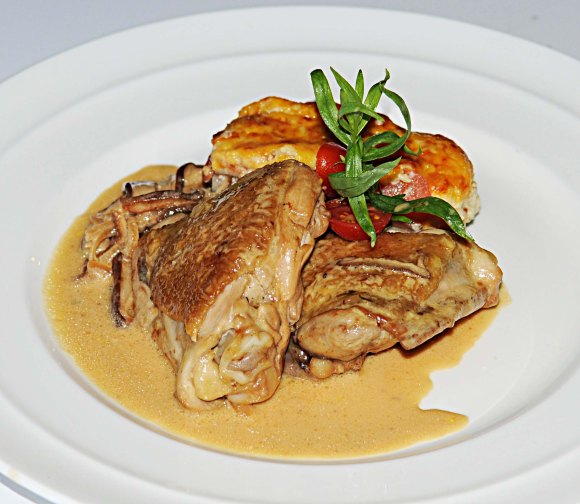
Chicken and mushroom casserole with a creamy champagne and tarragon sauce


Served with  Peccorino Swiss chard, and Macaroni and cheese

CHICKEN CASSEROLEServes 4

The casserole:
2 tablespoons olive oil
12 free-range chicken thighs, deboned (reserve the bones)
1 shallot, finely chopped
12 fresh tarragon leaves
salt and freshly ground black pepper
½ cup brut Champagne
½ cup fresh cream
1 teaspoon Dijon mustard
500 g/1 lb fresh mushrooms, stems removed and sliced
fresh tarragon leaves


Fresh shiitake mushrooms can be replaced with dried ones, but use about half the quantity.

The Peccorino Swiss chard:
1 kg/2 lbs Swiss chard
2 tablespoons butter
2 tablespoons olive oil
1 tablespoon garlic, minced
½ small red onion, diced
2 tablespoons Parmesan cheese
2 tablespoons Peccorino cheese
10 cherry tomatoes, skinned
salt and freshly ground black pepper

The macaroni and cheese:
4 cups milk
40 g butter
50 g/1.7 oz flour, sifted
½ cup Fontina
½ cup mature cheddar cheese
1 teaspoon mustard
400 g/14 oz Riggatoni pasta
15 g/0.5 oz butter
4 large tomatoes, skinned and sliced in 3 mm/0.2 thick slices
1 tablespoon red onion, finely sliced
1 cup Gruyère cheese, freshly grated
½ cup Parmesan


Any leftover Macaroni and cheese is ideal for a light lunch with salad the next day. It will keep, covered and refrigerated, for up to four days, but well wrapped, it also freezes well.

The salsa:
2 ripe pears, julienned
2 teaspoons, finely chopped
1 tablespoon pickled ginger, finely sliced
1½ tablespoon chive oil
1 teaspoon Dijon mustard
2 teaspoons lemon juice
pinch of sugar

The chicken:

  • Heat the oil in a saucepan and lightly sauté the chicken and bones until golden brown all over. Add the shallot and sauté until translucent, then add the tarragon and season with salt and pepper.
  • Add the Champagne and bring to a boil over medium heat. Cover and cook for ±20 minutes, remove the bones, then add the mushrooms and cook for another 15 minutes.
  • Mix the cream and mustard and pour over the chicken. Stir and bring to the boil, then cover and cook for 10 more minutes over low heat, stirring often. Serve immediately.

If you prefer to use reduced fat cream and to avoid it curdling, turn the heat right down at the end of the cooking time and only then pour the cream and mustard over the chicken. Stir gently to heat through, not longer than 15 seconds, then remove from the heat. Do not let it boil again – it will curdle.

  • Serve with some fresh tarragon leaves scattered over.

The Swiss chard:

  • Separate the ribs and leaves. Finely chop the ribs and shred the leaves, keeping them separate as the ribs take longer to cook.
  • Heat the butter and olive oil together in a large saucepan over medium-high heat.
  • Stir in the garlic and onion, and cook for 30 seconds. Remove with a slotted spoon and set aside.
  • Add the ribs and cook for about 5 minutes then add the chard leaves and cook until the leaves are wilted. Drain and squeeze out as much liquid as possible.
  • Put the chard, fried garlic and onions in a processor and pulse until it looks like large breadcrumbs.
  • Remove from the processor to a bowl, add the freshly grated Parmesan cheese and Peccorino. Mix well and tomatoes. Season to taste and keep warm.

The macaroni and cheese:

  • Preheat the oven to 200°C/392°F.
  • For the cheese sauce, bring the milk to a boil in a small saucepan, then remove from the heat.
  • Meanwhile, in a separate saucepan and over a medium heat, melt the butter. Stir in the flour and cook for 3-4 minutes, then gradually stir in the milk and cook gently, stirring constantly, until the sauce is smooth.
  • Reduce the heat and simmer for 3-4 minutes or until thickened. Remove from the heat and add the freshly grated Fontina and cheddar cheese and mustard, then season to taste with salt and freshly ground black pepper.
  • For the macaroni, cook the Riggatoni until tender, drain and set aside.
  • In a large ovenproof dish, start the layering: First a layer of a third of the pasta, followed by a layer of a third of the tomatoes and onions.
  • Spoon over a third of the sauce and sprinkle over a third of the freshly gated Gruyère cheese, then repeat with the rest of the ingredients.
  • Finally sprinkle over the freshly grated Parmesan. Bake in the oven for 20 minutes or until the top is golden brown. Remove from the oven and let it rest for at least 15 minutes before serving.

The pear salsa:

  • Gently mix the pear, chives and pickled ginger in a bowl.
  • Whisk together the chive oil, mustard, lemon and sugar and just before serving, pour over the salsa.

To serve:
Spoon the sauce over the chicken and scatter the tarragon leaves over. Serve with the Swiss chard, Macaroni and cheese and the Pear, chive and pickled ginger salsa.

Categories
METHODS

Clarifying stock for clear soups or aspic


As used in Quail egg and prawn set in aspic molds

Clarified stock is used for clear soups and savory jellies. During the clarifying process a certain amount of flavor will be lost.  To avoid this, add additional finely chopped aromatic vegetables (vegetables, celery, leek, parsley, etc) together with the specified amount of gelatin to the stock.   Then add lightly whisked egg white (2 or 3 depending on the volume of the stock) and bring the stock up to the boil.  The egg white will start to form a crust on top to which all the impurities (that make the liquid cloudy) in the stock get trapped.  Do not stir the stock at all. This process will take about ten minutes after boiling started, then turn the heat of and carefully remove the crust.  Through a sieve lined with double cheesecloth and over a large bowl, slowly ladle the stock through. Do not squeeze the cheesecloth or force the liquid through. The stock is now clarified.  Seasoning are added then to flavor the aspic according to the recipe of the dish you are preparing.

Categories
METHODS

Tomato sauce


TOMATO OIL

4 ripe tomatoes, roughly chopped
1 small clove of garlic, roughly chopped
1 sprig of thyme
4 tablespoons/60 ml extra virgin olive oil
a pinch of sugar, optional

Preparation method
In a food processor, blend the tomatoes and garlic and strain into a small pan. Bring to the boil and add the thyme. Turn the heat down and simmer until the liquid is reduced to half. Remove from the heat, strain the juice again and leave to cool.

Whisk the olive oil, season and add a pinch of sugar if necessary.